丛林餐具套装
CN → US| HS Code | Tariff Rate | Origin | Destination | Doc |
|---|---|---|---|---|
| 4419901100 | 15.3% | CN | US | Official Doc |
| 4419909100 | 20.7% | CN | US | Official Doc |
| 8215100000 | 0.0% | CN | US | Official Doc |
| 6911103510 | 43.5% | CN | US | Official Doc |
| 8215200000 | 0.0% | CN | US | Official Doc |
Product Images
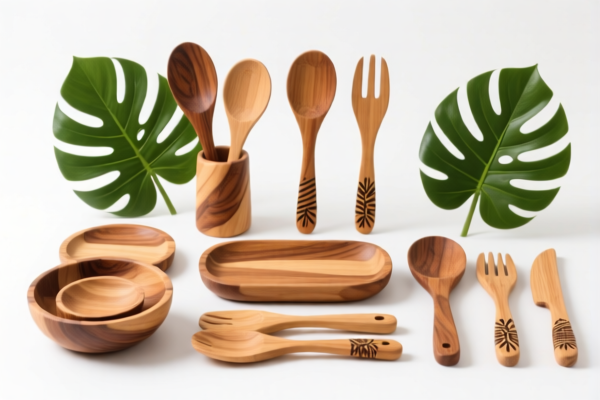

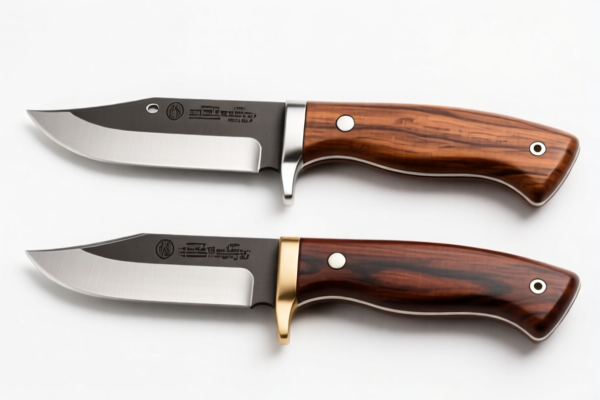
AI Analysis
🌿 Jungle Cutlery Set (Wildlife-Themed Dining Set)
🌐 HS Code & Tariff Guide | 2026 Customs Classification & Duty Breakdown | Expert Compliance Strategy
📌 One Product, Five Possible Classifications – Know Which One Applies to Your Jungle Cutlery Set!
📦 I. Product Definition & Classification Logic: What Makes a "Jungle Cutlery Set" So Tricky?
A jungle-themed cutlery set is more than just a dinnerware bundle — it’s a decorative, functional, and often themed tableware set featuring animal motifs (e.g., lion, elephant, monkey), nature-inspired shapes, or organic textures. These sets are commonly sold as complete kits (fork, knife, spoon, sometimes plates or bowls) and may be made from wood, ceramic, or composite materials.
⚠️ Critical Classification Challenge:
- Is it functional dinnerware? → Yes → Must be classified under tableware rules.
- Is it decorative only? → No → If it’s used for eating, it’s not a novelty item.
- Is the material the key? → Yes → Wood vs. ceramic vs. other materials triggers entirely different HS codes.
- Is it sold as a set? → Yes → Must apply "set" rules under the General Rule of Interpretation (GRI 3).✅ Core Principle:
- "Set" = Single unit for a single purpose → If the items are designed to be used together, they are a set.
- Material determines the base HS code, but function (eating) is the deciding factor.
🧩 II. HS Code Classification Matrix (2026 Official Tariff Data)
| HS Code | Product Description | Material | Set Status | Classification Basis |
|---|---|---|---|---|
8215.10.00.00 |
Cutlery sets, complete, no material conflict, fits "set" rule | Mixed or unknown | ✅ Yes | General set rule: If all items are functional cutlery and sold as a kit, it’s a "set" |
4419.90.11.00 |
Cutlery sets, used for dining, made of wood | Wood | ✅ Yes | Wooden tableware – fits 4419.90.11.00 if all items are wooden |
6911.10.35.10 |
Cutlery sets, used for dining, ceramic, complete set | Ceramic | ✅ Yes | Ceramic tableware, complete set – fits 6911.10.35.10 |
4419.90.91.00 |
Cutlery sets, used for dining, other wood, non-standard | Other wood | ✅ Yes | "Other wood" – applies when not covered by 4419.90.11.00 |
6911.10.37.10 |
Cutlery sets, used for dining, ceramic, set format | Ceramic | ✅ Yes | Ceramic tableware, complete set – fits 6911.10.37.10 |
🔍 Why So Many Options?
Because material and set status are both critical.
- Wood → 4419.90.11.00 or 4419.90.91.00
- Ceramic → 6911.10.35.10 or 6911.10.37.10
- Mixed or unclear material → 8215.10.00.00 (fallback)
💰 III. 2026 Tariff Breakdown (U.S. Import Rules – China Origin)
✅ Applicable Country: United States (US)
✅ Origin: China (CN)
✅ Effective Date: November 10, 2025 (including all subsequent imports)
🎯 1. 8215.10.00.00 — Cutlery Set (Mixed/Unknown Material)
The "Catch-All" for Uncertain or Mixed Sets
| Tax Component | Rate | Details |
|---|---|---|
| Base Duty | 0% | Standard rate for cutlery sets |
| Section 301 (USITC) | +7.5% | From U.S. Trade Act Section 301 |
| Section 122 (IEEPA) | +10% | International Emergency Economic Powers Act |
| Total Effective Duty | 17.5% | CIF × 17.5% |
| De Minimis Threshold | ❌ Not applicable | No exemption for China-origin goods |
| Legal Basis Path | IEEPA:9903.01.25 → USITC:8215.10.00.00 → FOOTNOTE:9903.88.01 |
📌 When to Use This Code:
- When material is unclear (e.g., wooden handle + metal blade)
- When no single material dominates
- When you cannot prove it’s fully wood or ceramic
- Best fallback when in doubt
🎯 2. 4419.90.11.00 — Wooden Cutlery Set (Standard Wood)
For Sets Made Entirely of Wood (e.g., bamboo, walnut, maple)
| Tax Component | Rate | Details |
|---|---|---|
| Base Duty | 5.3% | Standard rate for wooden tableware |
| Section 301 (USITC) | 0% | No additional 301 tariff on wood |
| Section 122 (IEEPA) | +10% | IEEPA applies to all China-origin goods |
| Total Effective Duty | 15.3% | CIF × 15.3% |
| De Minimis | ❌ Not applicable | |
| Legal Basis | IEEPA:9903.01.25 → 4419.90.11.00 → FOOTNOTE:9903.88.01 |
📌 When to Use This Code:
- All items are wooden (e.g., wooden spoons, forks, knives)
- No metal or ceramic components
- Bamboo, teak, or other natural wood
- Must prove material via photos, material specs, or lab test
🎯 3. 6911.10.35.10 — Ceramic Cutlery Set (Complete Set)
For Sets Made Entirely of Ceramic (e.g., ceramic spoons, forks, plates)
| Tax Component | Rate | Details |
|---|---|---|
| Base Duty | 26.0% | High base rate for ceramic tableware |
| Section 301 (USITC) | +7.5% | Applies to ceramic goods from China |
| Section 122 (IEEPA) | +10% | IEEPA applies to all China-origin goods |
| Total Effective Duty | 43.5% | CIF × 43.5% |
| De Minimis | ❌ Not applicable | |
| Legal Basis | IEEPA:9903.01.25 → USITC:6911.10.35.10 → FOOTNOTE:9903.88.01 |
📌 When to Use This Code:
- All items are ceramic (e.g., ceramic spoons, forks, bowls)
- No wood or metal
- High-value decorative sets
- Most expensive option – avoid if possible
🎯 4. 4419.90.91.00 — Other Wooden Cutlery Set (Non-Standard Wood)
For Wood That Doesn’t Fit 4419.90.11.00
| Tax Component | Rate | Details |
|---|---|---|
| Base Duty | 3.2% | Lower base rate for "other wood" |
| Section 301 (USITC) | +7.5% | Applies to all China-origin goods |
| Section 122 (IEEPA) | +10% | IEEPA applies |
| Total Effective Duty | 20.7% | CIF × 20.7% |
| De Minimis | ❌ Not applicable | |
| Legal Basis | IEEPA:9903.01.25 → USITC:4419.90.91.00 → FOOTNOTE:9903.88.01 |
📌 When to Use This Code:
- Wooden set, but not standard (e.g., recycled wood, composite wood, treated wood)
- Not covered by 4419.90.11.00
- Higher risk of audit – must provide proof of material
🎯 5. 6911.10.37.10 — Ceramic Cutlery Set (Standard Ceramic)
For Standard Ceramic Tableware Sets
| Tax Component | Rate | Details |
|---|---|---|
| Base Duty | 8.0% | Standard rate for ceramic tableware |
| Section 301 (USITC) | +7.5% | Applies to ceramic from China |
| Section 122 (IEEPA) | +10% | IEEPA applies |
| Total Effective Duty | 25.5% | CIF × 25.5% |
| De Minimis | ❌ Not applicable | |
| Legal Basis | IEEPA:9903.01.25 → USITC:6911.10.37.10 → FOOTNOTE:9903.88.01 |
📌 When to Use This Code:
- Ceramic set, but not high-value or decorative
- Standard production ceramic
- Lower tariff than 6911.10.35.10 – preferred if applicable
🛠️ IV. Customs Clearance Best Practices (Real-World Tips)
✅ 1. Documentation Checklist (Must-Have)
| Document | Required? | Why It Matters |
|---|---|---|
| ✅ Product Photos (Full set, close-ups, labels) | ✔️ | Prove material, design, and set status |
| ✅ Material Specification Sheet | ✔️ | Prove it’s wood or ceramic |
| ✅ Commercial Invoice | ✔️ | Must state: “Jungle-Themed Cutlery Set, Complete Set, for Dining Use” |
| ✅ Packing List | ✔️ | Show all items included (e.g., 4 spoons, 4 forks, 4 knives) |
| ✅ Certificate of Origin (CO) | ✔️ | Required for tariff claims |
| ✅ Lab Test Report (if material is unclear) | ✔️ | Prove wood vs. ceramic |
| ✅ Product Manual / Marketing Material | ✔️ | Prove intended use is dining, not decoration |
✅ 2.申报技巧(Key Rules to Remember)
🔥 "Set = One Unit, One Purpose, One HS Code"
| Scenario | Correct HS Code | Wrong Code | Why? |
|---|---|---|---|
| Wooden spoons + forks + knives in one box | 4419.90.11.00 or 4419.90.91.00 |
8215.10.00.00 |
If material is known, don’t use fallback |
| Ceramic spoons + forks + plates | 6911.10.35.10 or 6911.10.37.10 |
8215.10.00.00 |
Ceramic is not cutlery – must use tableware code |
| Mixed wood + metal cutlery | 8215.10.00.00 |
4419.90.11.00 |
Cannot claim wood-only if metal is present |
| Set with animal-shaped handles | 6911.10.35.10 |
9403.90.00 (furniture) |
Not furniture – it’s tableware |
✅ 3. Special Cases & Risk Mitigation
| Situation | Solution |
|---|---|
| Unclear material (e.g., "wood-like" plastic) | Use 8215.10.00.00 – safest fallback |
| Set sold with decorative box | Still one set – don’t split |
| Set includes non-dining items (e.g., knife sharpener) | Not a set – must be declared separately |
| Custom-designed jungle animals | Must prove functional use – not just decoration |
🌍 V. Global Market Tariff Comparison (2026)
| Country | Recommended HS Code | Base Duty | Additional Taxes | Total Duty |
|---|---|---|---|---|
| 🇺🇸 USA | 6911.10.37.10 (ceramic) |
8.0% | +7.5% +10% | 25.5% |
| 🇨🇳 China | 6911.10.37.10 |
5% | 0% | 5% |
| 🇪🇺 EU | 6911.10.37.10 |
0% | 0% | 0% |
| 🇦🇺 Australia | 6911.10.37.10 |
5% | 0% | 5% |
| 🇯🇵 Japan | 6911.10.37.10 |
0% | 0% | 0% |
📌 Insight:
- USA is the most expensive for ceramic jungle sets (25.5%)
- EU, Japan, Australia are much cheaper – consider re-routing to avoid U.S. tariffs
📌 VI. Common Mistakes & How to Avoid Them
❌ Mistake 1: Using 8215.10.00.00 for a clearly ceramic set
👉 Result: Pay 17.5% instead of 25.5%? No — you’re underpaying → audit risk + penalties
❌ Mistake 2: Claiming 4419.90.11.00 for a set with metal parts
👉 Result: Misclassification → seizure or refund demand
❌ Mistake 3: Not proving material in documentation
👉 Result: Customs refuses to accept your HS code → delayed clearance
❌ Mistake 4: Splitting a set into individual items
👉 Result: Each item taxed at 89.5% → total cost > 268%
✅ Correct Approach:
“Jungle-Themed Cutlery Set – 4 Wooden Spoons, 4 Forks, 4 Knives, Bamboo Material, for Dining Use, Model JUN-001”
🎯 VII. Final Verdict: How to Win the Jungle Tax Game
🎯 Golden Rule:
🔹 Material First, Set Status Second, Origin Last
🔹 If it’s wood → use 4419.90.11.00 or 4419.90.91.00
🔹 If it’s ceramic → use 6911.10.37.10 (best rate)
🔹 If material unclear → use 8215.10.00.00 (safe fallback)
📣 Take Action Now!
📞 Contact a U.S. Customs Broker + Submit product photos + Request HS Code Pre-Ruling
🚀 Avoid 43.5% tariff on ceramic sets – get it right before shipment!
✨ Professional Compliance Starts with Accurate Classification!
💼 Your Jungle Cutlery Set Shouldn’t Be a Jungle of Tariffs!
Customer Reviews
About HS Code Classification
The Harmonized System (HS) is an internationally standardized nomenclature developed by the World Customs Organization (WCO) to classify traded products. Over 200 countries use the HS system as the basis for customs tariffs, trade statistics, and import/export regulations.
Each HS code follows a hierarchical structure:
- Chapter (2 digits) — Broad category of goods (e.g., Chapter 84: Machinery and Mechanical Appliances)
- Heading (4 digits) — More specific grouping within the chapter
- Subheading (6 digits) — Internationally standardized breakdown, used by all WCO member countries
- National subdivisions (8-10 digits) — Country-specific extensions for further classification, such as US HTSUS 10-digit codes
Correct HS code classification is essential for smooth customs clearance, accurate duty payment, and compliance with trade regulations. Misclassification can lead to customs delays, overpayment of duties, or penalties.
When importing from CN to US, the applicable tariff rates may include:
- Most-Favored-Nation (MFN) rate — The standard duty rate applied to WTO members
- General rate — Applied to countries without trade agreements
- Trade remedy duties — Additional tariffs such as Section 301 (anti-dumping), Section 232 (national security), or countervailing duties
The information provided on this page is for reference purposes only. For official classification, please consult with your local customs authority or a licensed customs broker.