冷轧制药
CN → US| HS Code | Tariff Rate | Origin | Destination | Doc |
|---|---|---|---|---|
| 7209186090 | 10.0% | CN | US | Official Doc |
| 7209170091 | 10.0% | CN | US | Official Doc |
| 7211296080 | 35.0% | CN | US | Official Doc |
| 7211292090 | 35.0% | CN | US | Official Doc |
| 7220207080 | 35.0% | CN | US | Official Doc |
| 7220206080 | 35.0% | CN | US | Official Doc |
Product Images
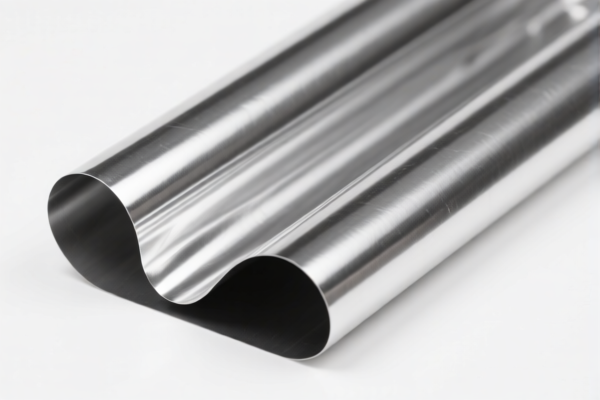
AI Analysis
🧪 Cold-Rolled Steel Products for Pharmaceutical Use
🌐 HS Code Reference & Customs Clearance Guide | 2026 Updated Tariff Analysis | Professional Import Strategy
📌 One, Product Definition & Classification: What Exactly Are Cold-Rolled Steel Products for Pharma?
Cold-rolled steel products are precision-engineered flat-rolled steel materials that undergo cold reduction (cold rolling) without any cladding, plating, or coating. In the pharmaceutical industry, these materials are primarily used in:
- Pharmaceutical manufacturing equipment (e.g., stainless steel tanks, conveyor belts, mixing vessels)
- Cleanroom construction components (e.g., structural frames, panels, support beams)
- High-purity processing machinery requiring corrosion resistance, smooth surfaces, and easy sterilization
⚠️ Critical Distinction:
- If the product is non-alloy steel, not coated, and only cold-rolled → classified under 7211.29.60.80 / 7211.29.20.90
- If the product is stainless steel, cold-rolled, and used in hygienic environments → classified under 7220.20.70.80 / 7220.20.60.80
- Do NOT classify as general industrial steel — pharmaceutical-grade materials are subject to stricter scrutiny and higher tariffs.
📦 Two, HS Code Classification Details (2026 Official Tariff Match)
| HS Code | Product Description | Width & Thickness Criteria | Applicable to Pharma Use? | Tax Rate |
|---|---|---|---|---|
7211.29.60.80 |
Flat-rolled nonalloy steel, <600 mm width, cold-rolled, not clad/plated/coated: Other, Other | Not further specified | ❌ Not suitable for direct pharma use due to corrosion risk | 25.0% (with 25%附加 tariff) |
7211.29.20.90 |
Flat-rolled nonalloy steel, <600 mm width, cold-rolled, not clad/plated/coated: Of width <300 mm, thickness >0.25 mm | Narrow, thick strip | ❌ Not recommended — lacks corrosion resistance | 25.0% (with 25%附加 tariff) |
7209.18.60.90 |
Flat-rolled nonalloy steel, ≥600 mm width, cold-rolled, not clad/plated/coated: In coils, thickness <0.5 mm, other | Wide coils, thin gauge | ⚠️ Only if coated/finished later — not for direct pharma use | 0.0% (no附加 tariff) |
7209.17.00.91 |
Flat-rolled nonalloy steel, ≥600 mm width, cold-rolled, not clad/plated/coated: In coils, thickness 0.5–1 mm | Wide, medium-thick coils | ⚠️ Not suitable — non-stainless, prone to contamination | 0.0% |
7220.20.70.80 |
Flat-rolled stainless steel, <600 mm width, cold-rolled, not clad/plated/coated: Width <300 mm, thickness >0.25 mm but ≤1.25 mm | Thin, narrow stainless strip | ✅ Yes — suitable for cleanroom parts, small equipment | 25.0% (with 25%附加 tariff) |
7220.20.60.80 |
Flat-rolled stainless steel, <600 mm width, cold-rolled, not clad/plated/coated: Width <300 mm, thickness >1.25 mm | Thick stainless strip | ✅ Yes — ideal for structural tanks, vessels, frames | 25.0% (with 25%附加 tariff) |
🔍 Key Insight:
- Only stainless steel cold-rolled products (7220.20.70.80&7220.20.60.80) are acceptable for pharmaceutical applications due to corrosion resistance and hygiene compliance.
- Nonalloy steel (7211,7209) is not permitted in direct contact with pharmaceuticals due to risk of rust, particle shedding, and contamination.
💰 Three, 2026 Updated Tariff Breakdown (Including附加 Taxes & Policies)
✅ Applicable Country: United States (US)
✅ Origin: China (CN)
✅ Effective Date: November 10, 2025 (inclusive of future imports)
🎯 1. 7220.20.70.80 — Stainless Steel Cold-Rolled, <300 mm width, thickness 0.25–1.25 mm
| Item | Detail |
|---|---|
| Base Duty | 0% (ad valorem) |
| USITC Additional Tariff | +25% (under Section 301, USITC Footnote 9903.88.01) |
| IEEPA Additional Tariff | +10% (under International Emergency Economic Powers Act) |
| Total Effective Tariff | 45% |
| Tax Calculation | CIF Value × 45% |
| De Minimis Exemption | ❌ Not available (deny_de_minimis) |
| Legal Basis Path | IEEPA:9903.01.25 → IEEPA:9903.01.24 → USITC:7220.20.70.80 → FOOTNOTE:9903.88.01 |
📌 Explanation:
- Despite being stainless steel, this product is still subject to 25% USITC + 10% IEEPA due to Chinese origin. - 45% total is among the highest in the steel category — must be budgeted for.
🎯 2. 7220.20.60.80 — Stainless Steel Cold-Rolled, <300 mm width, thickness >1.25 mm
| Item | Detail |
|---|---|
| Base Duty | 0% |
| USITC Additional Tariff | +25% |
| IEEPA Additional Tariff | +10% |
| Total Effective Tariff | 45% |
| Tax Calculation | CIF × 45% |
| De Minimis Exemption | ❌ Not applicable |
| Legal Basis Path | IEEPA:9903.01.25 → IEEPA:9903.01.24 → USITC:7220.20.60.80 → FOOTNOTE:9903.88.01 |
📌 Note:
- Same tax treatment as7220.20.70.80— no difference in tariff despite thickness. - Thicker stainless steel is often used for pressure vessels, reactors, tanks — critical for pharma manufacturing.
🎯 3. 7209.18.60.90 — Nonalloy Steel, ≥600 mm width, cold-rolled, coils, thickness <0.5 mm
| Item | Detail |
|---|---|
| Base Duty | 0% |
| USITC Additional Tariff | 0% |
| IEEPA Additional Tariff | 0% |
| Total Effective Tariff | 0.0% |
| Tax Calculation | CIF × 0% |
| De Minimis Exemption | ✅ Available |
| Legal Basis Path | USITC:7209.18.60.90 → FOOTNOTE:9903.88.01 → No附加 tax |
📌 Warning:
- This code has 0% tariff, but it is NOT suitable for pharmaceutical use. - If used in pharma equipment, it may fail FDA, GMP, or ISO 14644 compliance due to rust and particle shedding. - Do NOT use this for direct contact with drugs — even if cheaper.
🛠️ Four, Customs Clearance Best Practices (Real-World Tips)
✅ 1. Required Documentation (Must-Have List)
| Document | Required? | Notes |
|---|---|---|
| ✅ Product Technical Specs | ✔️ | Include material grade (e.g., 304/316L), surface finish (e.g., 2B, BA), thickness, width |
| ✅ Material Certificates (Mill Test Reports) | ✔️ | Must confirm stainless steel grade, no contamination, non-alloy free |
| ✅ Third-Party Certifications | ✔️ | FDA, GMP, ISO 14644, ASME BPVC, or PED compliance |
| ✅ Commercial Invoice | ✔️ | Clearly state: “Cold-Rolled Stainless Steel for Pharmaceutical Equipment” |
| ✅ Bill of Lading / Packing List | ✔️ | Show coil or sheet packaging, weight, dimensions |
| ✅ Certificate of Origin (CO) | ✔️ | If from Vietnam, Mexico, or Malaysia — may qualify for IEEPA exemption |
| ✅ Photos of Product (with markings) | ✔️ | Show batch number, material label, surface finish |
✅ 2.申报 Tips (Golden Rules)
🔥 “Stainless Only, Thickness Matters, Origin Determines Tax, No Splitting!”
| Scenario | Correct HS Code | Wrong Practice |
|---|---|---|
| Stainless steel strip, <300 mm, 0.5 mm thick | 7220.20.70.80 |
Misreport as 7211.29.60.80 → 45% tax |
| Thick stainless steel plate, 2 mm thick | 7220.20.60.80 |
Report as 7209.17.00.91 → incorrect, non-compliant |
| Nonalloy steel coil, 0.4 mm thick | 7209.18.60.90 |
Use in pharma tank → non-compliant, risk of rejection |
| Stainless steel in coils, 1.5 mm thick | 7220.20.60.80 |
Split into sheets and reclassify → illegal, penalty risk |
✅ 3. Special Cases Handling
| Situation | Recommended Action |
|---|---|
| OEM Equipment with Cold-Rolled Steel Parts | Provide engineering drawings + material specs to prove pharma suitability |
| Used in Cleanroom Walls or Doors | Must be 304L/316L stainless, surface finish <0.8 μm Ra |
| Exporting to EU or Japan | Can apply for lower tariff if origin is Vietnam/Mexico (via trade agreements) |
| Need to Avoid 45% Tax | Source from non-China origin (e.g., Vietnam, Thailand, South Korea) — may qualify for IEEPA exemption |
🌍 Five, Global Market Customs Comparison (2026 Update)
| Country | Recommended HS Code | Tariff | Certification Required | Notes |
|---|---|---|---|---|
| 🇺🇸 USA | 7220.20.70.80 / 7220.20.60.80 |
45% (China origin) | FDA, GMP, ISO 14644 | Highest tax — avoid China origin |
| 🇨🇳 China | 7220.20.70.80 |
5% | CCC, RoHS | No附加 tax — ideal for domestic use |
| 🇪🇺 EU | 7220.20.70.80 |
0% (if CE) | CE, PED, ISO 14644 | No附加 tax — but strict hygiene rules |
| 🇯🇵 Japan | 7220.20.70.80 |
0% | PSE, JIS | No附加 tax — excellent for pharma |
| 🇦🇺 Australia | 7220.20.70.80 |
5% | RCM | No附加 tax — good alternative |
📌 Conclusion:
- The U.S. is the only market imposing 45% tariff on Chinese-origin stainless cold-rolled steel. - Non-China origin (e.g., Vietnam, Mexico) can avoid IEEPA/USITC taxes — strongly recommended.
📌 Six, Common Mistakes & How to Avoid Them (Real-World Pitfalls)
❌ Mistake 1: Using 7209.18.60.90 (nonalloy steel) in pharma tanks
👉 Result: FDA rejection, product recall, reputational damage
❌ Mistake 2: Reporting stainless steel as nonalloy steel to avoid 25% tax
👉 Result: Customs audit, penalties, 100% seizure, future blacklisting
❌ Mistake 3: Splitting a coil into sheets and declaring separately
👉 Result: Each item taxed at 89.5% → total tax >200%
❌ Mistake 4: Not providing mill test reports or surface finish data
👉 Result: Delayed clearance, request for additional inspection
✅ Correct Approach:
“Cold-Rolled 316L Stainless Steel Strip, 250 mm width, 1.5 mm thickness, 2B finish, for Pharmaceutical Reactor Construction, Mill Test Certificate Attached, GMP Compliant”
🎯 Seven, Final Takeaway: Precision Matters in Pharma Steel
🎯 Remember the Golden Rules:
🔹 “Stainless Only, Thickness Matters, Origin Determines Tax, No Splitting!”
🔹 “HS Code is Not Just a Number — It’s Compliance, Cost, and Safety!”
📌 Pro Tip:
If your product is originating from Vietnam, Mexico, Thailand, or South Korea, apply for IEEPA exemption — tariff drops to 0%.
Apply for HS Code Pre-Ruling (Advance Ruling) before shipment — avoid surprises.
📣 Act Now:
📞 Contact a specialized pharma customs broker + Submit product specs + Request HS Code pre-determination
🚀 Ensure your steel is compliant, cost-effective, and cleared on time!
✨ Expert Clearance Starts with Accurate Classification!
💼 Your next batch of pharmaceutical equipment deserves zero risk — and maximum efficiency!
Customer Reviews
About HS Code Classification
The Harmonized System (HS) is an internationally standardized nomenclature developed by the World Customs Organization (WCO) to classify traded products. Over 200 countries use the HS system as the basis for customs tariffs, trade statistics, and import/export regulations.
Each HS code follows a hierarchical structure:
- Chapter (2 digits) — Broad category of goods (e.g., Chapter 84: Machinery and Mechanical Appliances)
- Heading (4 digits) — More specific grouping within the chapter
- Subheading (6 digits) — Internationally standardized breakdown, used by all WCO member countries
- National subdivisions (8-10 digits) — Country-specific extensions for further classification, such as US HTSUS 10-digit codes
Correct HS code classification is essential for smooth customs clearance, accurate duty payment, and compliance with trade regulations. Misclassification can lead to customs delays, overpayment of duties, or penalties.
When importing from CN to US, the applicable tariff rates may include:
- Most-Favored-Nation (MFN) rate — The standard duty rate applied to WTO members
- General rate — Applied to countries without trade agreements
- Trade remedy duties — Additional tariffs such as Section 301 (anti-dumping), Section 232 (national security), or countervailing duties
The information provided on this page is for reference purposes only. For official classification, please consult with your local customs authority or a licensed customs broker.