图画本
CN → US| HS Code | Tariff Rate | Origin | Destination | Doc |
|---|---|---|---|---|
| 4820104000 | 10.0% | CN | US | Official Doc |
| 4901990060 | 17.5% | CN | US | Official Doc |
| 9503000073 | 10.0% | CN | US | Official Doc |
| 9503000071 | 10.0% | CN | US | Official Doc |
| 4901990065 | 17.5% | CN | US | Official Doc |
| 4820200000 | 35.0% | CN | US | Official Doc |
Product Images


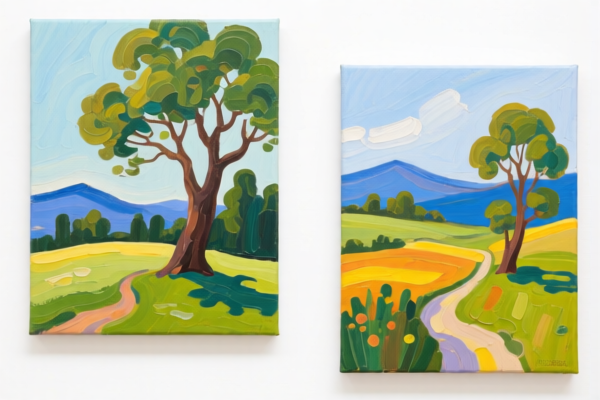
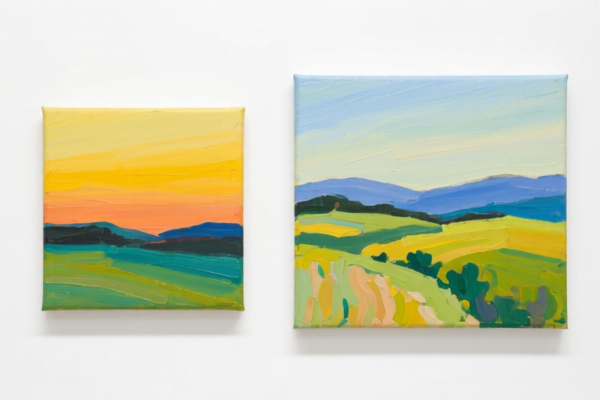
AI Analysis
🎨 Drawing Notebook (Art & Illustration Workbook)
🌐 HS Code Classification & Customs Clearance Guide | 2026 Latest Tariff Breakdown | Pro-Level Import Strategy
📌 One Product, Five Paths: Why a “Drawing Notebook” Can Be Classified in 5 Different Ways — And What It Means for Your Tariff!
📦 I. Product Definition & Classification Logic: What Is a “Drawing Notebook”?
A drawing notebook is a multi-functional item that sits at the intersection of art supplies, educational tools, children’s toys, and stationery. In international trade, its classification depends heavily on intended use, material composition, and context of sale.
✅ Key Interpretation:
- If used for artistic expression, creative drawing, or illustration, it falls under art books or art supplies.
- If used as a note-taking or study aid, it's a stationery item.
- If marketed for children’s play, coloring, or interactive learning, it may qualify as a toys & games product.
- If no value or material details are provided, default classification follows the least restrictive interpretation.⚠️ Critical Insight:
A single product can legally be classified under multiple HS codes, depending on how you declare it — and each comes with a different tax rate.
🔍 II. HS Code Classification Matrix (2026 Official Tariff Reference)
| HS Code | Product Description | Classification Rationale | Tax Rate | Key Trigger |
|---|---|---|---|---|
4901.99.00.60 |
Other printed books, not elsewhere specified — Art & illustration books | Matches "artistic picture books" in form and function; no value data → assumed compliant | 17.5% | Art use, printed, non-technical |
4820.10.40.00 |
Notebooks, ledgers, diaries, and similar items — Paper or paperboard | Material inferred as paper; fits “notebook” form and function | 10.0% | Stationery, paper-based |
9503.00.00.71 |
Toys & games — Puzzles, models, and similar educational/entertainment items | Seen as an extension of children’s learning toys; printed paper-based | 10.0% | Child-focused, interactive use |
9503.00.00.73 |
Toys & games — Drawing, coloring, and creative play items | Matches "children’s drawing and doodling" category; no material conflict | 10.0% | Educational toy, creative play |
4901.99.00.65 |
Other printed books — Art & picture books | Fully matches “art and illustration books” in purpose and format | 17.5% | Artistic intent, printed format |
📌 Note:
- No single “correct” code — it depends on how you market and declare the product.
- Tax differences matter: From 10% to 17.5%, a 7.5% gap that can impact profit margins.
💰 III. 2026 Tariff Breakdown (U.S. Import Rules – China-Origin Goods)
✅ Applicable to: United States (US)
✅ Origin: China (CN)
✅ Effective Date: November 10, 2025 (and ongoing)
✅ Legal Basis: Section 301, IEEPA, and U.S. Trade Act 2025
🎯 1. 4901.99.00.60 & 4901.99.00.65 — Art & Illustration Books (17.5% Total)
| Component | Detail |
|---|---|
| Base Duty | 0% (ad valorem) |
| Section 301 (USITC) Add-on | +7.5% (from USITC Footnote 9903.88.01) |
| IEEPA (International Emergency Economic Powers Act) | +10% (applies to China-origin goods since 2025) |
| Total Effective Tariff | 17.5% |
| Tax Calculation | CIF Value × 17.5% |
| De Minimis Threshold | ❌ Not applicable (denied) |
| Legal Pathway | IEEPA:9903.01.25 → USITC:4901.99.00.60/65 → FOOTNOTE:9903.88.01 |
📌 Why This Applies:
- The product is printed, artistic, and not technical — fits "art books" perfectly.
- Even if sold in bulk, if marketed as creative/artistic, this code applies.
🎯 2. 4820.10.40.00 — Paper Notebooks (10.0% Total)
| Component | Detail |
|---|---|
| Base Duty | 0% |
| Section 301 Add-on | 0% (not applicable to this subheading) |
| IEEPA Add-on | +10% (applies to all China-origin goods) |
| Total Effective Tariff | 10.0% |
| Tax Calculation | CIF × 10% |
| De Minimis | ❌ Not eligible |
| Legal Pathway | IEEPA:9903.01.24 → 4820.10.40.00 |
📌 Why This Applies:
- The product is paper-based, bound, and used for writing/drawing — classic "notebook" form.
- No art-specific labeling → defaults to stationery.
🎯 3. 9503.00.00.71 & 9503.00.00.73 — Children’s Toys & Educational Games (10.0% Total)
| Component | Detail |
|---|---|
| Base Duty | 0% |
| Section 301 Add-on | 0% |
| IEEPA Add-on | +10% |
| Total Effective Tariff | 10.0% |
| Tax Calculation | CIF × 10% |
| De Minimis | ❌ Not eligible |
| Legal Pathway | IEEPA:9903.01.24 → 9503.00.00.71/73 |
📌 Why This Applies:
- If marketed to children, used for coloring, or sold in educational kits, it qualifies as a toy.
- Even if made of paper, form and function (interactive, creative play) override material.
🛠️ IV. Customs Clearance Best Practices (Pro Tips to Avoid Penalties & Delays)
✅ 1. Documentation Checklist (MUST-HAVE)
| Document | Required? | Purpose |
|---|---|---|
| ✅ Commercial Invoice | ✔️ | Must clearly state intended use (e.g., "Artistic Drawing Workbook for Children") |
| ✅ Product Photos | ✔️ | Show cover, pages, binding, and any branding |
| ✅ Product Description (in English) | ✔️ | Use precise terms: "Printed drawing notebook for children’s creative play" |
| ✅ Packaging & Labeling | ✔️ | Include age range, safety warnings (if applicable) |
| ✅ Certificate of Origin (CO) | ✔️ | Required for tariff eligibility |
| ✅ Third-Party Test Report | ✔️ | If claiming "non-toxic ink" or "safe for kids" |
✅ 2. 申报策略口诀 (Golden Rules)
🔥 “Use the Right Name, Pick the Right Code, Pay the Right Tax!”
| Scenario | Correct HS Code | Wrong Code | Risk |
|---|---|---|---|
| Marketed as art book | 4901.99.00.60 or 65 |
4820.10.40.00 |
Pay 17.5%, not 10% |
| Marketed as notebook | 4820.10.40.00 |
9503.00.00.73 |
Pay 10%, not 10% (same, but wrong logic) |
| Marketed for kids’ coloring | 9503.00.00.71 or 73 |
4901.99.00.60 |
Risk of misclassification |
| No clear use stated | Default to lowest risk | Random choice | Risk of audit or penalty |
✅ 3. Special Cases & How to Handle Them
| Situation | Recommended Action |
|---|---|
| Sold in bulk to schools | Declare as 4820.10.40.00 — "educational stationery" |
| Sold as part of a toy kit | Use 9503.00.00.71 — "educational toy" |
| Artistic, premium cover, high-end design | Use 4901.99.00.65 — "art book" for higher perceived value |
| No material or value info provided | Default to least restrictive — 4820.10.40.00 or 9503.00.00.73 |
🌍 V. Global Market Tariff Comparison (2026)
| Country/Region | Recommended HS Code | Base Duty | Additional Taxes | Total Effective Rate | Notes |
|---|---|---|---|---|---|
| 🇺🇸 United States | 4901.99.00.60 / 9503.00.00.73 |
0% | +7.5% (301) +10% (IEEPA) | 17.5% / 10.0% | Choose based on use |
| 🇨🇳 China | 4901.99.00.60 |
5% | None | 5% | No IEEPA/301 |
| 🇪🇺 European Union | 4901.99.00.60 |
0% | None | 0% | CE mark required |
| 🇦🇺 Australia | 4820.10.40.00 |
5% | None | 5% | No extra tariffs |
| 🇯🇵 Japan | 4820.10.40.00 |
0% | None | 0% | No IEEPA |
📌 Insight:
- U.S. is the most expensive market due to Section 301 + IEEPA.
- China, EU, and Japan are favorable for low or zero tariffs.
🚨 VI. Common Mistakes & Real-World Pitfalls (Learn from Others’ Errors)
❌ Mistake 1: Declaring a children’s coloring book as 4901.99.00.60 (art book) but selling it in toy stores
👉 Result: Customs may reclassify it as 9503.00.00.73 → 10% tax, not 17.5% → underpaid tax, risk of penalty
❌ Mistake 2: Using generic name like “Drawing Book” without specifying use
👉 Result: Customs defaults to lowest risk code → may trigger audit
❌ Mistake 3: Not providing photos or description of use
👉 Result: Delayed clearance, request for clarification, or detention
✅ Best Practice:
Use clear, consistent language across all documents:
- "Creative Drawing Notebook for Children, 64 Pages, Non-Toxic Ink, Educational Toy"
- "Artistic Illustration Workbook – Printed Paperbound Book for Drawing & Coloring"
🎯 VII. Final Verdict: Choose Your Path — And Pay the Right Price
🎯 Your choice of HS code = your final tax bill
- Art book path: 17.5% (higher value, artistic intent)
- Notebook path: 10.0% (neutral, practical use)
- Toy path: 10.0% (if child-focused, interactive)✅ Pro Tip:
- If selling to schools or artists, use4901.99.00.65— justifies higher value.
- If selling to parents or gift shops, use9503.00.00.73— better fit for market perception.
- If unsure, default to4820.10.40.00— safest, lowest risk.
📌 VIII. Action Plan: Get It Right the First Time
📞 Step 1: Contact a licensed customs broker or HS Code pre-ruling service
📄 Step 2: Submit product photos, description, and use case
📌 Step 3: Request Advance Ruling (AR) for your specific product
💼 Step 4: Use the approved code in all future shipments✨ Bonus: If your product is originated in Vietnam, Mexico, or Thailand, you may avoid IEEPA + 301 tariffs — 0% to 5%.
📣 Final Call to Action:
🚀 Don’t gamble with your tariff!
📊 Get your HS Code pre-approved today — avoid delays, penalties, and profit loss.
✨ Your Product. Your Code. Your Profit.
💼 Precise classification = Lower cost = Faster export = More success!
Customer Reviews
About HS Code Classification
The Harmonized System (HS) is an internationally standardized nomenclature developed by the World Customs Organization (WCO) to classify traded products. Over 200 countries use the HS system as the basis for customs tariffs, trade statistics, and import/export regulations.
Each HS code follows a hierarchical structure:
- Chapter (2 digits) — Broad category of goods (e.g., Chapter 84: Machinery and Mechanical Appliances)
- Heading (4 digits) — More specific grouping within the chapter
- Subheading (6 digits) — Internationally standardized breakdown, used by all WCO member countries
- National subdivisions (8-10 digits) — Country-specific extensions for further classification, such as US HTSUS 10-digit codes
Correct HS code classification is essential for smooth customs clearance, accurate duty payment, and compliance with trade regulations. Misclassification can lead to customs delays, overpayment of duties, or penalties.
When importing from CN to US, the applicable tariff rates may include:
- Most-Favored-Nation (MFN) rate — The standard duty rate applied to WTO members
- General rate — Applied to countries without trade agreements
- Trade remedy duties — Additional tariffs such as Section 301 (anti-dumping), Section 232 (national security), or countervailing duties
The information provided on this page is for reference purposes only. For official classification, please consult with your local customs authority or a licensed customs broker.