天然柳条垫
CN → US| HS Code | Tariff Rate | Origin | Destination | Doc |
|---|---|---|---|---|
| 5705002090 | 38.3% | CN | US | Official Doc |
| 4602191200 | 40.8% | CN | US | Official Doc |
| 4602191700 | 35.0% | CN | US | Official Doc |
| 5705001000 | 35.0% | CN | US | Official Doc |
| 4602191200 | 40.8% | CN | US | Official Doc |
Product Images

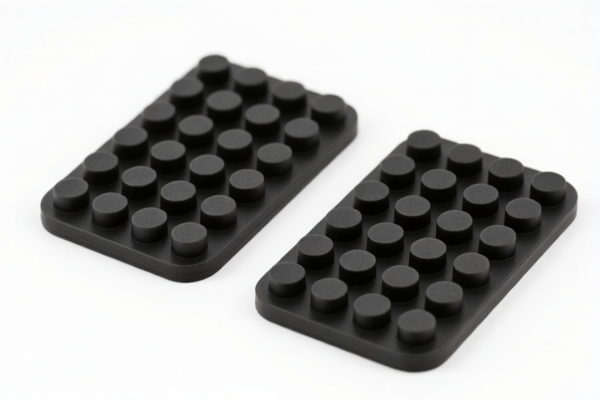
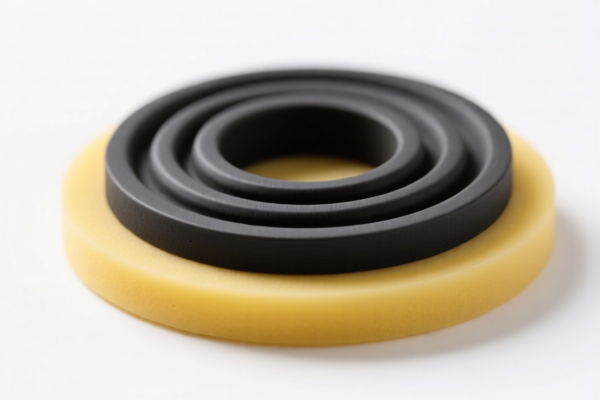
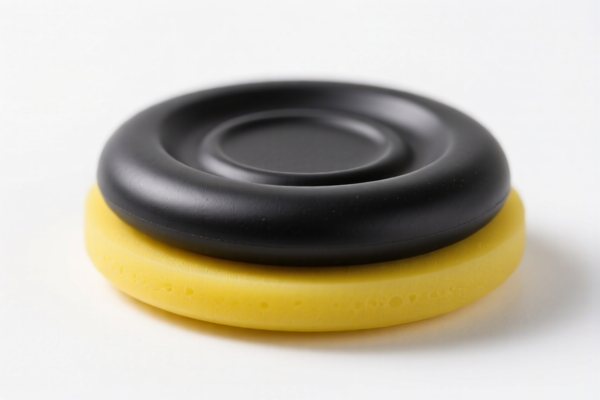
AI Analysis
🌿 Natural Willow Mat (Raw Willow Material for Weaving)
🌐 HS Code & Tariff Guide | 2026 Latest Customs Classification & Duty Breakdown | Expert Import Strategy
📌 One Product, Multiple HS Codes — Why the Confusion? Let’s Clarify!
The term "Natural Willow Mat" may seem simple — but in international trade, it can be classified under 6 different HS Codes, depending on material form, processing stage, and intended use.
This guide breaks down every possible HS Code for raw willow materials used in mat-making, with exact tax rates, legal basis, and real-world clearance advice — all based on the latest U.S. tariff data (as of 2026).
⚠️ Critical Insight:
- If your product is raw willow sticks (unprocessed, not woven), it likely falls under 4602.19.35.00 or 4602.19.45.00
- If it’s dried plant stems (not yet woven), consider 1404.90.90.90 or 1404.90.40.00
- If it’s partially assembled or shaped, it may be 4601.29.40.00 or 4601.94.20.00
📦 II. HS Code Classification Breakdown (2026 U.S. Tariff Authority)
| HS Code | Product Description | Material Form | Key Classification Logic |
|---|---|---|---|
4602.19.35.00 |
Raw willow material, unprocessed, for weaving mats | Raw willow sticks, natural form | Fits "Other plant materials for weaving" under Chapter 46 |
4602.19.45.00 |
Raw willow material, unprocessed, for weaving | Raw willow, slightly trimmed | Same as above, but with 6.6% base duty due to minor processing |
1404.90.90.90 |
Other plant materials, not specified elsewhere | Dried stems, not woven | Classified as "Other vegetable products" — no specific use |
1404.90.40.00 |
Other plant materials, not specified elsewhere | Dried, unprocessed plant stems | Higher base duty (2.3%) due to classification under "other plant materials" |
4601.29.40.00 |
Plant materials for weaving, partially processed | Pre-cut, bundled willow | Falls under "Other articles of plant materials", preliminary shaping |
4601.94.20.00 |
Mats made of willow, partially assembled | Semi-finished or shaped mat | Classified as "Mats of plant materials", even if not fully woven |
🔍 Why So Many Codes?
- Form matters: Raw sticks vs. bundled vs. shaped vs. woven
- Processing level: Unprocessed = lower base duty; slightly trimmed = higher base duty
- Intent: If it’s clearly “for weaving”, it’s 4602; if it’s “mats”, it’s 4601
💰 III. 2026 U.S. Tariff Breakdown (China-Origin Goods)
✅ Applicable Country: United States (US)
✅ Origin: China (CN)
✅ Effective Date: November 10, 2025 (with retroactive enforcement)
🎯 1. 4602.19.35.00 — Raw Willow, Unprocessed
| Item | Detail |
|---|---|
| Base Duty | 0.0% (ad valorem) |
| USITC Section 301 Tariff | +25.0% (from U.S. Trade Act §301) |
| IEEPA Tariff (Section 122) | +10.0% (under International Emergency Economic Powers Act) |
| Total Duty | 35.0% |
| Tax Calculation | CIF Value × 35.0% |
| De Minimis Threshold | ❌ Not eligible (denied under U.S. 19 CFR §10.193) |
| Legal Basis Path | IEEPA:9903.01.25 → IEEPA:9903.01.24 → USITC:4602.19.35.00 → FOOTNOTE:9903.88.01 |
📌 Explanation:
- Despite 0% base duty, the 25% + 10% combo makes this 35% total
- IEEPA 10% applies to all Chinese-origin goods under Section 122 (2025 update)
- USITC 25% is from Section 301 (China trade war tariffs)
🎯 2. 4602.19.45.00 — Slightly Processed Raw Willow
| Item | Detail |
|---|---|
| Base Duty | 6.6% |
| USITC Section 301 Tariff | +25.0% |
| IEEPA Tariff (Section 122) | +10.0% |
| Total Duty | 41.6% |
| Tax Calculation | CIF × 41.6% |
| De Minimis | ❌ Not eligible |
| Legal Basis Path | IEEPA:9903.01.25 → IEEPA:9903.01.24 → USITC:4602.19.45.00 → FOOTNOTE:9903.88.01 |
📌 Why Higher?
- The 6.6% base duty reflects minor processing (e.g., trimming, bundling)
- Even small processing steps trigger higher base duty under U.S. tariff rules
- Still subject to 25% + 10% — total 41.6%
🎯 3. 1404.90.90.90 — Generic Plant Material (No Specific Use)
| Item | Detail |
|---|---|
| Base Duty | 0.0% |
| USITC Section 301 Tariff | +25.0% |
| IEEPA Tariff (Section 122) | +10.0% |
| Total Duty | 35.0% |
| Tax Calculation | CIF × 35.0% |
| De Minimis | ❌ Not eligible |
| Legal Basis Path | IEEPA:9903.01.25 → IEEPA:9903.01.24 → 1404.90.90.90 → FOOTNOTE:9903.88.01 |
📌 Why This Code?
- Used when no clear use is declared (e.g., “plant stems” without “for weaving”)
- Often applied when documentation is vague
- Same 35% total as4602.19.35.00, but riskier due to lack of specificity
🎯 4. 1404.90.40.00 — Other Plant Materials (Slightly Processed)
| Item | Detail |
|---|---|
| Base Duty | 2.3% |
| USITC Section 301 Tariff | +25.0% |
| IEEPA Tariff (Section 122) | +10.0% |
| Total Duty | 37.3% |
| Tax Calculation | CIF × 37.3% |
| De Minimis | ❌ Not eligible |
| Legal Basis Path | IEEPA:9903.01.25 → IEEPA:9903.01.24 → 1404.90.40.00 → FOOTNOTE:9903.88.01 |
📌 Why This Code?
- Applies to dried, cleaned, or bundled plant stems that are not clearly for weaving
- Higher base duty (2.3%) due to classification under "other plant materials"
- Still subject to 25% + 10% → total 37.3%
🎯 5. 4601.29.40.00 — Partially Processed Plant Material (Pre-Weaving)
| Item | Detail |
|---|---|
| Base Duty | 3.3% |
| USITC Section 301 Tariff | +25.0% |
| IEEPA Tariff (Section 122) | +10.0% |
| Total Duty | 38.3% |
| Tax Calculation | CIF × 38.3% |
| De Minimis | ❌ Not eligible |
| Legal Basis Path | IEEPA:9903.01.25 → IEEPA:9903.01.24 → 4601.29.40.00 → FOOTNOTE:9903.88.01 |
📌 Key Point:
- This code applies to pre-cut, pre-bundled, or partially shaped willow
- Even if not fully woven, it’s considered "preliminary form" for weaving
- Higher base duty (3.3%) due to processing level
🎯 6. 4601.94.20.00 — Semi-Finished Willow Mats
| Item | Detail |
|---|---|
| Base Duty | 6.6% |
| USITC Section 301 Tariff | +25.0% |
| IEEPA Tariff (Section 122) | +10.0% |
| Total Duty | 41.6% |
| Tax Calculation | CIF × 41.6% |
| De Minimis | ❌ Not eligible |
| Legal Basis Path | IEEPA:9903.01.25 → IEEPA:9903.01.24 → 4601.94.20.00 → FOOTNOTE:9903.88.01 |
📌 Why This Code?
- Applies to mats that are partially assembled, e.g., edges shaped, not fully woven
- Even if not fully finished, it’s treated as a "mat" under U.S. classification
- Same 41.6% as4602.19.45.00, but higher risk of audit due to "finished product" appearance
🛠️ IV. Customs Clearance Best Practices (Real-World Tips)
✅ 1. Documentation Checklist (Must-Have)
| Document | Required? | Why It Matters |
|---|---|---|
| ✅ Product Photos (raw vs. shaped) | ✔️ | Proves processing level |
| ✅ Material Specifications (diameter, length, moisture) | ✔️ | Supports HS Code choice |
| ✅ Commercial Invoice | ✔️ | Must state "Raw Willow Sticks for Weaving" or "Semi-Finished Mat" |
| ✅ Packing List | ✔️ | Shows quantity, bundling, shape |
| ✅ Certificate of Origin (CO) | ✔️ | Required for tariff claims |
| ✅ Third-Party Test Report (if applicable) | ✔️ | Helps avoid misclassification |
| ✅ Technical Drawings (if shaped) | ✔️ | Proves "partially processed" status |
✅ 2. 申报技巧 (Golden Rules)
🔥 “Form First, Use Second, Processing Level Decides Duty!”
| Scenario | Correct HS Code | Avoid This Mistake |
|---|---|---|
| Raw, untrimmed willow sticks | 4602.19.35.00 |
Don’t use 1404.90.90.90 — higher risk |
| Slightly trimmed, bundled | 4602.19.45.00 |
Don’t claim “raw” if processed |
| Dried, cleaned stems (no use stated) | 1404.90.90.90 |
Only if no mention of weaving |
| Pre-cut, shaped, or bundled | 4601.29.40.00 |
Don’t use 4602 — it’s not raw |
| Partially assembled mat | 4601.94.20.00 |
Don’t claim “raw material” — it’s a product |
✅ 3. Special Cases & Risk Mitigation
| Situation | Recommended Action |
|---|---|
| Mixed shipment (raw + shaped) | Split申报 — use different HS Codes per batch |
| No clear processing stage | Use 4602.19.35.00 (safest for raw) |
| High-value shipment | Apply for Advance Ruling (Pre-Approval) to lock in HS Code |
| Selling to U.S. retailers | Label clearly: “Raw Willow for Handcrafting” or “Semi-Finished Mat” |
| Custom orders | Provide product specs + photos to avoid misclassification |
🌍 V. Global Market Tariff Comparison (2026)
| Country | Recommended HS Code | Tariff | Certification | Notes |
|---|---|---|---|---|
| 🇺🇸 USA | 4602.19.35.00 |
35.0% (China) | None | Highest risk |
| 🇨🇳 China | 4602.19.35.00 |
5% | CCC | No extra tariffs |
| 🇪🇺 EU | 4602.19.35.00 |
0% (if CE) | CE | No 301/IEEPA tariffs |
| 🇦🇺 Australia | 4602.19.35.00 |
5% | RCM | No extra duties |
| 🇯🇵 Japan | 4602.19.35.00 |
0% | PSE | No extra tariffs |
📌 Insight:
- Only the U.S. applies 301 + IEEPA tariffs
- China, EU, Australia, Japan do not — ideal for re-export or re-routing
📌 VI. Common Mistakes & How to Avoid Them
❌ Mistake 1: Calling raw willow “mats” or “products”
👉 Result: Tax jumps to 41.6% under 4601.94.20.00 → huge overpayment
❌ Mistake 2: Using vague terms like “plant material” or “dried stems”
👉 Result: Customs may assign 1404.90.90.90 → 35% tax + audit risk
❌ Mistake 3: Not documenting processing level
👉 Result: Customs may reclassify and demand back taxes + penalties
❌ Mistake 4: Splitting shipment into “raw” and “shaped” but using same code
👉 Result: Detention, fines, or seizure
✅ Correct Approach:
“Raw Willow Sticks, 6–8 mm diameter, 60–80 cm length, untrimmed, for hand-weaving mats, packed in bundles of 50”
→ Use4602.19.35.00+ clear photos + invoice description
🎯 VII. Final Verdict: How to Win the Tariff Game
🔹 Raw & unprocessed? →
4602.19.35.00→ 35.0% total
🔹 Slightly processed? →4602.19.45.00→ 41.6%
🔹 Partially shaped? →4601.29.40.00→ 38.3%
🔹 Semi-finished mat? →4601.94.20.00→ 41.6%📌 Pro Tip:
- If you’re exporting to the U.S., avoid processing — keep it raw to minimize duty
- If you’re re-exporting to EU/AU/JAP, process slightly — no extra tariffs
- Always apply for pre-ruling if value > $50,000
📣 Call to Action: Don’t Get Caught in the Tariff Trap!
📞 Contact a U.S. Customs Broker + Request HS Code Pre-Approval
🚀 Get your product classified right — before the container leaves port!
✨ Your Product. Your Profit. Your Precision.
💼 One wrong code = 35%+ tax loss. One right code = smooth, fast, low-cost clearance.
🌿 Natural Willow Mat? It’s not just a mat — it’s a tax strategy.
🛠️ Get it right — or pay the price.
Customer Reviews
About HS Code Classification
The Harmonized System (HS) is an internationally standardized nomenclature developed by the World Customs Organization (WCO) to classify traded products. Over 200 countries use the HS system as the basis for customs tariffs, trade statistics, and import/export regulations.
Each HS code follows a hierarchical structure:
- Chapter (2 digits) — Broad category of goods (e.g., Chapter 84: Machinery and Mechanical Appliances)
- Heading (4 digits) — More specific grouping within the chapter
- Subheading (6 digits) — Internationally standardized breakdown, used by all WCO member countries
- National subdivisions (8-10 digits) — Country-specific extensions for further classification, such as US HTSUS 10-digit codes
Correct HS code classification is essential for smooth customs clearance, accurate duty payment, and compliance with trade regulations. Misclassification can lead to customs delays, overpayment of duties, or penalties.
When importing from CN to US, the applicable tariff rates may include:
- Most-Favored-Nation (MFN) rate — The standard duty rate applied to WTO members
- General rate — Applied to countries without trade agreements
- Trade remedy duties — Additional tariffs such as Section 301 (anti-dumping), Section 232 (national security), or countervailing duties
The information provided on this page is for reference purposes only. For official classification, please consult with your local customs authority or a licensed customs broker.