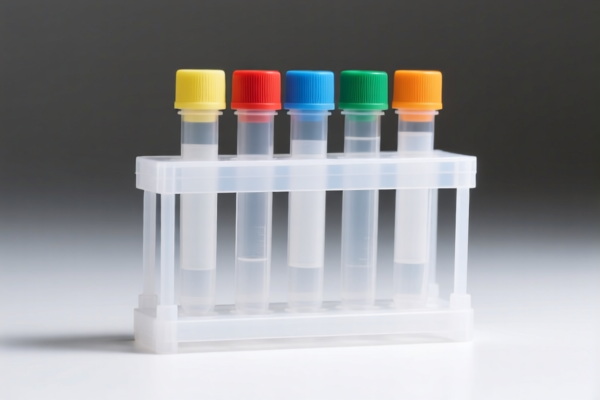
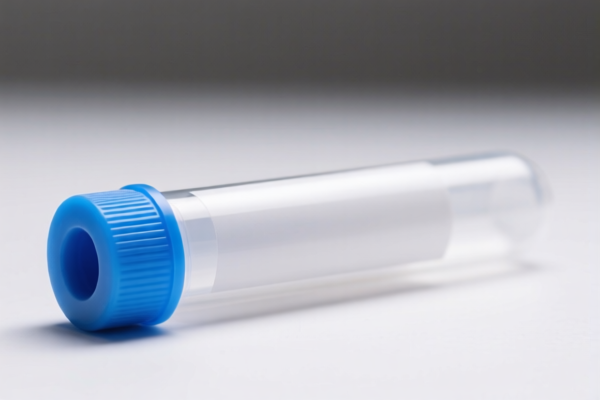
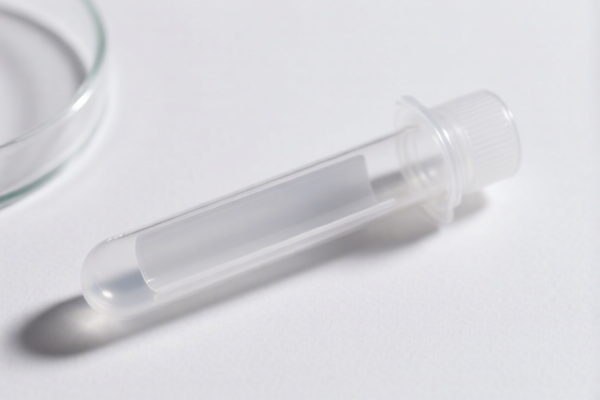
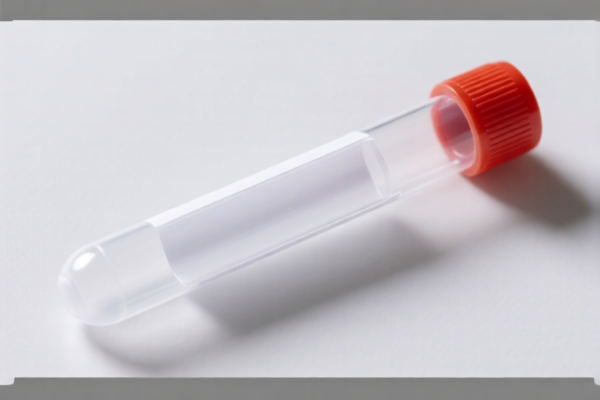
实验室塑料稀释管
CN → US| HS Code | Tariff Rate | Origin | Destination | Doc |
|---|---|---|---|---|
| 3926909910 | 22.8% | CN | US | Official Doc |
| 9017800000 | 40.3% | CN | US | Official Doc |
| 9017900160 | 0.0% | CN | US | Official Doc |
Product Images
AI Analysis
🧪 Laboratory Plastic Dilution Tubes
🌐 HS Code Classification & Customs Clearance Guide | 2026 Updated Tariff Analysis | Expert-Level Import Strategy
📌 One Product, Three Possible HS Codes — Know Which One Applies to Your Shipment!
📦 一、Product Definition & Classification: What Exactly Is a “Laboratory Plastic Dilution Tube”?
A laboratory plastic dilution tube is a precision plastic vessel used in scientific labs for measuring, mixing, and diluting liquid samples — commonly in microbiology, chemistry, and clinical diagnostics. It is typically:
- Made of plastic (e.g., polypropylene, polystyrene)
- Cylindrical or conical in shape
- Marked with volume graduations
- Designed for single-use or limited reuse
- Used in calibration, sample preparation, and quantitative analysis
⚠️ Key Distinction:
- If it's only a measuring vessel with no integrated electronic or mechanical components → It’s not a measuring instrument, but a tool or accessory
- If it's used in calibration processes and designed to maintain precise volume standards → It may qualify as a calibration tool, even if made of plastic
🔍 二、HS Code Classification Breakdown (2026 Updated Tariff Authority)
| HS Code | Product Description | Applicable Use Case | Material Match | Legal Basis |
|---|---|---|---|---|
9017.80.00.00 |
Other instruments and apparatus for measuring or checking physical quantities, not elsewhere specified | Used as a laboratory calibration tool; plastic, non-electronic, for precise volume measurement | ✅ Yes (plastic) | Instrument category |
3926.90.99.10 |
Other articles of plastics, not elsewhere specified | Generic plastic labware; no functional role beyond containment | ✅ Yes (plastic) | Plastic product |
9017.90.01.60 |
Parts and accessories for instruments or apparatus of heading 9017 | Component of a larger measurement system; e.g., part of a pipette system or automated analyzer | ✅ Yes (plastic) | Accessory to an instrument |
🔍 Critical Insight:
The correct HS code depends not just on material, but on intended function and integration: - If it’s used standalone for calibration →9017.80.00.00
- If it’s generic labware with no precision function →3926.90.99.10
- If it’s designed as a part of a calibrated system (e.g., fits into a robotic liquid handler) →9017.90.01.60
💰 三、2026 Tariff Rate Analysis (With Full Legal & Policy Breakdown)
✅ Applicable Country: United States (US)
✅ Origin: China (CN)
✅ Effective Date: November 10, 2025 (including future imports)
🎯 1. 9017.80.00.00 — Instruments for Measuring/Checking Physical Quantities (Other)
| Item | Detail |
|---|---|
| Base Duty Rate | 5.3% (ad valorem) |
| Section 301 (USITC) Additional Tariff | +25.0% |
| Section 122 (IEEPA) Additional Tariff | +10.0% |
| Total Effective Duty | 40.3% |
| Tax Calculation | CIF Value × 40.3% |
| De Minimis Threshold | ❌ Not applicable (denied under US law) |
| Legal Basis Pathway | IEEPA:9903.01.25 → USITC:9017.80.00.00 → FOOTNOTE:9903.88.01 |
📌 Explanation:
- This code applies when the tube is used as a measurement or calibration tool, even if plastic.
- The 25% USITC tariff comes from Section 301 of the Trade Act of 1974 — targeting Chinese goods deemed to have unfair trade practices.
- The 10% IEEPA tariff is from the International Emergency Economic Powers Act, used to impose sanctions on Chinese-origin goods under national security concerns.
- Total: 40.3% — one of the highest tariffs in the labware category.
🎯 2. 3926.90.99.10 — Other Articles of Plastics (Not Elsewhere Specified)
| Item | Detail |
|---|---|
| Base Duty Rate | 5.3% |
| Section 301 (USITC) Additional Tariff | +7.5% |
| Section 122 (IEEPA) Additional Tariff | +10.0% |
| Total Effective Duty | 22.8% |
| Tax Calculation | CIF Value × 22.8% |
| De Minimis Threshold | ❌ Not applicable |
| Legal Basis Pathway | IEEPA:9903.01.24 → USITC:3926.90.99.10 → FOOTNOTE:9903.88.01 |
📌 Explanation:
- This code applies when the tube is not used as a measurement instrument, but simply as a plastic container.
- Lower USITC tariff (7.5%) because it's not classified as a precision instrument.
- Still subject to IEEPA 10% due to Chinese origin.
- Total: 22.8% — significantly lower than the instrument classification.
🎯 3. 9017.90.01.60 — Accessories for Instruments of Heading 9017
| Item | Detail |
|---|---|
| Base Duty Rate | "The rate applicable to the article of which it is a part or accessory" (i.e., same as the main instrument) |
| Section 301 (USITC) Additional Tariff | +25.0% |
| Section 122 (IEEPA) Additional Tariff | +10.0% |
| Total Effective Duty | "Rate applicable to the article of which it is a part or accessory" + 35.0% |
| Tax Calculation | Depends on the main instrument’s duty rate (e.g., if the main device is 25%, total = 60%) |
| De Minimis Threshold | ❌ Not applicable |
| Legal Basis Pathway | IEEPA:9903.01.25 → USITC:9017.90.01.60 → FOOTNOTE:9903.88.01 |
📌 Critical Warning:
- This code is not a standalone rate — it inherits the duty rate of the primary instrument it belongs to.
- If the dilution tube is used as a part of a larger automated lab system (e.g., a pipetting robot), the entire system’s tariff applies.
- Example: If the robot has a 25% tariff, then the tube’s effective rate becomes 60% (25% + 25% + 10%).
- This is the riskiest option — do not use unless the tube is truly an integral part of a calibrated system.
🛠️ 四、Customs Clearance Best Practices (Pro Tips to Avoid Penalties)
✅ 1. Essential Documentation Checklist (Must-Have)
| Document | Required? | Purpose |
|---|---|---|
| ✅ Product Specification Sheet | ✔️ | Show dimensions, volume accuracy, material (PP/PS), calibration tolerance |
| ✅ Lab Use Case / Application Note | ✔️ | Prove it’s used for calibration, not just storage |
| ✅ Product Photos (Clear, with markings) | ✔️ | Show graduations, brand, model, packaging |
| ✅ Third-Party Test Report | ✔️ | ISO 17025, FDA compliance, or GLP certification (if applicable) |
| ✅ Commercial Invoice | ✔️ | Clearly state: “Laboratory Plastic Dilution Tube, for Calibration Use” |
| ✅ Certificate of Origin (CO) | ✔️ | If from Vietnam, Mexico, or Thailand, can avoid 301/IEEPA tariffs |
| ✅ Packing List | ✔️ | Show quantity, unit price, and whether sold as individual items or kits |
✅ 2.申报技巧(Key Rules to Remember)
🔥 “Function over Form — If it measures, it’s an instrument!”
| Scenario | Correct HS Code | Common Mistake |
|---|---|---|
| Tube used in calibration of pipettes | 9017.80.00.00 |
Misclassified as 3926.90.99.10 → Higher tax paid |
| Tube is generic, no calibration use | 3926.90.99.10 |
Misclassified as 9017.80.00.00 → Higher tax, risk of audit |
| Tube is part of a robotic liquid handler | 9017.90.01.60 |
Misclassified as standalone → Underpaid duties, future penalties |
| Tube is sold with a calibration certificate | 9017.80.00.00 |
Not declared as such → Audit risk |
✅ 3. Special Cases & Solutions
| Situation | Recommended Action |
|---|---|
| Selling in bulk, no calibration claim | Use 3926.90.99.10 → 22.8% tariff |
| Selling with calibration validation report | Use 9017.80.00.00 → 40.3% tariff, but legally correct |
| Integrated into a lab automation system | Use 9017.90.01.60 — but only if system is declared as a whole |
| Origin from Vietnam/Mexico/Thailand | Apply for CO — may qualify for 0% tariff under USMCA/ASEAN |
| Low-value shipment (<$800) | ❌ No de minimis relief — still subject to full tariff |
🌍 五、Global Market Tariff Comparison (2026)
| Country/Region | Recommended HS Code | Base Duty | Additional Taxes | Notes |
|---|---|---|---|---|
| 🇺🇸 USA | 9017.80.00.00 |
5.3% | +25% +10% = 40.3% | High-risk; no de minimis |
| 🇨🇳 China | 3926.90.99.10 |
5% | 0% | No extra tariffs |
| 🇪🇺 EU | 3926.90.99.10 |
0% | 0% | No additional tariffs |
| 🇦🇺 Australia | 3926.90.99.10 |
5% | 0% | No extra taxes |
| 🇯🇵 Japan | 3926.90.99.10 |
0% | 0% | No extra tariffs |
📌 Conclusion:
- The USA is the only market with high附加 tariffs on labware from China.
- Vietnam/Mexico origin can avoid 301/IEEPA tariffs — consider shifting production.
🚨 六、Common Mistakes & Risk Warnings (Real-World Pitfalls)
❌ Mistake 1: Classifying a calibration tube as generic plasticware
👉 Result: Underpaid duties → Future audits, penalties, interest, and seizure risk
❌ Mistake 2: Using 9017.90.01.60 for a standalone tube
👉 Result: Inherited tariff from main instrument → Could hit 60%+ — catastrophic
❌ Mistake 3: Not including calibration use in invoice description
👉 Result: Customs may reclassify as 3926.90.99.10 → Higher risk of dispute
❌ Mistake 4: Assuming “plastic” = “low tariff”
👉 Result: Ignoring function-based classification → Wrong code, wrong tax
✅ Correct Approach:
“Plastic Dilution Tube, 10 mL, Graduated, Polypropylene, for Laboratory Calibration, Used with Pipette Calibration System, Model XYZ, ISO 17025 Certified”
🎯 七、Final Verdict: Choose Wisely — Your Tax Bill Depends on It!
🎯 Remember the Golden Rule:
🔹 "If it measures, it’s an instrument. If it contains, it’s plastic. If it’s part of a system, it inherits the system’s tariff."
🎯 Pro Tip:
✅ Apply for an Advance Ruling (Pre-Clearance) from U.S. Customs before shipment — get a binding HS code decision
✅ Use Vietnam/Mexico origin if possible — avoid 301/IEEPA tariffs entirely
✅ Document calibration use — protect your classification
📌 Call to Action:
📞 Contact a U.S.-licensed customs broker + submit product specs + request HS Code pre-ruling
🚀 Avoid surprise tariffs, delays, and penalties — secure your import success today!
✨ Precision in Classification = Profit in Profitability!
💼 Your labware may be plastic — but your duty rate should be smart.
Customer Reviews
About HS Code Classification
The Harmonized System (HS) is an internationally standardized nomenclature developed by the World Customs Organization (WCO) to classify traded products. Over 200 countries use the HS system as the basis for customs tariffs, trade statistics, and import/export regulations.
Each HS code follows a hierarchical structure:
- Chapter (2 digits) — Broad category of goods (e.g., Chapter 84: Machinery and Mechanical Appliances)
- Heading (4 digits) — More specific grouping within the chapter
- Subheading (6 digits) — Internationally standardized breakdown, used by all WCO member countries
- National subdivisions (8-10 digits) — Country-specific extensions for further classification, such as US HTSUS 10-digit codes
Correct HS code classification is essential for smooth customs clearance, accurate duty payment, and compliance with trade regulations. Misclassification can lead to customs delays, overpayment of duties, or penalties.
When importing from CN to US, the applicable tariff rates may include:
- Most-Favored-Nation (MFN) rate — The standard duty rate applied to WTO members
- General rate — Applied to countries without trade agreements
- Trade remedy duties — Additional tariffs such as Section 301 (anti-dumping), Section 232 (national security), or countervailing duties
The information provided on this page is for reference purposes only. For official classification, please consult with your local customs authority or a licensed customs broker.