实验用橡胶手套
CN → US| HS Code | Tariff Rate | Origin | Destination | Doc |
|---|---|---|---|---|
| 4014905000 | 14.2% | CN | US | Official Doc |
| 4014901000 | 10.0% | CN | US | Official Doc |
| 3926909910 | 22.8% | CN | US | Official Doc |
| 3926201020 | 10.0% | CN | US | Official Doc |
| 6116106500 | 24.5% | CN | US | Official Doc |
| 6116109500 | 24.5% | CN | US | Official Doc |
Product Images
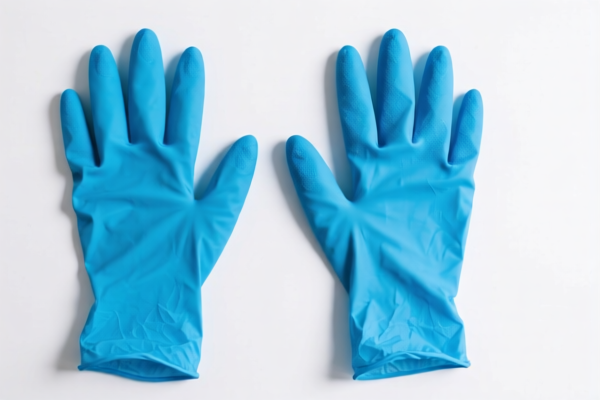



AI Analysis
🧤 Experimental Rubber Gloves (Lab Gloves)
🌐 HS Code Reference & Customs Clearance Guide | 2026 Latest Tariff Analysis | Professional-Level通关 Strategy
📌 1. Product Definition & Classification: Do You Really Understand "Rubber Gloves"?
Experimental rubber gloves, often referred to as "lab gloves" or "medical gloves," are protective gear used in scientific laboratories, hospitals, and healthcare settings to prevent contamination and protect the user's hands. In international trade, they are primarily classified under Chapter 40 (Rubber and articles thereof) or Chapter 61 (Articles of apparel and clothing accessories, knitted or crocheted) depending on the material, processing method, and specific usage.
Key Distinction: * Chemical Rubber/Sulfur-Vulcanized Rubber: Usually classified under Chapter 40 (e.g., 4014, 4015). These are durable, chemical-resistant, and often thicker. * Textile-Backed/Knitted Rubber Gloves: If the glove has a knitted or crocheted fabric backing with rubber coating, it may fall under Chapter 61 (e.g., 6116). * Medical vs. General Purpose: The specific summary in the data points to "Health/Medical" or "General" use, which impacts the sub-heading.
⚠️ Critical Differentiator:
- Material Structure: Is it 100% solid rubber/sulfurized rubber? → Chapter 40.
- Construction: Is it a knitted glove dipped in rubber? → Chapter 61.
- Usage: Is it explicitly for "Hygiene/Medical" purposes? This triggers specific sub-codes within the above chapters.
📦 2. HS Code Classification Details (2026 Latest Tariff Authority Comparison)
Based on the provided data, here are the five specific HS Codes applicable to experimental rubber gloves, ranging from low-tax medical grades to high-tax general agricultural/generic grades.
| HS Code | Product Description | Usage Scenario | Tax Detail Breakdown |
|---|---|---|---|
4014.90.50.00 |
Experimental rubber gloves, sulfurized rubber material, for health/medical purposes | Lab safety, chemical handling | Base: 4.2% + Section 122: 10% = 14.2% |
4014.90.10.00 |
Experimental rubber gloves, rubber material, for health/medical supplies | Medical procedures, hygiene | Base: 0.0% + Section 122: 10% = 10.0% |
6116.10.95.00 |
Experimental rubber gloves, rubber material, form: glove (General Category) | General lab use, non-medical specific | Base: 7.0% + Section 122: 7.5% + 10% = 24.5% |
6116.10.65.00 |
Experimental rubber gloves, rubber material, form: glove (Catch-all Logic) | General rubber gloves, no specific medical claim | Base: 7.0% + Section 122: 7.5% + 10% = 24.5% |
4015.19.51.00 |
Agricultural rubber gloves, sulfurized rubber, form: glove | Farming, heavy-duty chemical handling | Base: 14.0% + Section 122: 25.0% + 10% = 49.0% |
🔍 Key Insight:
- Lowest Tax (10%):4014.90.10.00(Medical/Health specific, 0% base).
- Highest Tax (49%):4015.19.51.00(Agricultural, high base + high Section 122).
- The "Trap": Misclassifying a standard lab glove as "Agricultural" (4015) or "General Knitted" (6116) can double or quadruple your customs duty.
💰 3. 2026 Latest Tariff Rate Detailed Explanation (Including Surcharges & Policy Add-ons)
✅ Applicable Country: United States (US)
✅ Origin: China (CN)
✅ Effective Date: From 2025/2026 (Section 122 Tariffs apply)
🎯 1. 4014.90.10.00 – Medical/Health Rubber Gloves (Lowest Rate)
| Item | Detail |
|---|---|
| Base Tariff | 0% (ad valorem) |
| Section 122 Tariff | +10% (Specific to this subheading under new rules) |
| Total Tariff | 10.0% |
| Tax Calculation | CIF Value × 10% |
| De Minimis Exemption | ❌ Not Applicable (Section 122 typically overrides de minimis for certain goods, or requires formal entry) |
| Legal Basis | HTSUS 4014.90.10.00 + Section 122 Add-on |
📌 Explanation:
- This is the most advantageous classification if the gloves are explicitly for medical/hygiene use. - The 0% base rate significantly reduces cost compared to other rubber goods. - Crucial: You must prove the "medical/hygiene" purpose in documentation (e.g., FDA registration, ISO 13485, marketing materials stating "Medical Use").
🎯 2. 4014.90.50.00 – Sulfurized Medical Rubber Gloves
| Item | Detail |
|---|---|
| Base Tariff | 4.2% |
| Section 122 Tariff | +10% |
| Total Tariff | 14.2% |
| Tax Calculation | CIF Value × 14.2% |
| De Minimis Exemption | ❌ Not Applicable |
| Legal Basis | HTSUS 4014.90.50.00 + Section 122 Add-on |
📌 Explanation:
- Slightly higher due to the 4.2% base tariff for sulfurized rubber products. - Still very competitive compared to general gloves.
🎯 3. 6116.10.95.00 / 6116.10.65.00 – General/Knitted Rubber Gloves
| Item | Detail |
|---|---|
| Base Tariff | 7.0% |
| Section 122 Tariff | +7.5% |
| Total Tariff | 24.5% |
| Tax Calculation | CIF Value × 24.5% |
| De Minimis Exemption | ❌ Not Applicable |
| Legal Basis | HTSUS 6116.10.xx.xx + Section 122 Add-on |
📌 Explanation:
- If the gloves are knitted/crocheted with a rubber coating, or if you cannot prove "medical" use, they fall here. - 24.5% is significantly higher than the 10-14% medical range. - "Catch-all" logic (65.00) means if it doesn't fit a specific medical description, it defaults to this higher bracket.
🎯 4. 4015.19.51.00 – Agricultural Rubber Gloves (Highest Rate)
| Item | Detail |
|---|---|
| Base Tariff | 14.0% |
| Section 122 Tariff | +25.0% |
| Total Tariff | 49.0% |
| Tax Calculation | CIF Value × 49.0% |
| De Minimis Exemption | ❌ Not Applicable |
| Legal Basis | HTSUS 4015.19.51.00 + Section 122 Add-on |
📌 Explanation:
- DO NOT USE for lab gloves unless they are explicitly marketed as agricultural (e.g., heavy-duty gardening gloves). - This is a punitive rate designed to protect domestic agricultural supply chains. - Misclassifying a lab glove here is risky (overpaying), but misclassifying an agricultural glove as medical is illegal fraud.
🛠️ 4. Customs Clearance Practical Advice (Real-World Pitfall Avoidance)
✅ 1. Documentation Checklist (Must-Haves)
| Document | Required? | Purpose |
|---|---|---|
| ✅ Product Specification Sheet | ✔️ | Must explicitly state: "Material: Sulfurized Rubber," "Usage: Laboratory/Medical," "Compliance: ASTM D6319 / ISO 374." |
| ✅ Certificate of Origin (CO) | ✔️ | To verify Chinese origin and apply Section 122 rates. |
| ✅ Medical Device Registration (if applicable) | ✔️ | If claiming 4014.90.10.00 (0% base), provide FDA 510(k) or equivalent to prove "Medical Use." |
| ✅ Commercial Invoice | ✔️ | Description must match HS Code: "Rubber Gloves, Sulfurized, for Medical/Lab Use." Avoid vague terms like "Rubber Products." |
| ✅ Packing List | ✔️ | Include weight, dimensions, and number of pairs. |
✅ 2. Declaration Tips (Key Mnemonic)
🔥 "Medical Proof for 0%, General for 7%, Agri is 49%!"
| Scenario | Correct HS Code | Risk if Wrong |
|---|---|---|
| Lab Gloves (Medical/Chemical Resistant) | 4014.90.10.00 or 4014.90.50.00 |
Low tax (10-14%) |
| General Utility Gloves | 6116.10.95.00 |
Medium tax (24.5%) |
| Agricultural/Gardening Gloves | 4015.19.51.00 |
High tax (49%) |
| Knitted Gloves with Rubber Palm | 6116.10.xx.xx |
Medium tax (24.5%) |
📌 Warning:
- Do not declare "Experimental Gloves" without specifying material or usage. Customs will guess, and guessing leads to higher taxes or delays. - If the gloves are powder-free and latex/nitrile, specify this in the description to align with medical classifications.
✅ 3. Special Cases
| Case | Handling Advice |
|---|---|
| OEM Private Label | Ensure the label does not say "Agricultural" if it's a lab glove. Use "Laboratory" or "Medical." |
| Mixed Container | If importing both lab and agri gloves, separate them in the invoice and packing list. Do not mix HS Codes in one line item. |
| Samples | Even for samples, declare accurately. Misclassification can lead to audits of future shipments. |
🌍 5. Global Market Comparison (2026 Latest)
| Country/Region | Recommended HS Code | Tariff (China Origin) | Certification Required | Notes |
|---|---|---|---|---|
| 🇺🇸 USA | 4014.90.10.00 |
10% | FDA (if medical), ASTM D6319 | Section 122 applies. Avoid 4015 for lab gloves. |
| 🇨🇳 China | 4014.90.10.00 |
9.5% | CFDA/NMPA | No Section 122. Lower base rate. |
| 🇪🇺 EU | 4014.10.00 |
0% (Most cases) | CE Mark, EN 374 | PPE Regulation applies. |
| 🇬🇧 UK | 4014.10.00 |
0% | UKCA Mark | Post-Brexit rules align with EU PPE. |
| 🇯🇵 Japan | 4014.10.00 |
7.5% | PSE (if electrical) | Standard chemical resistance tests required. |
📌 Conclusion:
- USA is the most complex market due to Section 122 tariffs. Accurate classification is critical to save 14-39% in duties. - EU/UK are more forgiving with 0% rates for many rubber gloves, but PPE certification is strict.
📌 6. Common Mistakes & Pitfall Guide (Lessons Learned)
❌ Mistake 1: Calling all rubber gloves "Medical" to get 0% base rate.
👉 Consequence: If audited and no medical proof is found, you owe back taxes + penalties.
✅ Fix: Only use 4014.90.10.00 if you have medical compliance documents.
❌ Mistake 2: Using 4015.19.51.00 for lab gloves.
👉 Consequence: You pay 49% instead of 10%. Overpayment by 39%!
✅ Fix: Ensure the product description says "Laboratory" or "Industrial," not "Agricultural."
❌ Mistake 3: Ignoring Section 122 Tariffs.
👉 Consequence: Budgeting fails. You think duty is 4.2%, but it's 14.2%.
✅ Fix: Always add 10% (or relevant Section 122 rate) to your cost model for US imports from China.
❌ Mistake 4: Vague Description: "Rubber Gloves."
👉 Consequence: Customs delays for classification review.
✅ Fix: Use precise terms: "Sulfurized Rubber Gloves, Sterile, for Medical Use, ASTM D6319 Compliant."
🎯 7. Conclusion: Professional Declaration, Cost Savings, Efficient Clearance!
🎯 Remember the Mnemonic:
🔹 "Medical Proof for 10%, General for 24.5%, Agri is 49%!"
🔹 "HS Code saves money, Declaration saves time, Accuracy saves profit!"
📌 Pro Tip:
If your gloves are Nitrile or Latex and intended for Hospitals, ensure you have ISO 13485 certification. This makes claiming 4014.90.10.00 (10% total) straightforward.
For Industrial/Lab use where medical certification is absent, consider 4014.90.50.00 (14.2%) as a safe middle ground, rather than risking the 49% agricultural rate.
📣 Immediate Action:
📞 Consult with a licensed customs broker.
📄 Prepare Material Safety Data Sheets (MSDS) and Product Compliance Certificates.
🚀 Get an Advance Ruling (Ruling Letter) from US Customs (CBP) if importing high volumes. This locks in your HS Code and prevents future disputes.
✨ Professional Customs Clearance Starts with Precise Classification!
💼 Every Dollar Saved in Tariffs is Pure Profit!
Customer Reviews
About HS Code Classification
The Harmonized System (HS) is an internationally standardized nomenclature developed by the World Customs Organization (WCO) to classify traded products. Over 200 countries use the HS system as the basis for customs tariffs, trade statistics, and import/export regulations.
Each HS code follows a hierarchical structure:
- Chapter (2 digits) — Broad category of goods (e.g., Chapter 84: Machinery and Mechanical Appliances)
- Heading (4 digits) — More specific grouping within the chapter
- Subheading (6 digits) — Internationally standardized breakdown, used by all WCO member countries
- National subdivisions (8-10 digits) — Country-specific extensions for further classification, such as US HTSUS 10-digit codes
Correct HS code classification is essential for smooth customs clearance, accurate duty payment, and compliance with trade regulations. Misclassification can lead to customs delays, overpayment of duties, or penalties.
When importing from CN to US, the applicable tariff rates may include:
- Most-Favored-Nation (MFN) rate — The standard duty rate applied to WTO members
- General rate — Applied to countries without trade agreements
- Trade remedy duties — Additional tariffs such as Section 301 (anti-dumping), Section 232 (national security), or countervailing duties
The information provided on this page is for reference purposes only. For official classification, please consult with your local customs authority or a licensed customs broker.