导管固定胶带
CN → US| HS Code | Tariff Rate | Origin | Destination | Doc |
|---|---|---|---|---|
| 5603120070 | 35.0% | CN | US | Official Doc |
| 3919102055 | 40.8% | CN | US | Official Doc |
| 5603110070 | 35.0% | CN | US | Official Doc |
| 3005101000 | 10.0% | CN | US | Official Doc |
| 3005105000 | 10.0% | CN | US | Official Doc |
Product Images
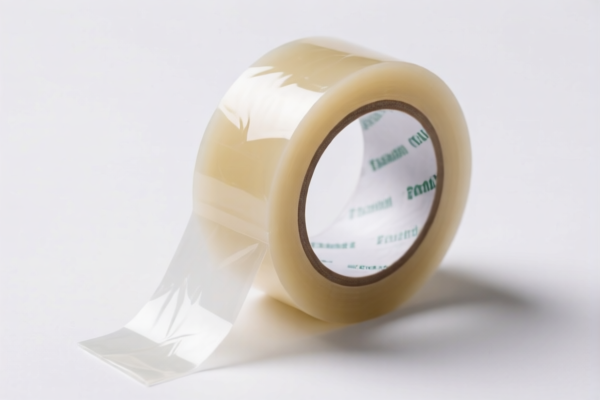


AI Analysis
🩹 Medical Tube Fixation Tape (导管固定胶带)
🌐 HS Code Reference & Customs Clearance Guide | 2026 Updated Tariff Analysis | Pro-Level Import Strategy
📌 One, Product Definition & Classification: What Exactly Is "Tube Fixation Tape"?
Tube fixation tape is a medical-grade adhesive bandage specifically designed to secure intravenous (IV) lines, catheters, feeding tubes, and other medical tubing to a patient’s skin. It prevents accidental dislodgement, reduces patient discomfort, and supports safe, continuous treatment in hospitals, clinics, and home care settings.
In international trade, this product falls into two major classification categories, depending on its material composition and functional design:
- Adhesive medical dressing with a bonding layer → Classified under pharmaceutical/medical categories
- Plastic or non-woven fabric-based self-adhesive tape → Classified under textile or plastic categories
⚠️ Critical Distinction:
- If the tape is coated with a medical adhesive, used for patient fixation, and meets medical device standards → 3005.10.50.00 / 3005.10.10.00
- If it's a plain plastic or non-woven tape without medical-specific adhesive or intended use → 3919.90.50.60 / 5603.11.00.70 / 3919.10.20.55
📦 Two, HS Code Classification Details (2026 Updated Tariff Authority)
| HS Code | Product Description | Use Case | Material/Structure | Key Feature |
|---|---|---|---|---|
3005.10.50.00 |
Medical adhesive tapes with bonding layer, used for securing tubes, catheters, or wounds | Hospital, clinic, home care | Coated with medical-grade adhesive (e.g., silicone or acrylic) | Medically intended, non-woven or fabric base |
3005.10.10.00 |
Adhesive medical dressings with bonding layer, used in surgery or wound care | Surgical, post-op, ICU | Similar to above, but more general medical use | No material conflict, fits "bonding layer" definition |
3919.90.50.60 |
Plastic self-adhesive tapes (non-woven or film), flat shape, no specific medical use stated | Industrial, packaging, general use | Plastic film or resin-based, self-adhesive | Assumed plastic, no medical claim |
5603.11.00.70 |
Non-woven fabric tapes, not knitted or felted, not coated with rubber | Industrial, packaging, hygiene | Non-woven polypropylene or polyester | Non-woven structure, no adhesive layer specified |
3919.10.20.55 |
Plastic self-adhesive tapes, specifically polyethylene or PVC-based | Medical, industrial, lab use | Plastic film with adhesive layer | Plastic-based, commonly used in medical settings |
🔍 Key Insight:
- The same physical product can be classified under multiple HS codes depending on documentation, labeling, and declared purpose. - Medical intent is the deciding factor: if it's marketed as "for medical use" or "for catheter fixation", it must be declared under 3005.10.50.00 or 3005.10.10.00.
💰 Three, 2026 Updated Tariff Breakdown (With Full Duty & Clause Details)
✅ Applicable Country: United States (US)
✅ Origin: China (CN)
✅ Effective Date: November 10, 2025 (including subsequent imports)
🎯 1. 3005.10.50.00 — Medical Adhesive Tape (Catheter Fixation)
| Item | Detail |
|---|---|
| Base Tariff | 0.0% (ad valorem) |
| USITC Section 301 Additional Duty | +0.0% (not listed under 301) |
| IEEPA Section 102(a) Additional Duty | +10.0% (from IEEPA: 9903.01.24) |
| Total Effective Rate | 10.0% |
| Tax Calculation | CIF Value × 10.0% |
| De Minimis Threshold | ✅ Yes (10% de minimis applies) |
| Legal Basis Path | IEEPA:9903.01.24 → 3005.10.50.00 → FOOTNOTE:9903.88.01 |
📌 Explanation:
- No 301 (USITC) tariff applies because this code is not on the Section 301 list. - Only IEEPA 10% is applied — a targeted tariff on Chinese-origin medical products. - De minimis applies, meaning if the value is under $800, no duty is paid.
🎯 2. 3005.10.10.00 — Medical Adhesive Dressing (General Use)
| Item | Detail |
|---|---|
| Base Tariff | 0.0% |
| USITC Section 301 Additional Duty | +0.0% |
| IEEPA Section 102(a) Additional Duty | +10.0% |
| Total Effective Rate | 10.0% |
| Tax Calculation | CIF × 10.0% |
| De Minimis Threshold | ✅ Yes |
| Legal Basis Path | IEEPA:9903.01.24 → 3005.10.10.00 → FOOTNOTE:9903.88.01 |
📌 Note:
- Identical to above — same duty treatment. - Even if the tape is used for surgical wound fixation, it still qualifies for 10% total duty.
🎯 3. 3919.90.50.60 — Plastic Self-Adhesive Tape (Flat Shape)
| Item | Detail |
|---|---|
| Base Tariff | 5.8% |
| USITC Section 301 Additional Duty | +25.0% |
| IEEPA Section 102(a) Additional Duty | +10.0% |
| Total Effective Rate | 40.8% |
| Tax Calculation | CIF × 40.8% |
| De Minimis Threshold | ❌ No (denied under de minimis) |
| Legal Basis Path | IEEPA:9903.01.25 → USITC:9903.88.01 → 3919.90.50.60 |
📌 Explanation:
- High-risk classification — if the product is not clearly labeled as medical, it defaults to plastic tape. - 40.8% total duty is extremely high — no de minimis relief. - Must be avoided unless you have no medical claim.
🎯 4. 5603.11.00.70 — Non-Woven Fabric Tape
| Item | Detail |
|---|---|
| Base Tariff | 0.0% |
| USITC Section 301 Additional Duty | +25.0% |
| IEEPA Section 102(a) Additional Duty | +10.0% |
| Total Effective Rate | 35.0% |
| Tax Calculation | CIF × 35.0% |
| De Minimis Threshold | ❌ No |
| Legal Basis Path | IEEPA:9903.01.25 → USITC:9903.88.01 → 5603.11.00.70 |
📌 Warning:
- Even if the tape is non-woven, if it's not medical-grade, it gets hit with 35%. - No de minimis — must pay full duty. - Avoid this code unless you have no medical intent.
🎯 5. 3919.10.20.55 — Plastic Self-Adhesive Tape (Specifically Polyethylene/PVC)
| Item | Detail |
|---|---|
| Base Tariff | 5.8% |
| USITC Section 301 Additional Duty | +25.0% |
| IEEPA Section 102(a) Additional Duty | +10.0% |
| Total Effective Rate | 40.8% |
| Tax Calculation | CIF × 40.8% |
| De Minimis Threshold | ❌ No |
| Legal Basis Path | IEEPA:9903.01.25 → USITC:9903.88.01 → 3919.10.20.55 |
📌 Same as 3919.90.50.60 — high-risk, high-duty classification.
🛠️ Four, Customs Clearance Best Practices (Pro Tips to Avoid Penalties)
✅ 1. Required Documentation (Must-Have Checklist)
| Document | Required? | Notes |
|---|---|---|
| ✅ Product Specification Sheet | ✔️ | Include material (e.g., non-woven, polyethylene), adhesive type, thickness |
| ✅ Medical Device Certificate (if applicable) | ✔️ | FDA 510(k), CE Mark, or ISO 13485 |
| ✅ Labeling & Packaging Photos | ✔️ | Show "For Medical Use", "Catheter Fixation", "Sterile" |
| ✅ Commercial Invoice | ✔️ | Must state "Medical Tube Fixation Tape" and "Not for Industrial Use" |
| ✅ Certificate of Origin (CO) | ✔️ | Required for tariff eligibility |
| ✅ Test Report (e.g., ISO 10993, Biocompatibility) | ✔️ | Helps prove medical-grade use |
| ✅ Packing List | ✔️ | Clarify quantity, unit, and intended use |
✅ 2.申报技巧(Key Rules to Remember)
🔥 "Medical Purpose Wins! If It’s for Patients, Declare It as Medical!"
| Scenario | Correct HS Code | Wrong Code | Risk |
|---|---|---|---|
| Tape labeled "For Catheter Fixation" | 3005.10.50.00 |
3919.90.50.60 |
40.8% vs 10.0% → +30.8% tax |
| Tape used in hospital, not industrial | 3005.10.10.00 |
5603.11.00.70 |
35.0% vs 10.0% → +25% tax |
| No medical claim, plain tape | 3919.90.50.60 |
3005.10.50.00 |
40.8% vs 10.0% → +30.8% tax |
| Tape sold as "non-medical" but used medically | 3919.90.50.60 |
3005.10.50.00 |
Detention + penalty |
✅ 3. Special Cases & Solutions
| Situation | Recommended Action |
|---|---|
| No medical labeling, but used medically | Apply for pre-ruling (Advance Ruling) to classify under 3005.10.50.00 |
| Tape sold in bulk, not labeled | Use "intended use" in invoice and add "for medical use" in description |
| Exporting to EU, Canada, Australia | No IEEPA/301 tariffs — only 0–5% base duty |
| Selling to US via Amazon FBA | Must declare as medical device — avoid 3919 codes to prevent audit |
🌍 Five, Global Market Comparison (2026 Updated)
| Country/Region | Recommended HS Code | Duty Rate | Certification | Notes |
|---|---|---|---|---|
| 🇺🇸 United States | 3005.10.50.00 |
10.0% | FDA, CE, ISO 13485 | De minimis applies |
| 🇨🇳 China | 3005.10.50.00 |
0% | CFDA | No extra tariffs |
| 🇪🇺 European Union | 3005.10.50.00 |
0% (if CE) | CE, ISO 13485 | No IEEPA/301 |
| 🇦🇺 Australia | 3005.10.50.00 |
0% | TGA, RCM | No additional duties |
| 🇯🇵 Japan | 3005.10.50.00 |
0% | PMDA | No extra tariffs |
📌 Conclusion:
- The US is the only market with significant extra tariffs (IEEPA 10%). - China-origin medical tapes are NOT subject to 301 tariffs — only IEEPA 10%. - Avoid plastic/non-woven codes unless you have no medical claim.
📌 Six, Common Mistakes & How to Avoid Them (Real Cases)
❌ Mistake 1: Labeling tape as "plastic adhesive tape" but using it in hospitals
👉 Result: Classified as 3919.90.50.60 → 40.8% duty, no de minimis, possible audit
❌ Mistake 2: Using 5603.11.00.70 for medical tape
👉 Result: 35.0% duty, no de minimis, risk of seizure
❌ Mistake 3: Not declaring medical intent on invoice
👉 Result: Customs assumes industrial use → higher duty, delays, fines
✅ Correct Way:
“Medical Tube Fixation Tape, Non-Woven Fabric, Acrylic Adhesive, Sterile, for Catheter & IV Line Securement, FDA-Registered, ISO 13485 Certified”
🎯 Seven, Final Verdict: Win the Game with Smart Classification!
🎯 Golden Rule:
🔹 "If it’s used for patients, call it medical — even if it looks like tape!"
🔹 "Medical = 10% duty, Plastic = 40.8% — the difference is your profit margin!"
📌 Pro Tip:
✅ Apply for an Advance Ruling (Pre-Approval) before shipping to lock in the 10% rate.
✅ Use a medical device compliance expert to ensure labeling and documentation are bulletproof.
✅ Use a customs broker experienced in medical devices — they know the difference between3005.10and3919.
📣 Take Action Now!
📞 Contact a licensed customs broker + submit product photos + request HS Code pre-ruling
🚀 Ensure your medical tape clears customs fast, legally, and at the lowest possible cost!
✨ Smart Classification = Smooth Clearance = Higher Profits!
💼 Your product’s value starts with the right HS code!
Customer Reviews
About HS Code Classification
The Harmonized System (HS) is an internationally standardized nomenclature developed by the World Customs Organization (WCO) to classify traded products. Over 200 countries use the HS system as the basis for customs tariffs, trade statistics, and import/export regulations.
Each HS code follows a hierarchical structure:
- Chapter (2 digits) — Broad category of goods (e.g., Chapter 84: Machinery and Mechanical Appliances)
- Heading (4 digits) — More specific grouping within the chapter
- Subheading (6 digits) — Internationally standardized breakdown, used by all WCO member countries
- National subdivisions (8-10 digits) — Country-specific extensions for further classification, such as US HTSUS 10-digit codes
Correct HS code classification is essential for smooth customs clearance, accurate duty payment, and compliance with trade regulations. Misclassification can lead to customs delays, overpayment of duties, or penalties.
When importing from CN to US, the applicable tariff rates may include:
- Most-Favored-Nation (MFN) rate — The standard duty rate applied to WTO members
- General rate — Applied to countries without trade agreements
- Trade remedy duties — Additional tariffs such as Section 301 (anti-dumping), Section 232 (national security), or countervailing duties
The information provided on this page is for reference purposes only. For official classification, please consult with your local customs authority or a licensed customs broker.