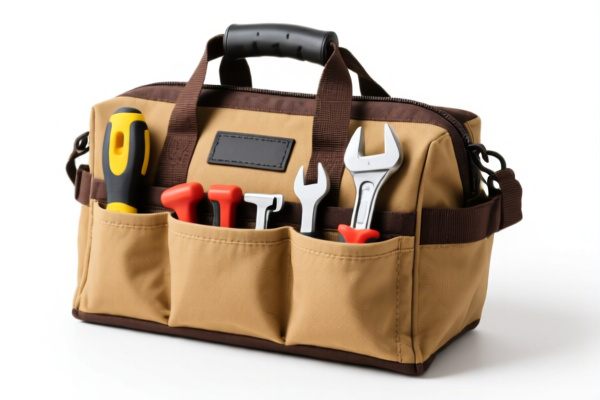
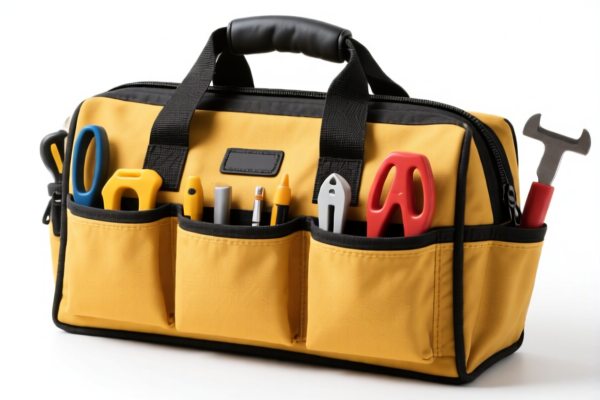
工具卷包
CN → US| HS Code | Tariff Rate | Origin | Destination | Doc |
|---|---|---|---|---|
| 8206000000 | 0.0% | CN | US | Official Doc |
| 8205906000 | 0.0% | CN | US | Official Doc |
| 8205517500 | 38.7% | CN | US | Official Doc |
Product Images


AI Analysis
🛠️ Tool Kit Set (Tool Roll Pack)
🌐 HS Code Classification & Customs Clearance Guide | 2026 Updated Tariff Analysis | Professional Import Strategy
📌 One, Product Definition & Classification: Do You Really Understand “Tool Roll Pack”?
A tool roll pack — also known as a tool kit, tool set, or tool pouch — is a compact, portable, and organized collection of hand tools, typically designed for retail sale as a complete unit. It is commonly used by DIY enthusiasts, tradespeople, and hobbyists.
In international trade, such items are classified not as individual tools, but as pre-packaged sets that meet specific criteria under the Harmonized System (HS Code), particularly Chapter 82: Tools, Implements, Cutlery, Spoons, and Forks.
⚠️ Key Differentiator:
- If the product is sold as a bundled set (e.g., screwdrivers, pliers, wrenches, etc.) in a single package — regardless of whether it's rolled, boxed, or carried in a bag → classified under a set-specific HS code.
- If sold individually → each tool is classified separately.
📦 Two, HS Code Classification Details (2026 Official Tariff Reference)
| HS Code | Product Description | Applicable Use Case | Key Features |
|---|---|---|---|
8206.00.00.00 |
Tools, not elsewhere specified, in sets for retail sale | Pre-packaged tool sets sold as a unit (e.g., 5-piece, 10-piece kits) | ✅ Contains ≥2 tools, sold together, for retail |
8205.90.60.00 |
Other hand tools, not elsewhere specified, in sets | Tool kits with mixed tools (e.g., screwdrivers + pliers + socket set) | ✅ Two or more tools in one package |
8205.51.75.00 |
Other household tools and parts, including DIY tool kits | DIY kits for home use (e.g., repair kits, storage rolls) | ✅ Designed for household use, includes metal/plastic tools |
🔍 Critical Insight:
- The “set” nature is the deciding factor — not the packaging (bag, roll, box, etc.).
- Even if the set is rolled up in a fabric pouch, it still qualifies as a set under HS rules if it contains multiple tools.
💰 Three, 2026 Updated Tariff Breakdown (With Detailed Additional Duties)
✅ Applicable Country: United States (US)
✅ Origin: China (CN)
✅ Effective Date: November 10, 2025 (and onward)
🎯 1. 8206.00.00.00 — Tools in Sets for Retail Sale
| Item | Detail |
|---|---|
| Base Duty Rate | The rate of duty applicable to that article in the set subject to t |
| Additional Duty (USITC 301) | +25.0% (from Section 301 of the U.S. Trade Act) |
| Section 122 Clause Duty | +10.0% (under IEEPA – International Emergency Economic Powers Act) |
| Total Effective Duty | +35.0% |
| Tax Calculation | CIF Value × (Base Rate + 25% + 10%) |
| De Minimis Threshold | ❌ Not applicable (denied de minimis) |
| Legal Basis Path | IEEPA:9903.01.25 → IEEPA:9903.01.24 → USITC:8206.00.00.00 → FOOTNOTE:9903.88.01 |
📌 Explanation:
- Base duty is typically 0% for this code, but the total rate becomes 35% due to 25% USITC + 10% IEEPA. - This applies regardless of the actual value of the tools — no exemption for low-value shipments.
🎯 2. 8205.90.60.00 — Other Hand Tools in Sets
| Item | Detail |
|---|---|
| Base Duty Rate | The rate of duty applicable to that article in the set subject to t |
| Additional Duty (USITC 301) | +25.0% |
| Section 122 Clause Duty | +10.0% |
| Total Effective Duty | +35.0% |
| Tax Calculation | CIF × (Base Rate + 25% + 10%) |
| De Minimis Threshold | ❌ Not applicable |
| Legal Basis Path | IEEPA:9903.01.25 → IEEPA:9903.01.24 → USITC:8205.90.60.00 → FOOTNOTE:9903.88.01 |
📌 Note:
- This code applies to tool kits containing two or more tools, even if the tools are of different types (e.g., pliers + screwdrivers + wrenches). - No material conflict with “ferrous metals” — acceptable even if tools are plastic or mixed-material.
🎯 3. 8205.51.75.00 — Other Household Tools & Parts (DIY Tool Kits)
| Item | Detail |
|---|---|
| Base Duty Rate | 3.7% |
| Additional Duty (USITC 301) | +25.0% |
| Section 122 Clause Duty | +10.0% |
| Total Effective Duty | 38.7% |
| Tax Calculation | CIF × 38.7% |
| De Minimis Threshold | ❌ Not applicable |
| Legal Basis Path | IEEPA:9903.01.25 → IEEPA:9903.01.24 → USITC:8205.51.75.00 → FOOTNOTE:9903.88.01 |
📌 Key Point:
- This code is specifically for DIY or home-use tool kits (e.g., repair kits, storage rolls, hobby tool sets). - Higher base rate (3.7%) due to classification as “household tools”. - Still subject to 25% + 10% — total 38.7% — one of the highest rates for tools.
🛠️ Four, Customs Clearance Best Practices (Real-World Tips)
✅ 1. Required Documentation (Must-Have List)
| Document | Required? | Purpose |
|---|---|---|
| ✅ Commercial Invoice | ✔️ | Clearly state: “Tool Kit Set – 8-Piece, in Fabric Roll, for Retail Sale” |
| ✅ Packing List | ✔️ | List all tools included (e.g., 2 screwdrivers, 1 pliers, 1 wrench, etc.) |
| ✅ Product Photos (with label) | ✔️ | Show packaging, tools, and “DIY” or “Household Use” labeling |
| ✅ Bill of Lading / Air Waybill | ✔️ | Prove shipment origin and destination |
| ✅ Certificate of Origin (CO) | ✔️ | If origin is Vietnam, Mexico, Thailand, or Malaysia, may qualify for IEEPA exemption |
| ✅ Technical Specs / Tool List | ✔️ | Prove ≥2 tools are included (critical for set classification) |
✅ 2.申报技巧(Key Rules to Remember)
🔥 “Set = One Code, No Splitting!”
| Scenario | Correct Action | Wrong Action |
|---|---|---|
| Tool roll pack with 6 tools in one fabric roll | 申报 8206.00.00.00 or 8205.51.75.00 |
Split into 6 individual tools → 6x 38.7% = 232.2% total duty |
| DIY kit labeled “Home Repair Kit” | 申报 8205.51.75.00 |
Mislabel as “hand tools” → risk of misclassification |
| Tool set sold in a plastic box | 申报 8205.90.60.00 |
Declare as “metal parts” → 0% base rate, but still pays 35% → still high |
✅ Correct Declaration Example:
“DIY Tool Roll Pack, 8-Piece Set, Includes Screwdrivers, Pliers, Wrench, Allen Keys, in Fabric Storage Roll, for Home Use, Retail Packaging, Origin: China”
✅ 3. Special Cases & Risk Mitigation
| Situation | Recommended Action |
|---|---|
| Tool roll pack from Vietnam or Mexico | Apply for IEEPA exemption → 0% additional duty (if eligible) |
| Tool kit with plastic tools only | Still qualifies as “set” → use 8205.90.60.00 or 8205.51.75.00 |
| Kit includes batteries or small electronics | May trigger HS Code 8504.40.00 (batteries) or 8536.69.00 (electronic components) → consult a customs broker |
| Re-imported used tool kit | May be subject to different rules → check U.S. Customs' “Used Goods” policy |
🌍 Five, Global Market Comparison (2026 Updated)
| Country/Region | Recommended HS Code | Base Duty | Additional Duties | Certification Required | Notes |
|---|---|---|---|---|---|
| 🇺🇸 United States | 8206.00.00.00 / 8205.51.75.00 |
0%–3.7% | +25% +10% (IEEPA) | None (unless used) | Total: 35%–38.7% |
| 🇨🇳 China | 8206.00.00.00 |
5% | None | CCC, RoHS | No IEEPA |
| 🇪🇺 European Union | 8206.00.00.00 |
0% | None | CE, RoHS | No extra tariffs |
| 🇦🇺 Australia | 8206.00.00.00 |
5% | None | RCM | No IEEPA |
| 🇯🇵 Japan | 8206.00.00.00 |
0% | None | PSE | No additional duties |
📌 Conclusion:
- The U.S. is the only market imposing 25% + 10% additional duties on tool kits from China. - Vietnam/Mexico origin can reduce duty to 0%–5% — strongly recommended for importers.
📌 Six, Common Mistakes & How to Avoid Them (Real Cases)
❌ Mistake 1: Splitting a tool roll pack into 5 individual tools
👉 Result: Each item pays 35%–38.7% → Total: 175%–193.5% → Insane cost!
❌ Mistake 2: Declaring a DIY tool kit as “metal parts”
👉 Result: Misclassification → seizure, fines, or refund claims
❌ Mistake 3: Not including a list of tools in the packing list
👉 Result: Customs may reject the “set” claim → forced to pay higher duty
❌ Mistake 4: Using vague terms like “tool package” or “tool set” without specifying contents
👉 Result: Delayed clearance, request for clarification → increased handling fees
✅ Best Practice:
Always include:
- Exact number of tools
- Types of tools (e.g., “2 flathead screwdrivers, 1 needle-nose pliers”)
- Packaging type (e.g., “fabric roll”, “plastic box”)
- Intended use (e.g., “for home repair”, “DIY enthusiast”)
🎯 Seven, Final Verdict: Smart Classification = Big Savings!
🎯 Remember the Golden Rule:
🔹 “One set, one code, no splitting — or you’ll pay 3x more!”
🔹 “DIY kit? Use 8205.51.75.00. Not a set? Pay 35%+.”
📌 Pro Tip:
If your tool roll pack is made in Vietnam, Mexico, Thailand, or Malaysia, apply for IEEPA exemption — you can reduce duty from 38.7% to 0%–5%.
📣 Take Action Now:
📞 Contact a licensed customs broker or HS Code pre-ruling service
🚀 Submit product photos, packing list, and invoice for pre-approval
💼 Avoid delays, fines, and overpayment — get it right the first time!
✨ Professional Customs, Precise Classification, Maximum Profit!
💼 Your tool kit’s success starts with the right HS Code.
Customer Reviews
About HS Code Classification
The Harmonized System (HS) is an internationally standardized nomenclature developed by the World Customs Organization (WCO) to classify traded products. Over 200 countries use the HS system as the basis for customs tariffs, trade statistics, and import/export regulations.
Each HS code follows a hierarchical structure:
- Chapter (2 digits) — Broad category of goods (e.g., Chapter 84: Machinery and Mechanical Appliances)
- Heading (4 digits) — More specific grouping within the chapter
- Subheading (6 digits) — Internationally standardized breakdown, used by all WCO member countries
- National subdivisions (8-10 digits) — Country-specific extensions for further classification, such as US HTSUS 10-digit codes
Correct HS code classification is essential for smooth customs clearance, accurate duty payment, and compliance with trade regulations. Misclassification can lead to customs delays, overpayment of duties, or penalties.
When importing from CN to US, the applicable tariff rates may include:
- Most-Favored-Nation (MFN) rate — The standard duty rate applied to WTO members
- General rate — Applied to countries without trade agreements
- Trade remedy duties — Additional tariffs such as Section 301 (anti-dumping), Section 232 (national security), or countervailing duties
The information provided on this page is for reference purposes only. For official classification, please consult with your local customs authority or a licensed customs broker.