废弃电器
CN → US| HS Code | Tariff Rate | Origin | Destination | Doc |
|---|---|---|---|---|
| 8548000000 | 35.0% | CN | US | Official Doc |
| 8549990000 | 35.0% | CN | US | Official Doc |
| 8549910000 | 35.0% | CN | US | Official Doc |
| 7602000098 | 0.0% | CN | US | Official Doc |
| 7602000097 | 0.0% | CN | US | Official Doc |
Product Images
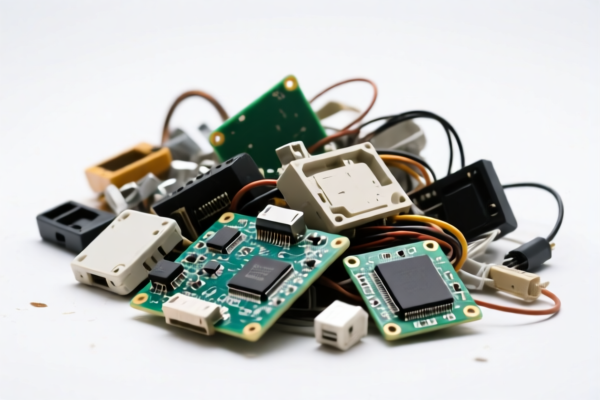
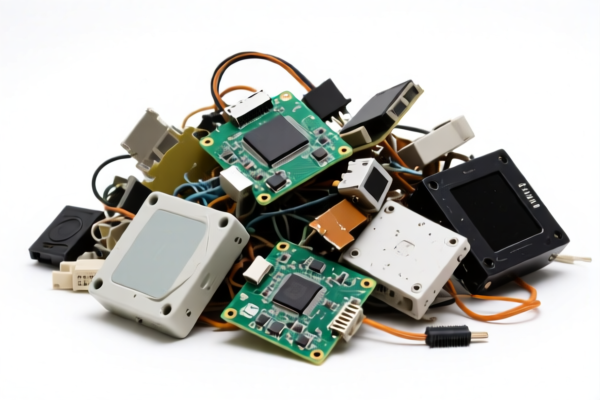
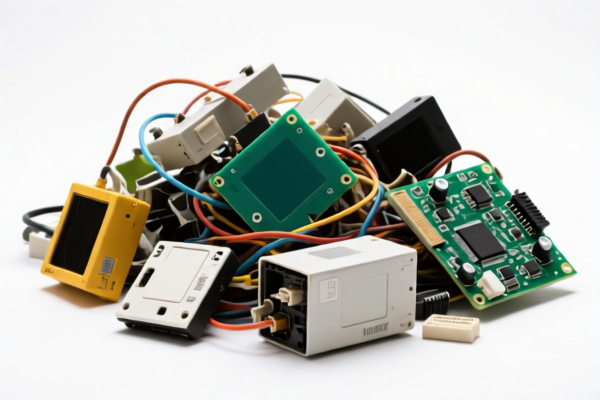
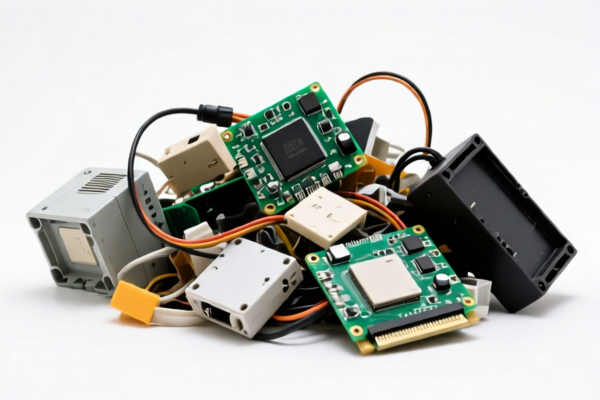
AI Analysis
📦 E-Waste (Electrical and Electronic Waste and Scrap)
🌐 HS Code Reference & Customs Clearance Guide | 2026 Latest Tariff Analysis | Professional Import Strategy
📌 One, Product Definition & Classification: Do You Really Understand "E-Waste"?
Electrical and electronic waste (e-waste) refers to discarded devices, components, or materials from electronic products that are no longer functional or have reached end-of-life. In international trade, e-waste is categorized based on composition, presence of hazardous substances, and recyclability.
⚠️ Critical Distinction: - If the waste contains hazardous materials (e.g., lead, mercury, cadmium, PCBs, batteries, CRT glass) → Highly restricted & taxed
- If it’s general recyclable scrap (e.g., clean aluminum, copper) → May qualify for lower or zero tariffs, but still subject to scrutiny
📦 Two, HS Code Classification Details (2026 Latest Tariff Authority Match)
| HS Code | Product Description | Applicable Scenario | Contains Hazardous Substances? |
|---|---|---|---|
8549.99.00.00 |
Electrical and electronic waste and scrap: Other: Other | General e-waste not covered elsewhere (e.g., mixed circuit boards, non-specific components) | ❌ Not specified — assumed safe unless proven otherwise |
8549.91.00.00 |
Electrical and electronic waste and scrap: Other: Containing primary cells, primary batteries, electric accumulators, mercury-switches, glass from cathode-ray tubes or other activated glass, or electrical or electronic components containing cadmium, mercury, lead or polychlorinated biphenyls (PCBs) | E-waste with high-risk materials (e.g., old CRT monitors, batteries, mercury switches) | ✅ YES — High-risk, heavily taxed |
7602.00.00.98 |
Aluminum waste and scrap: Other | Non-recyclable or mixed aluminum waste (e.g., contaminated scrap) | ❌ No hazardous content (but may be rejected if contaminated) |
7602.00.00.97 |
Aluminum waste and scrap: Other recyclable aluminum | Clean, recoverable aluminum scrap (e.g., from casings, heat sinks) | ❌ No hazardous content |
8548.00.00.00 |
Electrical parts of machinery or apparatus, not specified or included elsewhere in this chapter | Spare parts, connectors, PCBs, or components from broken electronics | ❌ Not inherently hazardous — but may contain hazardous materials |
🔍 Key Insight:
-8549.91.00.00is the most dangerous category — includes CRTs, batteries, mercury switches, PCBs → strictly regulated
-8549.99.00.00is generic e-waste — still subject to scrutiny, especially if unknown composition
- Aluminum scrap (7602.00.00.97/98) is not automatically exempt — must prove clean, recyclable, and free of contamination
💰 Three, 2026 Latest Tariff Breakdown (With附加 Taxes & Policy Rules)
✅ Applicable Country: United States (US)
✅ Origin: China (CN)
✅ Effective Date: November 10, 2025 (including future imports)
🎯 1. 8549.99.00.00 — General E-Waste (No Hazardous Substances Specified)
| Item | Details |
|---|---|
| Base Tariff | 0% (ad valorem) |
| USITC Additional Duty | +25% (under Section 301 of U.S. Trade Act) |
| IEEPA Additional Duty | +10% (International Emergency Economic Powers Act, for Chinese-origin goods) |
| Total Tariff | 35% |
| Tax Calculation | CIF Value × 35% |
| De Minimis Exemption | ❌ Not available (denied under U.S. customs rules) |
| Legal Basis Path | IEEPA:9903.01.25 → USITC:8549.99.00.00 → FOOTNOTE:9903.88.01 |
📌 Explanation:
- Even though no hazardous materials are listed, this category is still subject to 25% USITC + 10% IEEPA due to China-origin and e-waste classification
- No de minimis relief → even small shipments face full duty
- High risk of seizure or rejection if composition is unclear
🎯 2. 8549.91.00.00 — E-Waste Containing Hazardous Materials (CRT, Batteries, Mercury, PCBs, etc.)
| Item | Details |
|---|---|
| Base Tariff | 0% |
| USITC Additional Duty | +25% |
| IEEPA Additional Duty | +10% |
| Total Tariff | 35% |
| Tax Calculation | CIF Value × 35% |
| De Minimis Exemption | ❌ Not available |
| Legal Basis Path | IEEPA:9903.01.25 → USITC:8549.91.00.00 → FOOTNOTE:9903.88.01 |
📌 Critical Note:
- This is not just a tariff issue — it’s a regulatory and environmental hazard
- CRT glass, mercury switches, leaded solder, PCBs are banned or severely restricted under U.S. EPA and RCRA rules
- Even small quantities may trigger environmental inspection, fines, or destruction
- No export or import license is issued for such materials unless under special permit
🎯 3. 7602.00.00.97 — Recyclable Aluminum Scrap (Clean, Recoverable)
| Item | Details |
|---|---|
| Base Tariff | 0% |
| USITC Additional Duty | Failed to retrieve tax information |
| IEEPA Additional Duty | Failed to retrieve tax information |
| Total Tariff | Error |
| Tax Calculation | Cannot be determined |
| De Minimis Exemption | ❌ Unknown |
| Legal Basis Path | No data available |
📌 Warning:
- No tax data available → extremely high risk
- May be subject to anti-dumping, countervailing duties, or future tariffs
- Must provide proof of recyclability, purity, and non-contamination
- Even clean aluminum scrap may be rejected if mixed with e-waste or hazardous residues
🎯 4. 7602.00.00.98 — Other Aluminum Waste and Scrap (Non-Recyclable)
| Item | Details |
|---|---|
| Base Tariff | 0% |
| USITC Additional Duty | Failed to retrieve tax information |
| IEEPA Additional Duty | Failed to retrieve tax information |
| Total Tariff | Error |
| Tax Calculation | Cannot be determined |
| De Minimis Exemption | ❌ Unknown |
| Legal Basis Path | No data available |
📌 Warning:
- This category is not recyclable → likely to be rejected at U.S. ports
- May be classified as waste, not tradeable goods
- High risk of destruction or return without refund
- No tax data = no legal certainty
🎯 5. 8548.00.00.00 — Electrical Parts (Not Elsewhere Specified)
| Item | Details |
|---|---|
| Base Tariff | 0% |
| USITC Additional Duty | +25% |
| IEEPA Additional Duty | +10% |
| Total Tariff | 35% |
| Tax Calculation | CIF Value × 35% |
| De Minimis Exemption | ❌ Not available |
| Legal Basis Path | IEEPA:9903.01.25 → USITC:8548.00.00.00 → FOOTNOTE:9903.88.01 |
📌 Important:
- Even if it’s a "spare part", if it comes from e-waste, it inherits the same tariff and risk
- Must prove it’s not contaminated with lead, mercury, or PCBs
- No de minimis relief → even small PCBs face 35% duty
🛠️ Four, Customs Clearance Best Practices (Real-World Pro Tips)
✅ 1. Required Documentation (Do NOT Skip!)
| Document | Must Provide | Why It Matters |
|---|---|---|
| ✅ Material Safety Data Sheet (MSDS) | ✔️ | Proves absence of hazardous substances |
| ✅ Certificate of Recycling / Reclaimability | ✔️ | For aluminum scrap (7602.00.00.97) |
| ✅ Third-Party Lab Test Report | ✔️ | Confirms no lead, mercury, cadmium, PCBs |
| ✅ Commercial Invoice | ✔️ | Must clearly state "Recyclable Aluminum Scrap" or "Non-Hazardous E-Waste" |
| ✅ Bill of Lading & Packing List | ✔️ | Shows origin, quantity, and packaging |
| ✅ Origin Certificate (CO) | ✔️ | If not from China, may avoid IEEPA/USITC duties |
| ✅ Product Photos (with labels) | ✔️ | Helps customs verify content |
✅ 2.申报技巧(Key Rules to Remember)
🔥 "No Hazard? Prove It. Mixed? Avoid It. Contaminated? Don’t Ship!"
| Scenario | Correct HS Code | Wrong Approach |
|---|---|---|
| Clean aluminum from old electronics | 7602.00.00.97 |
8549.99.00.00 → 35% duty |
| CRT monitor with leaded glass | 8549.91.00.00 |
8549.99.00.00 → Environmental violation |
| PCB with no hazardous materials | 8548.00.00.00 |
8549.99.00.00 → 35% duty |
| Mixed e-waste (aluminum + circuit boards) | ❌ Do NOT ship | Split into parts → each part taxed at 35% |
✅ 3. Special Handling Scenarios
| Situation | Recommended Action |
|---|---|
| E-waste from non-China origin | Apply for IEEPA exemption (e.g., Vietnam, Mexico, Thailand) → 0% tariff |
| Aluminum scrap with trace contaminants | Do not declare → risk of destruction or fine |
| Unknown composition | Do not ship → request lab test first |
| Large volume of e-waste | Apply for advance ruling (pre-ruling) to confirm HS code and tariff |
| Used electronics for repair | Must be non-hazardous, functional, and declared as "used" — not "waste" |
🌍 Five, Global Customs Comparison (2026 Latest)
| Country/Region | Recommended HS Code | Tariff | Certification | Notes |
|---|---|---|---|---|
| 🇺🇸 United States | 8549.91.00.00 / 8549.99.00.00 |
35% | EPA, RCRA, RoHS | High risk, no de minimis |
| 🇨🇳 China | 8549.99.00.00 |
0% | China RoHS | Strict export controls |
| 🇪🇺 EU | 8549.99.00.00 |
0% (if compliant) | WEEE, CE | Must register under WEEE |
| 🇦🇺 Australia | 8549.99.00.00 |
5% | RCM | No IEEPA, but strict rules |
| 🇯🇵 Japan | 8549.99.00.00 |
0% | PSE | No extra tariffs |
📌 Conclusion:
- U.S. is the most restrictive — 35% tariff + environmental risk
- China, EU, Japan allow trade if compliant with local e-waste laws
- Aluminum scrap is only safe if proven clean and recyclable
📌 Six, Common Mistakes & Pitfalls (Learn from Others’ Failures)
❌ Mistake 1: Shipping mixed e-waste (aluminum + circuit boards) as “general scrap”
👉 Result: 35% tariff, seizure, or destruction
❌ Mistake 2: Declaring CRT glass as “non-hazardous” without lab test
👉 Result: Environmental violation, fines up to $100,000, criminal charges
❌ Mistake 3: Using 7602.00.00.98 for contaminated aluminum
👉 Result: Rejected at port, no refund, re-export cost
❌ Mistake 4: Not providing MSDS or lab report
👉 Result: Customs holds shipment, delays, additional fees
✅ Correct Approach:
“Recyclable Aluminum Scrap, 99.5% Purity, No Lead/Cadmium/PCBs, Test Report Attached, Origin: Vietnam, HS Code: 7602.00.00.97”
🎯 Seven, Final Verdict: Smart E-Waste Trade Starts with Accuracy
🎯 Remember the Mantra:
🔹 "Prove It, Don’t Guess. Clean It, Don’t Mix. Declare It, Don’t Hide."
🔹 "One wrong label → 35% tax, 6 months delay, or total loss."
📌 Pro Tip:
If your e-waste is from Vietnam, Mexico, Thailand, or India, apply for IEEPA exemption → 0% tariff
✅ Apply for Advance Ruling (Pre-Ruling) before shipment → lock in HS code & tariff
📣 Act Now:
📞 Contact a licensed customs broker + provide product photos + lab report
🚀 Avoid fines, delays, and destruction — ship smart, not just cheap!
✨ Professional Customs Starts with Precision
💼 Your E-Waste, Your Risk, Your Responsibility
Customer Reviews
About HS Code Classification
The Harmonized System (HS) is an internationally standardized nomenclature developed by the World Customs Organization (WCO) to classify traded products. Over 200 countries use the HS system as the basis for customs tariffs, trade statistics, and import/export regulations.
Each HS code follows a hierarchical structure:
- Chapter (2 digits) — Broad category of goods (e.g., Chapter 84: Machinery and Mechanical Appliances)
- Heading (4 digits) — More specific grouping within the chapter
- Subheading (6 digits) — Internationally standardized breakdown, used by all WCO member countries
- National subdivisions (8-10 digits) — Country-specific extensions for further classification, such as US HTSUS 10-digit codes
Correct HS code classification is essential for smooth customs clearance, accurate duty payment, and compliance with trade regulations. Misclassification can lead to customs delays, overpayment of duties, or penalties.
When importing from CN to US, the applicable tariff rates may include:
- Most-Favored-Nation (MFN) rate — The standard duty rate applied to WTO members
- General rate — Applied to countries without trade agreements
- Trade remedy duties — Additional tariffs such as Section 301 (anti-dumping), Section 232 (national security), or countervailing duties
The information provided on this page is for reference purposes only. For official classification, please consult with your local customs authority or a licensed customs broker.