折叠椅
CN → US| HS Code | Tariff Rate | Origin | Destination | Doc |
|---|---|---|---|---|
| 9403608093 | 35.0% | CN | US | Official Doc |
| 9401696031 | 35.0% | CN | US | Official Doc |
| 9401790050 | 35.0% | CN | US | Official Doc |
| 9401698011 | 35.0% | CN | US | Official Doc |
Product Images
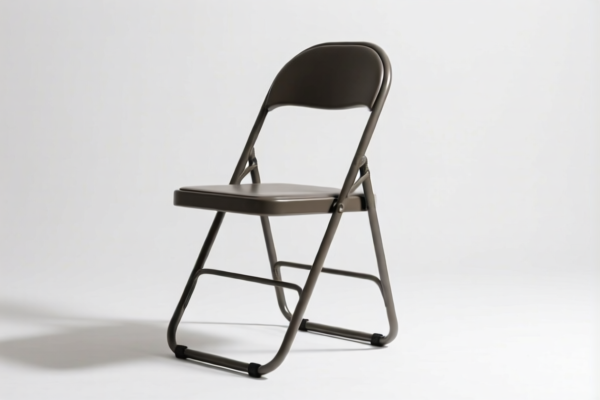
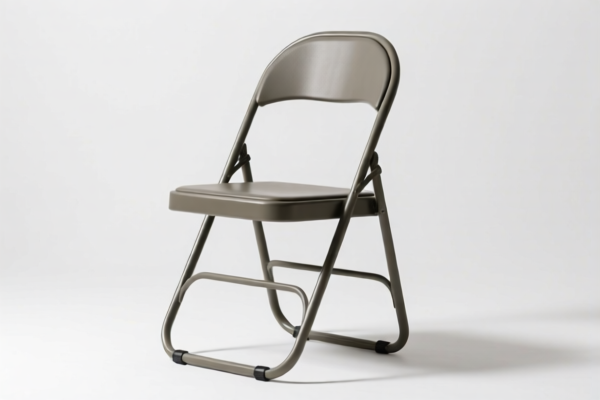


AI Analysis
🪑 Folding Chair | Comprehensive HS Code & Tariff Guide (2026 Update)
🌐 HS Code Classification & Customs Clearance Strategy | 2026 Latest Tariff Rules | Pro-Level Import Planning
📌 I. Product Definition & Classification: What Exactly Is a "Folding Chair"?
A folding chair is a portable, collapsible seating solution designed for temporary or space-saving use. It is commonly used in outdoor events, offices, homes, construction sites, and emergency shelters.
In international trade, folding chairs are classified based on material composition, frame type, and functional design. The key classification factors include:
- ✅ Material: Wood, metal, plastic, or mixed materials
- ✅ Frame Type: Wooden frame, metal frame, or other structural support
- ✅ End Use: General furniture, seating, or non-standard applications
⚠️ Critical Insight:
- Wooden frame folding chairs → Classified under wooden furniture (HS 9403.60.80.93 or 9401.69.80.11)
- Metal frame folding chairs → Classified under metal furniture (HS 9401.79.00.50)
- Mixed-material chairs → Must be matched to the dominant component or intended use
📦 II. HS Code Classification Details (2026 Official Tariff Reference)
| HS Code | Product Description | Material/Structure | Key Classification Logic |
|---|---|---|---|
9403.60.80.93 |
Other wooden furniture; folding chairs | Wood-based | "Other wooden furniture" — broad category for non-specific wooden items |
9401.69.60.31 |
Other wooden frame seats; folding chairs | Wood frame | "Other wooden frame seats" — covers non-standard wooden seating |
9401.79.00.50 |
Other metal frame seats; folding chairs | Metal frame | "Other metal frame seats" — applies to non-specific metal chairs |
9401.69.80.11 |
Other wooden frame seats; folding chairs | Wood frame | "Other wooden frame seats" — similar to 9401.69.60.31, but with different subheading |
4421.91.98.80 |
Other wood or bamboo articles; folding chairs | Wood or bamboo | "Other wood/bamboo items" — used when chair is treated as a non-furniture item |
🔍 Why Multiple Codes?
- 9403.60.80.93 and 9401.69.60.31 are both wood-based, but differ in subcategory (furniture vs. seating)
- 9401.79.00.50 applies only to metal frames
- 4421.91.98.80 is a last-resort classification when no better fit exists — often used for non-standard or decorative wood items
💰 III. 2026 Latest Tariff Breakdown (US Market | China Origin)
✅ Applicable Country: United States (US)
✅ Origin: China (CN)
✅ Effective Date: November 10, 2025 (inclusive)
🎯 1. 9403.60.80.93 — Folding Chair (Wooden Furniture, General)
| Item | Detail |
|---|---|
| Base Duty | 0% (ad valorem) |
| USITC Additional Duty | +25% (under Section 301) |
| IEEPA Additional Duty | +10% (International Emergency Economic Powers Act) |
| Total Tariff | 35.0% |
| Tax Calculation | CIF Value × 35% |
| De Minimis Exemption | ❌ Not available (denied under US law) |
| Legal Basis Path | IEEPA:9903.01.25 → IEEPA:9903.01.24 → USITC:9403.60.80.93 → FOOTNOTE:9903.88.01 |
📌 Explanation:
- USITC 25%: Imposed under Section 301 of the U.S. Trade Act for unfair trade practices by China
- IEEPA 10%: Applied under International Emergency Economic Powers Act for national security concerns
- Total = 35% — high but standard for most wooden furniture from China
🎯 2. 9401.69.60.31 — Folding Chair (Other Wooden Frame Seats)
| Item | Detail |
|---|---|
| Base Duty | 0% |
| USITC Additional Duty | +25% |
| IEEPA Additional Duty | +10% |
| Total Tariff | 35.0% |
| Tax Calculation | CIF × 35% |
| De Minimis Exemption | ❌ Not available |
| Legal Basis Path | IEEPA:9903.01.25 → IEEPA:9903.01.24 → USITC:9401.69.60.31 → FOOTNOTE:9903.88.01 |
📌 Note:
- This code is functionally identical to 9403.60.80.93 in terms of tax treatment
- Used when the chair is classified as a seat rather than general furniture
🎯 3. 9401.79.00.50 — Folding Chair (Other Metal Frame Seats)
| Item | Detail |
|---|---|
| Base Duty | 0% |
| USITC Additional Duty | +25% |
| IEEPA Additional Duty | +10% |
| Total Tariff | 35.0% |
| Tax Calculation | CIF × 35% |
| De Minimis Exemption | ❌ Not available |
| Legal Basis Path | IEEPA:9903.01.25 → IEEPA:9903.01.24 → USITC:9401.79.00.50 → FOOTNOTE:9903.88.01 |
📌 Key Point:
- Applies to metal-framed folding chairs (e.g., aluminum or steel frames)
- Despite material difference, tax rate is identical to wooden versions
🎯 4. 9401.69.80.11 — Folding Chair (Other Wooden Frame Seats)
| Item | Detail |
|---|---|
| Base Duty | 0% |
| USITC Additional Duty | +25% |
| IEEPA Additional Duty | +10% |
| Total Tariff | 35.0% |
| Tax Calculation | CIF × 35% |
| De Minimis Exemption | ❌ Not available |
| Legal Basis Path | IEEPA:9903.01.25 → IEEPA:9903.01.24 → USITC:9401.69.80.11 → FOOTNOTE:9903.88.01 |
📌 Why This Code?
- Used when the chair is not covered by more specific subheadings
- Often selected when the wooden frame is non-standard or custom-designed
🎯 5. 4421.91.98.80 — Folding Chair (Other Wood/Bamboo Articles)
| Item | Detail |
|---|---|
| Base Duty | 3.3% (ad valorem) |
| USITC Additional Duty | +25.0% |
| IEEPA Additional Duty | +10.0% |
| Total Tariff | 38.3% |
| Tax Calculation | CIF × 38.3% |
| De Minimis Exemption | ❌ Not available |
| Legal Basis Path | IEEPA:9903.01.25 → IEEPA:9903.01.24 → USITC:4421.91.98.80 → FOOTNOTE:9903.88.01 |
📌 Critical Warning:
- This is the highest tariff rate among all options
- Used only when no better fit exists (e.g., chair is treated as a wooden artifact, not furniture)
- Avoid this code if possible — it increases cost by 3.3% vs. others
🛠️ IV. Customs Clearance Best Practices (Pro Tips to Avoid Penalties)
✅ 1. Essential Documentation Checklist
| Document | Required? | Purpose |
|---|---|---|
| ✅ Product Specification Sheet | ✔️ | Detail frame material, dimensions, weight, folding mechanism |
| ✅ Bill of Lading & Packing List | ✔️ | Confirm shipment integrity and quantity |
| ✅ Commercial Invoice | ✔️ | Must include exact HS Code, origin, CIF value |
| ✅ Certificate of Origin (CO) | ✔️ | Prove country of manufacture (critical for tariff eligibility) |
| ✅ Product Photos (with labels) | ✔️ | Show frame type, material, brand, model |
| ✅ Third-Party Test Reports | ✔️ | Include fire safety, structural integrity, material compliance |
| ✅ Draft HS Code Ruling Request | ✔️ | Apply for Advance Ruling to lock in classification |
✅ 2.申报技巧(Key Rules to Remember)
🔥 "Frame First, Material Matters, Code Match, Tax Avoid!"
| Scenario | Correct HS Code | Common Mistake |
|---|---|---|
| Wooden frame chair | 9403.60.80.93 or 9401.69.60.31 |
Misclassified as 4421.91.98.80 → +3.3% tax |
| Metal frame chair | 9401.79.00.50 |
Misclassified as 9403.60.80.93 → risk of rejection |
| Chair with mixed materials | Dominant material determines code | Split申报 → each item taxed at 35% → total 70%+ |
| Chair sold as "decorative item" | Avoid 4421.91.98.80 unless necessary |
Can trigger audit or penalties |
✅ 3. Special Cases & Solutions
| Situation | Recommended Action |
|---|---|
| OEM/Custom Folding Chairs | Submit design drawings + material specs for pre-classification |
| Chair with fabric upholstery | Still classified by frame material — not by fabric |
| Used or recycled folding chairs | May qualify for lower duty — provide proof of reuse |
| Folding chairs for military/emergency use | Apply for special-purpose exemption — requires documentation |
| Chairs from Vietnam/Mexico | Can qualify for IEEPA exemption — 0% additional duty (if origin is not China) |
🌍 V. Global Market Tariff Comparison (2026 Update)
| Country/Region | Recommended HS Code | Base Duty | Additional Taxes | Notes |
|---|---|---|---|---|
| 🇺🇸 USA | 9403.60.80.93 / 9401.79.00.50 |
0% | +25% (USITC) +10% (IEEPA) → 35% | China origin = high cost |
| 🇨🇳 China | 9403.60.80.93 |
5% | None | No extra duties |
| 🇪🇺 EU | 9401.69.60.31 |
0% | None (if CE certified) | No 301/IEEPA taxes |
| 🇦🇺 Australia | 9401.79.00.50 |
5% | None | No additional duties |
| 🇯🇵 Japan | 9401.69.80.11 |
0% | None | No extra taxes |
| 🇲🇽 Mexico | 9403.60.80.93 |
0% | None (USMCA) | Low tariff if origin is Mexico |
📌 Insight:
- Only the U.S. imposes 35% total duty on folding chairs from China
- Vietnam/Mexico origin chairs can avoid IEEPA/USITC taxes → save 35%
- Consider relocating production to non-China countries for tariff savings
📌 VI. Common Mistakes & Risk Warnings (Avoid These!)
❌ Mistake 1: Using 4421.91.98.80 for a standard folding chair
👉 Result: 38.3% tariff instead of 35% → 3.3% extra cost per unit
❌ Mistake 2: Splitting chair into parts (frame + seat + legs)
👉 Result: Each part taxed at 35% → total 105%+ — impossible to clear
❌ Mistake 3: Declaring "wooden chair" without specifying frame type
👉 Result: Customs may apply most restrictive code → audit or seizure
❌ Mistake 4: Not providing material proof or photos
👉 Result: Delayed clearance, request for additional info, fines
✅ Correct Declaration Example:
"Folding Chair, Wooden Frame, 18" x 18" x 32", 5 lbs, Foldable Design, Model XYZ, CE & RoHS Certified, Origin: China, HS Code: 9403.60.80.93"
🎯 VII. Conclusion: Precision Pays Off
🎯 Remember the Golden Rule:
🔹 "Frame First, Material Second, Code Match, Tax Minimized!"
🔹 "One wrong HS Code = 35% tax hike or 105% total cost!"
📌 Pro Tip:
✅ Apply for an Advance Ruling (Pre-Decision) from U.S. Customs before shipment
✅ Use non-China origin (e.g., Vietnam, Mexico, Thailand) to avoid IEEPA/USITC duties
✅ Always match the code to the dominant material and function
📣 Take Action Now:
📞 Contact a licensed customs broker + submit product photos + request HS Code pre-ruling
🚀 Ensure smooth, fast, and low-cost clearance — protect your margins!
✨ Expert Tip:
"Your HS Code isn’t just a number — it’s your profit margin in disguise!"
💼 Every dollar saved on tariffs is a dollar earned.
🪑 Folding chair? Not just furniture — it’s a tax strategy!
Customer Reviews
About HS Code Classification
The Harmonized System (HS) is an internationally standardized nomenclature developed by the World Customs Organization (WCO) to classify traded products. Over 200 countries use the HS system as the basis for customs tariffs, trade statistics, and import/export regulations.
Each HS code follows a hierarchical structure:
- Chapter (2 digits) — Broad category of goods (e.g., Chapter 84: Machinery and Mechanical Appliances)
- Heading (4 digits) — More specific grouping within the chapter
- Subheading (6 digits) — Internationally standardized breakdown, used by all WCO member countries
- National subdivisions (8-10 digits) — Country-specific extensions for further classification, such as US HTSUS 10-digit codes
Correct HS code classification is essential for smooth customs clearance, accurate duty payment, and compliance with trade regulations. Misclassification can lead to customs delays, overpayment of duties, or penalties.
When importing from CN to US, the applicable tariff rates may include:
- Most-Favored-Nation (MFN) rate — The standard duty rate applied to WTO members
- General rate — Applied to countries without trade agreements
- Trade remedy duties — Additional tariffs such as Section 301 (anti-dumping), Section 232 (national security), or countervailing duties
The information provided on this page is for reference purposes only. For official classification, please consult with your local customs authority or a licensed customs broker.