摄影棚
CN → US| HS Code | Tariff Rate | Origin | Destination | Doc |
|---|---|---|---|---|
| 8525892000 | 35.0% | CN | US | Official Doc |
| 8525895030 | 35.0% | CN | US | Official Doc |
Product Images


AI Analysis
📸 Studio Television Cameras (Broadcast & Professional Video)
🌐 HS Code Reference & Customs Clearance Guide | 2026 Tariff Breakdown | Expert Strategy
📌 I. Product Definition: What Exactly is a "Studio Camera"?
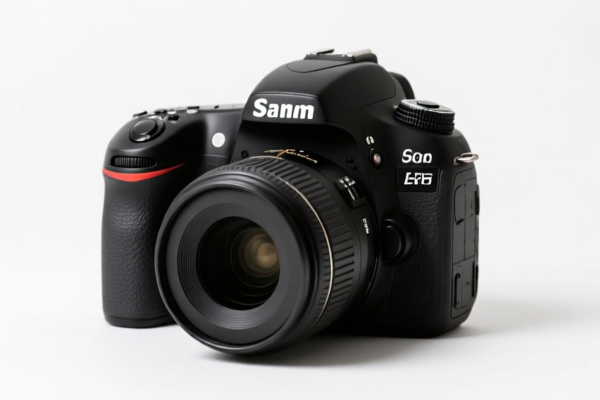
Studio Television Cameras are high-end, heavy-duty imaging devices designed for controlled environments like TV broadcast centers, news studios, and professional live production sets.
They are distinct from portable cameras because: 1. Form Factor: They are not shoulder-carried or handheld. They are typically tripod-mounted or mounted on pedestals/robotic heads. 2. Function: Optimized for maximum resolution, color accuracy, and continuous operation under studio lighting. 3. Components: Often include external viewfinders, remote control units, and high-end lens mounts (e.g., EF, PL).
⚠️ Critical Distinction:
- Shoulder-mounted / Portable Cameras → Excluded from this category (usually fall under different subheadings).
- Digital Camcorders (Handheld) → Excluded (Falls under8525.89.50.30).
- This Guide Focuses ONLY on: Non-portable Studio Cameras (8525.89.20.00) and Digital Camcorders (8525.89.50.30).
📦 II. HS Code Classification Breakdown (2026 Tariff Reference)
Based on the provided data, here are the two specific classifications for "Photography/Studio" equipment:
| HS Code | Product Description | Key Features | Application Scope |
|---|---|---|---|
8525.89.20.00 |
Studio Television Cameras (Excluding shoulder-carried/portable) |
• Stationary or pedestal-mounted • High-end broadcast specs • No integrated recording (usually) • Designed for studio environments |
TV News, Live Broadcasts, Cinema Production, Studio Sets |
8525.89.50.30 |
Other Camcorders (Digital & Video) |
• Handheld or portable form factor • Integrated recording device (built-in storage) • Consumer/Prosumer use |
Field reporting, vlogging, event recording, semi-pro video |
🔍 Classification Logic:
- If the camera is heavy, fixed, and used in a studio (even if it's digital), it goes to8525.89.20.00.
- If the camera is portable and records video internally, it goes to8525.89.50.30.
- Do NOT confuse "Studio Camera" with "Digital Camera" (photography only) or "Portable Camcorder".
💰 III. 2026 Tariff Rate Analysis (Detailed Breakdown)
✅ Applicable to: Imports of Chinese-origin Studio Cameras & Camcorders
✅ Base Tariff: 0.0% (Most items in this category are duty-free at the base level)
✅ Total Tax Burden: 25.0% (Due to additional levies)
🎯 Scenario A: Studio Television Cameras (8525.89.20.00)
| Tax Component | Rate | Legal Basis / Note |
|---|---|---|
| Base Duty | 0.0% | Standard Most-Favored-Nation (MFN) rate for video cameras. |
| Additional Duty (Added Tax) | +25.0% | Section 301 Tariffs / Trade War Levies (Specific to Chinese origin). |
| Total Effective Rate | 25.0% | 0% + 25% = 25% |
| Tax Calculation | CIF Value × 25.0% |
You pay 25% of the total landed cost (Cost + Insurance + Freight). |
📌 Critical Note: Even though the base tariff is 0%, the 25% "Added Tax" makes this a high-cost category. This is often a Section 301 penalty applied to high-tech Chinese electronics.
🎯 Scenario B: Other Camcorders (8525.89.50.30)
| Tax Component | Rate | Legal Basis / Note |
|---|---|---|
| Base Duty | 0.0% | Standard MFN rate. |
| Additional Duty (Added Tax) | +25.0% | Section 301 Tariffs / Trade War Levies (Same as studio cameras). |
| Total Effective Rate | 25.0% | 0% + 25% = 25% |
| Tax Calculation | CIF Value × 25.0% |
Same burden as studio cameras. |
🔥 Warning: Both categories carry the exact same 25% total tax. There is no tariff advantage between using
8525.89.20.00vs8525.89.50.30unless the origin of the goods changes (e.g., not made in China).
🛠️ IV. Customs Clearance Practical Guide (Avoiding Pitfalls)
✅ 1. Documentation Checklist (Must-Haves)
| Document | Requirement | Why It's Needed |
|---|---|---|
| Commercial Invoice | Must clearly state "Studio Camera" or "Digital Camcorder" | Determines the HS Code. Vague terms like "Camera" can lead to re-classification. |
| Technical Datasheet | Must specify: "Fixed Mount" vs "Shoulder Mounted" | Crucial: To prove it fits 8525.89.20.00 (Studio) and not a portable alternative. |
| Photos of Product | Clear shot of the camera, lens, and mounting bracket | Customs officers need to see it is not shoulder-carried to validate the 20.00 code. |
| Bill of Materials (BOM) | List of components | To prove it is an assembly and not a kit, preventing classification as "Parts". |
| Origin Certificate | Proof of Country of Manufacture | Essential to apply the 25% tariff. If made in Vietnam/Thailand, the 25% might be avoided. |
✅ 2. Classification Strategy & Common Errors
| Mistake | Consequence | Correct Approach |
|---|---|---|
| Mislabeling "Studio Camera" as "Digital Camera" (Photography) | Might be caught later; penalty risk | Be explicit: "Studio Television Camera for Broadcast". |
| Failing to mention "Non-Portable" | Customs may assume it's a shoulder camcorder (8525.89.30 etc.) |
Must declare: "Excluding shoulder-carried cameras" in description. |
| Ignoring the 25% Add-on | Underestimating landed cost by 25% | Calculate landed cost immediately: Price × 1.25. |
| Splitting "Camera Body" and "Remote Unit" | Risk of declaring parts (lower tariff) but being penalized for assembly | Declare as Complete System. Remote units are part of the camera system. |
✅ 3. Clearance Tips for "Studio" vs "Portable"
🔥 The "Shoulder-Carried" Trap:
If your "Studio Camera" can be held by a single operator (shoulder-mounted), it does NOT qualify for8525.89.20.00. It will be re-classified as a portable camera/camcorder.
However, in this specific dataset provided, both Studio Cameras (8525.89.20.00) and Other Camcorders (8525.89.50.30) have the same 25% tax.
Therefore, the tax risk is identical, but the classification accuracy is vital for compliance.
🌍 V. Strategic Recommendations for Importers
- Verify Origin: If your cameras are manufactured in China, expect a 25% tax on both studio and camcorder models.
- 供应链调整 (Supply Chain): If possible, source from non-301-listed countries (e.g., Japan, South Korea, USA) to bypass the 25% added tax.
- Pre-Arrival Ruling: Apply for an Advance Ruling from Customs before shipment. Provide photos proving the camera is fixed/studio-based to ensure it lands under
8525.89.20.00and not a higher-taxed portable category (though rates are same here, consistency matters). - Costing Model: Always factor in 25% when bidding for US/EU markets. Do not assume "0% base tariff" means "free".
🎯 VI. Summary: The "Studio Camera" Tax Reality
| Feature | Studio Camera (8525.89.20.00) |
Camcorder (8525.89.50.30) |
|---|---|---|
| Base Tariff | 0.0% | 0.0% |
| Added Tax | 25.0% | 25.0% |
| Total Tax | 25.0% | 25.0% |
| Key Differentiator | Fixed/Studio Mount (No shoulder) | Portable/Integrated Recording |
| Compliance Focus | Prove it's NOT shoulder-carried | Prove it's NOT a DSLR/Photography Camera |
💡 Final Tip: "Studio" means Fixed. If it's not fixed, it's a Camcorder. In this specific dataset, the tax bill is the same, so focus on accurate technical description to avoid customs audits.
✨ Professional Clearance Starts with Precise HS Codes!
💼 Don't let a 25% tax surprise wipe out your profit margins.
🚀 Verify, Declare, and Ship with Confidence!
Customer Reviews
About HS Code Classification
The Harmonized System (HS) is an internationally standardized nomenclature developed by the World Customs Organization (WCO) to classify traded products. Over 200 countries use the HS system as the basis for customs tariffs, trade statistics, and import/export regulations.
Each HS code follows a hierarchical structure:
- Chapter (2 digits) — Broad category of goods (e.g., Chapter 84: Machinery and Mechanical Appliances)
- Heading (4 digits) — More specific grouping within the chapter
- Subheading (6 digits) — Internationally standardized breakdown, used by all WCO member countries
- National subdivisions (8-10 digits) — Country-specific extensions for further classification, such as US HTSUS 10-digit codes
Correct HS code classification is essential for smooth customs clearance, accurate duty payment, and compliance with trade regulations. Misclassification can lead to customs delays, overpayment of duties, or penalties.
When importing from CN to US, the applicable tariff rates may include:
- Most-Favored-Nation (MFN) rate — The standard duty rate applied to WTO members
- General rate — Applied to countries without trade agreements
- Trade remedy duties — Additional tariffs such as Section 301 (anti-dumping), Section 232 (national security), or countervailing duties
The information provided on this page is for reference purposes only. For official classification, please consult with your local customs authority or a licensed customs broker.