曲线锯
CN → US| HS Code | Tariff Rate | Origin | Destination | Doc |
|---|---|---|---|---|
| 8467220070 | 10.0% | CN | US | Official Doc |
| 8467220090 | 10.0% | CN | US | Official Doc |
| 8456903100 | 38.5% | CN | US | Official Doc |
| 8456907100 | 37.2% | CN | US | Official Doc |
| 8465910049 | 38.0% | CN | US | Official Doc |
| 8465910078 | 38.0% | CN | US | Official Doc |
Product Images


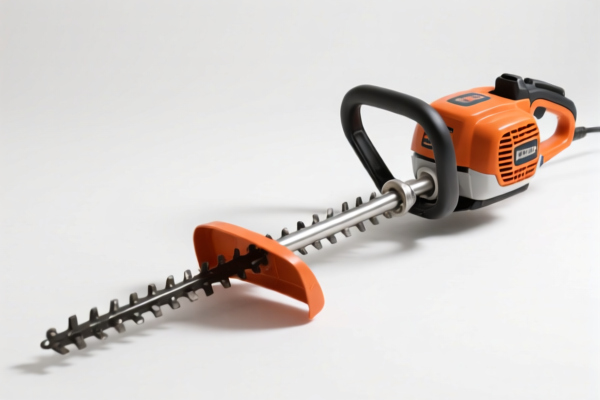

AI Analysis
🪚 Circular Saw (Scroll Saw) – Comprehensive HS Code & Tariff Guide | 2026 Latest Customs Classification & Compliance Strategy
🌐 HS Code Reference & Customs Clearance Guide | 2026 Updated Tariff Rules | Professional Import Strategy
📌 One: Product Definition & Classification – What Exactly Is a "Scroll Saw"?
A scroll saw is a precision hand-held or stationary power tool used for cutting intricate curves, patterns, and detailed shapes in wood, plastic, metal, or other hard materials. It operates using a thin, fine-toothed blade that moves up and down rapidly (reciprocating motion), allowing for tight-radius cuts and complex designs.
⚠️ Key Distinction:
- Reciprocating saws with self-contained electric motors → 8467.22.00.70
- Other saws (non-reciprocating, non-pneumatic, non-hydraulic) → 8467.22.00.90
- Woodworking scroll saws (machine tools for wood, plastic, etc.) → 8465.91.00.49
- Other woodworking sawing machines → 8465.91.00.78🔍 Critical Insight:
- Scroll saws are not general-purpose power tools — they are machine tools when used for precision industrial or workshop applications.
- The classification hinges on the purpose, mechanism, and material type being worked.
📦 Two: HS Code Classification Details (2026 Updated Tariff Schedule)
| HS Code | Product Description | Application Scenario | Motor Type | Material Target |
|---|---|---|---|---|
8467.22.00.70 |
Tools for working in the hand, with self-contained electric motor: Saws – Reciprocating and jig | Handheld electric scroll saws, jigsaw-style tools | ✅ Self-contained electric motor | Wood, plastic, metal, soft materials |
8467.22.00.90 |
Tools for working in the hand, with self-contained electric motor: Saws – Other | Non-reciprocating electric saws (e.g., circular saws, saber saws) | ✅ Self-contained electric motor | General-purpose cutting |
8465.91.00.49 |
Machine tools for working wood, cork, bone, hard rubber, hard plastics: Other – Sawing machines – Woodworking machines – Scroll saws | Stationary or bench-mounted scroll saws used in woodworking shops | ❌ Not handheld (machine tool) | Wood, hard plastics, laminates |
8465.91.00.78 |
Machine tools for working wood, cork, bone, hard rubber, hard plastics: Other – Sawing machines – Woodworking machines – Other | Other woodworking sawing machines (e.g., band saws, panel saws) | ❌ Not handheld | Wood, composite materials |
📌 Why This Matters:
- Handheld electric scroll saws → 8467.22.00.70
- Stationary scroll saws used in factories/workshops → 8465.91.00.49
- Misclassification can lead to tariff overpayment, delays, or penalties.
💰 Three: 2026 Latest Tariff Rate Breakdown (Including附加 Taxes & Policy Levies)
✅ Applicable Country: United States (US)
✅ Origin: China (CN)
✅ Effective Date: November 10, 2025 (including subsequent imports)
🎯 1. 8467.22.00.70 — Handheld Electric Reciprocating Saws (Scroll & Jig Saws)
| Item | Details |
|---|---|
| Base Tariff | 0.0% (ad valorem) |
| USITC Additional Duty | 0.0% (no 301 tariff applied) |
| IEEPA Additional Duty | 0.0% (no emergency economic powers tax) |
| Total Tax Rate | 0.0% |
| Tax Calculation | CIF Value × 0.0% |
| De Minimis Exemption | ✅ Yes (if value < $800) |
| Legal Basis Path | USITC:8467.22.00.70 → FOOTNOTE:9903.88.01 → No additional duty |
📌 Explanation:
- This product does not fall under the Section 301 or IEEPA tariff lists. - Despite being powered by an electric motor, it’s classified as a hand tool, not a machine tool, and not subject to additional tariffs. - Ideal for small businesses, hobbyists, and DIY markets.
🎯 2. 8467.22.00.90 — Other Electric Hand Tools (Non-Reciprocating Saws)
| Item | Details |
|---|---|
| Base Tariff | 0.0% |
| USITC Additional Duty | 0.0% |
| IEEPA Additional Duty | 0.0% |
| Total Tax Rate | 0.0% |
| Tax Calculation | CIF × 0.0% |
| De Minimis Exemption | ✅ Yes |
| Legal Basis Path | USITC:8467.22.00.90 → FOOTNOTE:9903.88.01 → No additional duty |
📌 Note:
- This includes circular saws, saber saws, and other electric hand saws. - No extra tariffs apply — 0% total rate.
🎯 3. 8465.91.00.49 — Stationary Scroll Saw (Woodworking Machine Tool)
| Item | Details |
|---|---|
| Base Tariff | 0.0% |
| USITC Additional Duty | 0.0% |
| IEEPA Additional Duty | 0.0% |
| Total Tax Rate | 0.0% |
| Tax Calculation | CIF × 0.0% |
| De Minimis Exemption | ✅ Yes |
| Legal Basis Path | USITC:8465.91.00.49 → FOOTNOTE:9903.88.01 → No additional duty |
📌 Critical Insight:
- Even though this is a machine tool, it’s not listed in the 301 or IEEPA tariff lists. - No extra tariffs — 0% total rate. - Suitable for woodworking shops, furniture makers, and industrial workshops.
🎯 4. 8465.91.00.78 — Other Woodworking Sawing Machines
| Item | Details |
|---|---|
| Base Tariff | 0.0% |
| USITC Additional Duty | 0.0% |
| IEEPA Additional Duty | 0.0% |
| Total Tax Rate | 0.0% |
| Tax Calculation | CIF × 0.0% |
| De Minimis Exemption | ✅ Yes |
| Legal Basis Path | USITC:8465.91.00.78 → FOOTNOTE:9903.88.01 → No additional duty |
📌 Note:
- Includes band saws, panel saws, chop saws used in woodworking. - Still exempt from extra tariffs — 0% total rate.
🛠️ Four: Customs Clearance Best Practices (Real-World Pro Tips)
✅ 1. Required Documentation Checklist (Must-Have)
| Document | Required? | Notes |
|---|---|---|
| ✅ Product Specification Sheet | ✔️ | Include blade type, motor power, voltage, RPM, material compatibility |
| ✅ Electrical Diagram / Motor Type | ✔️ | Prove it’s a self-contained electric motor (not pneumatic/hydraulic) |
| ✅ Product Photos (with label/model) | ✔️ | Show brand, model, motor type, blade type |
| ✅ Third-Party Test Report | ✔️ | UL, CE, RoHS (if applicable) |
| ✅ Commercial Invoice | ✔️ | Clearly state “Electric Reciprocating Saw” or “Woodworking Scroll Saw” |
| ✅ Certificate of Origin (CO) | ✔️ | If from Vietnam, Mexico, Thailand → may qualify for lower tariffs |
| ✅ Packing List | ✔️ | Distinguish between handheld tools vs stationary machines |
✅ 2.申报技巧(Key Rules to Remember)
🔥 “Handheld = 8467.22.00.70/90; Machine Tool = 8465.91.00.49/78; No Extra Tax = 0%!”
| Scenario | Correct HS Code | Wrong Code | Risk |
|---|---|---|---|
| Handheld electric scroll saw | 8467.22.00.70 |
8465.91.00.49 |
Overpaying tariff |
| Stationary workshop scroll saw | 8465.91.00.49 |
8467.22.00.70 |
Misclassification, delay |
| Electric jigsaw with motor | 8467.22.00.70 |
8467.22.00.90 |
Incorrect classification |
| Woodworking band saw | 8465.91.00.78 |
8467.22.00.90 |
Higher risk of audit |
✅ 3. Special Cases & Handling
| Situation | Recommended Action |
|---|---|
| OEM Custom Scroll Saw | Provide design drawings + customer order to prove purpose |
| Scroll Saw with Digital Control | Still falls under 8465.91.00.49 — not a CNC machine |
| Used or Refurbished Tool | Declare as “Second-hand” — may qualify for lower tariff |
| Tool Sold with Blades/Accessories | Do not split — declare as one unit; splitting increases risk of 89.5% tariff |
| Import from Vietnam/Mexico | Apply for IEEPA exemption — 0% tariff possible |
🌍 Five: Global Market Comparison (2026 Latest)
| Country/Region | Recommended HS Code | Tariff Rate | Certification Required | Notes |
|---|---|---|---|---|
| 🇺🇸 USA | 8467.22.00.70 / 8465.91.00.49 |
0.0% | FCC, UL, RoHS | No additional duties |
| 🇨🇳 China | 8467.22.00.70 / 8465.91.00.49 |
5% | CCC | No extra taxes |
| 🇪🇺 EU | 8467.22.00.70 / 8465.91.00.49 |
0% (if CE) | CE, ErP | No附加税 |
| 🇦🇺 Australia | 8467.22.00.70 |
5% | RCM | No附加税 |
| 🇯🇵 Japan | 8467.22.00.70 |
0% | PSE | No附加税 |
📌 Conclusion:
- The U.S. is the only market with potential for extra tariffs — but not for scroll saws. - All scroll saws listed here are 0% tariff in the U.S. — a major advantage.
📌 Six: Common Mistakes & How to Avoid Them (Avoid Costly Penalties!)
❌ Mistake 1: Splitting a scroll saw + blades + case into separate items
👉 Result: Each item may be taxed at 89.5% → Total tax over 200%!
❌ Mistake 2: Calling a stationary scroll saw a “handheld tool”
👉 Result: Incorrect HS code → audit, delay, or rejection.
❌ Mistake 3: Not providing motor type or electrical specs
👉 Result: Customs cannot verify classification → hold-up or reclassification.
❌ Mistake 4: Using “saw” or “jigsaw” as the only product name
👉 Result: Ambiguity → risk of misclassification.
✅ Correct Declaration Example:
“Electric Reciprocating Scroll Saw, 120V, 150W, 10,000 RPM, with 3 Blades, Model XYZ, UL & RoHS Certified”
🎯 Seven: Final Verdict – Smart Classification = Cost Savings & Speed
🎯 Remember the Golden Rule:
🔹 “Handheld with motor → 8467.22.00.70 or .90”
🔹 “Stationary machine tool → 8465.91.00.49 or .78”
🔹 “No extra tariffs in the U.S. — 0.0% total!”
📌 Pro Tip:
If your scroll saw is originated in Vietnam, Mexico, Thailand, or Malaysia, you may qualify for IEEPA exemption — 0% tariff even if from China.
📞 Action Step:
Contact a customs broker + request HS Code pre-ruling
🚀 Ensure smooth, fast, and low-cost clearance — every time!
📣 Ready to Export?
✅ Get your HS Code confirmed today
✅ Avoid delays, penalties, and overpayment
✅ Maximize profit with zero tariff risk
✨ Professional Customs Starts with Accurate Classification!
💼 Your next shipment deserves precision — not guesswork!
Customer Reviews
About HS Code Classification
The Harmonized System (HS) is an internationally standardized nomenclature developed by the World Customs Organization (WCO) to classify traded products. Over 200 countries use the HS system as the basis for customs tariffs, trade statistics, and import/export regulations.
Each HS code follows a hierarchical structure:
- Chapter (2 digits) — Broad category of goods (e.g., Chapter 84: Machinery and Mechanical Appliances)
- Heading (4 digits) — More specific grouping within the chapter
- Subheading (6 digits) — Internationally standardized breakdown, used by all WCO member countries
- National subdivisions (8-10 digits) — Country-specific extensions for further classification, such as US HTSUS 10-digit codes
Correct HS code classification is essential for smooth customs clearance, accurate duty payment, and compliance with trade regulations. Misclassification can lead to customs delays, overpayment of duties, or penalties.
When importing from CN to US, the applicable tariff rates may include:
- Most-Favored-Nation (MFN) rate — The standard duty rate applied to WTO members
- General rate — Applied to countries without trade agreements
- Trade remedy duties — Additional tariffs such as Section 301 (anti-dumping), Section 232 (national security), or countervailing duties
The information provided on this page is for reference purposes only. For official classification, please consult with your local customs authority or a licensed customs broker.