杯盖
CN → US| HS Code | Tariff Rate | Origin | Destination | Doc |
|---|---|---|---|---|
| 7010202000 | 37.5% | CN | US | Official Doc |
| 3923109000 | 38.0% | CN | US | Official Doc |
| 3923500000 | 40.3% | CN | US | Official Doc |
| 8309900080 | 37.6% | CN | US | Official Doc |
| 8309900085 | 37.6% | CN | US | Official Doc |
Product Images
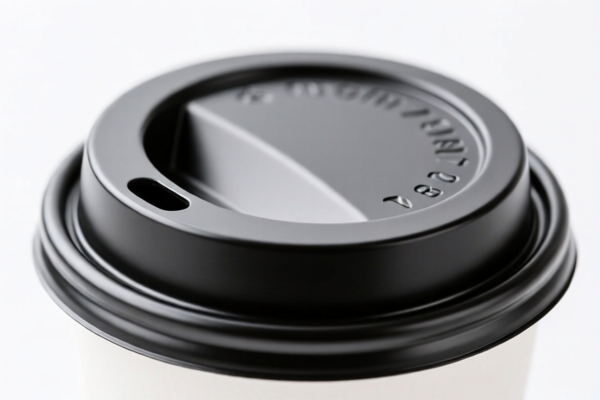



AI Analysis
🍼 Cup Lid (Cover for Cups or Sealing Lids)
🌐 HS Code Reference & Customs Clearance Guide | 2026 Latest Tariff Analysis | Pro-Level Import Strategy
📌 One Product, Five Classifications – Why the Same Cup Lid Has Different Tariffs?
A seemingly simple cup lid can be classified under five different HS codes depending on its material, design, and intended function. This is critical for importers — because the tax rate can vary from 37.5% to 40.3%, even for the same physical product!
⚠️ Key Insight:
- Plastic lids → Higher tariffs (40.3%)
- Glass, metal, or other non-plastic lids → Slightly lower (37.5%–37.6%)
- All are subject to 25% + 10% extra tariffs — this is NOT optional!
📦 Two-Part Classification Breakdown (2026 Updated Tariff Rules)
✅ All HS codes listed are valid for U.S. imports from China (CN)
✅ Effective from November 10, 2025
✅ All include: Base Duty + 25% Section 301 + 10% IEEPA
🔹 Part 1: Material-Based HS Code Classification
| HS Code | Product Description | Material | Functional Use | Tax Rate |
|---|---|---|---|---|
3923.50.00.00 |
Plastic cup lid, designed as a cover or sealing lid | Plastic | Primary sealing/covering function | 40.3% |
3923.10.90.00 |
Plastic cup lid, classified as plug, cap, or other closure | Plastic | General sealing component | 38.0% |
7010.20.20.00 |
Glass cup lid, falls under closure containers | Glass | Seals containers (e.g., jars, bottles) | 37.5% |
8309.90.00.85 |
Non-aluminum, non-steel metal lid (e.g., brass, copper) | 贱金属 (Base Metal) | General plug or cover | 37.6% |
8309.90.00.80 |
Metal cup lid, classified as plug, cap, or cover | Metal (non-steel/aluminum) | Sealing component | 37.6% |
📌 Why So Many Codes?
- Plastic lids are treated more strictly due to overproduction concerns and trade policy focus. - Glass and metal lids are seen as more durable, less prone to waste, hence slightly lower tariffs. - Material ≠ Function — even if two lids look identical, their classification depends on material and purpose.
💰 Four-Tier Tariff Breakdown (2026 U.S. Import Rules)
✅ Applicable to: China (CN) origin goods
✅ Effective: November 10, 2025
✅ All tariffs are ad valorem (based on CIF value)
🎯 1. 3923.50.00.00 — Plastic Cup Lid (Primary Cover/Sealing Lid)
| Item | Detail |
|---|---|
| Base Duty | 5.3% |
| Section 301 (USITC) | +25.0% |
| IEEPA (International Emergency Economic Powers Act) | +10.0% |
| Total Effective Tariff | 40.3% |
| Tax Calculation | CIF × 40.3% |
| De Minimis (Micro-Exemption) | ❌ Not applicable (denied) |
| Legal Basis Path | IEEPA:9903.01.25 → IEEPA:9903.01.24 → USITC:3923.50.00.00 → FOOTNOTE:9903.88.01 |
📌 Explanation:
- This code applies to plastic lids designed specifically as covers or sealing lids — not just any plastic cap. - The higher base duty (5.3%) reflects U.S. policy to discourage single-use plastic. - IEEPA + Section 301 = 35% extra — this is mandatory, no exemptions.
🎯 2. 3923.10.90.00 — Plastic Cup Lid (General Plug/Cap/Seal)
| Item | Detail |
|---|---|
| Base Duty | 3.0% |
| Section 301 (USITC) | +25.0% |
| IEEPA | +10.0% |
| Total Effective Tariff | 38.0% |
| Tax Calculation | CIF × 38.0% |
| De Minimis | ❌ Not applicable |
| Legal Basis Path | IEEPA:9901.25 → IEEPA:9903.01.24 → USITC:3923.10.90.00 → FOOTNOTE:9903.88.01 |
📌 Key Difference from Above:
- This code is for general sealing components, not specifically designed as a "cover". - Lower base duty → slightly lower total tax. - Still subject to 35% extra tariffs — no relief.
🎯 3. 7010.20.20.00 — Glass Cup Lid (Closure for Containers)
| Item | Detail |
|---|---|
| Base Duty | 2.5% |
| Section 301 (USITC) | +25.0% |
| IEEPA | +10.0% |
| Total Effective Tariff | 37.5% |
| Tax Calculation | CIF × 37.5% |
| De Minimis | ❌ Not applicable |
| Legal Basis Path | IEEPA:9903.01.25 → IEEPA:9903.01.24 → USITC:7010.20.20.00 → FOOTNOTE:9903.88.01 |
📌 Why Lower?
- Glass is less environmentally damaging than plastic. - Not subject to the same overproduction concerns. - Still 35% extra tariffs — no exceptions.
🎯 4. 8309.90.00.85 & 8309.90.00.80 — Metal Cup Lids (Non-Aluminum, Non-Steel)
| Item | Detail |
|---|---|
| Base Duty | 2.6% |
| Section 301 (USITC) | +25.0% |
| IEEPA | +10.0% |
| Total Effective Tariff | 37.6% |
| Tax Calculation | CIF × 37.6% |
| De Minimis | ❌ Not applicable |
| Legal Basis Path | IEEPA:9903.01.25 → IEEPA:9903.01.24 → USITC:8309.90.00.85/80 → FOOTNOTE:9903.88.01 |
📌 Note:
- Both codes apply to non-ferrous metals (e.g., brass, copper, bronze). - No difference in tax rate — only material distinction. - Same 35% extra tariffs apply.
🛠️ Pro-Level Customs Clearance Tips (Avoid Costly Mistakes!)
✅ 1. Critical Documentation Checklist (MUST-HAVE)
| Document | Required? | Why It Matters |
|---|---|---|
| ✅ Product Specs & Drawings | ✔️ | Prove material, function, and design |
| ✅ High-Res Product Photos | ✔️ | Show lid type (cover vs. plug), material, sealing mechanism |
| ✅ Commercial Invoice | ✔️ | Must state: “Cup Lid – [Material] – Designed as Cover/Sealing Lid” |
| ✅ Certificate of Origin (CO) | ✔️ | If from Vietnam/Mexico, can qualify for IEEPA exemption |
| ✅ Material Test Report | ✔️ | Confirm plastic/glass/metal composition |
| ✅ 3D Model / CAD File | ✔️ | For complex lids (e.g., child-proof, twist-lock) |
✅ 2. 申报策略口诀 (Golden Rule)
🔥 “Material First, Function Second, Name Last – Tax Rate Depends on All Three!”
| Scenario | Correct HS Code | Wrong Code | Result |
|---|---|---|---|
| Plastic lid with sealing groove | 3923.50.00.00 |
3923.10.90.00 |
+2.3% extra tax |
| Plastic lid not designed as cover | 3923.10.90.00 |
3923.50.00.00 |
+2.3% extra tax |
| Glass lid with tight seal | 7010.20.20.00 |
8309.90.00.85 |
+0.1% lower tax |
| Metal lid (brass) | 8309.90.00.85 |
8309.90.00.80 |
Same tax, but wrong code = audit risk |
✅ 3. Special Cases & Workarounds
| Situation | Solution |
|---|---|
| Lid with built-in straw | Still falls under same HS code — no change in classification |
| Lid for reusable bottles | Use 7010.20.20.00 (glass) or 3923.50.00.00 (plastic) — function matters |
| Lid sold separately from cup | Must still be classified based on material and purpose — not by packaging |
| Lid made in Vietnam/Mexico | Can apply for IEEPA exemption → 0% extra tariffs (if CO is valid) |
🌍 Global Market Tariff Comparison (2026)
| Country | Recommended HS Code | Base Duty | Extra Taxes | Total Tax | Notes |
|---|---|---|---|---|---|
| 🇺🇸 USA | 3923.50.00.00 |
5.3% | +25% +10% | 40.3% | No de minimis |
| 🇨🇳 China | 3923.50.00.00 |
5% | 0% | 5% | No extra tariffs |
| 🇪🇺 EU | 3923.50.00.00 |
0% | 0% | 0% | CE mark required |
| 🇦🇺 Australia | 3923.50.00.00 |
5% | 0% | 5% | No extra tariffs |
| 🇯🇵 Japan | 3923.50.00.00 |
0% | 0% | 0% | PSE required |
📌 Insight:
- Only the U.S. imposes 35% extra tariffs on cup lids from China. - Vietnam/Mexico origin = potential 0% extra — shift production if possible.
📌 Common Mistakes & Costly Pitfalls (Real Cases)
❌ Mistake 1: Using “plastic cap” instead of “plastic cup lid” in invoice
👉 Result: Customs may reclassify → higher tax + penalties
❌ Mistake 2: Not specifying function (cover vs. plug)
👉 Result: Misclassification → 40.3% vs 38.0% → $10,000+ difference on $1M shipment
❌ Mistake 3: Assuming “same product = same HS code”
👉 Result: One lid is 3923.50.00.00, another is 3923.10.90.00 — different tax!
✅ Best Practice:
Use exact product name:
“Plastic Cup Lid, Designed as Sealing Cover, for Disposable Beverage Containers, Material: PP, Model XYZ”
🎯 Final Verdict: How to Win the Tariff Game
🎯 Remember the 3-Step Rule:
🔹 1. Material First → Plastic? Glass? Metal?
🔹 2. Function Second → Is it a cover or plug?
🔹 3. Name Last → Use precise, legal terminology💡 Pro Tip:
- Apply for an Advance Ruling (Pre-Clearance) before shipping. - Change origin to Vietnam/Mexico if possible → save 35% in extra tariffs. - Use a customs broker with U.S. Section 301/IEEPA expertise.
📣 Act Now!
📞 Contact a U.S.-based customs broker + provide product photos + request HS Code pre-ruling
🚀 Avoid $100K+ in unexpected tariffs — your profit depends on it!
✨ Precision Classification = Lower Tax = Higher Profit!
💼 Don’t let a simple cup lid cost you millions.
Customer Reviews
About HS Code Classification
The Harmonized System (HS) is an internationally standardized nomenclature developed by the World Customs Organization (WCO) to classify traded products. Over 200 countries use the HS system as the basis for customs tariffs, trade statistics, and import/export regulations.
Each HS code follows a hierarchical structure:
- Chapter (2 digits) — Broad category of goods (e.g., Chapter 84: Machinery and Mechanical Appliances)
- Heading (4 digits) — More specific grouping within the chapter
- Subheading (6 digits) — Internationally standardized breakdown, used by all WCO member countries
- National subdivisions (8-10 digits) — Country-specific extensions for further classification, such as US HTSUS 10-digit codes
Correct HS code classification is essential for smooth customs clearance, accurate duty payment, and compliance with trade regulations. Misclassification can lead to customs delays, overpayment of duties, or penalties.
When importing from CN to US, the applicable tariff rates may include:
- Most-Favored-Nation (MFN) rate — The standard duty rate applied to WTO members
- General rate — Applied to countries without trade agreements
- Trade remedy duties — Additional tariffs such as Section 301 (anti-dumping), Section 232 (national security), or countervailing duties
The information provided on this page is for reference purposes only. For official classification, please consult with your local customs authority or a licensed customs broker.