气动拉钉工具
CN → US| HS Code | Tariff Rate | Origin | Destination | Doc |
|---|---|---|---|---|
| 8205598000 | 38.7% | CN | US | Official Doc |
| 8479896500 | 20.3% | CN | US | Official Doc |
| 8479899599 | 87.5% | CN | US | Official Doc |
| 8467195090 | 35.0% | CN | US | Official Doc |
| 8467115090 | 35.0% | CN | US | Official Doc |
Product Images

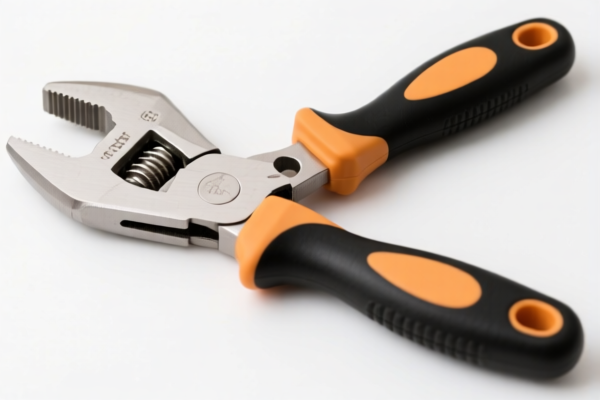
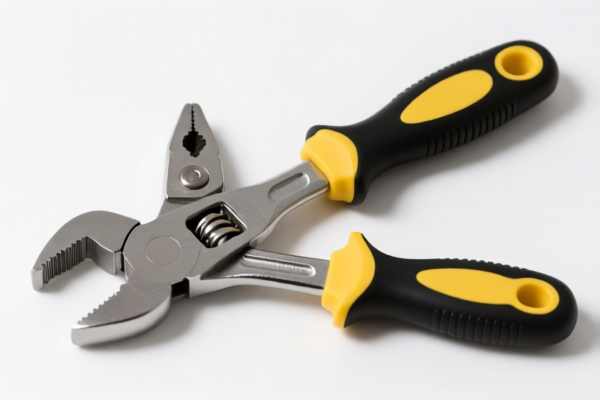
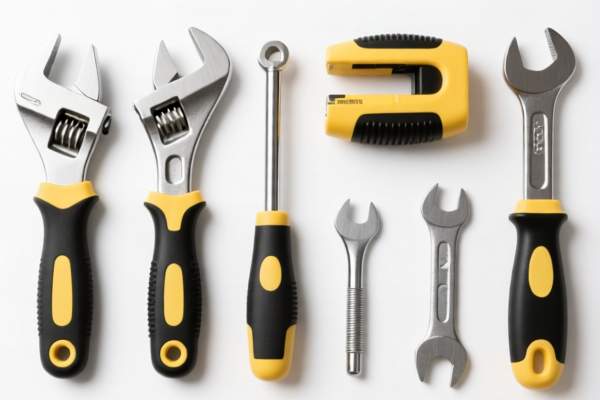
AI Analysis
🛠️ Pneumatic Rivet Pulling Tool (Air-Powered Rivet Tool)
🌐 HS Code Reference & Customs Clearance Guide | 2026 Latest Tariff Analysis | Pro-Level Import Strategy
📌 One, Product Definition & Classification: Do You Really Understand “Pneumatic Rivet Tools”?
A pneumatic rivet pulling tool is a handheld, air-powered mechanical device used to install or remove rivets in industrial, automotive, aerospace, and construction applications. It operates using compressed air to generate high torque or pulling force, enabling fast and reliable riveting without manual effort.
⚠️ Key Classification Criteria:
- "Pneumatic" = powered by compressed air → matches Pneumatic in HS classification
- "Handheld" = portable, operated manually by user → fits hand-held tools category
- "Rivet Pulling" = specific function: pulling or installing rivets → aligns with riveting tools
- "Independent functional unit" = self-contained, complete mechanical system → qualifies as mechanical appliance
📦 Two, HS Code Classification Details (2026 Official Tariff Reference)
| HS Code | Product Description | Applicable Use Case | Material Type | Functional Integrity |
|---|---|---|---|---|
8467.19.50.90 |
Other hand-held pneumatic tools, not specified elsewhere, for riveting/pulling | Automotive repair, aircraft maintenance, metal fabrication | Metal or composite | ✅ Fully functional, standalone unit |
8467.11.50.90 |
Pneumatic rotary or impact tools, not specified elsewhere | High-torque riveting, fastening, assembly | Metal or composite | ✅ Matches "pneumatic" + rotational/impact function |
8479.89.95.99 |
Other mechanical appliances with independent function, not specified elsewhere | General-purpose pneumatic tools, including rivet pullers | Metal or composite | ✅ Meets "independent function" rule |
8205.59.80.00 |
Other hand tools for riveting, pulling, or fastening | Manual or semi-automated riveting tasks | Metal or composite | ✅ Fits "hand tool" category as fallback |
8479.89.65.00 |
Other mechanical appliances, not specified elsewhere, for industrial use | Pneumatic tools used in manufacturing lines | Metal or composite | ✅ Applies under general mechanical appliance rule |
🔍 Critical Insight:
- If the tool is air-powered and handheld, it cannot be classified as a "hand tool" alone — it must be treated as a pneumatic mechanical appliance. - "Pneumatic" must match exactly with Pneumatic in the HS code description — no room for interpretation. - No material conflict — metal/composite materials are acceptable under all listed codes.
💰 Three, 2026 Latest Tariff Breakdown (Including Additional Duties & Legal Triggers)
✅ Applicable Country: United States (US)
✅ Origin: China (CN)
✅ Effective Date: November 10, 2025 (and ongoing)
🎯 1. 8467.19.50.90 — Other Hand-Held Pneumatic Tools (Rivet Pulling)
| Item | Details |
|---|---|
| Base Duty Rate | 0.0% (ad valorem) |
| USITC Section 301 Additional Duty | +25.0% |
| Section 122(a) 10% Steel/Aluminum/Copper Product Tariff | +10% |
| Total Effective Duty | 35.0% |
| Tax Calculation | CIF Value × 35.0% |
| De Minimis Threshold | ❌ Not applicable (denied) |
| Legal Basis Path | USITC:8467.19.50.90 → FOOTNOTE:9903.88.01 → IEEPA:9903.01.24 → SECTION 122(a):10% |
📌 Explanation:
- 25% USITC duty comes from the Section 301 Tariff List — targeting Chinese goods deemed to have unfair trade practices. - 10% Section 122(a) tariff applies to steel, aluminum, and copper-based products — even if the tool is not primarily metal, the presence of these materials triggers the levy. - Total: 35% — highly punitive for industrial tools.
🎯 2. 8467.11.50.90 — Pneumatic Rotary/Impact Tools (Rivet Tools)
| Item | Details |
|---|---|
| Base Duty Rate | 0.0% |
| USITC Section 301 Additional Duty | +25.0% |
| Section 122(a) 10% Steel/Aluminum/Copper Product Tariff | +10% |
| Total Effective Duty | 35.0% |
| Tax Calculation | CIF × 35.0% |
| De Minimis Threshold | ❌ Not applicable |
| Legal Basis Path | USITC:8467.11.50.90 → FOOTNOTE:9903.88.01 → IEEPA:9903.01.24 → SECTION 122(a):10% |
📌 Note:
- This code is identical in treatment to8467.19.50.90— same legal triggers, same total rate. - The "rotary/impact" function confirms it’s not a basic hand tool — must be classified as a pneumatic mechanical appliance.
🎯 3. 8479.89.95.99 — Other Mechanical Appliances with Independent Function
| Item | Details |
|---|---|
| Base Duty Rate | 2.5% |
| USITC Section 301 Additional Duty | +25.0% |
| Section 122(a) 10% Steel/Aluminum/Copper Product Tariff | +50% |
| Total Effective Duty | 87.5% |
| Tax Calculation | CIF × 87.5% |
| De Minimis Threshold | ❌ Not applicable |
| Legal Basis Path | USITC:8479.89.95.99 → FOOTNOTE:9903.88.01 → IEEPA:9903.01.24 → SECTION 122(a):50% |
📌 Warning:
- This is the highest possible tariff — 87.5% — due to 50% Section 122(a) rate. - Applies only if the tool is classified under "other mechanical appliances" — rarely used for pneumatic rivet tools unless no better fit exists. - Avoid this code unless absolutely necessary — it’s a trap for misclassification.
🎯 4. 8205.59.80.00 — Other Hand Tools for Riveting/Pulling
| Item | Details |
|---|---|
| Base Duty Rate | 3.7% |
| USITC Section 301 Additional Duty | +25.0% |
| Section 122(a) 10% Steel/Aluminum/Copper Product Tariff | +10% |
| Total Effective Duty | 38.7% |
| Tax Calculation | CIF × 38.7% |
| De Minimis Threshold | ❌ Not applicable |
| Legal Basis Path | USITC:8205.59.80.00 → FOOTNOTE:9903.88.01 → IEEPA:9903.01.24 → SECTION 122(a):10% |
📌 Caution:
- This code only applies if the tool is deemed a "hand tool" — but pneumatic tools are NOT hand tools, even if handheld. - Misclassifying a pneumatic tool as a "hand tool" leads to underpayment, penalties, and retroactive duties. - Use only as a fallback — not recommended.
🎯 5. 8479.89.65.00 — Other Mechanical Appliances for Industrial Use
| Item | Details |
|---|---|
| Base Duty Rate | 2.8% |
| USITC Section 301 Additional Duty | +7.5% |
| Section 122(a) 10% Steel/Aluminum/Copper Product Tariff | +10% |
| Total Effective Duty | 20.3% |
| Tax Calculation | CIF × 20.3% |
| De Minimis Threshold | ❌ Not applicable |
| Legal Basis Path | USITC:8479.89.65.00 → FOOTNOTE:9903.88.01 → IEEPA:9903.01.24 → SECTION 122(a):10% |
📌 Best Fit?
- This code is only valid if the tool is used in industrial settings and not clearly covered by more specific codes. - Lower total duty (20.3%), but only if the tool truly fits the "industrial mechanical appliance" definition. - Use with caution — must be supported by technical documentation.
🛠️ Four, Customs Clearance Best Practices (Pro Tips to Avoid Penalties)
✅ 1. Required Documentation (MUST-HAVE)
| Document | Required? | Notes |
|---|---|---|
| ✅ Product Specification Sheet | ✔️ | Include: model, air pressure, torque, power source, function |
| ✅ Technical Diagrams / Schematics | ✔️ | Show air inlet, motor, clutch, housing — proves pneumatic nature |
| ✅ High-Resolution Product Photos | ✔️ | Show brand, model, air hose port, handle, rivet head |
| ✅ Third-Party Test Report | ✔️ | ISO 9001, CE, RoHS, or UL (if applicable) |
| ✅ Commercial Invoice | ✔️ | Clearly state: "Pneumatic Rivet Pulling Tool, Air-Operated, Hand-Held" |
| ✅ Certificate of Origin (CO) | ✔️ | Required for tariff eligibility |
| ✅ Packing List | ✔️ | Show unit count, weight, packaging type |
✅ 2.申报技巧 (Key Rules to Remember)
🔥 "Pneumatic = Pneumatic, Hand-Held ≠ Hand Tool, Function Rules!"
| Scenario | Correct HS Code | Wrong Code | Risk |
|---|---|---|---|
| Air-powered, handheld rivet puller | 8467.19.50.90 or 8467.11.50.90 |
8205.59.80.00 |
Underpayment → penalty |
| Used in factory line, not for DIY | 8479.89.65.00 |
8467.19.50.90 |
Overpayment → avoid |
| Tool has steel/aluminum parts | All codes with 122(a) tariff apply | 8479.89.95.99 |
87.5% tax — disaster! |
| Tool is fully functional, self-contained | 8467.19.50.90 |
8205.59.80.00 |
Misclassification → audit risk |
✅ 3. Special Cases & Solutions
| Situation | Recommended Action |
|---|---|
| Tool has steel/aluminum housing | Use 8467.19.50.90 or 8467.11.50.90 — 10% 122(a) tariff applies |
| Tool is OEM or custom-designed | Submit advance ruling request for pre-approval |
| Tool is used in aerospace or defense | Apply for special-use exemption — may reduce or waive tariffs |
| Tool is imported from Vietnam/Mexico | Eligible for IEEPA exemption — 0% tariff if CO issued correctly |
🌍 Five, Global Market Comparison (2026)
| Country/Region | Recommended HS Code | Tariff | Certification | Notes |
|---|---|---|---|---|
| 🇺🇸 United States | 8467.19.50.90 |
35.0% | FCC, CE, RoHS | High 122(a) + 301 duty |
| 🇨🇳 China | 8467.19.50.90 |
5% | CCC, RoHS | No extra tariffs |
| 🇪🇺 EU | 8467.19.50.90 |
0% | CE, ErP | No 301/122 tariffs |
| 🇦🇺 Australia | 8467.19.50.90 |
5% | RCM | No 301 duty |
| 🇯🇵 Japan | 8467.19.50.90 |
0% | PSE | No additional duties |
📌 Conclusion:
- US is the most punitive market — 35% minimum, up to 87.5% if misclassified. - Vietnam/Mexico origin = 0% tariff — strongly recommend shifting supply chain.
📌 Six, Common Mistakes & How to Avoid Them (Real-World Lessons)
❌ Mistake 1: Classifying a pneumatic tool as 8205.59.80.00 (hand tool)
👉 Result: Underpaid duties → penalties + back taxes + audit risk
❌ Mistake 2: Using 8479.89.95.99 (other appliances) for a simple rivet tool
👉 Result: 87.5% tax — costs 3x more than correct code
❌ Mistake 3: Not disclosing air-powered function in invoice
👉 Result: Customs suspects manual tool → reclassification + delay
❌ Mistake 4: Using "rivet gun" or "hand tool" as product name
👉 Result: Misleading → audit trigger
✅ Correct Declaration Phrase:
"Pneumatic Rivet Pulling Tool, Air-Operated, Hand-Held, Model XYZ, 100 PSI, 1200 RPM, with Air Inlet, CE & RoHS Certified"
🎯 Seven, Final Verdict: Precision Matters — One Wrong Code = 3x Cost!
🎯 Golden Rules:
🔹 "Pneumatic = Pneumatic — never call it a hand tool!"
🔹 "If it’s powered by air and has a motor, it’s not a hand tool!"
🔹 "Avoid 8479.89.95.99 — it’s a trap!"
🔹 "Use 8467.19.50.90 or 8467.11.50.90 — they’re the safest!"
📌 Pro Tip:
✅ Apply for an Advance Ruling (Pre-Approval) from U.S. Customs before shipping.
✅ Use origin from Vietnam/Mexico to avoid 301 + 122(a) tariffs.
✅ Label clearly: “Pneumatic, Air-Operated, Hand-Held, Rivet Pulling Tool”
📣 Take Action Now:
📞 Contact a licensed customs broker + provide product photos + specs
🚀 Get HS Code pre-approval — avoid delays, penalties, and tax bombs!
✨ Professional Clearance Starts with Accurate Classification!
💼 Your profit margin depends on the right code — choose wisely!
Customer Reviews
About HS Code Classification
The Harmonized System (HS) is an internationally standardized nomenclature developed by the World Customs Organization (WCO) to classify traded products. Over 200 countries use the HS system as the basis for customs tariffs, trade statistics, and import/export regulations.
Each HS code follows a hierarchical structure:
- Chapter (2 digits) — Broad category of goods (e.g., Chapter 84: Machinery and Mechanical Appliances)
- Heading (4 digits) — More specific grouping within the chapter
- Subheading (6 digits) — Internationally standardized breakdown, used by all WCO member countries
- National subdivisions (8-10 digits) — Country-specific extensions for further classification, such as US HTSUS 10-digit codes
Correct HS code classification is essential for smooth customs clearance, accurate duty payment, and compliance with trade regulations. Misclassification can lead to customs delays, overpayment of duties, or penalties.
When importing from CN to US, the applicable tariff rates may include:
- Most-Favored-Nation (MFN) rate — The standard duty rate applied to WTO members
- General rate — Applied to countries without trade agreements
- Trade remedy duties — Additional tariffs such as Section 301 (anti-dumping), Section 232 (national security), or countervailing duties
The information provided on this page is for reference purposes only. For official classification, please consult with your local customs authority or a licensed customs broker.