涤纶蕾丝染色窗帘
CN → US| HS Code | Tariff Rate | Origin | Destination | Doc |
|---|---|---|---|---|
| 6303120010 | 28.8% | CN | US | Official Doc |
| 6303120090 | 28.8% | CN | US | Official Doc |
| 5804210000 | 47.0% | CN | US | Official Doc |
| 5804101000 | 41.0% | CN | US | Official Doc |
| 5407522020 | 49.9% | CN | US | Official Doc |
| 5407522060 | 49.9% | CN | US | Official Doc |
Product Images
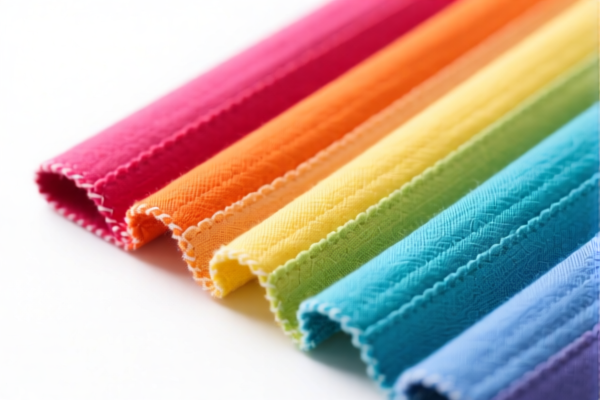
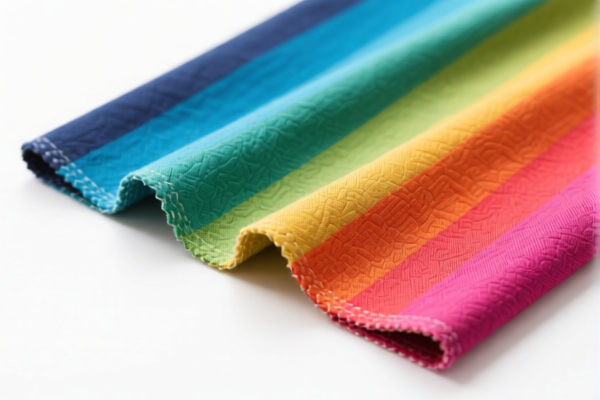


AI Analysis
🌸 Polyester Embroidered & Dyed Lace Curtains (Synthetic Fiber Fabric)
🌐 HS Code Reference & Customs Clearance Guide | 2026 Latest Tariff Analysis | Pro-Level Import Strategy
📌 One, Product Definition & Classification: What Exactly Is “Polyester Lace Curtains”?
Polyester lace curtains are decorative textile products made from synthetic fibers (specifically polyester), featuring intricate lace patterns created via machine weaving. These fabrics are typically dyed before or after weaving and used as window treatments — such as sheer, semi-sheer, or blackout curtains — offering both aesthetic appeal and light control.
⚠️ Critical Distinction:
- If the fabric is woven on a machine, not hand-knitted or crocheted, and made from synthetic fibers, it falls under textile machinery-made lace — not knitted fabric.
- If the product is used as a window covering (curtain or blind), even if it's lace, it is classified as a window treatment, not just a fabric.
📦 Two, HS Code Classification Breakdown (2026 Official Tariff Reference)
| HS Code | Product Description | Applicable Use Case | Key Features |
|---|---|---|---|
6303.12.00.10 |
Woven polyester (synthetic fiber) curtains & blackout blinds | Full-length window curtains, room dividers, privacy screens | Machine-woven, dyed, used for light control |
6303.12.00.90 |
Knitted or crocheted synthetic fiber curtains | Light, sheer curtains, decorative drapes | Handmade or machine-knitted, not fully woven |
5804.21.00.00 |
Machine-made artificial fiber lace (e.g., polyester lace) | Raw lace fabric, trim, or decorative panels | Not yet cut into curtains; used as component |
5407.52.20.60 |
Dyed polyester filament woven fabric | High-end, patterned, dyed curtains or drapes | Long-fiber polyester, dyed after weaving, high durability |
🔍 Key Insight:
-6303.12.00.10applies when the entire product is a finished curtain made from machine-woven polyester lace, used for window coverage.
-5804.21.00.00applies only if the product is raw lace fabric, not yet cut or assembled into a curtain.
-5407.52.20.60applies if the fabric is dyed after weaving, and used in high-end decorative curtains.
💰 Three, 2026 Latest Tariff Rates (With Detailed Duty Clauses)
✅ Applicable Country: United States (US)
✅ Origin: China (CN)
✅ Effective Date: November 10, 2025 (including subsequent imports)
🎯 1. 6303.12.00.10 — Polyester Woven Curtain / Blackout Blind
| Item | Detail |
|---|---|
| Base Tariff | 11.3% (ad valorem) |
| Section 301 Additional Duty | +7.5% (from USITC Footnote 9903.88.01) |
| Section 122 (IEEPA) Additional Duty | +10% (for Chinese-origin goods under IEEPA) |
| Total Effective Duty | 28.8% |
| Tax Calculation | CIF Value × 28.8% |
| De Minimis Threshold | ❌ Not applicable (denied de minimis) |
| Legal Basis Path | IEEPA:9903.01.25 → IEEPA:9903.01.24 → USITC:6303.12.00.10 → FOOTNOTE:9903.88.01 |
📌 Explanation:
- Base 11.3%: Standard tariff for synthetic fiber curtains.
- +7.5% Section 301: Imposed under the U.S. Trade Act of 1974, targeting Chinese goods deemed unfair trade practices.
- +10% IEEPA (Section 122): Enacted under the International Emergency Economic Powers Act, used to restrict imports from China for national security concerns.
- Total: 28.8% — High-cost barrier for U.S. importers.
🎯 2. 6303.12.00.90 — Knitted or Crocheted Synthetic Fiber Curtains
| Item | Detail |
|---|---|
| Base Tariff | 11.3% |
| Section 301 Additional Duty | +7.5% |
| Section 122 (IEEPA) Additional Duty | +10% |
| Total Effective Duty | 28.8% |
| Tax Calculation | CIF × 28.8% |
| De Minimis Threshold | ❌ Not applicable |
| Legal Basis Path | IEEPA:9903.01.25 → IEEPA:9903.01.24 → USITC:6303.12.00.90 → FOOTNOTE:9903.88.01 |
📌 Note:
- Even if the curtain is knitted or crocheted, if it's used as a window covering, it still falls under 6303.12.00.90.
- Same 28.8% total rate — no difference from woven curtains.
- Do not confuse with raw lace fabric — that’s a different HS code.
🎯 3. 5804.21.00.00 — Machine-Made Artificial Fiber Lace (Raw Fabric)
| Item | Detail |
|---|---|
| Base Tariff | 12.0% |
| Section 301 Additional Duty | +25.0% |
| Section 122 (IEEPA) Additional Duty | +10% |
| Total Effective Duty | 47.0% |
| Tax Calculation | CIF × 47.0% |
| De Minimis Threshold | ❌ Not applicable |
| Legal Basis Path | IEEPA:9903.01.25 → IEEPA:9903.01.24 → USITC:5804.21.00.00 → FOOTNOTE:9903.88.01 |
📌 Critical Warning:
- This 47.0% rate applies ONLY if the product is raw lace fabric, not yet assembled into a curtain.
- If you ship "lace trim" or "lace panel" as a component, this is the correct code.
- If you ship finished curtains, do NOT use this code — it will trigger severe penalties.
🎯 4. 5407.52.20.60 — Dyed Polyester Filament Woven Fabric
| Item | Detail |
|---|---|
| Base Tariff | 14.9% |
| Section 301 Additional Duty | +25.0% |
| Section 122 (IEEPA) Additional Duty | +10% |
| Total Effective Duty | 49.9% |
| Tax Calculation | CIF × 49.9% |
| De Minimis Threshold | ❌ Not applicable |
| Legal Basis Path | IEEPA:9903.01.25 → IEEPA:9903.01.24 → USITC:5407.52.20.60 → FOOTNOTE:9903.88.01 |
📌 Why So High?
- Dyed after weaving = higher value-added process → higher tariff.
- Polyester filament = high-performance synthetic fiber → targeted under Section 301.
- Used in premium curtains → often imported as finished fabric for local manufacturing.
- 49.9% is the highest rate in this list — avoid this code unless you’re shipping raw fabric.
🛠️ Four, Customs Clearance Best Practices (Pro Tips to Avoid Penalties)
✅ 1. Required Documentation (Must-Have Checklist)
| Document | Required? | Why It Matters |
|---|---|---|
| ✅ Product Specification Sheet | ✔️ | Shows fiber type, weave method, dyeing process |
| ✅ Fabric Sample (with label) | ✔️ | Proves it’s machine-woven, not knitted |
| ✅ Commercial Invoice | ✔️ | Must state: “Machine-woven polyester lace curtain, for window use” |
| ✅ Packing List | ✔️ | Shows number of units, dimensions, weight |
| ✅ Certificate of Origin (CO) | ✔️ | If from Vietnam, Mexico, or Thailand → may qualify for lower tariffs |
| ✅ Test Report (RoHS, REACH, OEKO-TEX) | ✔️ | Proves no harmful chemicals (required by U.S. EPA) |
| ✅ Photos of Final Product | ✔️ | Shows finished curtain, not raw fabric |
✅ 2.申报技巧 (Key Rules to Remember)
🔥 “Finish = Full Curtain, Raw = Fabric – Never Mix!”
| Scenario | Correct HS Code | Wrong Code | Risk |
|---|---|---|---|
| Finished curtain (woven, dyed, hung) | 6303.12.00.10 |
5804.21.00.00 |
47% vs 28.8% → $18 extra per $100 |
| Raw lace fabric (not cut into curtain) | 5804.21.00.00 |
6303.12.00.10 |
47% vs 28.8% → overpay |
| Dyed polyester fabric (for local cutting) | 5407.52.20.60 |
6303.12.00.10 |
49.9% vs 28.8% → massive overpayment |
| Knitted curtain (not woven) | 6303.12.00.90 |
6303.12.00.10 |
Same rate, but misclassification risk |
✅ 3. Special Cases & Solutions
| Situation | Recommended Action |
|---|---|
| Curtains made from raw lace fabric | Declare as 6303.12.00.10 — even if made from lace, if it's a finished curtain, it's not raw fabric |
| Lace trim used in curtains | Declare as 5804.21.00.00 — only if it's not assembled into a curtain |
| Curtains from non-China origin | Use Vietnam, Mexico, Thailand origin → may qualify for IEEPA exemption → 0% or 5% tariff |
| Custom design curtains | Apply for Advance Ruling (Pre-Clearance) — avoid disputes |
🌍 Five, Global Market Comparison (2026 Tariff Snapshot)
| Country/Region | Recommended HS Code | Tariff Rate | Certification Required | Notes |
|---|---|---|---|---|
| 🇺🇸 USA | 6303.12.00.10 |
28.8% (China) | FCC, RoHS, OEKO-TEX | High risk; no de minimis |
| 🇨🇳 China | 6303.12.00.10 |
5% | CCC, RoHS | No extra duties |
| 🇪🇺 EU | 6303.12.00.00 |
0% (if CE compliant) | CE, REACH | No additional tariffs |
| 🇦🇺 Australia | 6303.12.00.10 |
5% | RCM | No extra duties |
| 🇯🇵 Japan | 6303.12.00.10 |
0% | PSE | No extra duties |
📌 Takeaway:
- The U.S. is the only market with 28.8%+ tariffs on Chinese-made polyester curtains.
- Vietnam/Mexico origin can reduce tariffs to 0%–5% — strongly recommend shifting production.
📌 Six, Common Mistakes & How to Avoid Them (Real-World Pitfalls)
❌ Mistake 1: Declaring finished curtains as raw lace fabric (5804.21.00.00)
👉 Result: 47% duty instead of 28.8% → overpay by 63% → audit risk
❌ Mistake 2: Using 6303.12.00.10 for knitted curtains
👉 Result: Even though same rate, misclassification → possible detention or penalty
❌ Mistake 3: Not providing photos of final product
👉 Result: Customs can’t verify it’s a curtain, not a fabric → delay or rejection
❌ Mistake 4: Ignoring dyeing process in classification
👉 Result: If dyed after weaving, may trigger 5407.52.20.60 → 49.9% → huge overpayment
✅ Correct Declaration Example:
“Machine-woven polyester lace curtain, dyed, 100% polyester, 2.5m x 2.5m, for window use, with blackout lining, model XYZ, OEKO-TEX certified”
🎯 Seven, Final Verdict: Precision Beats Guesswork
🎯 Remember the Golden Rule:
🔹 “If it’s a finished curtain, use
6303.12.00.10or6303.12.00.90”
🔹 “If it’s raw lace fabric, use5804.21.00.00”
🔹 “If it’s dyed after weaving, use5407.52.20.60”
🔹 “Never mix finished products with raw components”
📌 Pro Tip:
📞 Apply for an Advance Ruling (Pre-Clearance) from U.S. Customs before shipping.
🚀 Save thousands in duties, avoid audits, and ensure smooth clearance.
📣 Act Now!
📞 Contact a licensed customs broker + provide product photos + request HS Code pre-approval
🚀 Turn your polyester lace curtains into a global success — not a customs nightmare!
✨ Professional Clearance Starts with Accurate Classification!
💼 Your profit margin depends on the right HS Code — don’t gamble!
Customer Reviews
About HS Code Classification
The Harmonized System (HS) is an internationally standardized nomenclature developed by the World Customs Organization (WCO) to classify traded products. Over 200 countries use the HS system as the basis for customs tariffs, trade statistics, and import/export regulations.
Each HS code follows a hierarchical structure:
- Chapter (2 digits) — Broad category of goods (e.g., Chapter 84: Machinery and Mechanical Appliances)
- Heading (4 digits) — More specific grouping within the chapter
- Subheading (6 digits) — Internationally standardized breakdown, used by all WCO member countries
- National subdivisions (8-10 digits) — Country-specific extensions for further classification, such as US HTSUS 10-digit codes
Correct HS code classification is essential for smooth customs clearance, accurate duty payment, and compliance with trade regulations. Misclassification can lead to customs delays, overpayment of duties, or penalties.
When importing from CN to US, the applicable tariff rates may include:
- Most-Favored-Nation (MFN) rate — The standard duty rate applied to WTO members
- General rate — Applied to countries without trade agreements
- Trade remedy duties — Additional tariffs such as Section 301 (anti-dumping), Section 232 (national security), or countervailing duties
The information provided on this page is for reference purposes only. For official classification, please consult with your local customs authority or a licensed customs broker.