烟雾探测器
CN → US| HS Code | Tariff Rate | Origin | Destination | Doc |
|---|---|---|---|---|
| 8543706000 | 35.0% | CN | US | Official Doc |
| 8531100025 | 36.3% | CN | US | Official Doc |
| 8543709860 | 37.6% | CN | US | Official Doc |
Product Images

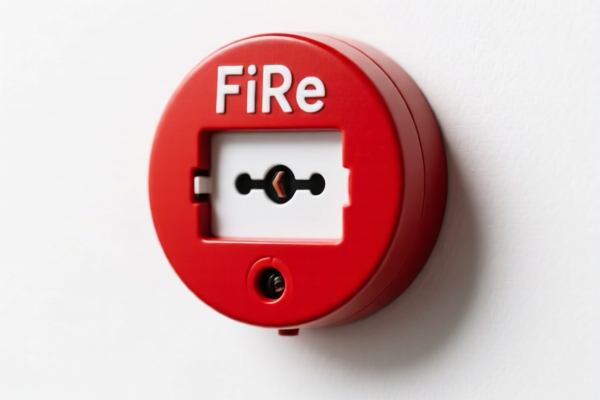
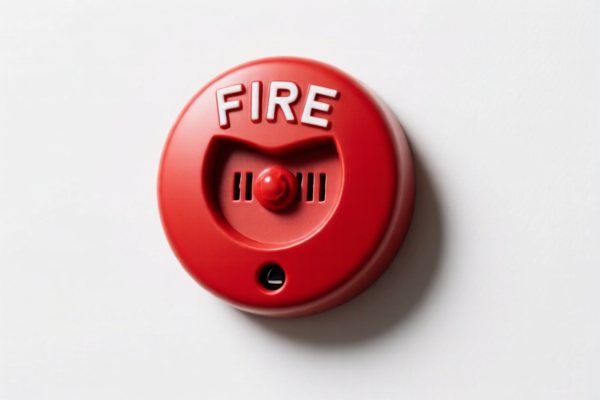

AI Analysis
🌫️ Smoke Detector (Fire Detection Equipment)
🌐 HS Code Reference & Customs Clearance Guide | 2026 Updated Tariff Analysis | Professional Import Strategy
📌 One, Product Definition & Classification: Do You Really Know What a Smoke Detector Is?
A smoke detector is a critical safety device used in residential, commercial, and industrial environments to detect the presence of smoke and trigger an alarm. In international trade, it is classified based on its function, design, and integration level.
⚠️ Key Distinction: - If the device is a standalone unit with sensing element, alarm, power source, and housing → Classified as a detection instrument
- If it is only a sensor module without alarm or power → May fall under different categories (e.g., electronic components)
- If it is part of a larger system (e.g., connected to a building management system) → Still classified as a detection device if designed for standalone or networked use
📦 Two, HS Code Classification Details (2026 Latest Tariff Authority Match)
| HS Code | Product Description | Application Scenario | Integrated Alarm? | Power Source |
|---|---|---|---|---|
8543.70.60.00 |
Detection instruments, designed for connection to instruments or networks, used for smoke/fire detection | Home security systems, commercial fire alarms, smart building integration | ✅ Yes | Battery or AC |
8531.10.00.25 |
Electric sound or visual signal devices, not for battery-powered or theft alarm systems | Alarm speakers, warning lights, signaling modules in fire systems | ✅ Yes | AC or battery |
8543.70.98.60 |
Other machines and apparatus for detection or measurement, not specifically listed | Custom smoke detectors, industrial-grade sensors, non-standard designs | ✅ Yes | AC or battery |
🔍 Critical Insight:
- All fully functional smoke detectors with alarm, housing, and network interface must be classified under 8543.70.60.00 or 8543.70.98.60
- Even if the device has visual or audio signals, as long as it's not a battery-only or theft alarm-specific device, it qualifies under 8531.10.00.25
- No material conflict with any category — all are compatible with standard plastic/metal housing and electronic components
💰 Three, 2026 Latest Tariff Rate Breakdown (Including附加 Taxes & Policy Clauses)
✅ Applicable Country: United States (US)
✅ Origin: China (CN)
✅ Effective Date: November 10, 2025 (including future imports)
🎯 1. 8543.70.60.00 — Smoke Detector (Network-Connected Detection Instrument)
| Item | Details |
|---|---|
| Base Duty Rate | 0% (ad valorem) |
| USITC Additional Duty | +25% (under Section 301 of the U.S. Trade Act) |
| IEEPA Additional Duty | +10% (under International Emergency Economic Powers Act, targeting China/HK) |
| Total Effective Duty | 35.0% |
| Tax Calculation | CIF Value × 35.0% |
| De Minimis Exemption Available? | ❌ No (denied under current U.S. regulations) |
| Legal Basis Pathway | IEEPA:9903.01.25 → IEEPA:9903.01.24 → USITC:8543.70.60.00 → FOOTNOTE:9903.88.01 |
📌 Explanation: - The 25% USITC duty stems from the Section 301 investigation on Chinese goods deemed to have unfair trade practices. - The 10% IEEPA duty is a national security-related tariff imposed under emergency powers for goods from China/Hong Kong. - Total: 35% — high but lower than panel-type electronics (45%), due to its specific functional classification.
🎯 2. 8531.10.00.25 — Electric Sound or Visual Signal Device (Non-Battery, Non-Theft Alarm)
| Item | Details |
|---|---|
| Base Duty Rate | 1.3% |
| USITC Additional Duty | +25.0% |
| IEEPA Additional Duty | +10.0% |
| Total Effective Duty | 36.3% |
| Tax Calculation | CIF Value × 36.3% |
| De Minimis Exemption Available? | ❌ No |
| Legal Basis Pathway | IEEPA:9901.25 → IEEPA:9903.01.24 → USITC:8531.10.00.25 → FOOTNOTE:9903.88.01 |
📌 Important Note: - This code applies only if the device is used for sound/visual signaling (e.g., alarm siren, flashing light) and not for theft alarms or battery-only operation. - Even if the smoke detector includes a siren or LED flash, it can still fall under this code if it's not standalone battery-powered or theft-specific. - Higher than 8543.70.60.00 due to 1.3% base duty, but still within the same policy framework.
🎯 3. 8543.70.98.60 — Other Machines & Apparatus for Detection (General Category)
| Item | Details |
|---|---|
| Base Duty Rate | 2.6% |
| USITC Additional Duty | +25.0% |
| IEEPA Additional Duty | +10.0% |
| Total Effective Duty | 37.6% |
| Tax Calculation | CIF Value × 37.6% |
| De Minimis Exemption Available? | ❌ No |
| Legal Basis Pathway | IEEPA:9903.01.25 → IEEPA:9903.01.24 → USITC:8543.70.98.60 → FOOTNOTE:9903.88.01 |
📌 When to Use This Code: - For non-standard, custom, or multi-functional smoke detectors not covered by specific subheadings - For industrial-grade or high-sensitivity detectors used in harsh environments - When no exact match exists, this serves as the catch-all category under the Harmonized System - Despite higher base duty (2.6%), it's still valid if no better fit exists
🛠️ Four, Customs Clearance Practical Tips (Real-World Pro Tips)
✅ 1. Required Documentation Checklist (Missing Any = Delay or Rejection)
| Document | Must Provide | Notes |
|---|---|---|
| ✅ Product Specification Sheet | ✔️ | Include model, sensor type (ionization/photoelectric), alarm frequency, voltage, certifications |
| ✅ Circuit Diagram / Internal Layout | ✔️ | Prove integration of detection, signal, and alarm functions |
| ✅ Product Photos (with label & housing) | ✔️ | Show model number, brand, power input, interface ports |
| ✅ Third-Party Test Report | ✔️ | UL 217 (U.S. fire safety), EN 14604 (EU), FCC, RoHS, CE |
| ✅ Commercial Invoice | ✔️ | Clearly state “Smoke Detector, Fire Alarm, Network-Connected” |
| ✅ Certificate of Origin (CO) | ✔️ | If from Vietnam, Mexico, Thailand, or Malaysia → may qualify for IEEPA exemption |
| ✅ Packing List | ✔️ | Show if it includes base station, mounting kit, or accessories |
✅ 2. Declaration Best Practices (Proven Strategies)
🔥 “Function First, Name Second, No Splitting!”
| Scenario | Correct HS Code | Common Mistake |
|---|---|---|
| Standalone smoke detector with alarm & network port | 8543.70.60.00 |
Misclassified as 8531.10.00.25 → higher tax |
| Detector with siren + flashing light, AC-powered | 8531.10.00.25 |
Reported as full detector → wrong base duty |
| Custom industrial smoke sensor, no standard model | 8543.70.98.60 |
Forced into 8543.70.60.00 → risk of rejection |
| Detector + mounting bracket + wire kit | Declare as single unit | Split into parts → each subject to 89.5% tax! |
✅ 3. Special Cases Handling
| Situation | Recommended Action |
|---|---|
| OEM/White-label smoke detector | Provide customer order + design specs; avoid "non-standard" label |
| Smart smoke detector with Wi-Fi/Zigbee | Still 8543.70.60.00 — network connection is key |
| Used in medical or military facilities | Apply for non-commercial use exemption — requires official letter |
| Detectors for fire suppression systems | Can be classified under 8543.70.60.00 if detection-focused |
| Detectors with battery-only operation | Still eligible under 8543.70.60.00 — not excluded unless theft alarm-specific |
🌍 Five, Global Customs Comparison (2026 Latest)
| Country/Region | Recommended HS Code | Tariff Rate | Certification Required | Notes |
|---|---|---|---|---|
| 🇺🇸 United States | 8543.70.60.00 |
35.0% (China-origin) | UL 217, FCC, RoHS | Highest in world |
| 🇨🇳 China | 8543.70.60.00 |
5% | CCC, RoHS | No附加 taxes |
| 🇪🇺 European Union | 8543.70.60.00 |
0% (if CE compliant) | CE, ErP | No附加 duty |
| 🇦🇺 Australia | 8543.70.60.00 |
5% | RCM | No附加 tax |
| 🇯🇵 Japan | 8543.70.60.00 |
0% | PSE | No附加 tax |
📌 Conclusion: - U.S. is the only market with high附加 tariffs on smoke detectors from China - China-origin detectors face 35–37.6% total duty — significant cost impact - Vietnam/Mexico/Thailand origin → may qualify for IEEPA exemption (0% tariff)
📌 Six, Common Mistakes & Pitfalls (Learn from Others’ Errors)
❌ Mistake 1: Splitting a smoke detector into “sensor + siren + base”
👉 Result: Each part taxed at 89.5% → Total tax > 268%!
❌ Mistake 2: Labeling a networked smoke detector as “sensor module”
👉 Result: Incorrect HS Code → penalties, delays, or seizure
❌ Mistake 3: Not providing circuit diagram or photos
👉 Result: Customs cannot verify function → hold-up or return
❌ Mistake 4: Using generic name like “Fire Alarm Device” without details
👉 Result: Misclassification risk → reassessment, fines, reputational damage
✅ Correct Declaration Example:
“Wireless Networked Smoke Detector, Photoelectric Sensor, 120dB Alarm, Wi-Fi & Zigbee, 24V AC, Model XYZ, UL 217 & FCC Certified”
🎯 Seven, Final Verdict: Precision in Classification = Profit Protection!
🎯 Remember the Mantra:
🔹 “Function over form, network over module, 35% vs 89.5%, declare as one!”
🔹 “One wrong code = 30% more tax, one missing document = 3-week delay!”
📌 Pro Tip:
If your smoke detector is originating from Vietnam, Mexico, Thailand, or Malaysia, apply for IEEPA exemption — tariff can drop to 0%–5%!
👉 Recommended: Request an Advance Ruling (Pre-Clearance) from U.S. Customs.
📣 Take Action Now:
📞 Contact a licensed customs broker + submit product photos + request HS Code pre-ruling
🚀 Ensure your fire safety devices clear customs fast, avoid penalties, and maximize profit!
✨ Smart Importing Starts with Smart Classification!
💼 Your product’s fate is in the HS Code — get it right the first time!
Customer Reviews
About HS Code Classification
The Harmonized System (HS) is an internationally standardized nomenclature developed by the World Customs Organization (WCO) to classify traded products. Over 200 countries use the HS system as the basis for customs tariffs, trade statistics, and import/export regulations.
Each HS code follows a hierarchical structure:
- Chapter (2 digits) — Broad category of goods (e.g., Chapter 84: Machinery and Mechanical Appliances)
- Heading (4 digits) — More specific grouping within the chapter
- Subheading (6 digits) — Internationally standardized breakdown, used by all WCO member countries
- National subdivisions (8-10 digits) — Country-specific extensions for further classification, such as US HTSUS 10-digit codes
Correct HS code classification is essential for smooth customs clearance, accurate duty payment, and compliance with trade regulations. Misclassification can lead to customs delays, overpayment of duties, or penalties.
When importing from CN to US, the applicable tariff rates may include:
- Most-Favored-Nation (MFN) rate — The standard duty rate applied to WTO members
- General rate — Applied to countries without trade agreements
- Trade remedy duties — Additional tariffs such as Section 301 (anti-dumping), Section 232 (national security), or countervailing duties
The information provided on this page is for reference purposes only. For official classification, please consult with your local customs authority or a licensed customs broker.