男孩休闲裤
CN → US| HS Code | Tariff Rate | Origin | Destination | Doc |
|---|---|---|---|---|
| 6103421070 | 33.6% | CN | US | Official Doc |
| 6103431570 | 38.2% | CN | US | Official Doc |
| 6211329081 | 25.6% | CN | US | Official Doc |
| 6203424561 | 34.1% | CN | US | Official Doc |
| 6203439040 | 45.4% | CN | US | Official Doc |
Product Images
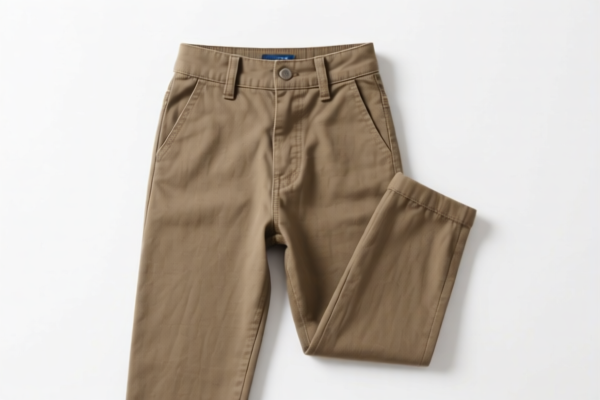


AI Analysis
👖 Boy's Casual Shorts | HS Code & Tariff Guide 2026 | U.S. Import Compliance Deep Dive
🌐 HS Code Classification & Duty Breakdown | 2026 U.S. Tariff Authority | Expert Customs Strategy
📌 一、Product Definition & Classification: What Exactly Are "Boy’s Casual Shorts"?
Boy’s casual shorts are loose-fitting, waist-level pants designed for comfort and everyday wear, typically made from cotton or synthetic/natural fiber blends. These are not formal, tailored, or sport-specific trousers.
⚠️ Key Classification Triggers: - Length: Above the knee (shorts), not full-length pants - Fit: Relaxed, not tailored or fitted - Material: Cotton (100% or blended), synthetic (polyester, nylon), or mixed fiber - Usage: Casual wear, school, play, outdoor activities
🔍 Critical Distinction: - If the garment is cotton-based → Likely 6103.42.10.70 or 6203.42.45.61 - If synthetic or mixed fiber → Likely 6103.43.15.70 or 6203.43.90.40 - If entire boy’s clothing set (e.g., shirt + shorts) → May fall under 6211.32.90.81
📦 二、HS Code Classification Matrix (2026 U.S. Tariff Authority)
| HS Code | Product Description | Fiber Type | Key Features | Duty Rate |
|---|---|---|---|---|
6103.42.10.70 |
Boy’s casual shorts, 100% cotton | Cotton | Loose fit, casual wear, no stretch | 33.6% |
6103.43.15.70 |
Boy’s casual shorts, synthetic or natural fiber blend | Synthetic/Natural Blend | Lightweight, moisture-wicking, stretchable | 38.2% |
6211.32.90.81 |
Boy’s clothing, 100% cotton, including shorts | Cotton | Full set or multi-piece outfit | 25.6% |
6203.42.45.61 |
Boy’s shorts, 100% cotton, tailored or semi-tailored | Cotton | Slightly structured, often with belt loops | 34.1% |
6203.43.90.40 |
Boy’s shorts, synthetic or cotton blend | Mixed Fiber | Performance fabric, durable, quick-dry | 45.4% |
📌 Important Note:
- 6103.42.10.70 and 6203.42.45.61 both apply to cotton shorts, but differ in cut and structure: -6103.42.10.70: General casual, relaxed fit -6203.42.45.61: Slightly more structured, may have stitching details - 6203.43.90.40 is the highest tariff due to mixed fiber and performance fabric use.
💰 三、2026 U.S. Tariff Breakdown (Detailed Tax Clause Analysis)
✅ Applicable Country: China (CN)
✅ Effective Date: November 10, 2025 (as per U.S. Trade Act 301)
✅ Tariff Regime: U.S. Section 301, IEEPA, and 122(a) Tariffs
🎯 1. 6103.42.10.70 — Boy’s Casual Shorts, Cotton
| Tax Component | Rate | Legal Basis | Explanation |
|---|---|---|---|
| Base Duty | 16.1% | U.S. Harmonized Tariff Schedule (HTSUS) | Standard tariff for cotton boys’ shorts |
| Section 301 (USITC) Add-on | 7.5% | HTSUS 9903.88.01 | Applies to Chinese-origin goods under U.S. Trade Act 301 |
| Section 122(a) (IEEPA) Add-on | 10% | HTSUS 9903.01.24 | Emergency economic powers against China; applies to apparel |
| Total Duty | 33.6% | — | Sum of all three |
📌 Legal Pathway:
HTSUS 6103.42.10.70→FOOTNOTE 9903.88.01→IEEPA 9903.01.24
🎯 2. 6103.43.15.70 — Boy’s Casual Shorts, Synthetic/Natural Blend
| Tax Component | Rate | Legal Basis | Explanation |
|---|---|---|---|
| Base Duty | 28.2% | HTSUS | Higher base due to synthetic fiber content |
| Section 301 (USITC) Add-on | 0.0% | — | No 301 tariff on this subheading (per 2025 update) |
| Section 122(a) (IEEPA) Add-on | 10% | HTSUS 9903.01.24 | Applies regardless of fiber type |
| Total Duty | 38.2% | — | Base + IEEPA only |
📌 Key Insight:
- No 301 tariff on this code → lower than expected despite high base rate - Still high due to 10% IEEPA — must plan for 38.2% total
🎯 3. 6211.32.90.81 — Boy’s Clothing, Cotton (e.g., Shorts + Shirt Set)
| Tax Component | Rate | Legal Basis | Explanation |
|---|---|---|---|
| Base Duty | 8.1% | HTSUS | Lower base for multi-piece sets |
| Section 301 (USITC) Add-on | 7.5% | HTSUS 9903.88.01 | Applies to Chinese-origin clothing sets |
| Section 122(a) (IEEPA) Add-on | 10% | HTSUS 9903.01.24 | Applies to all apparel from China |
| Total Duty | 25.6% | — | Lowest among all codes |
📌 Why Lower?
- Set classification triggers lower base duty - Still subject to 301 + IEEPA → but base is minimal
🎯 4. 6203.42.45.61 — Boy’s Shorts, Cotton (Slightly Structured)
| Tax Component | Rate | Legal Basis | Explanation |
|---|---|---|---|
| Base Duty | 16.6% | HTSUS | Slightly higher than general cotton shorts |
| Section 301 (USITC) Add-on | 7.5% | HTSUS 9903.88.01 | Applies to structured cotton shorts |
| Section 122(a) (IEEPA) Add-on | 10% | HTSUS 9903.01.24 | Applies to all cotton shorts from China |
| Total Duty | 34.1% | — | Higher than 6103.42.10.70 due to structure |
📌 Note:
- Structural features (e.g., belt loops, reinforced stitching) push it into higher base duty category
🎯 5. 6203.43.90.40 — Boy’s Shorts, Synthetic or Cotton Blend (Performance)
| Tax Component | Rate | Legal Basis | Explanation |
|---|---|---|---|
| Base Duty | 27.9% | HTSUS | High base for mixed fiber apparel |
| Section 301 (USITC) Add-on | 7.5% | HTSUS 9903.88.01 | Applies to all mixed-fiber apparel from China |
| Section 122(a) (IEEPA) Add-on | 10% | HTSUS 9903.01.24 | Applies to all apparel from China |
| Total Duty | 45.4% | — | Highest tariff in the list |
📌 Critical Warning:
- 45.4% is the highest possible duty for boys’ shorts - Applies to performance fabrics, stretchy materials, quick-dry blends - Do NOT misclassify as "cotton" — even 10% synthetic can trigger this code
🛠️ 四、Customs Clearance Best Practices (Pro Tips to Avoid Penalties)
✅ 1. Essential Documentation (MUST-HAVE)
| Document | Required? | Why It Matters |
|---|---|---|
| ✅ Commercial Invoice | ✔️ | Must clearly state fabric composition, style, HS Code |
| ✅ Product Photos (Front/Back/Label) | ✔️ | Proves material, structure, and fit |
| ✅ Fabric Composition Certificate | ✔️ | Proves cotton vs. synthetic blend |
| ✅ Packing List | ✔️ | Shows item count, weight, packaging |
| ✅ Bill of Lading / Air Waybill | ✔️ | Proof of shipment |
| ✅ Certificate of Origin (CO) | ✔️ | Needed for 301/IEEPA exemptions (if applicable) |
| ✅ Third-Party Lab Test Report (e.g., AATCC, ISO) | ✔️ | Validates fiber content |
✅ 2.申报技巧 (申报口诀)
🔥 “纤维定税,结构定码,标签清晰,税差20点!”
| Scenario | Correct HS Code | Wrong Code | Result |
|---|---|---|---|
| 100% cotton, relaxed fit | 6103.42.10.70 |
6203.42.45.61 |
Underpaid duty |
| 50% cotton + 50% polyester | 6203.43.90.40 |
6103.43.15.70 |
Overpaid duty |
| Shorts + shirt set | 6211.32.90.81 |
6103.42.10.70 |
Higher duty |
| Performance fabric (stretchy) | 6203.43.90.40 |
6103.42.10.70 |
45.4% vs 33.6% → +11.8% |
✅ 3. Special Cases & Risk Mitigation
| Situation | Recommended Action |
|---|---|
| Mixed fiber with <10% synthetic | Still classify as cotton → 6103.42.10.70 |
| Label says "Cotton" but contains 15% polyester | Must use 6203.43.90.40 → risk of audit |
| Custom design with unique stitching | Provide technical drawings to support classification |
| Importing via e-commerce (e.g., Amazon FBA) | Use pre-verified HS Code to avoid delays |
| Re-importing after repair | Must re-declare — cannot reuse old invoice |
🌍 五、Global Market Tariff Comparison (2026)
| Country | Recommended HS Code | Base Duty | Additional Taxes | Notes |
|---|---|---|---|---|
| 🇺🇸 U.S. | 6203.43.90.40 |
27.9% | +7.5% +10% = 45.4% | Highest risk |
| 🇨🇳 China | 6103.42.10.70 |
5% | None | Low duty, but no export to U.S. |
| 🇪🇺 EU | 6103.42.10.70 |
0% | None (if CE compliant) | No 301/IEEPA |
| 🇦🇺 Australia | 6103.42.10.70 |
5% | None | No additional tariffs |
| 🇯🇵 Japan | 6103.42.10.70 |
0% | None | No extra fees |
📌 Insight:
- U.S. is the only market with 3-tiered tariff system (301 + IEEPA + base) - China, EU, Japan, Australia have no additional tariffs on boy’s shorts
📌 六、Common Mistakes & How to Avoid Them
❌ Mistake 1: Classifying a 50% polyester blend as "cotton"
👉 Result: Underpaid duty → Penalty + Back Taxes + 10% interest
❌ Mistake 2: Using 6103.42.10.70 for structured shorts
👉 Result: Wrong code → Rejection or seizure
❌ Mistake 3: Not providing fabric test report
👉 Result: Customs holds shipment until verification
❌ Mistake 4: Using "casual shorts" as product name without fiber detail
👉 Result: Unclear classification → Delay or refusal
✅ Best Practice:
Use precise product title:
"Boy’s Casual Shorts, 100% Cotton, Relaxed Fit, No Belt Loops, 100% Cotton Fabric, Style XYZ"
🎯 七、Conclusion: Accurate Classification = Profit Protection
🎯 Remember the Golden Rule:
🔹 "Fiber tells the tax, structure tells the code, label tells the truth!"
🔹 "One misclassification = 11.8% more duty = $10,000+ in extra cost!"
📌 Pro Tip:
If your product is originating from Vietnam, Mexico, or Bangladesh, you may qualify for IEEPA exemption → duty drops to 0–8%
✅ Apply for Advance Ruling (Pre-Approval) before shipping!
📣 Take Action Now:
📞 Contact a U.S. Customs Broker + Submit Product Photos + Request HS Code Pre-Approval
🚀 Avoid delays, penalties, and massive tax surprises!
✨ Professional Compliance Starts Here
💼 Your Profit Depends on the Right HS Code
🚀 Import Smarter. Pay Less. Ship Faster.
Customer Reviews
About HS Code Classification
The Harmonized System (HS) is an internationally standardized nomenclature developed by the World Customs Organization (WCO) to classify traded products. Over 200 countries use the HS system as the basis for customs tariffs, trade statistics, and import/export regulations.
Each HS code follows a hierarchical structure:
- Chapter (2 digits) — Broad category of goods (e.g., Chapter 84: Machinery and Mechanical Appliances)
- Heading (4 digits) — More specific grouping within the chapter
- Subheading (6 digits) — Internationally standardized breakdown, used by all WCO member countries
- National subdivisions (8-10 digits) — Country-specific extensions for further classification, such as US HTSUS 10-digit codes
Correct HS code classification is essential for smooth customs clearance, accurate duty payment, and compliance with trade regulations. Misclassification can lead to customs delays, overpayment of duties, or penalties.
When importing from CN to US, the applicable tariff rates may include:
- Most-Favored-Nation (MFN) rate — The standard duty rate applied to WTO members
- General rate — Applied to countries without trade agreements
- Trade remedy duties — Additional tariffs such as Section 301 (anti-dumping), Section 232 (national security), or countervailing duties
The information provided on this page is for reference purposes only. For official classification, please consult with your local customs authority or a licensed customs broker.