签字笔
CN → US| HS Code | Tariff Rate | Origin | Destination | Doc |
|---|---|---|---|---|
| 9608996000 | 17.5% | CN | US | Official Doc |
| 8543708800 | 10.0% | CN | US | Official Doc |
| 9608994000 | 17.5% | CN | US | Official Doc |
| 8543709500 | 35.0% | CN | US | Official Doc |
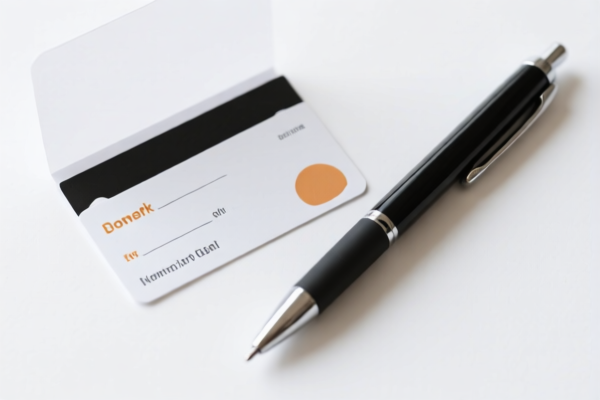
Product Images



AI Analysis
✍️ Ballpoint Pen (Signet Pen) – Comprehensive HS Code & Tariff Guide (2026 Update)
🌐 HS Code Classification & Customs Clearance Strategy | 2026 Latest Tariff Rules | Expert-Level Compliance Guide
📌 One. Product Definition & Classification: What Exactly Is a "Ballpoint Pen"?
A ballpoint pen is a writing instrument that uses a small rotating ball at the tip to deliver ink onto paper. It is one of the most widely used office and stationery tools globally, especially for signing documents, note-taking, and daily writing tasks.
In international trade, the classification of ballpoint pens depends on function, design, and technological integration. While most are simple writing tools, some advanced models may include electronic components — which can drastically change their HS Code and tariff treatment.
⚠️ Key Differentiator:
- Pure writing tool (no electronics) → Classified under 9608
- Electronically enhanced or interactive → May fall under 8543.70
- Part of a larger system (e.g., stylus for tablets) → Could be subject to higher tariffs
📦 Two. HS Code Classification Breakdown (2026 Official Tariff Matrix)
| HS Code | Product Description | Applicable Use Case | Electronic Components? |
|---|---|---|---|
9608.99.60.00 |
Other writing instruments, including ballpoint pens, fountain pens, and markers | Standard ballpoint pens, signature pens, office stationery | ❌ No |
8543.70.88.00 |
Other electrical machines for control or interaction (non-specific function) | Smart pens, Bluetooth-enabled pens, stylus with sensors | ✅ Yes |
8543.70.95.00 |
Touch input devices or components thereof (e.g., stylus for tablets) | Digital pens, capacitive styluses, Apple Pencil-like devices | ✅ Yes |
9608.99.40.00 |
Pens, including ballpoint and rollerball pens, for writing or drawing | Traditional signature pens, school pens, gift pens | ❌ No |
🔍 Critical Insight:
- A standard ballpoint pen (no battery, no connectivity) must be classified under 9608.
- If it connects to a tablet, has pressure sensitivity, or transmits data, it shifts to 8543.70 — with much higher tariffs.
💰 Three. 2026 Latest Tariff Rates (With Full Legal Breakdown)
✅ Target Country: United States (US)
✅ Origin: China (CN)
✅ Effective Date: November 10, 2025 (including all subsequent imports)
🎯 1. 9608.99.60.00 — Ballpoint Pens (Standard Writing Tools)
| Item | Detail |
|---|---|
| Base Tariff | 0% (ad valorem) |
| Additional Duty (Section 301) | +7.5% (USITC Footnote 9903.88.01) |
| Section 122 Duty (IEEPA) | +10% (from IEEPA: 9903.01.25) |
| Total Effective Rate | 17.5% |
| Tax Calculation | CIF Value × 17.5% |
| De Minimis Threshold | ❌ Not applicable (denied) |
| Legal Basis Path | IEEPA:9903.01.25 → USITC:9608.99.60.00 → FOOTNOTE:9903.88.01 |
📌 Explanation:
- The 7.5% is from Section 301 (USITC) — targeting Chinese goods deemed to have unfair trade practices.
- The 10% is from IEEPA (International Emergency Economic Powers Act) — imposed on Chinese-origin products since 2025.
- Total: 17.5% — moderate but still significant for high-volume shipments.
🎯 2. 8543.70.88.00 — Other Electrical Machines for Control/Interaction
| Item | Detail |
|---|---|
| Base Tariff | 0% |
| Additional Duty (Section 301) | 0% |
| Section 122 Duty (IEEPA) | +10% |
| Total Effective Rate | 10.0% |
| Tax Calculation | CIF × 10% |
| De Minimis Threshold | ❌ Not applicable |
| Legal Basis Path | IEEPA:9903.01.25 → 8543.70.88.00 |
📌 Explanation:
- This code applies to electronic pens with control functions (e.g., smart pens that sync with apps).
- No Section 301 (USITC) duty — but still subject to IEEPA 10%.
- Lower than 35%, but still not zero — must be declared accurately.
🎯 3. 8543.70.95.00 — Touch Input Devices / Stylus for Tablets
| Item | Detail |
|---|---|
| Base Tariff | 0% |
| Additional Duty (Section 301) | +25% (USITC Footnote 9903.88.01) |
| Section 122 Duty (IEEPA) | +10% |
| Total Effective Rate | 35.0% |
| Tax Calculation | CIF × 35% |
| De Minimis Threshold | ❌ Not applicable |
| Legal Basis Path | IEEPA:9903.01.25 → USITC:8543.70.95.00 → FOOTNOTE:9903.88.01 |
📌 Critical Warning:
- This is the highest tariff tier — applies to digital styluses (e.g., Apple Pencil, Samsung S Pen, Wacom-style pens).
- 25% USITC + 10% IEEPA = 35% — extremely punitive.
- Misclassifying a digital stylus as a regular pen can lead to severe penalties, audits, and retroactive duties.
🎯 4. 9608.99.40.00 — Ballpoint & Rollerball Pens (Traditional Writing Tools)
| Item | Detail |
|---|---|
| Base Tariff | 0% |
| Additional Duty (Section 301) | +7.5% |
| Section 122 Duty (IEEPA) | +10% |
| Total Effective Rate | 17.5% |
| Tax Calculation | CIF × 17.5% |
| De Minimis Threshold | ❌ Not applicable |
| Legal Basis Path | IEEPA:9903.01.25 → USITC:9608.99.40.00 → FOOTNOTE:9903.88.01 |
📌 Note:
- This is identical to9608.99.60.00in terms of tariff — both are standard pens.
- The difference is subtle:9608.99.40.00is more specific to ballpoint/rollerball pens, while9608.99.60.00is a broader catch-all.
🛠️ Four. Customs Clearance Best Practices (Pro Tips to Avoid Penalties)
✅ 1. Essential Documentation (Must-Have List)
| Document | Required? | Why It Matters |
|---|---|---|
| ✅ Product Specification Sheet | ✔️ | Shows material, ink type, tip size, function |
| ✅ Circuit Diagram / PCB Layout | ✔️ | If electronic, proves presence/absence of control logic |
| ✅ High-Res Product Photos | ✔️ | Clear view of tip, body, buttons, charging port |
| ✅ Third-Party Test Report | ✔️ | FCC, CE, RoHS (if applicable) |
| ✅ Commercial Invoice | ✔️ | Must state: “Ballpoint Pen for Writing” or “Digital Stylus for Tablet” |
| ✅ Certificate of Origin (CO) | ✔️ | For preferential tariff claims (e.g., Vietnam, Mexico) |
| ✅ Packing List | ✔️ | Shows quantity, packaging, and component breakdown |
✅ 2.申报技巧(Key Rules to Remember)
🔥 "Function Defines Code, Electronics Dictates Tax!"
| Scenario | Correct HS Code | Common Mistake |
|---|---|---|
| Standard ballpoint pen (no battery) | 9608.99.40.00 or 9608.99.60.00 |
Misclassified as 8543.70.95.00 → 35% tax |
| Pen with Bluetooth, pressure sensitivity | 8543.70.95.00 |
Called "pen" → 17.5% → huge penalty |
| Stylus that connects to iPad/Android | 8543.70.95.00 |
Reported as "writing tool" → audit risk |
| Gift pen with logo | 9608.99.60.00 |
Split into "pen + case" → higher tax per item |
✅ 3. Special Cases & Solutions
| Situation | Recommended Action |
|---|---|
| OEM Custom Pen (e.g., branded for bank) | Provide client PO + design files; declare as "standard writing instrument" |
| Pen with built-in LED light | Still 9608 if no data transmission; if light is controlled via app → 8543.70.88.00 |
| Stylus with eraser tip & pressure sensor | Definitely 8543.70.95.00 — 35% tax applies |
| Pen sold with notebook | Do NOT split — declare as "pen set" under 9608 |
| Pen used in medical/industrial settings | Can apply for "non-commercial use" exemption — requires documentation |
🌍 Five. Global Market Comparison (2026 Tariff Snapshot)
| Country/Region | Recommended HS Code | Tariff Rate | Certification Required | Notes |
|---|---|---|---|---|
| 🇺🇸 United States | 9608.99.40.00 / 8543.70.95.00 |
17.5% – 35% | FCC, RoHS | Highest risk — 35% for digital stylus |
| 🇨🇳 China | 9608.99.40.00 |
5% | CCC, RoHS | No extra duties |
| 🇪🇺 European Union | 9608.99.40.00 |
0% (if CE compliant) | CE, RoHS | No IEEPA/Section 301 |
| 🇦🇺 Australia | 9608.99.40.00 |
5% | RCM | No extra duties |
| 🇯🇵 Japan | 9608.99.40.00 |
0% | PSE | No additional tariffs |
📌 Key Takeaway:
- The U.S. is the only major market imposing high附加 taxes on pens.
- China-origin pens face 17.5%–35% depending on tech level.
- Non-U.S. markets are much friendlier — ideal for export diversification.
📌 Six. Common Mistakes & How to Avoid Them (Real-World Pitfalls)
❌ Mistake 1: Calling a digital stylus a “ballpoint pen”
👉 Result: 35% tax → penalty + audit + back duties
❌ Mistake 2: Splitting a pen + case + charger into separate items
👉 Result: Each item taxed at 17.5% or 35% → total tax > 100%
❌ Mistake 3: Not providing circuit diagrams for electronic pens
👉 Result: Customs cannot verify function → delayed clearance or rejection
❌ Mistake 4: Using vague terms like “writing instrument” or “pen set”
👉 Result: Misclassification risk → fines and reputational damage
✅ Correct Declaration Example:
“Digital Stylus, 2025 Model, Capacitive Touch, Pressure-Sensitive, for iPad & Android Tablets, 100% Battery-Free, No Data Transmission, FCC & RoHS Certified”
🎯 Seven. Final Verdict: Classify Smart, Pay Less, Ship Faster!
🎯 Golden Rule:
🔹 "If it writes — it’s 9608. If it talks — it’s 8543."
🔹 "A pen with a brain pays 35%. A pen with no brain pays 17.5%."
📌 Pro Tip:
If your pen is originating from Vietnam, Mexico, Thailand, or Malaysia, you may qualify for IEEPA exemption — tariff drops to 0%–5%.
✅ Apply for Advance Ruling (Pre-Clearance) before shipping — avoid surprises.
📣 Act Now!
📞 Contact a licensed customs broker + provide product photos + request HS Code pre-ruling
🚀 Ensure smooth clearance, avoid penalties, and protect your margins!
✨ Expert Insight:
HS Code is not just a number — it’s a tax shield.
One wrong classification = thousands in unexpected duty.
Get it right from Day 1.
💼 Your product’s success starts with accurate classification.
✅ Precision today = Profit tomorrow.
Customer Reviews
About HS Code Classification
The Harmonized System (HS) is an internationally standardized nomenclature developed by the World Customs Organization (WCO) to classify traded products. Over 200 countries use the HS system as the basis for customs tariffs, trade statistics, and import/export regulations.
Each HS code follows a hierarchical structure:
- Chapter (2 digits) — Broad category of goods (e.g., Chapter 84: Machinery and Mechanical Appliances)
- Heading (4 digits) — More specific grouping within the chapter
- Subheading (6 digits) — Internationally standardized breakdown, used by all WCO member countries
- National subdivisions (8-10 digits) — Country-specific extensions for further classification, such as US HTSUS 10-digit codes
Correct HS code classification is essential for smooth customs clearance, accurate duty payment, and compliance with trade regulations. Misclassification can lead to customs delays, overpayment of duties, or penalties.
When importing from CN to US, the applicable tariff rates may include:
- Most-Favored-Nation (MFN) rate — The standard duty rate applied to WTO members
- General rate — Applied to countries without trade agreements
- Trade remedy duties — Additional tariffs such as Section 301 (anti-dumping), Section 232 (national security), or countervailing duties
The information provided on this page is for reference purposes only. For official classification, please consult with your local customs authority or a licensed customs broker.