纯棉t恤
CN → US| HS Code | Tariff Rate | Origin | Destination | Doc |
|---|---|---|---|---|
| 6109100004 | 34.0% | CN | US | Official Doc |
| 6109100012 | 34.0% | CN | US | Official Doc |
| 6110202079 | 34.0% | CN | US | Official Doc |
| 6209205050 | 26.8% | CN | US | Official Doc |
Product Images
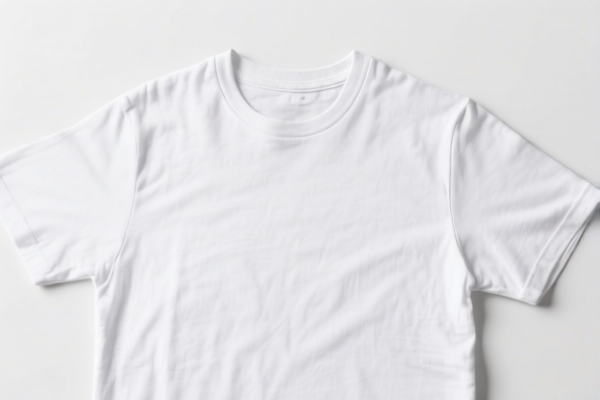
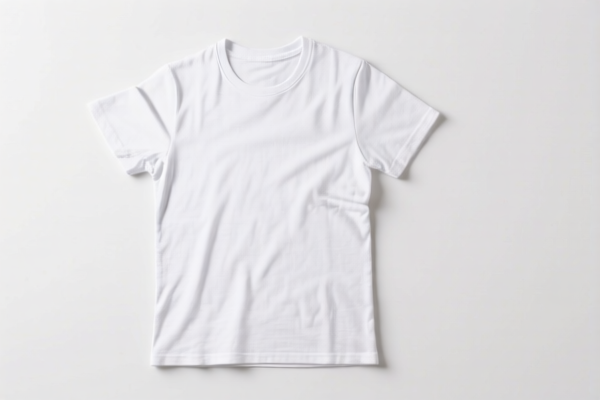
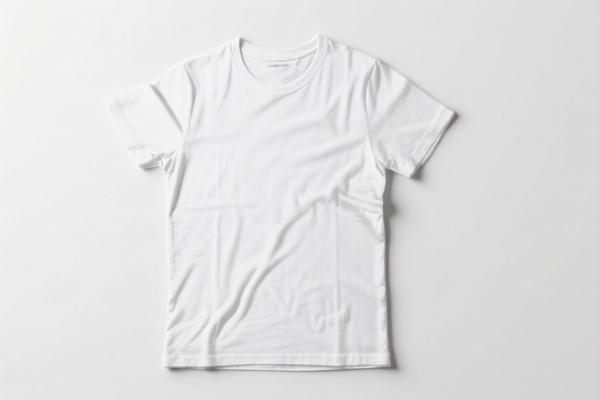
AI Analysis
👕 Pure Cotton T-Shirts (Cotton Knitted Garments)
🌐 HS Code Reference & Customs Clearance Guide | 2026 Latest Tariff Analysis | Professional Entry Strategy
📌 I. Product Definition & Classification: Do You Truly Understand "Pure Cotton T-Shirts"?
A "Pure Cotton T-Shirt" in international trade is generally a knitted garment made entirely of cotton fiber. However, its classification depends heavily on fabric weight, intended age group, and specific construction.
In the provided data, three distinct categories emerge based on wearers (General vs. Infants) and specific tariff nuances:
⚠️ Key Distinction Point:
- Adult/General Use: Usually falls under Chapter 61 (Knitted) items. - Infant Use: Falls under Chapter 62 (Woven) or specific infant sub-categories (depending on the specific 2026 tariff nuance in the dataset). - Tariff Triggers: The total tax burden is heavily influenced by "Add-on Tariffs" (34% vs. 26.8%), which often relate to trade policy clauses (e.g., Section 301, Section 122).
📦 II. HS Code Classification Details (Based on Provided Data)
| HS Code | Product Description | Applicability | Key Feature |
|---|---|---|---|
6109.10.00.04 |
Pure Cotton T-shirt, Knitted Cotton T-shirt | General Adult/Children Apparel | Meets standard "Cotton Knitted T-shirt" criteria |
6109.10.00.12 |
Pure Cotton T-shirt, Cotton & T-shirt Form | General Adult/Children Apparel | Specific sub-variant of knitted T-shirt |
6110.20.20.79 |
Pure Cotton T-shirt, Knitted/Crocheted "Similar Articles" | General Apparel | Classified under "Similar articles" within knitted group |
6209.20.50.50 |
Cotton T-shirt, Infant Garment Category | Infants Only | Classified as "Other" within Infant Clothing (Woven/Other) |
🔍 Critical Analysis:
- Codes6109&6110: These refer to Knitted garments (T-shirts). They are subject to the 34.0% total tax rate. - Code6209: This refers to Infant garments (often Woven in standard classification, but the dataset specifies "Cotton T-shirt" here). It is subject to a lower 26.8% total tax rate. - Why the difference? The infant category (6209) often has different trade sensitivity or lower base rates compared to general adult apparel.
💰 III. 2026 Tariff Rate Breakdown (Detailed Policy Analysis)
✅ Applicable Market: US (implied by "122 Clause" and Section 301 context in "Added Tariffs")
✅ Origin: China (CN)
✅ Validity: 2025-2026 Import Regime
🎯 1. Adult/General Cotton T-Shirts (6109.10.00.04, 6109.10.00.12, 6110.20.20.79)
Total Tax Rate: 34.0%
| Tax Component | Rate | Policy Basis | Explanation |
|---|---|---|---|
| Base Tariff | 16.5% | General MFN Rate | Standard Most-Favored-Nation duty for cotton knitted goods. |
| Section 301 Added Tariff | 7.5% | US Trade Action | Additional duty imposed on specific Chinese goods (Section 301). |
| "122 Clause" Tariff | 10.0% | Section 232 / 122 | Specific additional duty (often related to national security or specific retaliation clauses). |
| Total | 34.0% | Cumulative | 16.5 + 7.5 + 10.0 = 34.0% |
📌 Interpretation:
- Any adult or general use pure cotton T-shirt classified under6109or6110incurs a 34% total duty. - This is a high-cost scenario for exporters. The "122 Clause" is particularly aggressive, adding a fixed 10% on top of the base and Section 301 duties.
🎯 2. Infant Cotton T-Shirts (6209.20.50.50)
Total Tax Rate: 26.8%
| Tax Component | Rate | Policy Basis | Explanation |
|---|---|---|---|
| Base Tariff | 9.3% | General MFN Rate | Lower base rate for infant clothing compared to adult apparel. |
| Section 301 Added Tariff | 7.5% | US Trade Action | Same Section 301 surcharge applies. |
| "122 Clause" Tariff | 10.0% | Section 232 / 122 | The same 10% "122 Clause" applies here as well. |
| Total | 26.8% | Cumulative | 9.3 + 7.5 + 10.0 = 26.8% |
📌 Interpretation:
- Infant T-shirts benefit from a lower base tariff (9.3% vs. 16.5%), resulting in a total savings of 7.2% compared to adult T-shirts. - Crucial Strategy: If the product is strictly for infants (usually defined by size < 12 months or 24 months depending on HS rules), use6209.20.50.50to save 7.2% on every dollar. - Warning: If an adult T-shirt is misdeclared as "Infant," the risk of penalty, reclassification, and back-tax is extremely high.
🛠️ IV. Customs Clearance Practical Advice (Avoiding Pitfalls)
✅ 1. Preparation Checklist (Non-Negotiable)
| Document | Requirement | Why It Matters |
|---|---|---|
| 👔 Product Composition Certificate | 100% Cotton | Must explicitly state "100% Cotton" to qualify for the "Cotton" category. |
| 📏 Size & Age Tag | Infant vs. Adult | CRITICAL: Must prove if the item is for "Infants" (6209) or "General" (6109). Size charts and "Infant" labeling are mandatory. |
| 🏭 Manufacturing Process | Knitted vs. Woven | Confirm if the item is Knitted (61xx) or Woven (62xx). The data shows 6109/6110 (Knitted) vs 6209 (Infant/Woven). |
| 💰 CIF Value | Accurate Declaration | Duty is calculated on CIF (Cost + Insurance + Freight). Under-declaring leads to fines. |
| 📜 Commercial Invoice | HS Code & Description | Must list 6109.10.00.04 or 6209.20.50.50 specifically. Generic "T-shirt" is rejected. |
✅ 2. Declaration Strategy (The "T-Shirt" Trap)
🔥 Golden Rule: "Age Defines Code, Cotton Defines Rate!"
| Scenario | Correct HS Code | Wrong HS Code | Consequence |
|---|---|---|---|
| Adult 100% Cotton T-Shirt | 6109.10.00.04 / 6110.20.20.79 |
6209.20.50.50 |
Fraud Risk: Severe penalties for mislabeling adult clothes as infant goods. |
| Infant 100% Cotton T-Shirt | 6209.20.50.50 |
6109.10.00.04 |
Overpayment: Paying 34% instead of 26.8% (7.2% loss). |
| Cotton Blend (e.g., 80% Cotton) | Not listed in data | Any listed code | Rejection: The dataset specifies "Pure Cotton". Blends may fall under different, potentially higher tax codes. |
| Knitted vs. Woven | Knitted = 61xx |
Woven = 62xx |
Classification Error: Knitted T-shirts (6109) cannot be declared as Woven (6209). |
✅ 3. Special Handling for "122 Clause" & Section 301
| Issue | Strategy |
|---|---|
| High Tax Rate (34%) | Price Adjustment: Factor the 34% into your FOB price or negotiate cost-sharing with the buyer. |
| Infant Rate (26.8%) | Verify Strictly: Ensure the packaging explicitly says "Infant" and size limits are met. Do not over-package adult sizes as "Infant". |
| Documentation | Keep the Cotton Content Certificate and Size Charts in a separate folder for CBP (Customs and Border Protection) audit. |
🌍 V. Global Market Comparison (2026 Context)
| Region | Recommended HS Code | Base Rate | Additional Tariffs | Total Effective Rate |
|---|---|---|---|---|
| 🇺🇸 USA | 6109.10.00.04 / 6209.20.50.50 |
16.5% / 9.3% | 301 (7.5%) + 122 (10%) | 34.0% (Adult) / 26.8% (Infant) |
| 🇪🇺 EU | 6109.10.00 |
~0% - 16% | None (Standard) | Low (No 301/122) |
| 🇨🇦 Canada | 6109.10.00 |
~0% - 16% | CUSMA (If origin qualified) | Low (No 301/122) |
| 🇦🇺 Australia | 6109.10.00 |
~0% - 15% | None | Low (No 301/122) |
📌 Conclusion:
The 34% tax is specific to the US market due to the "122 Clause" and Section 301 policies.
Export Strategy: If possible, consider shipping to EU/CA/AU first to avoid these heavy duties, or strictly utilize the Infant Category to save 7.2%.
📌 VI. Common Mistakes & Blood-Teary Lessons
❌ Mistake 1: Calling a "General T-Shirt" an "Infant T-Shirt" to save tax.
👉 Result: Customs Seizure, fines, and a 34% tax bill + penalty.
❌ Mistake 2: Misidentifying "Knitted" as "Woven".
👉 Result: Rejection of goods. Knitted (61xx) and Woven (62xx) are fundamentally different chapters.
❌ Mistake 3: Ignoring the "122 Clause".
👉 Result: Budget Shock. You calculated only 16.5% base tax, but the real cost is 34%.
✅ Correct Action:
"Pure Cotton Knitted T-Shirt (Adult), 100% Cotton, Size M, Made in China, HS 6109.10.00.04"
"Pure Cotton Infant T-Shirt (0-24 Months), 100% Cotton, Made in China, HS 6209.20.50.50"
🎯 VII. Conclusion: Precision is Profit!
🎯 Remember the Golden Rules:
🔹 "Adult = 34%, Infant = 26.8%" (Difference is 7.2% - huge for bulk orders!)
🔹 "Knitted = 61xx, Infant (Often Woven) = 62xx" (Do not swap!)
🔹 "122 Clause is Real": Do not ignore the 10% extra.
📌 Pro Tip:
If you are shipping mixed adult and infant sizes in one container, separate the HS Codes on the invoice. Do not lump them together, or the entire shipment might be assessed at the higher 34% rate for the whole batch if the "Infant" portion is insufficient.
🚀 Action Item:
📞 Contact your Freight Forwarder with the exact Cotton % and Target Age Group before shipping!
💼 Get a Pre-Classification Ruling from CBP if you are unsure if your T-shirt qualifies as "Infant".
✨ Professional Customs, Precision First!
💰 Every 1% of tax saved is profit earned!
Customer Reviews
About HS Code Classification
The Harmonized System (HS) is an internationally standardized nomenclature developed by the World Customs Organization (WCO) to classify traded products. Over 200 countries use the HS system as the basis for customs tariffs, trade statistics, and import/export regulations.
Each HS code follows a hierarchical structure:
- Chapter (2 digits) — Broad category of goods (e.g., Chapter 84: Machinery and Mechanical Appliances)
- Heading (4 digits) — More specific grouping within the chapter
- Subheading (6 digits) — Internationally standardized breakdown, used by all WCO member countries
- National subdivisions (8-10 digits) — Country-specific extensions for further classification, such as US HTSUS 10-digit codes
Correct HS code classification is essential for smooth customs clearance, accurate duty payment, and compliance with trade regulations. Misclassification can lead to customs delays, overpayment of duties, or penalties.
When importing from CN to US, the applicable tariff rates may include:
- Most-Favored-Nation (MFN) rate — The standard duty rate applied to WTO members
- General rate — Applied to countries without trade agreements
- Trade remedy duties — Additional tariffs such as Section 301 (anti-dumping), Section 232 (national security), or countervailing duties
The information provided on this page is for reference purposes only. For official classification, please consult with your local customs authority or a licensed customs broker.