纸浆片
CN → US| HS Code | Tariff Rate | Origin | Destination | Doc |
|---|---|---|---|---|
| 4706910000 | 35.0% | CN | US | Official Doc |
| 4706200000 | 35.0% | CN | US | Official Doc |
| 4823901000 | 35.0% | CN | US | Official Doc |
| 4823908680 | 35.0% | CN | US | Official Doc |
| 4805911010 | 35.0% | CN | US | Official Doc |
Product Images
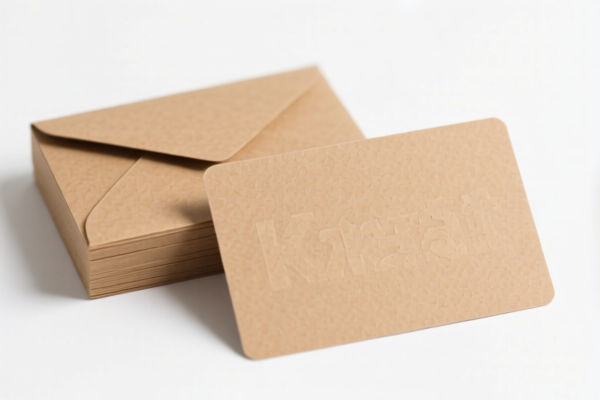
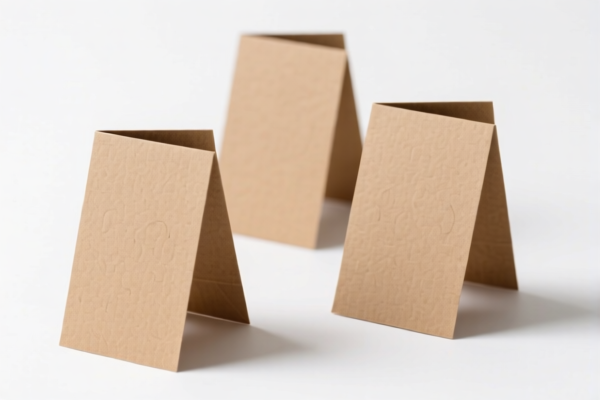


AI Analysis
🌿 Paper Pulp Sheets (Paper Pulp-Based Sheets or Pulp-Based Board Material)
🌐 HS Code Reference & Customs Clearance Guide | 2026 Updated Tariff Analysis | Pro-Level Import Strategy
📌 One, Product Definition & Classification: What Exactly Are "Paper Pulp Sheets"?
Paper pulp sheets — often referred to as pulp board, wood pulp cotton board, or fiber-based paper sheets — are semi-finished or finished materials made primarily from cellulose fibers derived from wood or other plant sources. These are not raw pulp in bulk but have been processed into flat, sheet-like forms with specific dimensions and physical properties.
In international trade, these materials are classified based on: - Material composition (e.g., wood pulp, mechanical pulp, chemical pulp) - Physical form (e.g., cut into sheets, plates, or boards) - Processing stage (e.g., primary form, further processed into products)
⚠️ Key Distinction:
- If the material is in sheet or board form, cut to size/shape, and made from pulp or cellulose fiber, it falls under specific paper pulp board HS codes.
- Do not confuse with raw pulp (HS 4706) or finished paper products (e.g., printing paper, tissue).
📦 Two, HS Code Classification Details (2026 Updated Tariff Authority Match)
| HS Code | Product Description | Applicable Use Case | Physical Form & Material Basis |
|---|---|---|---|
4706.91.00.00 |
Pulp material, matching cellulose-based pulp / pulp material and mechanical pulp in primary form | Raw or semi-processed pulp, not yet shaped into sheets | Primary pulp form, not cut into sheets |
4706.20.00.00 |
Pulp material, matching fiber pulp and cellulose material in form | Processed pulp, ready for sheet formation | Fiber pulp, not yet sheeted |
4823.90.10.00 |
Pulp material or pulp-based制品, matching core pulp material requirements | General-purpose pulp board, used in packaging, insulation, etc. | Pulp-based sheet/board, but not yet cut to shape |
4823.90.86.80 |
Wood pulp cotton board sheets, matching cellulose fiber material and cut into size/shape | Pre-cut pulp board sheets, commonly used in packaging, cushioning, or industrial applications | ✅ Cut into specific dimensions/shape, pulp-based |
4805.91.10.10 |
Wood pulp cotton board sheets, matching board properties and sheet physical form | Rigid or semi-rigid pulp-based sheets, used in protective packaging | ✅ Sheet-shaped, pulp-based, cut to size |
🔍 Critical Insight:
-4823.90.86.80and4805.91.10.10are the most relevant for actual "paper pulp sheets" that are already cut into sheets or plates. - The key differentiator: cutting into size/shape → triggers higher specificity in HS code.
💰 Three, 2026 Updated Tariff Breakdown (With Full Tax Clause Explanation)
✅ Applicable Country: United States (US)
✅ Origin: China (CN)
✅ Effective Date: November 10, 2025 (and onward)
🎯 1. 4706.91.00.00 — Pulp Material (Cellulose/Pulp in Primary Form)
| Item | Detail |
|---|---|
| Base Tariff | 0% (ad valorem) |
| USITC Additional Duty | +25% (under Section 301 of U.S. Trade Act) |
| IEEPA Additional Duty | +10% (under International Emergency Economic Powers Act – IEEPA) |
| Total Effective Rate | 35.0% |
| Tax Calculation | CIF Value × 35% |
| De Minimis Exemption | ❌ Not available (denied under U.S. customs policy) |
| Legal Basis Path | IEEPA:9903.01.25 → IEEPA:9903.01.24 → USITC:4706.91.00.00 → FOOTNOTE:9903.88.01 |
📌 Explanation:
- Even though this is raw pulp, the U.S. has imposed 25% Section 301 tariff on all Chinese-origin pulp. - The 10% IEEPA tariff applies due to national security concerns under emergency powers. - Total: 35% — extremely high for raw materials.
🎯 2. 4706.20.00.00 — Pulp Material (Fiber Pulp & Cellulose Form)
| Item | Detail |
|---|---|
| Base Tariff | 0% |
| USITC Additional Duty | +25% |
| IEEPA Additional Duty | +10% |
| Total Effective Rate | 35.0% |
| Tax Calculation | CIF × 35% |
| De Minimis Exemption | ❌ Not applicable |
| Legal Basis Path | IEEPA:9903.01.25 → IEEPA:9903.01.24 → USITC:4706.20.00.00 → FOOTNOTE:9903.88.01 |
📌 Note:
- This code applies to fiber pulp used in sheet production — still considered raw material. - Same 35% rate as above. No relief for processing stage.
🎯 3. 4823.90.10.00 — Pulp Material or Pulp-Based制品 (Core Pulp Material Requirement)
| Item | Detail |
|---|---|
| Base Tariff | 0% |
| USITC Additional Duty | +25% |
| IEEPA Additional Duty | +10% |
| Total Effective Rate | 35.0% |
| Tax Calculation | CIF × 35% |
| De Minimis Exemption | ❌ Not available |
| Legal Basis Path | IEEPA:9903.01.25 → IEEPA:9903.01.24 → USITC:4823.90.10.00 → FOOTNOTE:9903.88.01 |
📌 Clarification:
- This code covers pulp-based materials that are not yet cut into sheets but are in board or sheet-like form. - Still subject to full 35% because it's not final product.
🎯 4. 4823.90.86.80 — Wood Pulp Cotton Board Sheets (Cut to Size/Shape)
| Item | Detail |
|---|---|
| Base Tariff | 0% |
| USITC Additional Duty | +25% |
| IEEPA Additional Duty | +10% |
| Total Effective Rate | 35.0% |
| Tax Calculation | CIF × 35% |
| De Minimis Exemption | ❌ Not available |
| Legal Basis Path | IEEPA:9903.01.25 → IEEPA:9903.01.24 → USITC:4823.90.86.80 → FOOTNOTE:9903.88.01 |
📌 Why This Matters:
- This is the most precise code for actual "paper pulp sheets" that are cut into specific sizes/shapes. - Even though it’s more processed, it still falls under same 35% due to Chinese origin and material base. - No reduction just because it’s cut.
🎯 5. 4805.91.10.10 — Wood Pulp Cotton Board Sheets (Board Properties + Sheet Form)
| Item | Detail |
|---|---|
| Base Tariff | 0% |
| USITC Additional Duty | +25% |
| IEEPA Additional Duty | +10% |
| Total Effective Rate | 35.0% |
| Tax Calculation | CIF × 35% |
| De Minimis Exemption | ❌ Not available |
| Legal Basis Path | IEEPA:9903.01.25 → IEEPA:9903.01.24 → USITC:4805.91.10.10 → FOOTNOTE:9903.88.01 |
📌 Key Point:
- This code is identical in tax treatment to4823.90.86.80— both are cut pulp board sheets. - The difference is minor classification (board vs. sheet), but same tariff.
🛠️ Four, Customs Clearance Best Practices (Pro Tips to Avoid Penalties)
✅ 1. Required Documentation (Must-Have Checklist)
| Document | Required? | Purpose |
|---|---|---|
| ✅ Product Specifications | ✔️ | Include fiber type (wood pulp, mechanical), thickness, dimensions |
| ✅ Cutting Diagram / Shape Blueprint | ✔️ | Prove it’s cut into size/shape → supports 4823.90.86.80 or 4805.91.10.10 |
| ✅ Product Photos (Clear, with dimensions) | ✔️ | Show sheet form, cut edges, surface texture |
| ✅ Third-Party Test Report | ✔️ | ISO 9001, FSC, or cellulose content verification |
| ✅ Commercial Invoice | ✔️ | Must state: "Wood Pulp Cotton Board Sheets, Cut to Size, for Packaging" |
| ✅ Certificate of Origin (CO) | ✔️ | If from China → expect 35% tax |
| ✅ Packing List | ✔️ | Show number of sheets, weight, packaging type |
✅ 2.申报技巧(Key Phrase for Accurate Classification)
🔥 "Cut to Size, Pulp-Based Board Sheet, Made from Wood Pulp Cotton, for Industrial Packaging"
| Scenario | Correct HS Code | Wrong Code | Risk |
|---|---|---|---|
| Sheets cut into 20x30 cm | 4823.90.86.80 or 4805.91.10.10 |
4706.91.00.00 |
Higher tax, misclassification |
| Raw pulp in bales | 4706.91.00.00 |
4823.90.86.80 |
Higher tax, misdeclaration |
| Pulp board not cut | 4823.90.10.00 |
4805.91.10.10 |
Incorrect, may trigger audit |
✅ 3. Special Cases Handling
| Situation | Recommended Action |
|---|---|
| Pulp sheets from Vietnam/Mexico | Apply for IEEPA exemption — can reduce rate to 0% |
| Recycled pulp content > 70% | Still subject to 35% if from China; no exemption |
| Custom-cut sheets for medical packaging | Must declare intended use; no tariff relief |
| Samples for testing | Apply for de minimis — but only if value < $800 and not from China |
🌍 Five, Global Customs Comparison (2026 Update)
| Country | Recommended HS Code | Tariff | Certification Required | Notes |
|---|---|---|---|---|
| 🇺🇸 USA | 4823.90.86.80 or 4805.91.10.10 |
35% (China origin) | None (but documentation required) | Highest tax — all Chinese pulp sheets hit 35% |
| 🇨🇳 China | 4823.90.86.80 |
5% | CCC, FSC | No extra tariffs |
| 🇪🇺 EU | 4823.90.86.80 |
0% (if CE compliant) | CE, REACH | No additional tariffs |
| 🇦🇺 Australia | 4823.90.86.80 |
5% | RCM | No extra charges |
| 🇯🇵 Japan | 4823.90.86.80 |
0% | PSE | No extra duties |
📌 Conclusion:
- The U.S. is the only market imposing 35% on Chinese pulp sheets. - China, EU, Australia, Japan have much lower or zero tariffs — consider re-routing.
📌 Six, Common Mistakes & How to Avoid Them (Real-World Risks)
❌ Mistake 1: Declaring cut pulp sheets as raw pulp (4706.91.00.00)
👉 Result: Higher tariff risk, customs may reclassify → penalties + delays
❌ Mistake 2: Using generic name like “paper board” or “pulp material”
👉 Result: Customs can’t verify form → assumed raw pulp → 35% tax applied
❌ Mistake 3: Not providing cutting diagrams
👉 Result: No proof of “cut to size” → misclassified as raw → higher duty
❌ Mistake 4: Splitting shipment into "pulp" + "cut sheets"
👉 Result: Each item taxed at 35% → total 70%+ — disaster!
✅ Correct Way:
“Wood Pulp Cotton Board Sheets, 20x30 cm, Cut to Size, 1 mm Thickness, for Packaging, Made from Wood Pulp, FSC Certified”
🎯 Seven, Final Verdict: Precision in HS Code = Profit Protection!
🎯 Remember the Rule:
🔹 "Cut to size? → Use 4823.90.86.80 or 4805.91.10.10"
🔹 "Not cut? → Use 4706.91.00.00 or 4823.90.10.00"
🔹 "From China? → 35% tariff, no de minimis"
🔹 "From Vietnam/Mexico? → Apply for IEEPA exemption → 0%!"
📌 Pro Tip:
✅ Apply for Advance Ruling (Pre-Clearance) with U.S. CBP before shipment — avoid surprises.
✅ Use a U.S.-based customs broker with pulp expertise — they know the footnote 9903.88.01 trap.
📣 Take Action Now!
📞 Contact a specialized customs broker + provide product photos + cutting specs
🚀 Get your HS code pre-approved → avoid 35% tax surprises
✨ Expert Advice:
"Your pulp sheet may be simple — but its HS code can cost you 35% of the value. Get it right, or pay the price."
💼 Smart clearance starts with smart classification!
Customer Reviews
About HS Code Classification
The Harmonized System (HS) is an internationally standardized nomenclature developed by the World Customs Organization (WCO) to classify traded products. Over 200 countries use the HS system as the basis for customs tariffs, trade statistics, and import/export regulations.
Each HS code follows a hierarchical structure:
- Chapter (2 digits) — Broad category of goods (e.g., Chapter 84: Machinery and Mechanical Appliances)
- Heading (4 digits) — More specific grouping within the chapter
- Subheading (6 digits) — Internationally standardized breakdown, used by all WCO member countries
- National subdivisions (8-10 digits) — Country-specific extensions for further classification, such as US HTSUS 10-digit codes
Correct HS code classification is essential for smooth customs clearance, accurate duty payment, and compliance with trade regulations. Misclassification can lead to customs delays, overpayment of duties, or penalties.
When importing from CN to US, the applicable tariff rates may include:
- Most-Favored-Nation (MFN) rate — The standard duty rate applied to WTO members
- General rate — Applied to countries without trade agreements
- Trade remedy duties — Additional tariffs such as Section 301 (anti-dumping), Section 232 (national security), or countervailing duties
The information provided on this page is for reference purposes only. For official classification, please consult with your local customs authority or a licensed customs broker.