纸箱
CN → US| HS Code | Tariff Rate | Origin | Destination | Doc |
|---|---|---|---|---|
| 4819100040 | 35.0% | CN | US | Official Doc |
| 4805924010 | 35.0% | CN | US | Official Doc |
| 4805934010 | 35.0% | CN | US | Official Doc |
| 4819400040 | 35.0% | CN | US | Official Doc |
| 4823908680 | 35.0% | CN | US | Official Doc |
Product Images
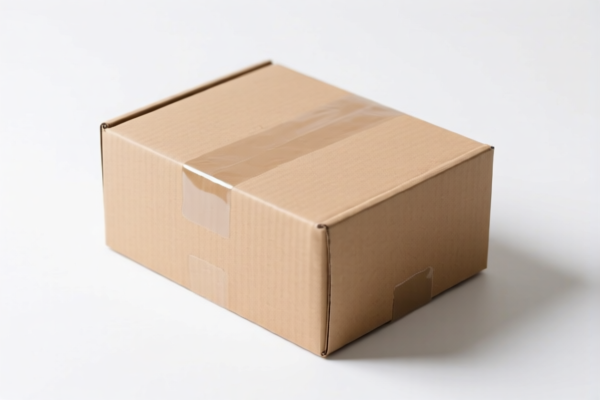


AI Analysis
📦 Cardboard Boxes (Paper and Paperboard Boxes)
🌐 HS Code Reference & Customs Clearance Guide | 2026 Updated Tariff Analysis | Pro-Level Import Strategy
📌 One, Product Definition & Classification: Do You Really Know What a "Cardboard Box" Is?
Cardboard boxes are among the most widely used packaging solutions in global trade—essential for e-commerce, logistics, manufacturing, and retail. However, not all boxes are created equal under international customs rules.
In the Harmonized System (HS), cardboard boxes are classified based on material composition, structural design, and functional use—not just their appearance.
⚠️ Critical Distinction:
- If it’s made from paper or paperboard and designed to hold, protect, or transport goods → Likely falls under 4819.10.00.40 or 4805.92.40.10
- If it’s a folded paperboard structure (like a retail gift box or display carton) → May be classified under 4805.93.40.10
- If it’s a bag-like paper container → Could be 4819.40.00.40
- If it’s a general paper product not excluded by regulation → 4823.90.86.80✅ Key Insight:
The form, material, and intended use determine the HS code—not just the word “box”.
📦 Two, HS Code Classification Breakdown (2026 Official Tariff Reference)
| HS Code | Product Description | Applicable Use Cases | Material & Structural Features |
|---|---|---|---|
4819.10.00.40 |
Boxes made from paper or paperboard, designed for packaging and transportation | General shipping boxes, corrugated cartons, industrial packaging | Made from paperboard; rigid structure; designed for stacking and protection |
4805.92.40.10 |
Folding carton board (non-corrugated), used for packaging and display | Retail packaging, cosmetic boxes, food packaging, gift boxes | Flat-foldable; made from folded paperboard; no corrugation; often printed |
4805.93.40.10 |
Folding carton board (Folding carton board), used for packaging and display | Retail packaging, branded boxes, display units, consumer goods | Similar to 4805.92.40.10; specifically defined as "folding carton board" in tariff schedules |
4819.40.00.40 |
Paper bags or sack-like paper containers | Paper shopping bags, gift bags, packaging for small items | Made from paper; open top; flexible structure; used for carrying goods |
4823.90.86.80 |
Other paper or paperboard articles, not excluded from general classification | Custom paper packaging, non-standard forms, promotional boxes | Complies with paper/paperboard material requirements; not specifically excluded by tariff |
🔍 Critical Reminder:
- "Folding carton" ≠ "corrugated box" → Different HS codes, same tax treatment
- "Paper bag" is not a "box" in HS classification → Must be declared as4819.40.00.40
- All five codes are subject to the same tariff structure → 35% total
- No exceptions — even if the box is plain, recycled, or eco-friendly
💰 Three, 2026 Updated Tariff Breakdown (With Detailed Duty Clauses)
✅ Applicable Country: United States (US)
✅ Origin: China (CN)
✅ Effective Date: November 10, 2025 (and ongoing)
🎯 1. 4819.10.00.40 — Paper & Paperboard Boxes
| Item | Details |
|---|---|
| Base Tariff | 0% (ad valorem) |
| USITC Section 301 Additional Duty | +25% (from U.S. Trade Act Section 301) |
| IEEPA Section 122 Clause Duty | +10% (under International Emergency Economic Powers Act) |
| Total Effective Tariff | 35% |
| Tax Calculation | CIF Value × 35% |
| De Minimis Threshold | ❌ Not applicable (denied) |
| Legal Basis Path | IEEPA:9903.01.25 → IEEPA:9903.01.24 → USITC:4819.10.00.40 → FOOTNOTE:9903.88.01 |
📌 Explanation:
- The 25% USITC duty is part of the Section 301 tariffs targeting Chinese goods deemed to have unfair trade practices.
- The 10% IEEPA duty is under Section 122 of the IEEPA, which authorizes emergency tariffs on goods from China, Hong Kong, and Macao.
- Combined: 35% — one of the highest tariffs on non-metallic packaging.
🎯 2. 4805.92.40.10 — Folding Carton Board (Non-Corrugated)
| Item | Details |
|---|---|
| Base Tariff | 0% |
| USITC Section 301 Duty | +25% |
| IEEPA Section 122 Duty | +10% |
| Total Tariff | 35% |
| Tax Calculation | CIF × 35% |
| De Minimis | ❌ Not allowed |
| Legal Path | IEEPA:9903.01.25 → IEEPA:9903.01.24 → USITC:4805.92.40.10 → FOOTNOTE:9903.88.01 |
📌 Note:
- This includes retail gift boxes, cosmetic packaging, food boxes, and display cartons.
- Even if unprinted, plain white, or recycled, the tariff applies.
- No exemption for "low-value" or "eco-friendly" materials.
🎯 3. 4805.93.40.10 — Folding Carton Board (Folding Carton Board)
| Item | Details |
|---|---|
| Base Tariff | 0% |
| USITC Duty | +25% |
| IEEPA 122 Duty | +10% |
| Total Tariff | 35% |
| Tax Calculation | CIF × 35% |
| De Minimis | ❌ Not eligible |
| Legal Path | IEEPA:9903.01.25 → IEEPA:9903.01.24 → USITC:4805.93.40.10 → FOOTNOTE:9903.88.01 |
📌 Clarification:
- This code is specifically defined as “folding carton board” in the U.S. tariff schedule.
- It applies to flat-foldable, rigid paperboard boxes used in retail and consumer goods.
- Same tax as 4805.92.40.10 — no difference in duty.
🎯 4. 4819.40.00.40 — Paper Bags / Sack-Like Containers
| Item | Details |
|---|---|
| Base Tariff | 0% |
| USITC Duty | +25% |
| IEEPA 122 Duty | +10% |
| Total Tariff | 35% |
| Tax Calculation | CIF × 35% |
| De Minimis | ❌ Not allowed |
| Legal Path | IEEPA:9903.01.25 → IEEPA:9903.01.24 → USITC:4819.40.00.40 → FOOTNOTE:9903.88.01 |
📌 Important:
- Even if it’s not a box, but a paper bag (e.g., shopping bag, gift bag), it’s still subject to 35%.
- Shape doesn’t matter — if it’s made of paper and used for carrying goods, it’s taxable.
🎯 5. 4823.90.86.80 — Other Paper or Paperboard Articles (General)
| Item | Details |
|---|---|
| Base Tariff | 0% |
| USITC Duty | +25% |
| IEEPA 122 Duty | +10% |
| Total Tariff | 35% |
| Tax Calculation | CIF × 35% |
| De Minimis | ❌ Not allowed |
| Legal Path | IEEPA:9903.01.25 → IEEPA:9903.01.24 → USITC:4823.90.86.80 → FOOTNOTE:9903.88.01 |
📌 Scope:
- Covers non-excluded paper products not fitting into specific categories.
- Includes custom paper packaging, promotional boxes, non-standard forms, decorative paper containers.
- No exceptions — if it’s paper-based and not excluded, this code applies.
🛠️ Four, Customs Clearance Best Practices (Pro Tips to Avoid Penalties)
✅ 1. Required Documentation (Must-Have Checklist)
| Document | Required? | Notes |
|---|---|---|
| ✅ Product Specifications | ✔️ | Include dimensions, material thickness, folding method, use case |
| ✅ Product Photos (front, back, side, open) | ✔️ | Show structure, seams, material, and intended use |
| ✅ Commercial Invoice | ✔️ | Clearly state: “Cardboard Box, Paperboard, Folding Carton, or Paper Bag” |
| ✅ Packing List | ✔️ | Specify quantity, type, and HS code per item |
| ✅ Certificate of Origin (CO) | ✔️ | Required for tariff eligibility; if from China → 35% applies |
| ✅ Test Reports (if applicable) | ✔️ | For fire resistance, durability, or safety (e.g., food-grade) |
| ✅ Technical Drawings (for complex boxes) | ✔️ | Helps customs verify folding structure |
✅ 2.申报技巧 (申报口诀)
🔥 “材料定码,结构定税,名称精准,税差35点!”
| Scenario | Correct HS Code | Wrong Approach |
|---|---|---|
| Corrugated shipping box | 4819.10.00.40 |
Misclassified as 4805.92.40.10 → same tax, but risk of audit |
| Retail gift box (folded) | 4805.93.40.10 |
Called “cardboard box” → incorrect, but same tax |
| Paper shopping bag | 4819.40.00.40 |
Called “box” → incorrect, but same tax |
| Custom paper packaging | 4823.90.86.80 |
Not listed? → Use this catch-all code |
| Plain white box | 4819.10.00.40 |
Still 35% — no exemption for plainness |
✅ Pro Tip:
Use exact product names like:
- "Folding Carton Board, 200 x 150 x 80 mm, for Cosmetics Packaging"
- "Paper Bag, 300gsm, for Retail Use, 100 Units"
- "Corrugated Box, 40 x 30 x 25 cm, for E-Commerce Shipping"
✅ 3. Special Cases & Solutions
| Situation | Recommended Action |
|---|---|
| Boxes from Vietnam, Mexico, Thailand, Malaysia | Apply for IEEPA exemption — may qualify for 0% tariff |
| Recycled or eco-friendly paper boxes | ❌ No exemption — same 35% rate |
| Boxes with printing or branding | Still 35% — branding doesn’t reduce duty |
| Boxes used for food or medical products | Must meet safety standards, but tariff unchanged |
| Bulk shipments with mixed types | Declare by type — don’t group all as “boxes” |
🌍 Five, Global Customs Comparison (2026 Update)
| Country/Region | Recommended HS Code | Tariff | Certification | Notes |
|---|---|---|---|---|
| 🇺🇸 USA | 4819.10.00.40 to 4823.90.86.80 |
35% (China origin) | None required | Highest tariff — 35% applies to all |
| 🇨🇳 China | 4819.10.00.40 etc. |
5% | CCC, RoHS | No additional duties |
| 🇪🇺 EU | 4819.10.00.40 |
0% (if CE) | CE, RoHS | No 301/IEEPA duties |
| 🇦🇺 Australia | 4819.10.00.40 |
5% | RCM | No extra tariffs |
| 🇯🇵 Japan | 4819.10.00.40 |
0% | PSE | No additional duties |
📌 Conclusion:
- The U.S. is the only market with 35% tariffs on all paper boxes from China
- China, EU, Australia, Japan: no extra duties
- Shift production to Vietnam/Mexico to avoid 35% → Save up to 30% on import costs
📌 Six, Common Mistakes & How to Avoid Them (Real-World Pitfalls)
❌ Mistake 1: Calling a paper bag a “box”
👉 Result: Wrong HS code → audit, fines, or seizure
❌ Mistake 2: Grouping all boxes together in one shipment
👉 Result: Customs may reclassify → higher tax or delay
❌ Mistake 3: Not providing photos or drawings
👉 Result: Customs can’t verify structure → delayed clearance
❌ Mistake 4: Using generic name like “packaging” or “container”
👉 Result: Misclassification risk → 35% tax applied anyway
✅ Correct Approach:
Use precise, descriptive names:
- "Folding Carton Board, 180 x 120 x 60 mm, for Jewelry Packaging, White, 500 Units"
- "Paper Bag, 300gsm, 30 x 25 x 10 cm, for Retail Use, Printed, 1000 Units"
🎯 Seven, Final Verdict: Precision Pays Off
🎯 Remember the Golden Rule:
🔹 “Material defines code, structure defines use, name defines risk.”
🔹 “35% is not a guess — it’s a fact for China-origin paper boxes.”
📌 Pro Tip:
✅ Apply for an Advance Ruling (Pre-Approval) from U.S. Customs before shipment
✅ Use a U.S.-based customs broker with experience in paper products
✅ Consider shifting production to Vietnam, Mexico, or Thailand to avoid 35% tariffs
📣 Take Action Now:
📞 Contact a licensed customs broker + Provide product photos + Request HS Code pre-determination
🚀 Avoid delays, penalties, and surprise costs — ship smart, not just fast!
✨ Smart Exporting Starts with Smart Classification!
💼 Your bottom line depends on the right HS code — choose wisely!
Customer Reviews
About HS Code Classification
The Harmonized System (HS) is an internationally standardized nomenclature developed by the World Customs Organization (WCO) to classify traded products. Over 200 countries use the HS system as the basis for customs tariffs, trade statistics, and import/export regulations.
Each HS code follows a hierarchical structure:
- Chapter (2 digits) — Broad category of goods (e.g., Chapter 84: Machinery and Mechanical Appliances)
- Heading (4 digits) — More specific grouping within the chapter
- Subheading (6 digits) — Internationally standardized breakdown, used by all WCO member countries
- National subdivisions (8-10 digits) — Country-specific extensions for further classification, such as US HTSUS 10-digit codes
Correct HS code classification is essential for smooth customs clearance, accurate duty payment, and compliance with trade regulations. Misclassification can lead to customs delays, overpayment of duties, or penalties.
When importing from CN to US, the applicable tariff rates may include:
- Most-Favored-Nation (MFN) rate — The standard duty rate applied to WTO members
- General rate — Applied to countries without trade agreements
- Trade remedy duties — Additional tariffs such as Section 301 (anti-dumping), Section 232 (national security), or countervailing duties
The information provided on this page is for reference purposes only. For official classification, please consult with your local customs authority or a licensed customs broker.