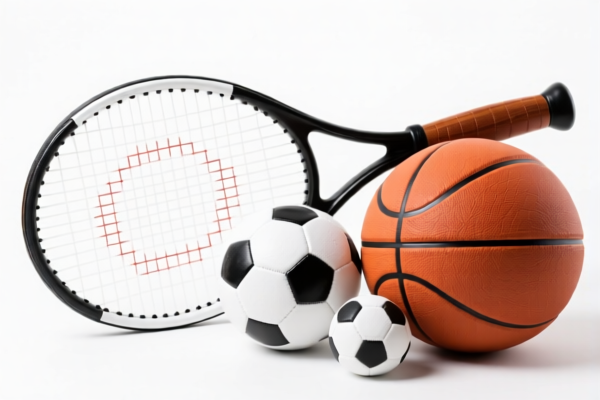
网球拍
CN → US| HS Code | Tariff Rate | Origin | Destination | Doc |
|---|---|---|---|---|
| 9506512000 | 15.3% | CN | US | Official Doc |
| 9506514000 | 13.9% | CN | US | Official Doc |
Product Images



AI Analysis
🎾 Tennis Rackets (Lawn-Tennis Rackets)
🌐 HS Code Reference & Customs Clearance Guide | 2026 Latest Tariff Analysis | Professional Entry Strategy
📌 I. Product Definition & Classification: Do You Really Know "Tennis Rackets"?
Tennis rackets are essential sports equipment used in professional, amateur, and recreational tennis, badminton, and similar racket sports. In international trade, they are strictly categorized based on their stringing status, which directly determines the HS Code and applicable tax rate.
Strung Rackets (预穿线球拍):
Rackets that are already strung with strings and ready for immediate play. These are considered "finished goods."
Unstrung Rackets (未穿线球拍):
Rackets that come as frames without strings, often requiring the buyer to purchase and install strings separately. These are treated as "semi-finished" or "parts."
⚠️ Critical Distinction for Customs:
- Strung: Must be classified under 9506.51.20.00 (Finished goods).
- Unstrung: Must be classified under 9506.51.40.00 (Parts/Components).
- Misclassification leads to severe penalties, duty discrepancies, and shipment delays!
📦 II. HS Code Classification Details (2026 Latest Tariff Authority)
| HS Code | Product Description | Application Scenario | Status |
|---|---|---|---|
9506.51.20.00 |
Lawn-tennis rackets, strung (ready to play) | Professional tournaments, retail sales, recreational use | ✅ Strung |
9506.51.40.00 |
Lawn-tennis rackets, not strung (frame only) | Manufacturing export, DIY kits, professional customization | ✅ Unstrung |
🔍 Key Reminder:
- Strung vs. Unstrung is the deciding factor. Even if the racket is made of carbon fiber or expensive materials, if it lacks strings, it falls under9506.51.40.00.
- Accessories (grips, overgrips) included with the racket do not change the classification of the main item.
- Do not mix: A shipment containing both strung and unstrung rackets must be separated on the commercial invoice to avoid confusion.
💰 III. 2026 Latest Tariff Rate Analysis (Detailed Breakdown)
✅ Applicable Jurisdiction: General International Trade (Based on provided data)
✅ Product Origin: Typically Manufactured in China (CN)
✅ Effective Date: Current 2026 Tariff Schedule
🎯 1. 9506.51.20.00 —— Tennis Rackets, Strung
| Item | Content |
|---|---|
| Base Tariff | 0.0% (Duty-Free) |
| Additional Tariff | 0.0% (No 301/Section 232 additional duties) |
| Total Tax Rate | 0.0% |
| Tax Detail | "基础关税: 0.0%, 加征关税: 0.0%" |
| Calculation | CIF Value × 0% = $0.00 Duty |
| Policy Status | ✅ Fully Exempt from standard and additional tariffs. |
📌 Explanation:
- Tennis rackets (strung) are considered essential sporting goods and enjoy a duty-free status in the general tariff schedule provided.
- No "Steel, Aluminum, Copper" surcharge applies to this specific finished product code.
- Cost Advantage: Importing finished rackets incurs zero customs duty, making them highly cost-effective for trade.
🎯 2. 9506.51.40.00 —— Tennis Rackets, Not Strung
| Item | Content |
|---|---|
| Base Tariff | 0.0% (Duty-Free) |
| Additional Tariff (Specific) | +50% (Applied to Steel, Aluminum, Copper products) |
| Total Tax Rate | 0.0% (Base) + 50% (Conditional) |
| Tax Detail | "基础关税: 0.0%, 加征关税: 0.0% 钢,铝铜制品加征关税: 50%" |
| Calculation | Depends on Material Composition! |
| Policy Status | ⚠️ Conditional High Risk if materials trigger surcharge. |
📌 CRITICAL WARNING:
- While the Base Tariff is 0%, the description explicitly states: "Steel, Aluminum, Copper Products Surcharge: 50%".
- Risk Scenario: If the unstrung rackets (9506.51.40.00) are manufactured using Steel, Aluminum, or Copper components (frames, grommets, screws), they may be subject to a 50% punitive tariff in addition to the base rate.
- Why? Unstrung rackets are often exported as "parts" or "semi-finished goods," which customs authorities sometimes scrutinize more heavily under material-specific trade remedy laws (e.g., anti-dumping or specific material surcharges).
- Contrast: The Strung version (9506.51.20.00) explicitly lists 0% additional tariff, likely because the finished good status exempts it from the "parts/material" surcharge logic.
🛠️ IV. Customs Clearance Practical Advice (Pitfall Avoidance)
✅ 1. Preparation Checklist (Must-Haves)
| Document | Required | Explanation |
|---|---|---|
| ✅ Product Specifications | ✔️ Mandatory | Must clearly state: "Strung" or "Unstrung" (Frame only). |
| ✅ Material Declaration | ✔️ Mandatory | Specify if frame is Carbon Fiber, Graphite, or contains Steel/Aluminum. |
| ✅ Commercial Invoice | ✔️ Mandatory | Description must match HS Code exactly: "Tennis Rackets, Strung" vs "Tennis Racket Frames". |
| ✅ Packing List | ✔️ Mandatory | Separate strung vs. unstrung in different boxes if both are in one shipment. |
| ✅ Photos of Actual Goods | ✔️ Recommended | Proof that strings are present (for 9506.51.20.00) or absent (for 9506.51.40.00). |
| ✅ Test Reports | ✔️ Recommended | ISO/ASTM safety standards for sports equipment. |
✅ 2. Declaration Strategy (Key Tips)
🔥 Golden Rule: "Strung = Finished = Safe; Unstrung = Parts = Material Check!"
| Scenario | Correct Declaration | Wrong Declaration | Consequence |
|---|---|---|---|
| Finished Racket | 9506.51.20.00 + "Strung" |
9506.51.40.00 + "Unstrung" |
Overpayment of duty + Audit risk. |
| Frame Only | 9506.51.40.00 + "Not Strung" |
9506.51.20.00 + "Strung" |
Severe Penalty: Misdeclaration of a finished good as a part. |
| Mixed Shipment | Split Invoice: Separate Lines | One Line with Mixed Status | Customs Delay & Rejection. |
| Aluminum Frame (Unstrung) | 9506.51.40.00 + Declare Material |
Ignore Material Details | 50% Surcharge applied automatically. |
✅ 3. Special Case Handling
| Situation | Recommendation |
|---|---|
| OEM Custom Frames | Clearly state "Unstrung Frames" on invoice. If they contain significant steel/aluminum, prepare for the 50% surcharge calculation. |
| Rackets with Strings & Grips | Even if the string is thin, if it's strung, it counts as 9506.51.20.00. |
| Professional Equipment vs. Kids' Toys | Both fall under 9506.51, but ensure the "strung/unstrung" distinction is clear. |
| Suspicion of "Deceptive Packaging" | Customs may open packages to check for strings. Ensure packaging allows easy visual verification. |
🌍 V. Global Market Context (2026 Overview)
| Country/Region | Recommended HS Code | Tariff Status | Notes |
|---|---|---|---|
| USA (General) | 9506.51.20.00 |
0% | Duty-free for finished goods. |
| USA (Unstrung) | 9506.51.40.00 |
0% Base + 50% (if Al/Steel/Cu) | High risk for metal frames. |
| EU | 9506.51.20.00 |
6.5% (Standard) | Different from provided data; check EU Tariff. |
| Canada | 9506.51.20.00 |
0% | Generally duty-free. |
| China (Import) | 9506.51.20.00 |
Varies | Check specific China Tariff Schedule. |
📌 Conclusion:
- USA/Target Market: The provided data shows 0% duty for Strung rackets (9506.51.20.00).
- The Trap: Unstrung rackets (9506.51.40.00) carry a hidden 50% surcharge if they contain Steel, Aluminum, or Copper.
- Strategy: Always ship finished (strung) rackets to avoid the 50% material surcharge risk, unless you have verified that the unstrung frames are made of non-surcharged materials (e.g., pure Carbon Fiber without metal components).
📌 VI. Common Mistakes & Pitfall Guide
❌ Mistake 1: Declaring a Strung racket as 9506.51.40.00 ("Not Strung")
👉 Consequence: Customs may fine you for under-declaring the product status, or demand proof of "unstrung" status which you cannot provide.
❌ Mistake 2: Shipping Unstrung Rackets made of Aluminum Frames without declaring the material risk.
👉 Consequence: You will be hit with the 50% Additional Tariff unexpectedly, destroying your profit margin.
❌ Mistake 3: Mixing Strung and Unstrung rackets in one invoice.
👉 Consequence: Customs will likely reject the entire shipment for "inconsistent classification."
✅ Best Practice:
"Ship Strung, Pay Zero! Ship Unstrung, Check Metal Content!"
"HS Code9506.51.20.00is your safe haven. Avoid9506.51.40.00unless you are certain of the material composition."
🎯 VII. Conclusion: Precision Classification = Maximum Savings
🎯 Key Takeaway:
🔹 Strung Rackets (
9506.51.20.00): 0% Total Tax. Safest & Cheapest option.
🔹 Unstrung Rackets (9506.51.40.00): 0% Base, but 50% Risk on Steel/Al/Cu. High Risk.
📌 Pro Tip:
If you are exporting tennis rackets, always include the strings before shipping. The 50% surcharge on unstrung metal/rubber frames is a hidden cost that can wipe out your entire profit.
Action Item: Verify your supplier's material list. If the frame uses aluminum or steel, do not export unstrung. Ship them pre-strung!
✨ Professional Customs Clearance Starts with Precise Classification!
💼 Your Margin Depends on the String!
Customer Reviews
About HS Code Classification
The Harmonized System (HS) is an internationally standardized nomenclature developed by the World Customs Organization (WCO) to classify traded products. Over 200 countries use the HS system as the basis for customs tariffs, trade statistics, and import/export regulations.
Each HS code follows a hierarchical structure:
- Chapter (2 digits) — Broad category of goods (e.g., Chapter 84: Machinery and Mechanical Appliances)
- Heading (4 digits) — More specific grouping within the chapter
- Subheading (6 digits) — Internationally standardized breakdown, used by all WCO member countries
- National subdivisions (8-10 digits) — Country-specific extensions for further classification, such as US HTSUS 10-digit codes
Correct HS code classification is essential for smooth customs clearance, accurate duty payment, and compliance with trade regulations. Misclassification can lead to customs delays, overpayment of duties, or penalties.
When importing from CN to US, the applicable tariff rates may include:
- Most-Favored-Nation (MFN) rate — The standard duty rate applied to WTO members
- General rate — Applied to countries without trade agreements
- Trade remedy duties — Additional tariffs such as Section 301 (anti-dumping), Section 232 (national security), or countervailing duties
The information provided on this page is for reference purposes only. For official classification, please consult with your local customs authority or a licensed customs broker.