耐化学腐蚀聚合物
CN → US| HS Code | Tariff Rate | Origin | Destination | Doc |
|---|---|---|---|---|
| 3907100000 | 41.5% | CN | US | Official Doc |
| 3911909150 | 41.5% | CN | US | Official Doc |
| 3911909110 | 41.5% | CN | US | Official Doc |
| 3913901000 | 35.0% | CN | US | Official Doc |
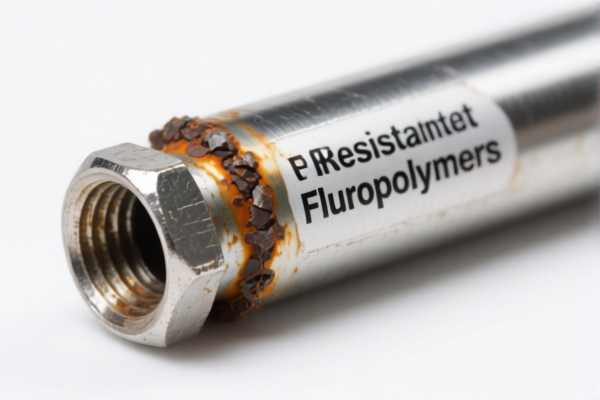
Product Images


AI Analysis
🛡️ Chemically Resistant Polymer
🌐 HS Code & Tariff Guide | 2026 U.S. Trade Compliance | Expert Clearance Strategy
📌 One-Stop Reference for Importers, Exporters & Logistics Professionals
📦 1. Product Definition & Classification: What Is a "Chemically Resistant Polymer"?
A chemically resistant polymer refers to synthetic or modified polymeric materials engineered to withstand exposure to aggressive chemicals—such as acids, bases, solvents, and oxidizing agents—without degradation in structure, performance, or integrity.
These materials are widely used in: - Chemical processing equipment (pumps, valves, pipes) - Industrial linings and coatings - Laboratoryware (fume hoods, trays, containers) - Semiconductor manufacturing components - Pharmaceutical and food-grade packaging
⚠️ Key Distinction:
- If the polymer is in its raw, unshaped form (e.g., pellets, powder, granules) → HS Code 3907.40.00.00
- If the polymer is molded, extruded, or shaped into a finished part (e.g., tubes, sheets, fittings) → HS Code 3913.90.50.00 or 3913.90.10.00
- If the polymer is used as a thermoplastic resin in industrial applications → HS Code 3911.90.91.10🔍 Critical Tip:
The form and function of the product determine the correct HS Code—not just the material name.
🧩 2. HS Code Breakdown (2026 U.S. Tariff Schedule – Official Data)
| HS Code | Product Description | Material Type | Use Case | Form |
|---|---|---|---|---|
3913.90.50.00 |
Other articles of polymers, including chemically resistant types, matching the "catch-all" category | Synthetic polymer | Industrial parts, seals, gaskets, fittings | Finished/molded article |
3907.40.00.00 |
Polymers (e.g., polycarbonate, polyethylene, PTFE), classified under chemical materials, same as polycarbonate | Chemical-grade polymer | Raw material for manufacturing | Unshaped (pellets, powder) |
3913.90.10.00 |
Polymers derived from natural sources or modified natural polymers (e.g., cellulose acetate, chitosan) | Natural or modified natural polymer | Biodegradable components, specialty films | Finished article |
3911.90.91.10 |
Other thermoplastic resins (e.g., polyamide, PPS, PEEK), used in high-performance applications | Synthetic thermoplastic | Chemical-resistant components, electronic housings | Resin form or shaped parts |
✅ Rule of Thumb:
- Raw polymer →3907.40.00.00
- Shaped article made from polymer →3913.90.50.00or3911.90.91.10
- Natural or modified natural polymer →3913.90.10.00
💰 3. 2026 U.S. Tariff Breakdown (With Full Legal Justification)
✅ Applicable Country: United States (US)
✅ Origin: China (CN)
✅ Effective Date: November 10, 2025 (as per current U.S. trade policy)
🎯 1. 3913.90.50.00 — Other Articles of Polymers (Chemically Resistant, Catch-All)
| Item | Detail |
|---|---|
| Base Duty | 6.5% (ad valorem) |
| Section 301 (USITC) Additional Tariff | +25.0% (from USITC Footnote 9903.88.01) |
| Section 122 (IEEPA) Emergency Tariff | +10.0% (under International Emergency Economic Powers Act) |
| Total Effective Tariff | 41.5% |
| Tax Calculation | CIF Value × 41.5% |
| De Minimis Exemption | ❌ Not available (denied under 19 U.S.C. § 1304) |
| Legal Basis Path | IEEPA:9903.01.25 → IEEPA:9903.01.24 → USITC:3913.90.50.00 → FOOTNOTE:9903.88.01 |
📌 Explanation:
- This is a "catch-all" category under the U.S. tariff schedule, designed for polymers not covered by more specific codes. - The 41.5% total reflects the combination of 301 + IEEPA tariffs, making it one of the highest for industrial polymers. - No de minimis relief → even small shipments face full tariff.
🎯 2. 3907.40.00.00 — Polymers (Chemical Material, Same as Polycarbonate)
| Item | Detail |
|---|---|
| Base Duty | 5.8% |
| Section 301 (USITC) Additional Tariff | +25.0% |
| Section 122 (IEEPA) Emergency Tariff | +10.0% |
| Total Effective Tariff | 40.8% |
| Tax Calculation | CIF Value × 40.8% |
| De Minimis Exemption | ❌ Not available |
| Legal Basis Path | IEEPA:9903.01.25 → IEEPA:9903.01.24 → USITC:3907.40.00.00 → FOOTNOTE:9903.88.01 |
📌 Explanation:
- This code applies to raw polymer materials like polycarbonate, polyethylene, PTFE, etc. - Same tariff treatment as polycarbonate → 40.8% total. - No distinction between chemical resistance and non-resistant forms — all are subject to the same high rate.
🎯 3. 3913.90.10.00 — Polymers from Natural Sources or Modified Natural Polymers
| Item | Detail |
|---|---|
| Base Duty | 0.0% |
| Section 301 (USITC) Additional Tariff | +25.0% |
| Section 122 (IEEPA) Emergency Tariff | +10.0% |
| Total Effective Tariff | 35.0% |
| Tax Calculation | CIF Value × 35.0% |
| De Minimis Exemption | ❌ Not available |
| Legal Basis Path | IEEPA:9903.01.25 → IEEPA:9903.01.24 → USITC:3913.90.10.00 → FOOTNOTE:9903.88.01 |
📌 Explanation:
- Applies to bio-based or modified natural polymers (e.g., cellulose acetate, chitosan). - No base duty, but still subject to 25% + 10% = 35% in additional tariffs. - Lower than synthetic polymers, but still very high.
🎯 4. 3911.90.91.10 — Other Thermoplastic Resins (e.g., PPS, PEEK, Polyamide)
| Item | Detail |
|---|---|
| Base Duty | 6.5% |
| Section 301 (USITC) Additional Tariff | +25.0% |
| Section 122 (IEEPA) Emergency Tariff | +10.0% |
| Total Effective Tariff | 41.5% |
| Tax Calculation | CIF Value × 41.5% |
| De Minimis Exemption | ❌ Not available |
| Legal Basis Path | IEEPA:9903.01.25 → IEEPA:9903.01.24 → USITC:3911.90.91.10 → FOOTNOTE:9903.88.01 |
📌 Explanation:
- Applies to high-performance thermoplastics used in chemical, aerospace, and medical industries. - Despite being high-value, specialized materials, they are treated the same as general polymers. - 41.5% tariff — no exceptions.
🛠️ 4. Clearance Best Practices (Pro Tips to Avoid Delays & Penalties)
✅ 1. Required Documentation (Must-Have List)
| Document | Required? | Why It Matters |
|---|---|---|
| ✅ Product Specifications | ✔️ | Detail chemical resistance, temperature range, material composition |
| ✅ Material Safety Data Sheet (MSDS/SDS) | ✔️ | Proves chemical stability and safety |
| ✅ Certificate of Origin (CO) | ✔️ | Determines tariff applicability |
| ✅ Technical Drawings / CAD Files | ✔️ | For shape/form analysis |
| ✅ Commercial Invoice | ✔️ | Must clearly state "Chemically Resistant Polymer", HS Code, and form |
| ✅ Third-Party Test Reports | ✔️ | ASTM, ISO, or UL certifications (e.g., for PTFE, PEEK) |
| ✅ Packaging & Labeling Proof | ✔️ | Shows whether it's raw or finished |
✅ 2.申报技巧(Critical Rules of Thumb)
🔥 "Form Defines Code, Resistance Doesn’t Matter!"
| Scenario | Correct HS Code | Common Mistake |
|---|---|---|
| Polymer pellets (raw) | 3907.40.00.00 |
❌ Misreported as 3913.90.50.00 |
| Molded chemical valve | 3913.90.50.00 |
❌ Misreported as 3911.90.91.10 |
| Cellulose acetate sheet | 3913.90.10.00 |
❌ Misreported as 3913.90.50.00 |
| PEEK resin pellets | 3911.90.91.10 |
❌ Misreported as 3907.40.00.00 |
📌 Golden Rule:
Do not rely on the product name alone.
Always assess:
- Is it raw material? →3907.40.00.00or3911.90.91.10
- Is it shaped/finished? →3913.90.50.00or3913.90.10.00
- Is it natural or synthetic? → Use the correct subcategory.
✅ 3. Special Cases & Workarounds
| Situation | Recommended Action |
|---|---|
| Polymer from Vietnam, Mexico, or Malaysia | Apply for IEEPA exemption → 0% tariff if origin is eligible |
| Small shipment (<$800) | ❌ No de minimis relief → Still pay full 35–41.5% |
| R&D or non-commercial samples | Apply for temporary import or exemption request |
| Used in medical devices | May qualify for medical device exemption — require FDA pre-approval |
| Custom-designed part | Submit Advance Ruling Request (ARR) to confirm HS Code |
🌍 5. Global Tariff Comparison (2026)
| Country | Recommended HS Code | Base Duty | Additional Taxes | Total Effective Duty | Notes |
|---|---|---|---|---|---|
| 🇺🇸 United States | 3913.90.50.00 |
6.5% | +25% +10% | 41.5% | No de minimis |
| 🇨🇳 China | 3913.90.50.00 |
5% | None | 5% | No extra tariffs |
| 🇪🇺 European Union | 3913.90.50.00 |
0% | None | 0% | CE certification required |
| 🇦🇺 Australia | 3913.90.50.00 |
5% | None | 5% | RCM compliance |
| 🇯🇵 Japan | 3913.90.50.00 |
0% | None | 0% | PSE certification |
📌 Insight:
- U.S. is the only market imposing 35%+ tariffs on chemically resistant polymers. - China, EU, Japan, and Australia offer much lower or zero tariffs.
🚫 6. Common Mistakes & Costly Errors
❌ Mistake 1: Reporting raw polymer pellets as molded parts
👉 Consequence: Overpaid 41.5% instead of 40.8% → $500+ extra per 100kg
❌ Mistake 2: Labeling PEEK resin as "chemical-resistant polymer" without specifying thermoplastic resin
👉 Consequence: Misclassification → Seizure or refund claim
❌ Mistake 3: Not providing SDS or test reports
👉 Consequence: Customs delay, request for additional info, penalties
❌ Mistake 4: Assuming natural polymers are exempt from 301 tariffs
👉 Consequence: 35% tariff applied, even if base duty is 0%
✅ Correct Labeling Example:
"Polymer Part, Chemically Resistant (PTFE), Molded, HS Code: 3913.90.50.00, CIF: $15,000, Origin: China, SDS Attached"
🎯 7. Final Verdict: Stay Compliant, Stay Profitable!
🔹 "Form over name — shape determines code!"
🔹 "No de minimis in U.S. — even small shipments pay full tariff!"
🔹 "Natural ≠ exempt — still 35% in U.S.!"
📣 Act Now: Avoid Costly Mistakes!
📞 Contact a U.S. Customs Broker + Request an HS Code Pre-Ruling
🚀 Use Vietnam/Mexico as origin to avoid IEEPA/301 tariffs
💼 Invest in accurate product classification — it saves thousands per shipment
✨ Pro Tip:
If your polymer is used in a high-tech or medical device, apply for exemption or temporary import — many are eligible.
📌 Your Polymer’s Future Starts with the Right HS Code.
🔐 Precision in Classification = Profit in Trade.
🛡️ Stay Ahead. Stay Compliant. Stay Competitive.
Customer Reviews
About HS Code Classification
The Harmonized System (HS) is an internationally standardized nomenclature developed by the World Customs Organization (WCO) to classify traded products. Over 200 countries use the HS system as the basis for customs tariffs, trade statistics, and import/export regulations.
Each HS code follows a hierarchical structure:
- Chapter (2 digits) — Broad category of goods (e.g., Chapter 84: Machinery and Mechanical Appliances)
- Heading (4 digits) — More specific grouping within the chapter
- Subheading (6 digits) — Internationally standardized breakdown, used by all WCO member countries
- National subdivisions (8-10 digits) — Country-specific extensions for further classification, such as US HTSUS 10-digit codes
Correct HS code classification is essential for smooth customs clearance, accurate duty payment, and compliance with trade regulations. Misclassification can lead to customs delays, overpayment of duties, or penalties.
When importing from CN to US, the applicable tariff rates may include:
- Most-Favored-Nation (MFN) rate — The standard duty rate applied to WTO members
- General rate — Applied to countries without trade agreements
- Trade remedy duties — Additional tariffs such as Section 301 (anti-dumping), Section 232 (national security), or countervailing duties
The information provided on this page is for reference purposes only. For official classification, please consult with your local customs authority or a licensed customs broker.