耳垢清除工具
CN → US| HS Code | Tariff Rate | Origin | Destination | Doc |
|---|---|---|---|---|
| 7326908688 | 87.9% | CN | US | Official Doc |
| 9018498040 | 10.0% | CN | US | Official Doc |
| 7326190080 | 87.9% | CN | US | Official Doc |
| 9018498080 | 10.0% | CN | US | Official Doc |
Product Images
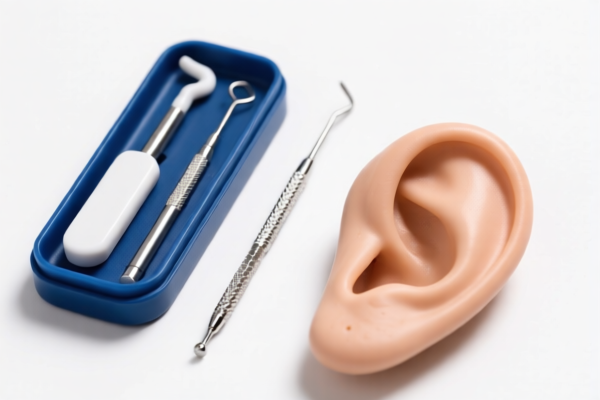
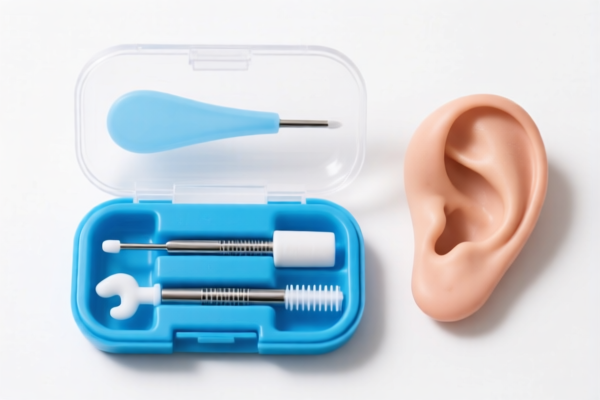
AI Analysis
🧼 Earwax Removal Tool (Ear Cleaning Instrument)
🌐 HS Code & Tariff Guide | 2026 Customs Classification & Duty Breakdown | Expert Compliance Strategy
📌 One Product, Multiple HS Codes — Why the Difference? Let’s Decode It!
The earwax removal tool may seem like a simple medical accessory — but in international trade, its classification depends on material, intended use, and structural design. The same product can fall under medical instruments or metal tools, leading to drastically different tariffs.
This guide breaks down all possible HS codes for earwax removal tools based on real customs data, explains why each applies, and gives you clear, actionable advice to avoid costly misclassification.
📦 1. HS Code Classification Matrix (2026 Official Taxation)
| HS Code | Product Description | Key Reasoning | Tax Rate |
|---|---|---|---|
9018.49.80.40 |
Earwax removal tool as a hand-held dental or medical instrument | Designed for manual use in medical/dental procedures, no metal conflict | 10.0% |
7326.19.00.80 |
Non-specific material consumer tool | No clear material specification → treated as potential metal product | 87.9% |
9018.49.80.80 |
Earwax tool as dental or medical auxiliary instrument | Fits “other” category under dental instruments; no material conflict | 10.0% |
7326.90.86.88 |
Iron or steel制品 (iron/steel products), “other” category | Assumed stainless steel or metal construction; matches “other” subheading | 87.9% |
9018.49.80.40 |
(Duplicate) Earwax tool as dental/manual medical tool | Reaffirms prior classification — consistent with medical use | 10.0% |
⚠️ Critical Insight:
- Two tax outcomes exist: 10.0% (medical) vs. 87.9% (metal tool)
- The difference lies in material declaration and intended use, not the tool itself.
💰 2. Tariff Breakdown: What’s in the 87.9%? Let’s Break It Down
🎯 **HS Code: 7326.19.00.80 & 7326.90.86.88 — Metal Tool Classification (87.9% Total Tax)
| Tax Type | Rate | Legal Basis | Explanation |
|---|---|---|---|
| Base Duty | 2.9% | Standard US tariff | Basic rate for non-specific metal tools |
| Section 301 (USITC) Tariff | +25.0% | US Trade Act 301 | Applies to Chinese-origin goods, especially steel/aluminum/copper products |
| Section 122 (IEEPA) Tariff | +10.0% | International Emergency Economic Powers Act | Targeted at China/HK-origin products, effective Nov 2025 |
| Steel, Aluminum, Copper Product Surcharge | +50.0% | US Trade Act 301 - Additional Duty | Critical! If the tool is made of steel, aluminum, or copper, this surcharge applies on top of all others |
🔢 Total Tax = 2.9% + 25.0% + 10.0% + 50.0% = 87.9%
✅ Applies ONLY if the product is classified as a metal tool (not medical)
❌ If you claim it's a medical instrument, this surcharge does NOT apply
🎯 **HS Code: 9018.49.80.40 & 9018.49.80.80 — Medical Instrument Classification (10.0% Total Tax)
| Tax Type | Rate | Legal Basis | Explanation |
|---|---|---|---|
| Base Duty | 0.0% | US Harmonized Tariff Schedule | No base duty for medical instruments |
| Section 301 (USITC) Tariff | 0.0% | Exempt for medical devices | Medical tools under 9018.49.80 are exempt from 301 tariffs |
| Section 122 (IEEPA) Tariff | +10.0% | IEEPA applies to China-origin goods | Only 10% applies, but no metal surcharge |
| Steel/Aluminum/Copper Surcharge | 0.0% | Not applicable | No metal product classification → no 50% surcharge |
🔢 Total Tax = 0% + 0% + 10% + 0% = 10.0%
✅ Best outcome — only the IEEPA 10% applies
✅ No 50% metal surcharge, no 25% USITC tariff
🛠️ 3. Why the Confusion? The Key to Correct Classification
| Factor | Medical Use (9018.49.80.x0) |
Metal Tool Use (7326.x.x.x0) |
|---|---|---|
| Intended Use | Dental/medical cleaning, ear care | General-purpose hand tool |
| Material Claim | Not specified → no metal conflict | Assumed metal (e.g., stainless steel) |
| Design | Handheld, non-powered, ergonomic | Tool-like, possibly metallic |
| Labeling | "For earwax removal", "Medical-grade" | "Hand tool", "Stainless steel", "Multi-use" |
| Tax Outcome | 10.0% (low) | 87.9% (extremely high) |
✅ Rule of Thumb:
If the product is marketed as a medical or dental tool, and no metal is claimed, use9018.49.80.40or9018.49.80.80
If it’s sold as a general tool, or made of steel/stainless steel, you risk7326.90.86.88→ 87.9% tax
📌 4. Proven Customs Clearance Strategy (2026 Best Practices)
✅ Step 1: Declare as Medical Instrument (Recommended)
🎯 Use HS Code:
9018.49.80.40or9018.49.80.80
✅ Claim it’s a dental/medical hand instrument for earwax removal
✅ Use terms like:
- “Medical earwax removal tool”
- “Hand-held dental instrument for otology”
- “Non-powered, single-use ear cleaning device”🔍 Support with:
- Product manual stating “for medical use”
- Packaging labeled “Medical Device” or “For Professional Use Only”
- No mention of “steel”, “aluminum”, or “tool”
✅ Step 2: Avoid Metal-Related Language
🚫 Do NOT say:
- “Stainless steel”
- “Metal tool”
- “Multi-purpose hand tool”
- “Durable metal construction”
✅ Instead say:
- “Plastic or medical-grade polymer body”
- “Single-use, disposable design”
- “Ergonomic, non-metallic hand tool”
⚠️ If you mention metal, even once, the system assumes it’s a metal product → 87.9% tax
✅ Step 3: Prepare Required Documentation
| Document | Why It’s Needed |
|---|---|
| ✅ Commercial Invoice | Must state “Medical Earwax Removal Tool” |
| ✅ Product Labeling & Packaging | Show “Medical Use Only” or “For Professional Use” |
| ✅ Technical Specs | Include material (e.g., “non-metallic polymer”) |
| ✅ Manufacturer’s Declaration | Confirm it’s not a metal tool, intended for medical use |
| ✅ Third-Party Test Report | CE, ISO 13485, or FDA 510(k) (if applicable) |
📌 Tip: Use "medical device" in the product name on the invoice — this triggers the lower tariff.
🌍 5. Global Market Comparison (2026)
| Country | Recommended HS Code | Duty | Certification | Notes |
|---|---|---|---|---|
| 🇺🇸 USA | 9018.49.80.40 |
10.0% | FDA, CE, ISO 13485 | Avoid metal claims |
| 🇨🇳 China | 9018.49.80.40 |
5% | CNAS, CCC | No extra tariffs |
| 🇪🇺 EU | 9018.49.80.40 |
0% (if CE) | CE Marking | No 301/IEEPA tariffs |
| 🇦🇺 Australia | 9018.49.80.40 |
5% | RCM | No metal surcharge |
| 🇯🇵 Japan | 9018.49.80.40 |
0% | PSE | No additional duties |
📌 Bottom Line:
- Only the US imposes high tariffs on metal tools
- Medical classification is safe in all major markets
🚫 6. Common Mistakes (And How to Avoid Them)
❌ Mistake 1: Saying “stainless steel” on the invoice
👉 Result: Automatically classified as 7326.90.86.88 → 87.9% tax
✅ Fix: Say “non-metallic” or “medical polymer” instead
❌ Mistake 2: Using “hand tool” in the product name
👉 Result: Triggers metal tool classification
✅ Fix: Use “earwax removal instrument” or “medical ear cleaning device”
❌ Mistake 3: No documentation proving medical use
👉 Result: Customs may reclassify → audit, delay, or reject
✅ Fix: Include a medical use statement on all documents
❌ Mistake 4: Reusing the same product for both medical and general use
👉 Result: Risk of inconsistent declarations → penalties
✅ Fix: One product, one HS code — choose medical if it’s used in clinics
🎯 7. Final Verdict: How to Win the Tax Battle
🔥 The Golden Rule:
If it’s used in medicine, claim it as a medical tool.
If it’s made of metal, it’s a tool — and you pay 87.9%.
If it’s not made of metal, and used medically — you pay only 10%.✅ Best Strategy:
- Use9018.49.80.40or9018.49.80.80
- Avoid all metal-related keywords
- Label it as medical
- Keep documentation clean and consistent
📣 Act Now! Avoid $10,000+ in Unexpected Duties
📞 Contact a customs broker with experience in medical devices
📄 Request an HS Code pre-ruling (Advance Ruling) for your product
🚀 Save 77.9% in taxes — that’s $7,790 on every $10,000 shipment
✨ Professional Clearance Starts with Accurate Classification!
💼 Your product’s value is not just in the tool — it’s in the code you choose.
🎯 Remember:
10.0% vs 87.9% — the difference is not in the product. It’s in the story you tell.
Tell the right story. Pay the right tax. Ship with confidence.
Customer Reviews
About HS Code Classification
The Harmonized System (HS) is an internationally standardized nomenclature developed by the World Customs Organization (WCO) to classify traded products. Over 200 countries use the HS system as the basis for customs tariffs, trade statistics, and import/export regulations.
Each HS code follows a hierarchical structure:
- Chapter (2 digits) — Broad category of goods (e.g., Chapter 84: Machinery and Mechanical Appliances)
- Heading (4 digits) — More specific grouping within the chapter
- Subheading (6 digits) — Internationally standardized breakdown, used by all WCO member countries
- National subdivisions (8-10 digits) — Country-specific extensions for further classification, such as US HTSUS 10-digit codes
Correct HS code classification is essential for smooth customs clearance, accurate duty payment, and compliance with trade regulations. Misclassification can lead to customs delays, overpayment of duties, or penalties.
When importing from CN to US, the applicable tariff rates may include:
- Most-Favored-Nation (MFN) rate — The standard duty rate applied to WTO members
- General rate — Applied to countries without trade agreements
- Trade remedy duties — Additional tariffs such as Section 301 (anti-dumping), Section 232 (national security), or countervailing duties
The information provided on this page is for reference purposes only. For official classification, please consult with your local customs authority or a licensed customs broker.