耳机
CN → US| HS Code | Tariff Rate | Origin | Destination | Doc |
|---|---|---|---|---|
| 8518302000 | 10.0% | CN | US | Official Doc |
| 8518301000 | 17.5% | CN | US | Official Doc |
| 8517690000 | 35.0% | CN | US | Official Doc |
| 8517790000 | 67.5% | CN | US | Official Doc |
| 8543709860 | 37.6% | CN | US | Official Doc |
| 8543708900 | 17.5% | CN | US | Official Doc |
Product Images
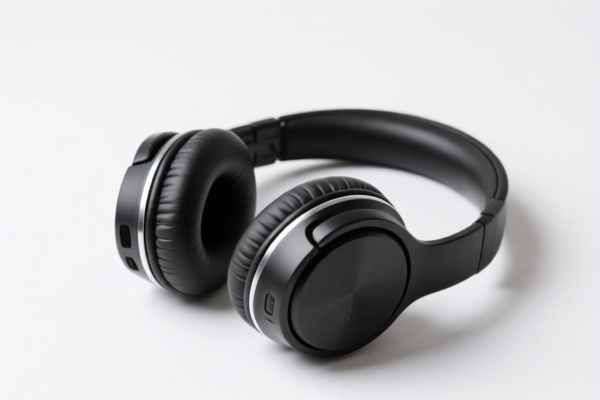
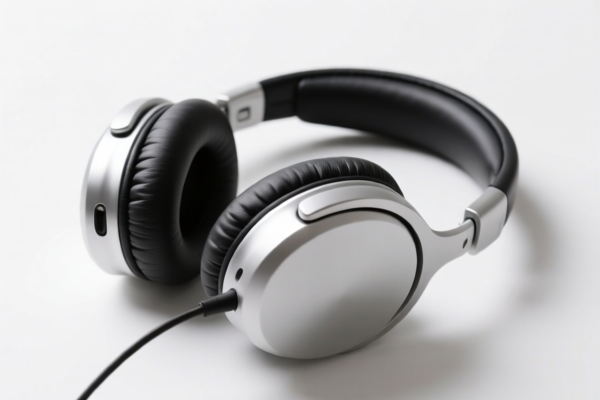
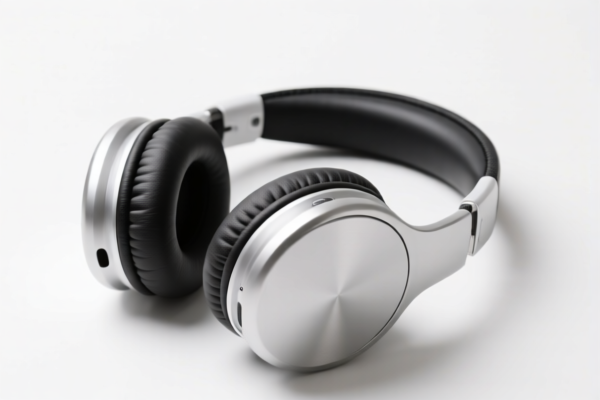
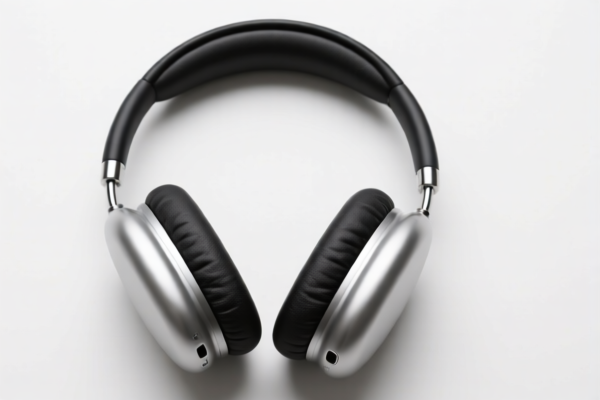
AI Analysis
🎧 Wireless Headphones – HS Code & Tariff Guide 2026 | Full Tax Breakdown & Customs Clearance Strategy
🌐 HS Code Reference & Customs Clearance Handbook | 2026 Updated Tariff Rules | Pro-Level Import Strategy
📌 One: Product Definition & Classification – What Exactly Is a Wireless Headphone?
Wireless headphones are portable audio output devices that transmit sound via Bluetooth, Wi-Fi, or other wireless protocols, typically powered by internal batteries. They are not limited to just "earbuds" — this category includes:
- True wireless earbuds (TWS)
- Over-ear wireless headphones
- On-ear wireless headsets
- Headphones with built-in microphones (for calls, voice assistants)
⚠️ Key Classification Principle:
- If it receives audio signals wirelessly and outputs sound directly to ears → likely not a general communication device, but audio output equipment.
- If it transmits/receives data over networks, includes advanced signal processing, or connects to complex systems → may fall under telecom or data transmission.
📦 Two: HS Code Classification Details (2026 Official Tariff Matrix)
| HS Code | Product Description | Applicable Use Case | Key Features |
|---|---|---|---|
8518.30.20.00 |
Other headphones and earphones (not combined with microphone) | Standard wireless earbuds, consumer-grade audio devices | Pure audio output, no mic, no data transmission |
8518.30.10.00 |
Headphones and earphones (with or without microphone) | All-in-one wireless headsets, used for calls, music, gaming | Includes mic, supports voice input |
8517.69.00.00 |
Equipment for wireless data transmission/reception (e.g., networked audio devices) | Devices that function as part of a wireless network, e.g., smart audio hubs | Uses wireless protocols for data, not just audio |
8517.79.00.00 |
Other wireless communication equipment (audio/data) | High-end audio systems with advanced wireless protocols (e.g., multi-device sync, AI processing) | May include metal casing, complex chipsets, or multi-frequency support |
8543.70.98.60 |
Other machines and apparatus (general-purpose electronic devices) | Devices not fitting specific categories; "catch-all" for electronics | Used when no better fit exists |
8543.70.89.00 |
Portable electronic devices powered by batteries, for audio reproduction | Lightweight, battery-driven, audio-only devices | Common for consumer TWS earbuds |
🔍 Critical Insight:
-8518.30.20.00and8518.30.10.00are most common for standard wireless headphones.
-8517.79.00.00applies only if the device has advanced wireless data processing, such as AI noise cancellation, multi-device pairing, or integration with IoT systems.
💰 Three: 2026 Updated Tariff Breakdown (U.S. Market – China Origin)
✅ Applicable Country: United States (US)
✅ Origin: China (CN)
✅ Effective Date: November 10, 2025 (and ongoing)
🎯 1. 8518.30.20.00 – Wireless Headphones (No Mic, Pure Audio)
| Item | Detail |
|---|---|
| Base Duty | 0.0% |
| Section 301 (USITC) Additional Duty | +0.0% |
| Section 122 (IEEPA) Additional Duty | +10.0% |
| Total Effective Duty | 10.0% |
| Tax Calculation | CIF Value × 10% |
| De Minimis Threshold | ✅ Yes (under $800 per shipment) |
| Legal Basis Path | IEEPA:9903.01.25 → IEEPA:9903.01.24 → 8518.30.20.00 |
📌 Explanation:
- This is the lowest tariff rate for standard wireless earbuds.
- No Section 301 (USITC) surcharge applies — only IEEPA 10%.
- Ideal for basic TWS earbuds without advanced features.
🎯 2. 8518.30.10.00 – Headphones with or without Microphone
| Item | Detail |
|---|---|
| Base Duty | 0.0% |
| Section 301 (USITC) Additional Duty | +7.5% |
| Section 122 (IEEPA) Additional Duty | +10.0% |
| Total Effective Duty | 17.5% |
| Tax Calculation | CIF Value × 17.5% |
| De Minimis Threshold | ✅ Yes (under $800) |
| Legal Basis Path | IEEPA:9903.01.25 → IEEPA:9903.01.24 → USITC:8518.30.10.00 → FOOTNOTE:9903.88.01 |
📌 Explanation:
- Applies when the device includes a built-in microphone (e.g., for calls, Siri, Alexa).
- 7.5% USITC surcharge is triggered due to "combination with communication function".
- 10% IEEPA remains.
- Most common for smart earbuds like AirPods, Galaxy Buds, etc.
🎯 3. 8517.69.00.00 – Wireless Data Transmission/Reception Equipment
| Item | Detail |
|---|---|
| Base Duty | 0.0% |
| Section 301 (USITC) Additional Duty | +25.0% |
| Section 122 (IEEPA) Additional Duty | +10.0% |
| Total Effective Duty | 35.0% |
| Tax Calculation | CIF Value × 35% |
| De Minimis Threshold | ❌ No (deny_de_minimis) |
| Legal Basis Path | IEEPA:9903.01.25 → USITC:8517.69.00.00 → FOOTNOTE:9903.88.01 |
📌 Explanation:
- Applies if the device functions as a wireless network node, e.g., audio streaming hub, Bluetooth mesh controller, or device that processes data beyond audio.
- 25% USITC tariff = "Section 301" on Chinese tech products.
- High risk of audit or seizure if misclassified.
🎯 4. 8517.79.00.00 – Other Wireless Communication Equipment (Audio/Data)
| Item | Detail |
|---|---|
| Base Duty | 0.0% |
| Section 301 (USITC) Additional Duty | +7.5% |
| Section 122 (IEEPA) Additional Duty | +10.0% |
| Steel/Aluminum/Copper Surcharge | +50.0% (if metal parts exceed threshold) |
| Total Effective Duty | 67.5% (if metal content high) |
| Tax Calculation | CIF Value × 67.5% |
| De Minimis Threshold | ❌ No |
| Legal Basis Path | IEEPA:9903.01.25 → IEEPA:9903.01.24 → 8517.79.00.00 → FOOTNOTE:9903.88.01 |
📌 Explanation:
- Applies to high-end, feature-rich devices with metal casings, multi-frequency support, AI processing, or integration with cloud services.
- 50% surcharge on steel/aluminum/copper if components exceed 10% of total weight.
- Extremely high risk — often flagged by U.S. Customs for review.
🎯 5. 8543.70.98.60 – Other Machines & Apparatus (General Electronics)
| Item | Detail |
|---|---|
| Base Duty | 2.6% |
| Section 301 (USITC) Additional Duty | +25.0% |
| Section 122 (IEEPA) Additional Duty | +10.0% |
| Total Effective Duty | 37.6% |
| Tax Calculation | CIF Value × 37.6% |
| De Minimis Threshold | ❌ No |
| Legal Basis Path | IEEPA:9903.01.25 → USITC:8543.70.98.60 → FOOTNOTE:9903.88.01 |
📌 Explanation:
- Used as a last-resort classification when no better fit exists.
- 2.6% base duty + 25% USITC + 10% IEEPA = 37.6%.
- Avoid this code unless absolutely necessary — high audit risk.
🎯 6. 8543.70.89.00 – Portable Battery-Powered Electronic Devices (Audio Reproduction)
| Item | Detail |
|---|---|
| Base Duty | 0.0% |
| Section 301 (USITC) Additional Duty | +7.5% |
| Section 122 (IEEPA) Additional Duty | +10.0% |
| Total Effective Duty | 17.5% |
| Tax Calculation | CIF Value × 17.5% |
| De Minimis Threshold | ✅ Yes |
| Legal Basis Path | IEEPA:9903.01.25 → IEEPA:9903.01.24 → 8543.70.89.00 |
📌 Explanation:
- Best fit for TWS earbuds and small wireless headphones.
- Emphasizes portability, battery-powered, audio-only function.
- Same rate as8518.30.10.00, but better justification for low-end devices.
🛠️ Four: Customs Clearance Best Practices (Pro Tips to Avoid Penalties)
✅ 1. Required Documentation (Must-Have)
| Document | Required? | Purpose |
|---|---|---|
| ✅ Product Specifications | ✔️ | Show function, power source, connectivity |
| ✅ Circuit Diagram / PCB Layout | ✔️ | Prove no data transmission beyond audio |
| ✅ Product Photos (with branding) | ✔️ | Show form factor, mic location, battery |
| ✅ FCC/CE/RoHS Certificate | ✔️ | Compliance proof |
| ✅ Commercial Invoice | ✔️ | Accurate description: "Wireless Earbuds, Bluetooth 5.3, Battery-Powered, No Mic" |
| ✅ Certificate of Origin (CO) | ✔️ | For tariff eligibility |
| ✅ Packing List | ✔️ | Show no component breakdown |
✅ 2.申报技巧(Key Rules)
🔥 "Mic = Higher Duty, No Mic = Lower Duty, No Data = Safe Code!"
| Scenario | Correct HS Code | Wrong Code to Avoid |
|---|---|---|
| TWS earbuds (no mic) | 8518.30.20.00 or 8543.70.89.00 |
8517.79.00.00 → 67.5% |
| Headphones with mic | 8518.30.10.00 or 8543.70.89.00 |
8517.69.00.00 → 35% |
| Smart earbuds with AI noise cancellation | 8517.79.00.00 (if advanced) |
8518.30.10.00 → underpaid |
| Generic "audio device" | 8543.70.98.60 |
Only if no better fit |
✅ 3. Special Cases
| Situation | Recommended Action |
|---|---|
| OEM/White-label earbuds | Provide design specs + label proof to avoid "non-standard" classification |
| Earbuds with charging case | Do not split — declare as one unit |
| Headphones with built-in speaker for announcements | May trigger 8517.79.00.00 — consult legal counsel |
| Used/Refurbished earbuds | Still subject to same tariffs — no discount |
| Samples for testing | Can apply for de minimis exemption if value < $800 |
🌍 Five: Global Customs Comparison (2026)
| Country | Recommended HS Code | Tariff | Certification | Notes |
|---|---|---|---|---|
| 🇺🇸 USA (China Origin) | 8518.30.20.00 |
10% | FCC, RoHS | High risk if misclassified |
| 🇨🇳 China | 8518.30.20.00 |
5% | CCC, RoHS | No extra tariffs |
| 🇪🇺 EU | 8518.30.20.00 |
0% (if CE) | CE, ErP | No additional duties |
| 🇦🇺 Australia | 8518.30.20.00 |
5% | RCM | No extra charges |
| 🇯🇵 Japan | 8518.30.20.00 |
0% | PSE | No extra tariffs |
📌 Conclusion:
- U.S. is the only market with significant additional tariffs on wireless headphones.
- China-origin products face 10–67.5% depending on features.
- Vietnam/Mexico/Malaysia origin may qualify for IEEPA exemption — 0%.
📌 Six: Common Mistakes & How to Avoid Them (Real-World Risks)
❌ Mistake 1: Declaring TWS earbuds as "communication devices"
👉 Result: 67.5% tariff → $675 on $1,000 shipment
❌ Mistake 2: Splitting earbuds + case + charger into separate shipments
👉 Result: Each item hits 35%–67.5% → Total 200%+
❌ Mistake 3: Not providing circuit diagrams
👉 Result: Customs delays, request for correction, or seizure
❌ Mistake 4: Using "Bluetooth Speaker" as description
👉 Result: Misclassified → 35%+ tariff
✅ Correct Declaration Example:
"Wireless Earbuds, True Wireless, Bluetooth 5.3, Battery-Powered, No Microphone, Model XYZ, FCC & RoHS Certified"
🎯 Seven: Final Verdict – Smart Classification = Big Savings
🎯 Golden Rules:
🔹 No mic? → Use
8518.30.20.00or8543.70.89.00→ 10%
🔹 Has mic? → Use8518.30.10.00or8543.70.89.00→ 17.5%
🔹 Advanced features? → Only use8517.79.00.00if truly necessary
🔹 Never split packages — always declare as one unit
📌 Pro Tip:
✅ Apply for an Advance Ruling (Pre-Approval) before shipping.
✅ Use origin from Vietnam/Mexico to avoid IEEPA/Section 301.
✅ Keep product specs and photos ready — customs may request them.
📣 Act Now!
📞 Contact a licensed customs broker + submit product images + request HS Code pre-ruling
🚀 Ship with confidence, avoid penalties, and save thousands per shipment!
✨ Smart Customs Starts with Smart Classification!
💼 Your profit margin depends on the right HS Code.
Customer Reviews
About HS Code Classification
The Harmonized System (HS) is an internationally standardized nomenclature developed by the World Customs Organization (WCO) to classify traded products. Over 200 countries use the HS system as the basis for customs tariffs, trade statistics, and import/export regulations.
Each HS code follows a hierarchical structure:
- Chapter (2 digits) — Broad category of goods (e.g., Chapter 84: Machinery and Mechanical Appliances)
- Heading (4 digits) — More specific grouping within the chapter
- Subheading (6 digits) — Internationally standardized breakdown, used by all WCO member countries
- National subdivisions (8-10 digits) — Country-specific extensions for further classification, such as US HTSUS 10-digit codes
Correct HS code classification is essential for smooth customs clearance, accurate duty payment, and compliance with trade regulations. Misclassification can lead to customs delays, overpayment of duties, or penalties.
When importing from CN to US, the applicable tariff rates may include:
- Most-Favored-Nation (MFN) rate — The standard duty rate applied to WTO members
- General rate — Applied to countries without trade agreements
- Trade remedy duties — Additional tariffs such as Section 301 (anti-dumping), Section 232 (national security), or countervailing duties
The information provided on this page is for reference purposes only. For official classification, please consult with your local customs authority or a licensed customs broker.