聚乙烯复合胶片
CN → US| HS Code | Tariff Rate | Origin | Destination | Doc |
|---|---|---|---|---|
| 3919905040 | 40.8% | CN | US | Official Doc |
| 3921190090 | 41.5% | CN | US | Official Doc |
| 3921190010 | 41.5% | CN | US | Official Doc |
| 3919905060 | 40.8% | CN | US | Official Doc |
| 3920200055 | 39.2% | CN | US | Official Doc |
Product Images
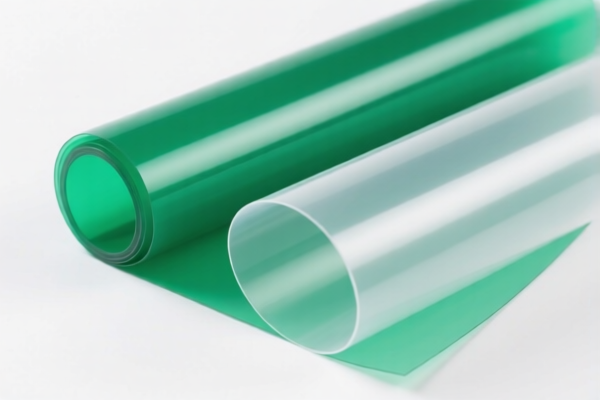
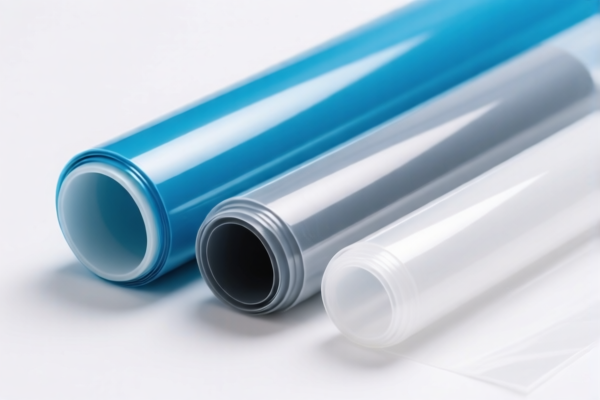

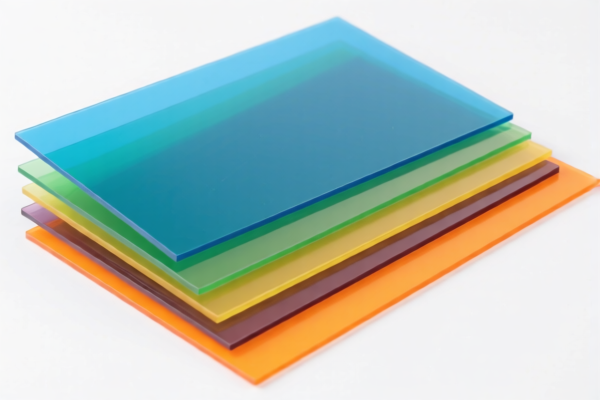
AI Analysis
🧪 Polyethylene Composite Film: HS Code Guide & Clearance Strategy
🌐 HS Code Reference & Clearance Guide | 2026 Latest Tariff Analysis | Professional Entry Strategy
📌 I. Product Definition: What Exactly is "Polyethylene Composite Film"?
Polyethylene Composite Film (PE Composite Film) is a high-performance packaging and industrial material formed by laminating or co-extruding polyethylene (PE) with other substrates (such as paper, aluminum foil, or other plastic films). It is widely used in: * Flexible Packaging: Food, pharmaceuticals, and industrial goods (moisture-proof, heat-sealable). * Construction: Waterproofing membranes, vapor barriers. * Industrial: Laminating layers for protective coatings.
⚠️ Critical Classification Distinction:
The HS Code depends entirely on Structure (whether it's a simple plastic film or a multi-layer laminate) and Form (Sheet/Film vs. Roll/Plate).
- Simple Plastic Sheet/Film (No specific backing material mentioned, just "Plastic") → 3919.90.50.x or 3920.20.x
- Polymer-Laminated Sheet/Film (Specifically Polypropylene/PE composites used as sheets) → 3921.19.00.x
📦 II. HS Code Classification Details (2026 Tariff Data)
Based on the provided data, here are the precise classifications for Polyethylene Composite Film variants.
| HS Code | Product Summary | Material & Form | Key Characteristics |
|---|---|---|---|
3919.90.50.40 |
Plastic Adhesive Tape & Sheets | Material: Plastic Form: Film |
General plastic film, often adhesive-backed or self-adhesive. |
3921.19.00.90 |
Other Plastics, Sheets/Films | Material: Polypropylene (PE/PP) Form: Sheet/Film |
Laminated composite sheets (non-adhesive). |
3921.19.00.10 |
Laminated Plastic Sheets | Material: Polypropylene (PE/PP) Form: Film/Sheets |
Multi-layer composite films used for packaging or insulation. |
3919.90.50.60 |
Plastic Sheets, Flat Shape | Material: Plastic Form: Flat Shape |
Non-adhesive, flat plastic sheets used for industrial molding or lining. |
3920.20.00.55 |
Polymer Sheets (Polyethylene) | Material: Polyethylene Form: Sheet/Film |
Specific to Polyethylene sheets, often multi-layer but not "laminated" in the strict sense of 3921. |
🔍 Key Insight:
- 3921 covers "Plastics... Laminated" (Composite films). If your product is a multi-layer composite (e.g., PE/Paper/Alu), 3921.19.00.90 or .10 is the correct choice. - 3920 covers "Other Plastics, Sheets" (Non-laminated or homogeneous). If it's a pure PE sheet or single-layer composite, 3920.20.00.55 applies. - 3919 is typically for Adhesive products or Plastic Sheets not classified elsewhere. If the film has an adhesive backing, 3919.90.50.x is the target.
💰 III. 2026 Tariff Rate Breakdown (Detailed Tax Analysis)
✅ Scope: Imports from China (CN) to US (assuming standard US-China trade context based on "122" and "Additional Duty" terms).
✅ Total Tariff Structure: Base Tariff + Section 301 (Additional) + Section 122 (New 10%).
🎯 Tax Structure 1: 3919.90.50.40 & 3919.90.50.60
(Plastic Film/Self-adhesive/Flat Shape)
| Tax Component | Rate | Description |
|---|---|---|
| Base Tariff | 5.8% | Standard Most-Favored-Nation (MFN) rate. |
| Section 301 (Add.) | 25.0% | "Section 301" Additional Tariff (Targeting Chinese plastics). |
| Section 122 | 10.0% | New "Section 122" Tariff (Specific countermeasures). |
| 🔴 TOTAL TAX | 40.8% | Base + Add1 + Add2 |
📌 Calculation Example:
If CIF Value = $10,000, Tax = $10,000 × 40.8% = $4,080.
🎯 Tax Structure 2: 3921.19.00.90 & 3921.19.00.10
(Laminated Polypropylene/Composite Sheets)
| Tax Component | Rate | Description |
|---|---|---|
| Base Tariff | 6.5% | Slightly higher base rate for laminated plastics. |
| Section 301 (Add.) | 25.0% | Applicable Section 301 surcharge. |
| Section 122 | 10.0% | Applicable Section 122 surcharge. |
| 🔴 TOTAL TAX | 41.5% | Base + Add1 + Add2 |
📌 Note: This category often applies to high-value composite films (e.g., PE/PET/Alu laminates).
🎯 Tax Structure 3: 3920.20.00.55
(Pure Polyethylene Sheets/Films)
| Tax Component | Rate | Description |
|---|---|---|
| Base Tariff | 4.2% | Lowest base rate for pure PE sheets. |
| Section 301 (Add.) | 25.0% | Mandatory Section 301 surcharge. |
| Section 122 | 10.0% | Mandatory Section 122 surcharge. |
| 🔴 TOTAL TAX | 39.2% | Base + Add1 + Add2 |
🛠️ IV. Customs Clearance Practical Advice (Action Plan)
To avoid delays, penalties, or incorrect classification, follow these strict protocols:
✅ 1. Documentation Checklist (Critical)
| Document | Requirement | Why? |
|---|---|---|
| Technical Data Sheet (TDS) | Must specify layers, composition %, and material types (PE, PP, etc.). | To prove if it is "Laminated" (3921) or "Simple" (3920). |
| Product Photos | Must show cross-section (layers visible) and packaging labels. | Visual proof of composite structure. |
| Commercial Invoice | Must state "Polyethylene Composite Film" clearly. Avoid vague terms like "Plastic Sheet". | Prevents "Misdeclaration" flags. |
| Bill of Materials (BOM) | List every layer (e.g., PE 60% / PET 40%). | Helps CBP determine the correct HS Code (3919 vs 3921). |
| Certificate of Origin | Must be issued by authorized body. | Proves "Made in China" (triggers Section 301/122). |
✅ 2. Declaration Strategy: The "Layer Logic"
Scenario A: It's a Multi-Layer Composite (e.g., PE + Aluminum + PET)
* Action: Declare under 3921.19.00.x.
* Reason: It is "Laminated," which falls under 3921.
* Risk: If declared as 3920 (simple sheet), you risk penalties for classification error.
Scenario B: It's a Simple PE Film with Adhesive
* Action: Declare under 3919.90.50.x.
* Reason: Adhesive backing moves it to 3919.
* Risk: If declared as 3921, you might overpay or face "adhesive" scrutiny.
Scenario C: Pure Polyethylene Sheet (No lamination)
* Action: Declare under 3920.20.00.55.
* Reason: It is a homogeneous sheet of polyethylene.
* Benefit: Slightly lower total tax (39.2%) compared to laminated versions.
✅ 3. Special Tips for "Section 122" & "Section 301"
⚠️ Crucial Warning:
The 10% Section 122 and 25% Section 301 are cumulative. They are NOT optional.
- Total Impact: You are paying 35% extra on top of the base tariff.
- No De Minimis: These tariffs apply even to small shipments.
- Mitigation: If your product contains >50% US Value-Added components, you might qualify for exclusion, but this is rare for composite films.
🌍 V. Market Comparison & Cost Impact
| Classification | Base Tariff | Add. Tax (301+122) | Total Effective Rate | Best For |
|---|---|---|---|---|
| 3919.90.50.40 | 5.8% | 35.0% | 40.8% | Adhesive tapes, general plastic films |
| 3921.19.00.90 | 6.5% | 35.0% | 41.5% | High-end laminated packaging (Alu/PET/PE) |
| 3920.20.00.55 | 4.2% | 35.0% | 39.2% | Pure PE sheets, industrial waterproofing |
📌 Conclusion:
- Cheapest:3920.20.00.55(Pure PE) → 39.2%
- Most Common:3921.19.00.90(Composite) → 41.5%
- Adhesive:3919.90.50.40→ 40.8%
📌 VI. Common Mistakes & How to Avoid Them
❌ Mistake 1: Declaring "Plastic Film" as a generic term without specifying "Composite" or "Laminated".
👉 Consequence: Customs may inspect and reclassify, adding 10-30 days delay + $500+ administrative fees.
❌ Mistake 2: Forgetting to apply Section 122 (10%) on top of Section 301 (25%).
👉 Consequence: Underpayment of ~35%, leading to severe penalties, seizure of goods, and audits.
❌ Mistake 3: Confusing "Sheet" (3920) with "Laminated Sheet" (3921).
👉 Consequence: 0.7% difference in base tariff + potential misclassification penalty.
✅ Correct Action:
"Polyethylene Composite Film, Multi-layer (PE/Alu/PET), 0.2mm thickness, non-adhesive, for food packaging."
HS Code:3921.19.00.90
Total Tax: 41.5%
🎯 VII. Final Recommendation: Professional Clearance
- Verify Composition: Ensure your lab report confirms the exact layer count. If it's 2+ layers, use 3921. If 1 layer, use 3920.
- Budget for 40% Tax: Do not quote prices without including the 39.2% ~ 41.5% total duty.
- Consult a Broker: Before shipping, run a Pre-Classification Ruling request with CBP. This locks in the HS Code and avoids surprises.
🚀 Pro Tip: If your product is a composite film (3921), ensure the invoice explicitly states "Laminated" to match the HS Code description. This reduces the chance of a "Request for Information" (RFI) from Customs.
✨ Precise Classification = Lower Risk, Faster Clearance, Predictable Costs!
💼 Don't let 35% in hidden duties eat your profit margins. Classify correctly today!
Customer Reviews
About HS Code Classification
The Harmonized System (HS) is an internationally standardized nomenclature developed by the World Customs Organization (WCO) to classify traded products. Over 200 countries use the HS system as the basis for customs tariffs, trade statistics, and import/export regulations.
Each HS code follows a hierarchical structure:
- Chapter (2 digits) — Broad category of goods (e.g., Chapter 84: Machinery and Mechanical Appliances)
- Heading (4 digits) — More specific grouping within the chapter
- Subheading (6 digits) — Internationally standardized breakdown, used by all WCO member countries
- National subdivisions (8-10 digits) — Country-specific extensions for further classification, such as US HTSUS 10-digit codes
Correct HS code classification is essential for smooth customs clearance, accurate duty payment, and compliance with trade regulations. Misclassification can lead to customs delays, overpayment of duties, or penalties.
When importing from CN to US, the applicable tariff rates may include:
- Most-Favored-Nation (MFN) rate — The standard duty rate applied to WTO members
- General rate — Applied to countries without trade agreements
- Trade remedy duties — Additional tariffs such as Section 301 (anti-dumping), Section 232 (national security), or countervailing duties
The information provided on this page is for reference purposes only. For official classification, please consult with your local customs authority or a licensed customs broker.