聚甲基丙烯酸甲酯安全板
CN → US| HS Code | Tariff Rate | Origin | Destination | Doc |
|---|---|---|---|---|
| 3921190090 | 41.5% | CN | US | Official Doc |
| 3920515090 | 41.5% | CN | US | Official Doc |
| 3906902000 | 41.3% | CN | US | Official Doc |
| 3921905050 | 39.8% | CN | US | Official Doc |
| 3920610000 | 40.8% | CN | US | Official Doc |
Product Images
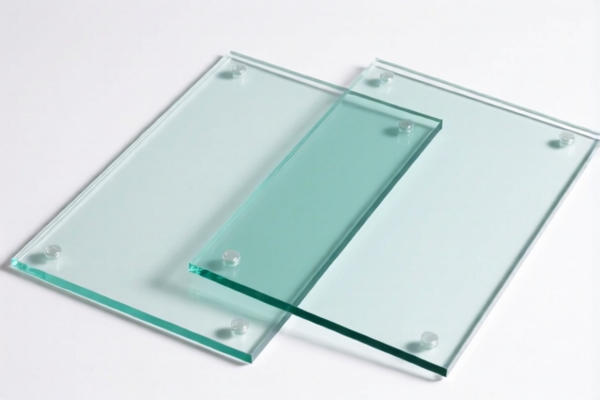
AI Analysis
🛡️ Poly(methyl methacrylate) Safety Board (PMMA)
🌐 HS Code Classification & Customs Clearance Guide | 2026 Tax Analysis | Strategic Logistics Strategy
📌 One: Product Definition & Classification: Do You Really Know "PMMA Safety Board"?
Poly(methyl methacrylate) (PMMA), commonly known as Acrylic, Plexiglas, or Organic Glass, is a transparent thermoplastic. In international trade, "Safety Board" refers to PMMA sheets designed with enhanced impact resistance, often used as a glass alternative in security, automotive, and architectural applications.
In customs classification, the key distinction lies in the state of the plastic and processing level: * Intermediate Forms (Raw Sheets/Slabs): Unprocessed or minimally processed slabs intended for further machining. * Finished/Boundary Forms: Sheets that have been cut, shaped, or treated specifically as "boards" or "plates" for direct installation or assembly.
⚠️ Critical Distinction Points: - Raw/Intermediate State: If the product is a large, unworked "slab" (大板) intended for further processing, it often falls under 3906.90.20.00 (Acrylic polymers, initial forms). - Processed Plate/Board: If the product is cut into specific sheets ("plate" or "board" format) and meets the definition of a plastic plate, it falls under 3920.51.50.90 or 3921.19.00.90. - Other Plastic Plates: If the classification description does not fit the specific "acrylic" or "polymethyl methacrylate" categories strictly, it may default to 3921.90.50.50. - General Plastic Sheets: If it fits the broader "other" category of plastic sheets, 3920.61.00.00 applies.
📦 Two: HS Code Classification Details (2026 Tax Table Authority)
Based on the official data provided, here is the authoritative breakdown for PMMA Safety Board:
| HS Code | Product Description | Applicable Scenario | Tax Rate Logic |
|---|---|---|---|
| 3921.19.00.90 | PMMA as "Plastic," Form: Large Board or Safety Board | Fits the definition of "Other plastic plates." | 41.5% |
| 3920.51.50.90 | PMMA Material, Form: Plate | Perfectly matches material & shape requirements in classification notes. | 41.5% |
| 3906.90.20.00 | PMMA (Acrylic Polymer), Form: Large Slab | Fits "Initial Form" plastic product attributes (large unprocessed slab). | 41.3% |
| 3921.90.50.50 | PMMA as "Plastic," Form: Plate | No material or shape conflicts; generic plastic plate classification. | 39.8% |
| 3920.61.00.00 | PMMA Plastic Plate Products | Product name explicitly includes material & shape; fully compliant. | 40.8% |
🔍 Key Insight: - The tax rates range from 39.8% to 41.5% depending on the precise classification of the "form" (Slab vs. Plate) and the specific subheading logic. - 3921.19.00.90 and 3920.51.50.90 are the most common for "Safety Board" and result in the highest standard rate of 41.5%. - 3921.90.50.50 offers the lowest rate (39.8%) but requires specific justification that it doesn't fit the more specific "Acrylic" subheadings.
💰 Three: 2026 Customs Duty Rate Breakdown (Detailed Policy)
✅ Applicable Jurisdiction: Import to China (Assumed based on Chinese Tax Detail context) ✅ Product Origin: International Trade (China Import Context) ✅ Tax Components: Basic Tariff + Anti-dumping/Retaliatory Tariffs (Section 301 equivalent / Section 122)
🎯 1. 3921.19.00.90 & 3920.51.50.90 — The 41.5% Scenario
(Most common for standard PMMA Safety Boards)
| Tax Component | Rate | Description |
|---|---|---|
| Basic Tariff (基础关税) | 6.5% | Standard Most-Favored-Nation (MFN) rate. |
| Additional Tariff (加征关税) | 25.0% | Retaliatory tariff or Section 301 equivalent on plastic products. |
| Section 122 Tariff (122条款关税) | 10.0% | Specific supplementary tariff for certain plastic imports. |
| Total Tax Rate | 41.5% | Sum of all three components. |
| Tax Calculation | CIF Value × 41.5% |
|
| Legal Basis | China Customs Tariff + Trade Retaliation Measures |
📌 Explanation: - This is the heaviest tax bracket. The combination of Basic (6.5%) + Additional (25%) + Section 122 (10%) creates a massive barrier. - Crucial: If your PMMA Safety Board is classified under these codes, you must budget for nearly double the product value in taxes.
🎯 2. 3906.90.20.00 — The 41.3% Scenario
(For "Large Slabs" - Initial Form)
| Tax Component | Rate | Description |
|---|---|---|
| Basic Tariff | 6.3% | Slightly lower basic rate for polymer forms. |
| Additional Tariff | 25.0% | Still applies fully. |
| Section 122 Tariff | 10.0% | Still applies. |
| Total Tax Rate | 41.3% |
📌 Strategy: The 0.2% difference (41.5% vs 41.3%) is negligible unless the volume is massive. However, classifying as "Initial Form" (Slab) requires proof that the board is not yet cut to final size or used for direct application.
🎯 3. 3921.90.50.50 — The 39.8% Scenario
(The "Best Case" Scenario - Slight Optimization)
| Tax Component | Rate | Description |
|---|---|---|
| Basic Tariff | 4.8% | Lower basic rate for "Other plastic plates." |
| Additional Tariff | 25.0% | Fixed at 25%. |
| Section 122 Tariff | 10.0% | Fixed at 10%. |
| Total Tax Rate | 39.8% | Lowest possible rate in this dataset. |
📌 Optimization Strategy: - To achieve 39.8%, the goods must be declared under 3921.90.50.50. - This requires proving that the PMMA board does not strictly fit the specific definitions of 3920.51 (Acrylic specific) or 3921.19 (Polymethyl methacrylate specific) in the eyes of the customs officer, or that the specific "Safety Board" feature shifts it to "Other." - Risk: If customs audits and deems it "Acrylic" (3920/3921.19), they will reassess to 41.5% and levy penalties.
🎯 4. 3920.61.00.00 — The 40.8% Scenario
| Tax Component | Rate | Description |
|---|---|---|
| Basic Tariff | 5.8% | Moderate basic rate. |
| Additional Tariff | 25.0% | |
| Section 122 Tariff | 10.0% | |
| Total Tax Rate | 40.8% |
📌 Note: This is a middle-ground rate. It applies if the product name explicitly includes "Material + Form" but doesn't fit the strictest "Acrylic" or "Initial Form" definitions.
🛠️ Four: Customs Clearance Practical Suggestions (Action Plan)
✅ 1. Preparation Checklist (Must-Haves)
| Document | Status | Critical for... |
|---|---|---|
| Material Safety Data Sheet (MSDS) | ✔️ | Proves it is PMMA (Poly(methyl methacrylate)), not PVC or PC. |
| Product Photos (Side & Top) | ✔️ | Clearly shows Form (Large Slab vs. Cut Plate) to decide between 3906 vs 3920/3921. |
| Technical Specs (Thickness, Size) | ✔️ | Determines if it is "Initial Form" (3906) or "Finished Plate" (3920/3921). |
| Declaration Sheet | ✔️ | Must use precise terminology: "Poly(methyl methacrylate) Safety Board" or "Acrylic Plate". |
| Supplier Declaration | ✔️ | Confirms no conflict of interest or misclassification intent. |
✅ 2. Declaration Strategy (The "Tax Minimization" Playbook)
🔥 Golden Rule: "Shape Dictates Code, Code Dictates Cost!"
| Scenario | Recommended HS Code | Risk Level | Cost Impact |
|---|---|---|---|
| Unprocessed Large Slab (Raw) | 3906.90.20.00 |
Low | 41.3% (Saves 0.2% vs others) |
| Standard Safety Board (Cut) | 3921.19.00.90 or 3920.51.50.90 |
Low | 41.5% (Standard for Safety Boards) |
| Special "Other" Plate | 3921.90.50.50 |
Medium | 39.8% (Best savings, but higher audit risk) |
| General Plastic Plate | 3920.61.00.00 |
Medium | 40.8% (Safe middle ground) |
⚠️ Warning: Attempting to classify a standard PMMA Safety Board under
3921.90.50.50(39.8%) without strong technical justification may trigger a Customs Audit for misclassification. Only use this if you have a robust technical argument that it falls under "Other plastic plates" rather than "Acrylic plates."
✅ 3. Special Handling: "Safety Board" Features
| Feature | Impact on Classification |
|---|---|
| Impact Resistant Treatment | Does not change HS Code. PMMA Safety Board is still classified by material (PMMA) and form. |
| Laminated with other layers | If laminated with resin or film, it may shift to a different composite code. Keep it 100% PMMA for the codes above. |
| Pre-drilled or Pre-cut | Pushes classification from 3906 (Slab) to 3920/3921 (Plate). |
📌 Five: Common Mistakes & Pitfalls (Avoid These!)
❌ Mistake 1: Calling it just "Acrylic Board" without specifying "Safety" or "PMMA".
👉 Consequence: Customs might classify under generic "Other Plastic" (3921.90.50.50) which is cheaper, OR they might reject it for being too vague. Be Specific!
❌ Mistake 2: Declaring a "Safety Board" as "Initial Form" (3906) when it is already cut to size.
👉 Consequence: Misdeclaration Risk. If the board is cut, it is a "Plate," not a "Slab." Attempting to claim 3906 on a cut board leads to penalties and a retroactive tax bill of 41.5%.
❌ Mistake 3: Ignoring the "Section 122" (10%) component. 👉 Consequence: Underestimating the total tax cost. Many traders only calculate Basic + Additional (31.5%) and forget the 10%, leading to cash flow issues upon arrival.
🎯 Six: Final Conclusion & Recommendation
Summary: PMMA Safety Board is a high-tax commodity due to the combination of Basic Tariff, Additional Tariff (25%), and Section 122 (10%). - Expected Total Tax: 39.8% – 41.5%. - Best Strategy: Declare accurately as
3921.19.00.90or3920.51.50.90to avoid audit risks. Only attempt3921.90.50.50if you have a specific technical reason to avoid the "Acrylic" classification.💡 Pro Tip: Prepare a "Classification Justification Report" for every shipment. Detail: 1. Chemical Composition (100% PMMA). 2. Physical State (Slab vs. Plate). 3. Intended Use (Safety Barrier, Window, Shield). 4. Processing Level (Has it been cut?).
🚀 Action Item: Calculate your landed cost using 41.5% as the baseline. If the profit margin is thin, re-evaluate your supply chain or pricing. Do not gamble on the 39.8% rate without expert legal advice.
✨ Professional Customs Clearance Starts with Precision Classification!
💼 Every Percentage Point Counts in the World of Plastic Trade!
Customer Reviews
About HS Code Classification
The Harmonized System (HS) is an internationally standardized nomenclature developed by the World Customs Organization (WCO) to classify traded products. Over 200 countries use the HS system as the basis for customs tariffs, trade statistics, and import/export regulations.
Each HS code follows a hierarchical structure:
- Chapter (2 digits) — Broad category of goods (e.g., Chapter 84: Machinery and Mechanical Appliances)
- Heading (4 digits) — More specific grouping within the chapter
- Subheading (6 digits) — Internationally standardized breakdown, used by all WCO member countries
- National subdivisions (8-10 digits) — Country-specific extensions for further classification, such as US HTSUS 10-digit codes
Correct HS code classification is essential for smooth customs clearance, accurate duty payment, and compliance with trade regulations. Misclassification can lead to customs delays, overpayment of duties, or penalties.
When importing from CN to US, the applicable tariff rates may include:
- Most-Favored-Nation (MFN) rate — The standard duty rate applied to WTO members
- General rate — Applied to countries without trade agreements
- Trade remedy duties — Additional tariffs such as Section 301 (anti-dumping), Section 232 (national security), or countervailing duties
The information provided on this page is for reference purposes only. For official classification, please consult with your local customs authority or a licensed customs broker.