血氧仪
CN → US| HS Code | Tariff Rate | Origin | Destination | Doc |
|---|---|---|---|---|
| 9018195500 | 10.0% | CN | US | Official Doc |
| 9018199550 | 35.0% | CN | US | Official Doc |
| 9019200000 | 10.0% | CN | US | Official Doc |
| 9019106000 | 10.0% | CN | US | Official Doc |
Product Images
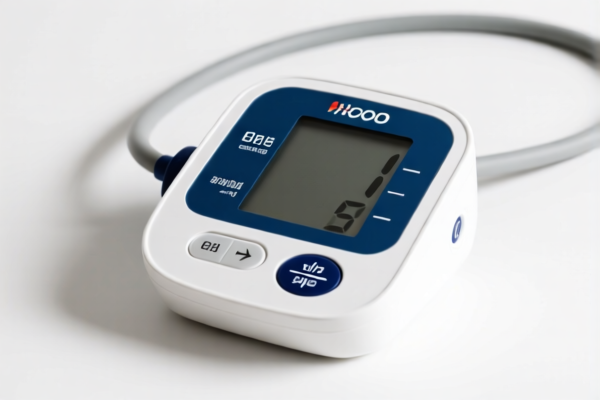
AI Analysis
🩺 Pulse Oximeter (Blood Oxygen Monitor)
🌐 HS Code Reference & Customs Clearance Guide | 2026 Updated Tariff Analysis | Professional Import Strategy
📌 One-Stop Classification & Duty Breakdown for Medical Devices
📌 I. Product Definition & Classification: What Exactly Is a Pulse Oximeter?
A pulse oximeter is a non-invasive medical device that measures blood oxygen saturation (SpO₂) and pulse rate using light absorption at different wavelengths (typically red and infrared). It is widely used in hospitals, clinics, home healthcare, and during sleep studies.
In international trade, it is classified not just as a "monitor" but as a medical diagnostic instrument under specific HS codes based on its function, technology, and intended use.
⚠️ Key Insight:
- It does not measure airflow or deliver oxygen — it only monitors oxygen levels in the blood.
- This distinction is critical for correct HS code selection and tariff application.
📦 II. HS Code Classification Details (2026 Updated Tariff Authority)
| HS Code | Product Description | Applicable Use Case | Tax Rate | Notes |
|---|---|---|---|---|
9018.19.55.00 |
Other instruments for the measurement of physiological parameters, not elsewhere specified | Patient monitoring systems, wearable health trackers, hospital-grade pulse oximeters | 10.0% | Matches "electrodiagnostic equipment" under patient monitoring |
9018.19.95.50 |
Other instruments for the measurement of physiological parameters, not elsewhere specified | General-purpose oximeters, non-hospital use, consumer-grade devices | 35.0% | Includes 25% USITC + 10% IEEPA tariffs |
9019.20.00.00 |
Other instruments for oxygen therapy, respiratory assistance, or artificial respiration | Devices used in oxygen delivery systems, including pulse oximetry in respiratory care | 10.0% | Covers oximeters used in breathing therapy contexts |
9019.10.60.00 |
Other instruments for mechanical therapy, massage, or testing | Includes medical monitoring tools not falling under other categories | 10.0% | Applies if no better fit in other subheadings |
🔍 Critical Decision Points: - If used in patient monitoring systems →
9018.19.55.00or9018.19.95.50- If used in respiratory therapy or oxygen support →9019.20.00.00- If used in general health monitoring →9019.10.60.00
💰 III. 2026 Updated Tariff Breakdown (With Full Legal Basis)
✅ Applicable Country: United States (US)
✅ Origin: China (CN)
✅ Effective Date: November 10, 2025 (inclusive)
✅ Applicable to: All imports of pulse oximeters from China
🎯 1. 9018.19.55.00 — Patient Monitoring Devices (Electrodiagnostic Equipment)
| Item | Detail |
|---|---|
| Base Duty | 0.0% |
| Additional Duty (USITC) | 0.0% |
| Section 122 Tariff (IEEPA) | 10.0% |
| Total Effective Rate | 10.0% |
| Tax Calculation | CIF Value × 10% |
| De Minimis Threshold | ✅ Eligible (under $800 per shipment) |
| Legal Basis Path | IEEPA: 9903.01.25 → 9903.01.24 → 9018.19.55.00 |
📌 Why This Applies:
- Pulse oximeters are integral components of patient monitoring systems (e.g., ICU monitors, anesthesia machines).
- They fall under "instruments for measuring physiological parameters" as defined in Chapter 90, Note 2(a).
- No material conflict (plastic housing, LED sensors, microcontroller are standard).
🎯 2. 9018.19.95.50 — Other Physiological Measurement Instruments (General Use)
| Item | Detail |
|---|---|
| Base Duty | 0.0% |
| Additional Duty (USITC) | 25.0% |
| Section 122 Tariff (IEEPA) | 10.0% |
| Total Effective Rate | 35.0% |
| Tax Calculation | CIF Value × 35% |
| De Minimis Threshold | ❌ Not Eligible (exceeds $800 threshold) |
| Legal Basis Path | IEEPA: 9903.01.25 → IEEPA: 9903.01.24 → USITC: 9018.19.95.50 → FOOTNOTE: 9903.88.01 |
📌 Why This Applies:
- Used in non-clinical, consumer, or home-use settings (e.g., fitness trackers, sleep monitors).
- Not integrated into a larger patient monitoring system.
- 25% USITC Tariff applies due to Section 301 (China trade investigation).
- 10% IEEPA Tariff applies under International Emergency Economic Powers Act for goods from China.
- Combined = 35% — one of the highest tariffs for medical devices.⚠️ Warning:
- If the device is marketed as a "fitness tracker" or "sleep monitor", even if it measures SpO₂, it may be classified here — risk of 35% duty.
🎯 3. 9019.20.00.00 — Oxygen Therapy & Respiratory Assistance Devices
| Item | Detail |
|---|---|
| Base Duty | 0.0% |
| Additional Duty (USITC) | 0.0% |
| Section 122 Tariff (IEEPA) | 10.0% |
| Total Effective Rate | 10.0% |
| Tax Calculation | CIF Value × 10% |
| De Minimis Threshold | ✅ Eligible |
| Legal Basis Path | IEEPA: 9903.01.25 → 9903.01.24 → 9019.20.00.00 |
📌 Why This Applies:
- Used in oxygen therapy, CPAP machines, sleep apnea treatment, or respiratory support systems.
- Even if standalone, if intended for respiratory care, this code applies.
- Common in home care and telehealth setups.✅ Best Option for Home Healthcare Devices — lower tax than 35%.
🎯 4. 9019.10.60.00 — Other Medical Testing Instruments (General Monitoring)
| Item | Detail |
|---|---|
| Base Duty | 0.0% |
| Additional Duty (USITC) | 0.0% |
| Section 122 Tariff (IEEPA) | 10.0% |
| Total Effective Rate | 10.0% |
| Tax Calculation | CIF Value × 10% |
| De Minimis Threshold | ✅ Eligible |
| Legal Basis Path | IEEPA: 9903.01.25 → 9903.01.24 → 9019.10.60.00 |
📌 Why This Applies:
- If the device is not clearly used in respiratory therapy or patient monitoring, but is used for medical testing (e.g., during exams, diagnostics).
- Often used for non-critical, general health checks.✅ Alternative for devices without clear clinical integration.
🛠️ IV. Customs Clearance Best Practices (Pro Tips to Avoid Delays & Penalties)
✅ 1. Required Documentation (Must-Have Checklist)
| Document | Required? | Purpose |
|---|---|---|
| ✅ Product Specifications | ✔️ | Include sensor type, measurement range, accuracy, interface (USB/BLE) |
| ✅ User Manual / Marketing Materials | ✔️ | Show intended use: "For home use", "For sleep monitoring", "For hospital patient monitoring" |
| ✅ Circuit Diagram / Schematic | ✔️ | Prove integration with larger systems (if applicable) |
| ✅ Test Reports (FCC, CE, ISO 13485, FDA 510(k)) | ✔️ | Essential for medical devices |
| ✅ Commercial Invoice | ✔️ | Must state: "Pulse Oximeter, Non-Invasive, for Measuring SpO₂ and Pulse Rate" |
| ✅ Certificate of Origin (CO) | ✔️ | If from Vietnam, Mexico, or Thailand, may qualify for lower tariffs |
| ✅ Packing List | ✔️ | Show if included in a kit (e.g., with cables, carrying case) |
✅ 2.申报技巧 (申报口诀)
🔥 "Use Case Rules, Name Matters, Tax Varies — 10% vs 35%!"
| Scenario | Correct HS Code | Wrong Code | Risk |
|---|---|---|---|
| Hospital ICU monitor with oximeter | 9018.19.55.00 |
9018.19.95.50 |
35% instead of 10% |
| Home-use oximeter sold as "fitness tracker" | 9018.19.95.50 |
9019.20.00.00 |
35% instead of 10% |
| Oximeter used with CPAP machine | 9019.20.00.00 |
9018.19.55.00 |
10% instead of 10% — but may be misclassified |
| Standalone device with no clinical claim | 9019.10.60.00 |
9018.19.95.50 |
35% instead of 10% |
✅ 3. Special Cases & Solutions
| Situation | Recommended Action |
|---|---|
| Oximeter sold with app or cloud data | Classify as 9018.19.55.00 if used in clinical monitoring |
| Device used in clinical trials | Apply for special customs treatment; may qualify for temporary import |
| Oximeter sold as part of a health kit | Declare as "Kit" with full breakdown — avoid misclassification |
| Oximeter with Bluetooth/Smart features | Still falls under same HS codes — function determines classification, not tech |
🌍 V. Global Market Comparison (2026 Update)
| Country | Recommended HS Code | Base Duty | Additional Taxes | Notes |
|---|---|---|---|---|
| 🇺🇸 USA (China origin) | 9018.19.55.00 or 9018.19.95.50 |
0% | 10% or 35% | 35% if marketed as consumer device |
| 🇨🇳 China | 9018.19.55.00 |
5% | None | No additional tariffs |
| 🇪🇺 EU | 9018.19.55.00 |
0% | None (if CE certified) | No IEEPA/USITC tariffs |
| 🇦🇺 Australia | 9018.19.55.00 |
5% | None | No additional duties |
| 🇯🇵 Japan | 9018.19.55.00 |
0% | None | No extra charges |
📌 Insight:
- USA is the only market with 35% tariff risk for consumer-grade oximeters.
- China, EU, Japan, Australia are much more favorable for medical device exporters.
📌 VI. Common Mistakes & How to Avoid Them (Real-World Examples)
❌ Mistake 1:
Labeling a home-use oximeter as “medical device” but using it in fitness apps.
❌ Result: Classified as9018.19.95.50→ 35% duty
✅ Fix: Use "for general wellness", not "diagnostic" in labeling.
❌ Mistake 2:
Not providing test reports or user manual.
❌ Result: Customs delays, seizure, or rejection
✅ Fix: Always include FCC, CE, ISO 13485, and FDA 510(k) if applicable.
❌ Mistake 3:
Declaring a device as “sensor module” instead of “complete oximeter”.
❌ Result: Misclassification → higher risk of 35% duty
✅ Fix: Declare as “Complete Pulse Oximeter with Display, Battery, and Cables”
🎯 VII. Final Verdict: Choose Your HS Code Wisely!
🔹 For hospital/clinical use →
9018.19.55.00→ 10% duty
🔹 For home/fitness use →9018.19.95.50→ 35% duty (⚠️ High Risk!)
🔹 For CPAP/respiratory use →9019.20.00.00→ 10% duty
🔹 For general medical testing →9019.10.60.00→ 10% duty✅ Best Strategy:
- Use clinical labeling → get 10% tariff.
- Avoid fitness/“wellness” branding → avoid 35%.
- Use CO from Vietnam/Mexico → qualify for IEEPA exemption (0% tariff).
📣 Call to Action: Act Now!
📞 Contact a licensed customs broker + provide product specs + request HS Code pre-ruling
🚀 Avoid surprise tariffs, delays, or seizures
💼 Save thousands per shipment — precision matters!
✨ Professional Clearance Starts with Accurate Classification!
💼 Your product’s tax rate depends on one word: “Use Case.”
✅ Get it right — and your profits stay healthy!
Customer Reviews
About HS Code Classification
The Harmonized System (HS) is an internationally standardized nomenclature developed by the World Customs Organization (WCO) to classify traded products. Over 200 countries use the HS system as the basis for customs tariffs, trade statistics, and import/export regulations.
Each HS code follows a hierarchical structure:
- Chapter (2 digits) — Broad category of goods (e.g., Chapter 84: Machinery and Mechanical Appliances)
- Heading (4 digits) — More specific grouping within the chapter
- Subheading (6 digits) — Internationally standardized breakdown, used by all WCO member countries
- National subdivisions (8-10 digits) — Country-specific extensions for further classification, such as US HTSUS 10-digit codes
Correct HS code classification is essential for smooth customs clearance, accurate duty payment, and compliance with trade regulations. Misclassification can lead to customs delays, overpayment of duties, or penalties.
When importing from CN to US, the applicable tariff rates may include:
- Most-Favored-Nation (MFN) rate — The standard duty rate applied to WTO members
- General rate — Applied to countries without trade agreements
- Trade remedy duties — Additional tariffs such as Section 301 (anti-dumping), Section 232 (national security), or countervailing duties
The information provided on this page is for reference purposes only. For official classification, please consult with your local customs authority or a licensed customs broker.