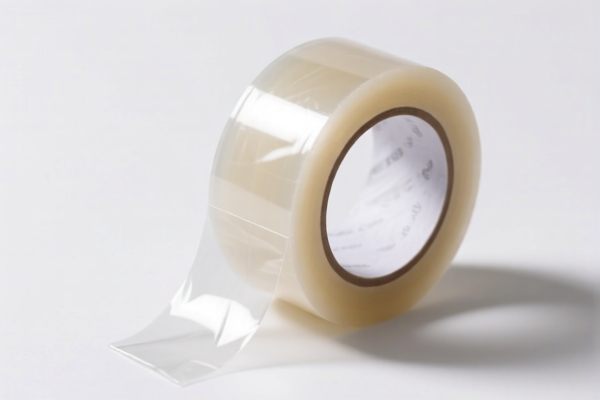
透明纤维增强胶带
CN → US| HS Code | Tariff Rate | Origin | Destination | Doc |
|---|---|---|---|---|
| 5603110070 | 35.0% | CN | US | Official Doc |
| 5603120070 | 35.0% | CN | US | Official Doc |
| 3919102010 | 40.8% | CN | US | Official Doc |
| 3919905020 | 40.8% | CN | US | Official Doc |
| 3926905500 | 40.1% | CN | US | Official Doc |
Product Images

AI Analysis
🌟 Transparent Fiber-Reinforced Tape
🌐 HS Code & Tariff Guide | 2026 Updated Customs Classification | Professional Clearance Strategy
📌 One Product, Multiple Codes – Why This Matters for Your Shipment!
📦 一、Product Definition & Classification: What Is "Transparent Fiber-Reinforced Tape"?
Transparent fiber-reinforced tape is a composite adhesive strip that combines: - A transparent plastic or polymer base (e.g., polypropylene, polyester, or PVC film), - Reinforcing fibers (typically synthetic or man-made fibers like polyester, nylon, or rayon), - And pressure-sensitive adhesive (PSA) on one or both sides.
This material is commonly used in: - Industrial packaging (e.g., reinforced carton sealing), - Automotive assembly (e.g., masking, holding), - Construction (e.g., surface protection, joint reinforcement), - Electronics (e.g., cable management, insulation).
⚠️ Critical Distinction:
- If the primary structure is non-woven fabric (no continuous fiber strands) → HS 5603.11/12.00.70
- If the material is plastic-based with embedded fibers → HS 3919.10.20.10 / 3919.90.50.20 / 3926.90.55.00
🔍 二、HS Code Classification Breakdown (2026 Updated Tariff Table)
| HS Code | Product Description | Key Features | Tax Rate | Applicable When |
|---|---|---|---|---|
5603.11.00.70 |
Non-woven fabric made from synthetic fibers, used as tape | Fiber-based, non-woven structure, no plastic matrix, adhesive-coated | 35.0% | Pure non-woven fiber tape with adhesive layer; no plastic base |
5603.12.00.70 |
Non-woven fabric with continuous filaments, used in tape form | Long continuous fibers, flexible, adhesive-coated, used in sealing/handling | 35.0% | Similar to above but with filament structure; still non-woven |
3919.10.20.10 |
Self-adhesive tapes of plastic, reinforced with fibers, in roll form | Plastic film base, fiber reinforcement, transparent appearance, roll format | 40.8% | Plastic-based tape with fibers; not non-woven |
3919.90.50.20 |
Other self-adhesive tapes of plastic, fiber-reinforced | Any plastic-based tape with fiber reinforcement, regardless of fiber type | 40.8% | General category for plastic + fiber composite tapes |
3926.90.55.00 |
Tapes made of plastic and textile, containing textile fibers | Contains textile fibers, plastic matrix, tape shape, often used in industrial applications | 40.1% | Hybrid material with textile + plastic, not pure non-woven |
✅ Key Insight:
- "Transparent" alone does NOT determine HS code – it's the material composition and structure that matter. - Fiber-reinforced ≠ non-woven – they are distinct manufacturing categories.
💰 三、2026 Tariff Breakdown (U.S. Customs – China Origin)
✅ Applicable Country: United States (US)
✅ Origin: China (CN)
✅ Effective Date: November 10, 2025 (including future imports)
🎯 1. 5603.11.00.70 — Non-Woven Synthetic Fiber Tape
| Item | Detail |
|---|---|
| Base Tariff | 0.0% (ad valorem) |
| USITC Section 301 Tariff | +25.0% |
| Section 122 Tariff (IEEPA) | +10.0% |
| Total Effective Rate | 35.0% |
| Tax Calculation | CIF Value × 35.0% |
| De Minimis Exemption | ❌ Not available (denied under U.S. law) |
| Legal Basis Path | IEEPA:9903.01.25 → IEEPA:9903.01.24 → USITC:5603.11.00.70 → FOOTNOTE:9903.88.01 |
📌 Explanation:
- USITC 25% = Section 301 tariff on Chinese goods under U.S. Trade Act. - IEEPA 10% = International Emergency Economic Powers Act (applies to China/HK). - Total: 35% – high but lower than plastic-based tapes.
🎯 2. 5603.12.00.70 — Continuous Filament Non-Woven Tape
| Item | Detail |
|---|---|
| Base Tariff | 0.0% |
| USITC Section 301 Tariff | +25.0% |
| Section 122 Tariff (IEEPA) | +10.0% |
| Total Effective Rate | 35.0% |
| Tax Calculation | CIF × 35.0% |
| De Minimis Exemption | ❌ Not applicable |
| Legal Basis Path | Same as above |
📌 Note:
- Despite structural differences (filament vs. random fiber), same tariff treatment due to non-woven classification. - No plastic matrix → No plastic-based tariff.
🎯 3. 3919.10.20.10 — Plastic-Based Fiber-Reinforced Tape (Roll Form)
| Item | Detail |
|---|---|
| Base Tariff | 5.8% |
| USITC Section 301 Tariff | +25.0% |
| Section 122 Tariff (IEEPA) | +10.0% |
| Total Effective Rate | 40.8% |
| Tax Calculation | CIF × 40.8% |
| De Minimis Exemption | ❌ Not available |
| Legal Basis Path | IEEPA:9901.25 → IEEPA:9903.01.24 → USITC:3919.10.20.10 → FOOTNOTE:9903.88.01 |
📌 Why Higher?
- 5.8% base tariff applies because it’s classified under plastic tapes. - Plus 25% + 10% = 40.8% – 5.8% more than non-woven. - Critical: If your tape has a plastic film base, even if transparent, this code applies.
🎯 4. 3919.90.50.20 — Other Plastic Fiber-Reinforced Tapes
| Item | Detail |
|---|---|
| Base Tariff | 5.8% |
| USITC Section 301 Tariff | +25.0% |
| Section 122 Tariff (IEEPA) | +10.0% |
| Total Effective Rate | 40.8% |
| Tax Calculation | CIF × 40.8% |
| De Minimis Exemption | ❌ Not available |
| Legal Basis Path | Same as above |
📌 When This Applies:
- Any plastic-based tape with fiber reinforcement not covered by 3919.10.20.10. - Often used for specialty tapes, high-strength tapes, or non-standard shapes.
🎯 5. 3926.90.55.00 — Tapes of Plastic + Textile Fibers
| Item | Detail |
|---|---|
| Base Tariff | 5.1% |
| USITC Section 301 Tariff | +25.0% |
| Section 122 Tariff (IEEPA) | +10.0% |
| Total Effective Rate | 40.1% |
| Tax Calculation | CIF × 40.1% |
| De Minimis Exemption | ❌ Not available |
| Legal Basis Path | IEEPA:9901.25 → IEEPA:9903.01.24 → USITC:3926.90.55.00 → FOOTNOTE:9903.88.01 |
📌 Key Point:
- Textile fibers (e.g., cotton, rayon, polyester yarns) in a plastic matrix → this code applies. - Even if transparent, if textile fiber is visible, this may be the correct code.
🛠️ 四、Customs Clearance Best Practices (Pro Tips to Avoid Penalties)
✅ 1. Essential Documentation (Must-Have)
| Document | Required? | Why It Matters |
|---|---|---|
| ✅ Product Specification Sheet | ✔️ | Shows material composition, fiber type, base layer |
| ✅ Technical Drawings / Cross-Section Image | ✔️ | Proves whether it’s plastic + fiber or non-woven |
| ✅ Product Photos (Front, Back, Edge Cutaway) | ✔️ | Critical for identifying fiber structure and transparency |
| ✅ Certificate of Origin (CO) | ✔️ | Needed for tariff eligibility |
| ✅ Commercial Invoice | ✔️ | Must state “Transparent Fiber-Reinforced Tape” with exact HS code |
| ✅ Third-Party Test Report (e.g., ASTM, ISO) | ✔️ | Validates material composition |
| ✅ Packaging List | ✔️ | Shows roll size, quantity, adhesive type |
✅ 2.申报技巧(申报口诀)
🔥 "Structure First, Material Second, Transparency Is Not Enough!"
| Scenario | Correct HS Code | Wrong Approach |
|---|---|---|
| Non-woven, synthetic fibers, no plastic base | 5603.11.00.70 or 5603.12.00.70 |
Misclassified as plastic → 40.8% |
| Plastic film + polyester fibers, roll form | 3919.10.20.10 |
Misclassified as non-woven → 35% |
| Textile yarns in plastic matrix, visible weave | 3926.90.55.00 |
Misclassified as plastic tape → 40.8% |
| Transparent, but fiber is continuous filament | 5603.12.00.70 |
Not plastic → avoid 3919 codes |
✅ 3. Special Cases & Solutions
| Situation | Recommended Action |
|---|---|
| Unclear material structure | Request pre-ruling (Advance Ruling) from U.S. CBP |
| Custom blend (e.g., non-woven + plastic) | Submit product sample + lab report for classification |
| Exporting to EU, Japan, Australia | Check local tariff rules – no 301/IEEPA tariffs |
| Using tape in medical/automotive | Apply for special use exemption (if applicable) |
🌍 五、Global Market Tariff Comparison (2026)
| Country | Recommended HS Code | Tariff | Certification | Notes |
|---|---|---|---|---|
| 🇺🇸 United States | Depends on structure | 35.0% – 40.8% | None (but documentation critical) | No de minimis |
| 🇨🇳 China | 5603.11.00.70 / 3919.10.20.10 |
5% – 13% | CCC, RoHS | No 301/IEEPA |
| 🇪🇺 European Union | 5603.11.00.70 / 3919.10.20.10 |
0% – 5% | CE, REACH | No extra tariffs |
| 🇦🇺 Australia | 3919.10.20.10 |
5% | RCM | No 301/IEEPA |
| 🇯🇵 Japan | 3919.10.20.10 |
0% | PSE | No extra tariffs |
📌 Takeaway:
- U.S. is the only market with 301 + IEEPA tariffs. - China-origin goods face the highest risk. - Non-woven tapes (5603) are cheaper to clear in U.S. than plastic-based (3919).
🚨 Six Common Mistakes (And How to Avoid Them)
❌ Mistake 1: Calling it “transparent tape” in invoice → no material detail
👉 Fix: Use “Transparent Fiber-Reinforced Tape, Non-Woven Synthetic Base, Adhesive-Coated”
❌ Mistake 2: Not including cross-section image → CBP can’t verify structure
👉 Fix: Always include edge-cut photo or microscopic image
❌ Mistake 3: Misclassifying plastic-based tape as non-woven → 40.8% vs 35% = $500+ extra per 100kg
👉 Fix: Use material test report to confirm base layer
❌ Mistake 4: Assuming “transparent” = “plastic” → not always true
👉 Fix: Know the difference between non-woven and plastic composite
❌ Mistake 5: Not applying for Advance Ruling before shipment
👉 Fix: Apply via CBP Pre-Ruling Portal – $2,000–$5,000 fee, but worth it for high-volume shipments
🎯 Seven Final Tips: Win the Clearance Game!
🔹 "Structure > Transparency > Name"
🔹 "If it’s plastic, it’s 40%+ tariff. If it’s non-woven, it’s 35%."
🔹 "Photos + specs = no delays."
🔹 "No de minimis in U.S. – don’t gamble."
🔹 "Pre-ruling saves $10k+ on large orders."
🔹 "Use exact HS code – don’t guess."
🔹 "One wrong code = audit, penalty, delay."
📌 Conclusion: Accurate Classification = Profit Protection
🎯 Remember:
✅ Non-woven = 35.0%
✅ Plastic + fiber = 40.8%
✅ Textile + plastic = 40.1%
✅ No de minimis in U.S.
✅ Photos + specs are mandatory
📣 Action Step Now:
📞 Contact a U.S. Customs Broker + Submit product sample + photos + spec sheet
🚀 Apply for HS Code Pre-Ruling before your next shipment
💼 Save thousands, avoid penalties, ship with confidence!
✨ Precision in Classification = Profit in the Long Run!
💼 Your product’s fate is decided in the HS code – get it right the first time!
Customer Reviews
About HS Code Classification
The Harmonized System (HS) is an internationally standardized nomenclature developed by the World Customs Organization (WCO) to classify traded products. Over 200 countries use the HS system as the basis for customs tariffs, trade statistics, and import/export regulations.
Each HS code follows a hierarchical structure:
- Chapter (2 digits) — Broad category of goods (e.g., Chapter 84: Machinery and Mechanical Appliances)
- Heading (4 digits) — More specific grouping within the chapter
- Subheading (6 digits) — Internationally standardized breakdown, used by all WCO member countries
- National subdivisions (8-10 digits) — Country-specific extensions for further classification, such as US HTSUS 10-digit codes
Correct HS code classification is essential for smooth customs clearance, accurate duty payment, and compliance with trade regulations. Misclassification can lead to customs delays, overpayment of duties, or penalties.
When importing from CN to US, the applicable tariff rates may include:
- Most-Favored-Nation (MFN) rate — The standard duty rate applied to WTO members
- General rate — Applied to countries without trade agreements
- Trade remedy duties — Additional tariffs such as Section 301 (anti-dumping), Section 232 (national security), or countervailing duties
The information provided on this page is for reference purposes only. For official classification, please consult with your local customs authority or a licensed customs broker.