金刚石锯片
CN → US| HS Code | Tariff Rate | Origin | Destination | Doc |
|---|---|---|---|---|
| 8202913000 | 35.0% | CN | US | Official Doc |
| 8202310000 | 35.0% | CN | US | Official Doc |
| 8466939885 | 39.7% | CN | US | Official Doc |
Product Images

AI Analysis
💎 Diamond-Tipped Saw Blades (Diamond Cutting Discs)
🌐 HS Code Classification & Customs Clearance Guide | 2026 Updated Tariff Analysis | Expert-Level Import Strategy
📌 One, Product Definition & Classification: What Exactly Is a "Diamond Saw Blade"?
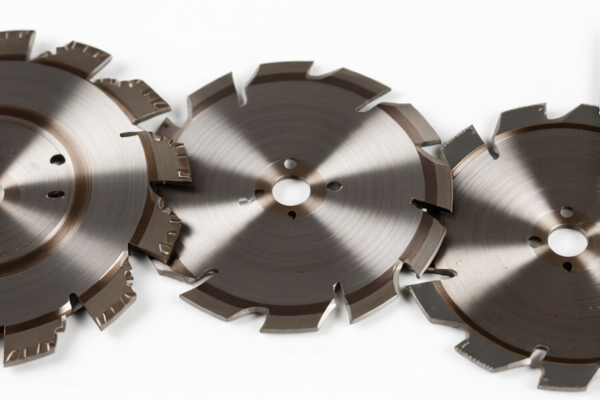
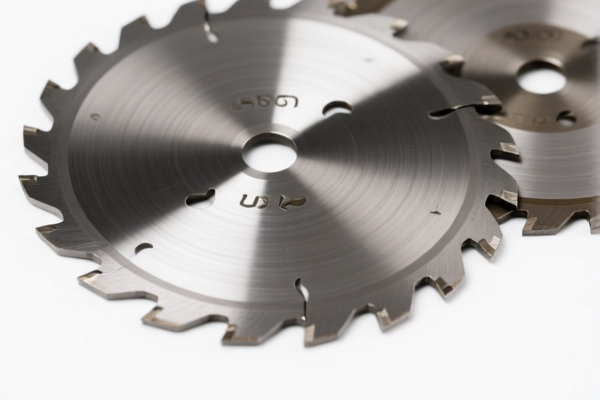
A diamond-tipped saw blade is a precision cutting tool used primarily in construction, stone processing, concrete demolition, and mining industries. It features a circular metal body (typically steel) with industrial-grade diamond segments embedded along the cutting edge. These segments are made from synthetic diamonds bonded in a metal matrix (usually cobalt or bronze), enabling the blade to cut through extremely hard materials like granite, marble, concrete, asphalt, and even reinforced concrete.
⚠️ Critical Distinction:
- If the blade has diamond-impregnated segments → Must be classified under 8202.91.30.00 or 8202.31.00.00
- If it's not diamond-tipped but made of steel only → May fall under 8202.31.00.00 or 8466.93.98.85
- If it's used as a machine part in a larger saw system → Could qualify under 8466.93.98.85
📦 Two, HS Code Classification Details (2026 Official Tariff Breakdown)
| HS Code | Product Description | Target Use Case | Diamond-Tipped? | Metal Body? |
|---|---|---|---|---|
8202.91.30.00 |
Other saw blades, including diamond-tipped ones, for cutting hard materials (e.g., stone, concrete) | Stone cutting, construction, mining, tile work | ✅ Yes | ✅ Yes |
8202.31.00.00 |
Steel saw blades (including circular saw blades), not otherwise specified | General metal cutting, woodworking, DIY | ✅ No (unless specified) | ✅ Yes |
8466.93.98.85 |
Other parts and accessories for machine tools, not specified elsewhere — includes saw blades used as components | Industrial saw systems, CNC machines, automated cutting lines | ✅ Yes (if used as part of a machine) | ✅ Yes |
🔍 Key Insight:
- Diamond-tipped blades are not considered "steel saw blades" — they are specialized cutting tools with a composite structure (metal + diamond). - Even if the blade has a steel body, the presence of diamond segments makes it ineligible for 8202.31.00.00 unless explicitly stated otherwise. - 8466.93.98.85 applies only when the blade is used as a component in a larger machine (e.g., in a CNC stone cutter), not when sold standalone.
💰 Three, 2026 Updated Tariff Rates (Including All附加 Taxes & Legal Basis)
✅ Applicable Country: United States (US)
✅ Origin: China (CN)
✅ Effective Date: November 10, 2025 (including subsequent imports)
🎯 1. 8202.91.30.00 — Diamond-Tipped Saw Blades (for Hard Materials)
| Item | Detail |
|---|---|
| Base Duty Rate | 0% (ad valorem) |
| USITC Section 301 Additional Duty | +25% (from USITC Footnote 9903.88.01) |
| IEEPA Section 122 Tariff | +10% (under International Emergency Economic Powers Act, targeting China/HK) |
| Total Effective Duty | 35.0% |
| Tax Calculation | CIF Value × 35% |
| De Minimis Threshold | ❌ Not applicable (denied under US law) |
| Legal Basis Path | IEEPA:9903.01.25 → IEEPA:9903.01.24 → USITC:8202.91.30.00 → FOOTNOTE:9903.88.01 |
📌 Explanation:
- 25% USITC duty comes from Section 301 of the U.S. Trade Act — targeting unfair trade practices by China. - 10% IEEPA duty is imposed under the International Emergency Economic Powers Act, specifically for goods from China or Hong Kong. - Combined total = 35% — one of the highest tariffs on industrial tools. - No de minimis exemption — even small shipments (under $800) are subject to full duty.
🎯 2. 8202.31.00.00 — Steel Saw Blades (Non-Diamond-Tipped)
| Item | Detail |
|---|---|
| Base Duty Rate | 0% |
| USITC Section 301 Additional Duty | +25% |
| IEEPA Section 122 Tariff | +10% |
| Total Effective Duty | 35.0% |
| Tax Calculation | CIF × 35% |
| De Minimis Threshold | ❌ Not applicable |
| Legal Basis Path | IEEPA:9901.25 → IEEPA:9903.01.24 → USITC:8202.31.00.00 → FOOTNOTE:9903.88.01 |
📌 Important Note:
- This code applies only if the blade is not diamond-tipped. - If diamond segments are present, this code is incorrect and may lead to penalties. - Even if the blade is made of steel, if it contains diamond particles, it must be classified under8202.91.30.00.
🎯 3. 8466.93.98.85 — Other Parts & Accessories for Machine Tools (e.g., as a Component)
| Item | Detail |
|---|---|
| Base Duty Rate | 4.7% |
| USITC Section 301 Additional Duty | +25% |
| IEEPA Section 122 Tariff | +10% |
| Total Effective Duty | 39.7% |
| Tax Calculation | CIF × 39.7% |
| De Minimis Threshold | ❌ Not applicable |
| Legal Basis Path | IEEPA:9903.01.25 → IEEPA:9903.01.24 → USITC:8466.93.98.85 → FOOTNOTE:9903.88.01 |
📌 When to Use This Code:
- Only when the blade is sold as a spare part or component for a larger machine (e.g., CNC stone cutter, automated saw line). - Must be clearly labeled as "for use in machine tool X" or included in a machine kit. - If sold standalone, this code is incorrect and will result in reclassification and penalties.
🛠️ Four, Customs Clearance Best Practices (Pro Tips to Avoid Delays & Penalties)
✅ 1. Required Documentation (Mandatory Checklist)
| Document | Required? | Purpose |
|---|---|---|
| ✅ Product Specifications | ✔️ | Detail material (steel body), diamond segment type (synthetic), diameter, thickness |
| ✅ Technical Drawings / Cutaway Diagrams | ✔️ | Show diamond segment placement, bonding method |
| ✅ Product Photos (Clear, with Label) | ✔️ | Must show blade edge, diamond segments, and manufacturer logo |
| ✅ Third-Party Certification (e.g., ISO, CE, RoHS) | ✔️ | For compliance with safety & environmental standards |
| ✅ Commercial Invoice | ✔️ | Must state: “Diamond-Tipped Saw Blade for Stone/Concrete Cutting” |
| ✅ Certificate of Origin (CO) | ✔️ | If from non-China origin, may qualify for lower duty |
| ✅ Packing List | ✔️ | Show quantity, weight, packaging type |
✅ 2.申报技巧 (申报口诀)
🔥 “Diamond in edge? → 8202.91.30.00!
Steel only? → 8202.31.00.00!
Part of a machine? → 8466.93.98.85!
Wrong code? → 35%–40% tax + penalties!”
| Scenario | Correct HS Code | Common Mistake |
|---|---|---|
| Diamond segments on steel blade | 8202.91.30.00 |
Misclassified as 8202.31.00.00 → 35% tax |
| Standalone blade, no machine | 8202.91.30.00 |
Misclassified as 8466.93.98.85 → 39.7% tax |
| Blade sold with CNC saw machine | 8466.93.98.85 |
Misclassified as 8202.91.30.00 → Underpaid duty |
| Blade made in Vietnam/Mexico | 8202.91.30.00 |
Can apply for IEEPA exemption → 0% tariff |
✅ 3. Special Cases Handling
| Situation | Recommended Action |
|---|---|
| OEM Custom Blades | Provide design specs + customer PO; avoid "non-standard" classification |
| Blades with Mixed Materials | If diamond + steel, must use 8202.91.30.00 |
| Used/Recycled Blades | Still subject to 35%–39.7% duty; declare as "used" with proper documentation |
| Blades for Military/Infrastructure Projects | Apply for special-purpose exemption; requires pre-approval |
| Blades Sold in Kits (with Machine) | Use 8466.93.98.85 only if clearly part of a system |
🌍 Five, Global Market Customs Comparison (2026 Update)
| Country/Region | Recommended HS Code | Duty Rate | Certification Required | Notes |
|---|---|---|---|---|
| 🇺🇸 United States | 8202.91.30.00 |
35.0% | FCC, CE, RoHS | No de minimis |
| 🇨🇳 China | 8202.91.30.00 |
5% | CCC, RoHS | No extra tariffs |
| 🇪🇺 European Union | 8202.91.30.00 |
0% (if CE compliant) | CE, ErP | No附加税 |
| 🇦🇺 Australia | 8202.91.30.00 |
5% | RCM | No附加税 |
| 🇯🇵 Japan | 8202.91.30.00 |
0% | PSE | No附加税 |
📌 Conclusion:
- The U.S. is the only major market imposing 35%+附加 taxes on diamond-tipped saw blades. - China-origin products face the highest cost — 35%–39.7%. - Vietnam/Mexico/Thailand-origin blades may qualify for IEEPA exemption → 0% tariff.
📌 Six, Common Mistakes & Risk Warnings (Avoid These!)
❌ Mistake 1: Classifying a diamond-tipped blade as 8202.31.00.00 (steel blade)
👉 Result: Underpaid duty → 35% penalty + interest + audit risk
❌ Mistake 2: Using 8466.93.98.85 for standalone blades
👉 Result: Overpaid duty → 39.7% instead of 35% → unnecessary cost
❌ Mistake 3: Not disclosing diamond content in invoice
👉 Result: Customs suspicion → delayed clearance or seizure
❌ Mistake 4: Using generic name like “saw blade” without mentioning “diamond-tipped”
👉 Result: Misclassification → rejection or reclassification
✅ Correct Declaration Example:
“Diamond-Tipped Circular Saw Blade, 355mm Diameter, 2.0mm Thickness, for Granite & Concrete Cutting, Synthetic Diamond Segments, Steel Body, Model XYZ, ISO 9001 Certified”
🎯 Seven, Final Verdict: Precision in Classification = Profit Protection
🎯 Remember the Golden Rule:
🔹 “If it cuts stone with diamonds → 8202.91.30.00”
🔹 “If it’s just steel → 8202.31.00.00”
🔹 “If it’s part of a machine → 8466.93.98.85”
🔹 “Wrong code = 35%–40% tax + penalties!”
📌 Pro Tip:
If your diamond saw blades are manufactured in Vietnam, Mexico, Thailand, or Malaysia, you may qualify for IEEPA exemption — 0% tariff on imports to the U.S.
✅ Apply for Advance Ruling (Pre-Clearance) to lock in the correct HS Code and avoid future disputes.
📣 Act Now:
📞 Contact a licensed customs broker + Submit product photos + Request HS Code Pre-Approval
🚀 Ensure smooth clearance, avoid penalties, and protect your margins!
✨ Expert-Level Clearance Starts with Accurate Classification!
💼 Your profit depends on the right HS Code — choose wisely!
Customer Reviews
About HS Code Classification
The Harmonized System (HS) is an internationally standardized nomenclature developed by the World Customs Organization (WCO) to classify traded products. Over 200 countries use the HS system as the basis for customs tariffs, trade statistics, and import/export regulations.
Each HS code follows a hierarchical structure:
- Chapter (2 digits) — Broad category of goods (e.g., Chapter 84: Machinery and Mechanical Appliances)
- Heading (4 digits) — More specific grouping within the chapter
- Subheading (6 digits) — Internationally standardized breakdown, used by all WCO member countries
- National subdivisions (8-10 digits) — Country-specific extensions for further classification, such as US HTSUS 10-digit codes
Correct HS code classification is essential for smooth customs clearance, accurate duty payment, and compliance with trade regulations. Misclassification can lead to customs delays, overpayment of duties, or penalties.
When importing from CN to US, the applicable tariff rates may include:
- Most-Favored-Nation (MFN) rate — The standard duty rate applied to WTO members
- General rate — Applied to countries without trade agreements
- Trade remedy duties — Additional tariffs such as Section 301 (anti-dumping), Section 232 (national security), or countervailing duties
The information provided on this page is for reference purposes only. For official classification, please consult with your local customs authority or a licensed customs broker.