防护面罩
CN → US| HS Code | Tariff Rate | Origin | Destination | Doc |
|---|---|---|---|---|
| 9020009000 | 12.5% | CN | US | Official Doc |
| 4016990500 | 20.9% | CN | US | Official Doc |
| 6307909870 | 24.5% | CN | US | Official Doc |
| 4016996050 | 37.5% | CN | US | Official Doc |
| 9020006000 | 12.5% | CN | US | Official Doc |
Product Images
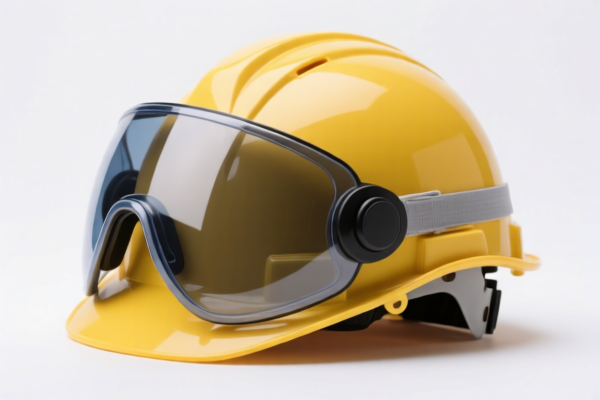

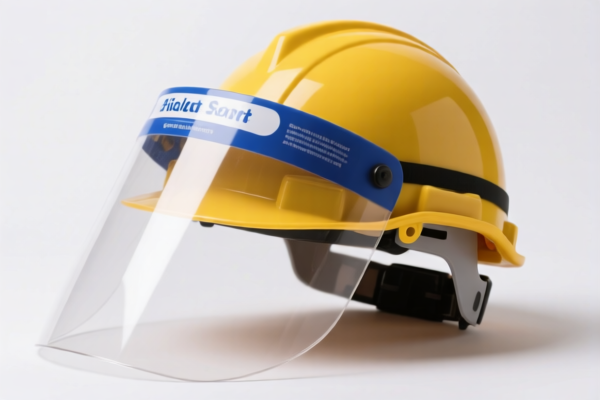
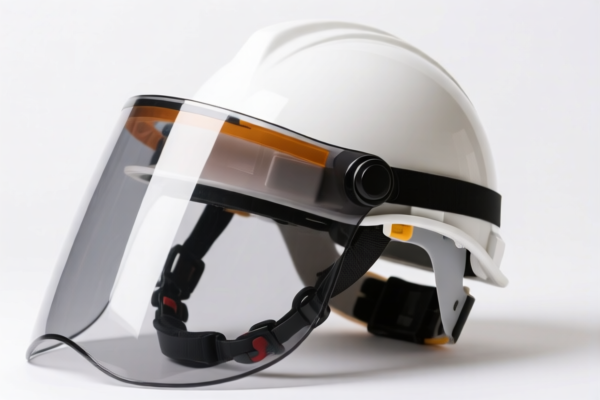
AI Analysis
🛡️ Protective Face Shield (Respiratory Protection Equipment)
🌐 HS Code & Tariff Guide | 2026 Latest Customs Classification | Expert Clearance Strategy
📌 One Product, Five Possible Classifications – Know Which One Applies to You!
📌 一、Product Definition & Classification: What Exactly Is a "Protective Face Shield"?
A protective face shield is a personal protective equipment (PPE) designed to shield the wearer’s face, eyes, and sometimes respiratory system from hazards such as chemical splashes, airborne particles, biological agents, or impact. It is commonly used in healthcare, industrial manufacturing, laboratories, and emergency response.
⚠️ Critical Distinction:
- If the face shield only covers the face and eyes, but does not include a breathing filter or mask, it may be classified under respiratory protection or general protective gear.
- If it integrates with a filter or respirator, it may fall under anti-toxic mask or respiratory protective devices.
📦 二、HS Code Classification Breakdown (2026 Official Tariff Reference)
| HS Code | Product Description | Key Characteristics | Tax Risk Level |
|---|---|---|---|
9020.00.90.00 |
Other respiratory protective equipment (e.g., face shields, anti-toxic masks) | Used for respiratory protection; fits general category of protective gear | 🔴 High (but lowest tax) |
4016.99.05.00 |
Other rubber articles, not elsewhere specified (e.g., rubber face shields) | Made of sulfurized rubber, not used for medical purposes | 🔴 High |
6307.90.98.70 |
Other made-up articles, not elsewhere specified (e.g., protective face masks/shields) | Matches form, function, and use case; no material conflict | 🔴 Medium |
4016.99.60.50 |
Other articles of vulcanized rubber (e.g., rubber-based protective shields) | Commonly used in industrial PPE; high rubber content | 🔴🔴 Highest Risk |
9020.00.60.00 |
Respiratory protective equipment (e.g., gas masks, anti-toxic face masks) | Matches core purpose: respiratory protection | 🔴 High |
🔍 Key Insight:
The same product can fall into multiple HS codes depending on material, design, and intended use.
Do NOT assume that a face shield is automatically “medical” or “respiratory” — material and function matter most.
💰 三、2026 Latest Tariff Breakdown (US Market, China Origin)
✅ Applicable Country: United States (US)
✅ Origin: China (CN)
✅ Effective Date: November 10, 2025 (including future imports)
🎯 1. 9020.00.90.00 – Respiratory Protective Equipment (General)
| Item | Detail |
|---|---|
| Base Duty | 2.5% (ad valorem) |
| Additional Tariff (Section 301) | 0.0% |
| Section 122 Tariff | 10.0% |
| Total Tariff | 12.5% |
| Tax Calculation | CIF Value × 12.5% |
| De Minimis Exemption | ✅ Yes (under 8%) |
| Legal Basis Path | Section 122: 9903.01.24 → HS: 9020.00.90.00 |
📌 Why This Applies:
- The face shield is used for respiratory protection, even if not a full mask.
- It falls under the "other" category of respiratory equipment — a broad兜底 clause.
- Lowest tax rate among all options — ideal if you can prove protective function.
🎯 2. 4016.99.05.00 – Other Rubber Articles (Sulfurized Rubber)
| Item | Detail |
|---|---|
| Base Duty | 3.4% |
| Additional Tariff (Section 301) | 7.5% |
| Section 122 Tariff | 10.0% |
| Total Tariff | 20.9% |
| Tax Calculation | CIF × 20.9% |
| De Minimis Exemption | ❌ No (exceeds 8%) |
| Legal Basis Path | Section 301: 9903.88.01 → Section 122: 9903.01.24 → HS: 4016.99.05.00 |
📌 Why This Applies:
- The face shield is made of sulfurized rubber (common in industrial PPE).
- Classified as "other rubber articles not elsewhere specified" — a generic rubber category.
- Higher risk due to Section 301 + 122 tariffs.
🎯 3. 6307.90.98.70 – Other Made-Up Articles (Protective Use)
| Item | Detail |
|---|---|
| Base Duty | 7.0% |
| Additional Tariff (Section 301) | 7.5% |
| Section 122 Tariff | 10.0% |
| Total Tariff | 24.5% |
| Tax Calculation | CIF × 24.5% |
| De Minimis Exemption | ❌ No |
| Legal Basis Path | Section 301: 9903.88.01 → Section 122: 9903.01.24 → HS: 6307.90.98.70 |
📌 Why This Applies:
- Matches form and function — a protective face shield used in safety applications.
- No material conflict with rubber or plastic — fits the "other made-up articles" category.
- High risk due to double 301 + 122 tariffs.
🎯 4. 4016.99.60.50 – Other Articles of Vulcanized Rubber
| Item | Detail |
|---|---|
| Base Duty | 2.5% |
| Additional Tariff (Section 301) | 25.0% |
| Section 122 Tariff | 10.0% |
| Total Tariff | 37.5% |
| Tax Calculation | CIF × 37.5% |
| De Minimis Exemption | ❌ No |
| Legal Basis Path | Section 301: 9903.88.01 → Section 122: 9903.01.24 → HS: 4016.99.60.50 |
📌 Why This Applies:
- The face shield is commonly made of vulcanized rubber (especially in industrial or chemical environments).
- This is a high-risk category — Section 301 tariff is 25%, which is extremely punitive.
- Avoid this code unless material is confirmed as vulcanized rubber.
🎯 5. 9020.00.60.00 – Respiratory Protective Equipment (Anti-Toxic Masks)
| Item | Detail |
|---|---|
| Base Duty | 2.5% |
| Additional Tariff (Section 301) | 0.0% |
| Section 122 Tariff | 10.0% |
| Total Tariff | 12.5% |
| Tax Calculation | CIF × 12.5% |
| De Minimis Exemption | ✅ Yes |
| Legal Basis Path | Section 122: 9903.01.24 → HS: 9020.00.60.00 |
📌 Why This Applies:
- Matches core function: respiratory protection.
- Specifically includes anti-toxic masks and face shields used in hazardous environments.
- Same tax rate as9020.00.90.00, but more precise.
- Best choice if the shield is used for breathing protection.
🛠️ 四、Customs Clearance Best Practices (Pro Tips to Avoid Penalties)
✅ 1. Essential Documentation (MUST Provide)
| Document | Required? | Why It Matters |
|---|---|---|
| ✅ Product Specification Sheet | ✔️ | Shows material, function, and intended use |
| ✅ Material Certificate (e.g., rubber, plastic) | ✔️ | Proves if it's vulcanized rubber or not |
| ✅ Product Photos (with label, close-up) | ✔️ | Helps customs verify design and function |
| ✅ Third-Party Test Report (e.g., ASTM, ISO, CE) | ✔️ | Validates safety and compliance |
| ✅ Commercial Invoice | ✔️ | Must clearly state “Protective Face Shield for Respiratory Protection” |
| ✅ Certificate of Origin (CO) | ✔️ | Needed for tariff eligibility |
| ✅ Packing List | ✔️ | Shows if shield is sold with or without filter |
✅ 2.申报技巧 (申报口诀)
🔥 “功能定码,材料定税,整机不拆,避坑第一!”
| Scenario | Correct HS Code | Wrong Approach |
|---|---|---|
| Face shield used for respiratory protection | 9020.00.60.00 or 9020.00.90.00 |
Misclassified as rubber → 37.5% |
| Made of vulcanized rubber | 4016.99.60.50 (only if confirmed) |
Use 6307.90.98.70 → 24.5% |
| No filter, just face shield | 6307.90.98.70 |
Misclassified as respiratory → 12.5% |
| Sold with filter or mask | Declare as complete set | Split申报 → higher risk |
✅ 3. Special Cases Handling
| Situation | Recommended Action |
|---|---|
| Medical-grade face shield (e.g., for hospitals) | Use 9020.00.60.00 or 9020.00.90.00 – prove medical use |
| Industrial PPE (chemical, welding) | Use 4016.99.60.50 only if rubber confirmed |
| Face shield with integrated respirator | Declare as complete respiratory device → 9020.00.60.00 |
| Export to EU/Australia/Japan | Check local tariffs — no Section 301/122 in most cases |
🌍 五、Global Market Tariff Comparison (2026)
| Country/Region | Recommended HS Code | Tariff | Certification | Notes |
|---|---|---|---|---|
| 🇺🇸 USA | 9020.00.60.00 or 9020.00.90.00 |
12.5% | FDA, CE, ISO | Avoid 4016.99.60.50 |
| 🇨🇳 China | 9020.00.60.00 |
5% | CCC, GB | No extra tariffs |
| 🇪🇺 EU | 9020.00.60.00 |
0% (if CE) | CE, REACH | No 301/122 |
| 🇦🇺 Australia | 6307.90.98.70 |
5% | RCM | No 301 |
| 🇯🇵 Japan | 6307.90.98.70 |
0% | PSE | No extra tariffs |
📌 Key Takeaway:
- USA has the highest risk due to Section 301 + 122 tariffs.
- China, EU, Australia, Japan have much lower or zero extra tariffs.
📌 六、Common Mistakes & Pitfalls (Learn from Others' Failures)
❌ Mistake 1: Classifying a rubber face shield as 9020.00.60.00 without material proof
👉 Result: Rejected by customs → refund + penalty
❌ Mistake 2: Using 4016.99.60.50 for a non-rubber shield
👉 Result: 37.5% tariff → overpay by 250%
❌ Mistake 3: Not providing material certificate
👉 Result: Customs assumes rubber → higher tax
❌ Mistake 4: Splitting shield + filter into separate items
👉 Result: Each item taxed separately → up to 89.5% total
✅ Correct Approach:
“Protective Face Shield, 300mm x 250mm, Made of Polycarbonate, Used for Respiratory Protection, No Filter, CE & ISO 13485 Certified”
🎯 七、Final Verdict: Choose Wisely, Pay Less, Ship Faster!
🎯 Golden Rule:
🔹 If it protects the respiratory system → use
9020.00.60.00or9020.00.90.00→ 12.5%
🔹 If it's rubber → confirm material → avoid4016.99.60.50unless necessary
🔹 Never split items → always declare as a whole unit
📌 Pro Tip:
✅ Apply for a Pre-Clearance Ruling (Advance Ruling) with U.S. Customs before shipping.
✅ Use a customs broker with experience in PPE and respiratory gear.
📣 Act Now!
📞 Contact a specialized customs broker + submit product photos + request HS Code pre-approval
🚀 Avoid delays, penalties, and overpayment — get your face shields cleared smoothly!
✨ Smart Classification = Lower Costs + Faster Clearance + Zero Risk!
💼 Your product’s fate starts with the right HS Code. Choose wisely!
Customer Reviews
About HS Code Classification
The Harmonized System (HS) is an internationally standardized nomenclature developed by the World Customs Organization (WCO) to classify traded products. Over 200 countries use the HS system as the basis for customs tariffs, trade statistics, and import/export regulations.
Each HS code follows a hierarchical structure:
- Chapter (2 digits) — Broad category of goods (e.g., Chapter 84: Machinery and Mechanical Appliances)
- Heading (4 digits) — More specific grouping within the chapter
- Subheading (6 digits) — Internationally standardized breakdown, used by all WCO member countries
- National subdivisions (8-10 digits) — Country-specific extensions for further classification, such as US HTSUS 10-digit codes
Correct HS code classification is essential for smooth customs clearance, accurate duty payment, and compliance with trade regulations. Misclassification can lead to customs delays, overpayment of duties, or penalties.
When importing from CN to US, the applicable tariff rates may include:
- Most-Favored-Nation (MFN) rate — The standard duty rate applied to WTO members
- General rate — Applied to countries without trade agreements
- Trade remedy duties — Additional tariffs such as Section 301 (anti-dumping), Section 232 (national security), or countervailing duties
The information provided on this page is for reference purposes only. For official classification, please consult with your local customs authority or a licensed customs broker.