面霜
CN → US| HS Code | Tariff Rate | Origin | Destination | Doc |
|---|---|---|---|---|
| 3004909244 | 10.0% | CN | US | Official Doc |
| 3307900000 | 40.4% | CN | US | Official Doc |
| 3004490050 | 10.0% | CN | US | Official Doc |
| 3304995000 | 35.0% | CN | US | Official Doc |
Product Images
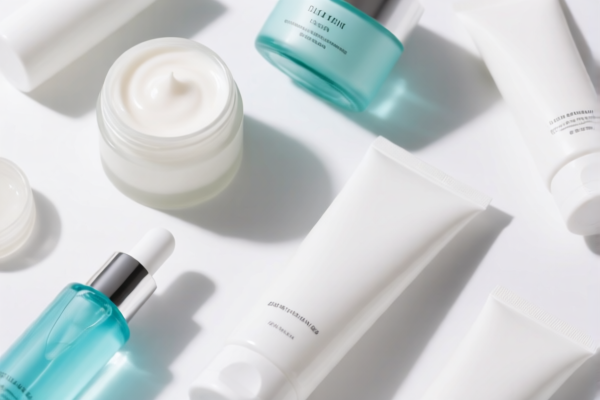
AI Analysis
🧴 Face Cream (Skincare & Dermatological Products)
🌐 HS Code Reference & Customs Clearance Guide | 2026 Tax Analysis | Professional Customs Strategy
📌 I. Product Definition & Classification: Do You Really Know "Face Cream"?
Face Creams are semi-solid emulsions applied to the skin for moisturizing, protecting, or therapeutic purposes. In international trade, they are often contested between two major categories:
- Pharmaceuticals (Dermatological Drugs): Products claiming therapeutic effects (e.g., treating eczema, psoriasis, containing local anesthetics) or classified as "dermatological preparations."
- Cosmetics (Toiletry Items): Products intended for beautifying, cleansing, or general skin care without medicinal claims.
⚠️ Critical Distinction Point:
- If the product claims medical treatment (curing/symptom relief) or contains local anesthetics → Classified under Chapter 30 (Pharmaceuticals).
- If the product claims beauty, moisturizing, or general care → Classified under Chapter 33 or 34 (Cosmetics).
- Misclassification Risk: Declaring a medicated cream as a cosmetic to avoid high tariffs can lead to seizure, fines, or back-taxes.
📦 II. HS Code Classification Details (2026 Authorized Reference)
| HS Code | Product Description | Applicable Scenario | Tax Category |
|---|---|---|---|
3004.90.92.44 |
Dermatological preparations / Skin care drugs (Pharmaceuticals) | Creams for treating specific skin conditions, classified as "Skin Care" within pharmaceuticals. | 💊 Pharmaceutical |
3307.90.00.00 |
Cosmetics & Toilet Preparations (Miscellaneous) | General face creams, body creams, not for specific medical treatment. | 💄 Cosmetic |
3004.49.00.50 |
Skin-specific topical medications / preparations | Creams classified as "Skin drugs" or "Skin care related topical preparations." | 💊 Medicinal |
3304.99.50.00 |
Skin preparation for beauty/care (Cosmetics) | Creams specifically defined as "Beauty or Skin Care" products (e.g., anti-aging, whitening, moisturizing). | 💄 Cosmetic |
🔍 Key Reminder:
- Pharmaceutical Codes (3004.xxxx) are strictly for products with therapeutic indications.
- Cosmetic Codes (3304/3307) are for beauty/maintenance.
- Tax implications vary drastically (10% vs. 35-40%+).
💰 III. 2026 Latest Tariff Rate Breakdown (Including Surtaxes & Policy Add-ons)
✅ Applicable Country: United States (US)
✅ Origin: China (CN)
✅ Effective Date: 2025 (Current Policy)
🎯 1. 3004.90.92.44 & 3004.49.00.50 —— Pharmaceutical/Dermatological Creams
These codes fall under Chapter 30 (Pharmaceuticals). Due to specific "Section 122" tariffs, the tax structure is lower than cosmetics.
| Item | Content |
|---|---|
| Base Duty Rate | 0.0% (ad valorem) |
| Section 301 (Add-on) | 0.0% (No additional 301 surtax for this subheading) |
| Section 122 Duty | +10.0% (Specific surtax for certain Chinese pharmaceuticals/medical goods) |
| Total Tax Rate | 10.0% |
| Tax Calculation | CIF Value × 10% |
| De Minimis Exemption | ❌ Not Applicable (Commercial imports only) |
| Legal Basis Path | Section 122 → 3004.xxxx |
📌 Explanation:
- The 0% base rate is standard for many pharmaceuticals.
- The 10% Section 122 tariff is the only surcharge.
- Crucial: This is significantly cheaper than cosmetic rates if the product legitimately qualifies as a drug (requires FDA approval or specific therapeutic claims).
🎯 2. 3307.90.00.00 —— Miscellaneous Cosmetics & Toilet Prep
This code falls under Chapter 33 (Cosmetics). These face the highest tariff impact due to Section 301 and Section 122 combined.
| Item | Content |
|---|---|
| Base Duty Rate | 5.4% |
| Section 301 (Add-on) | +25.0% (Retaliatory tariff on Chinese cosmetics) |
| Section 122 Duty | +10.0% (Additional surtax) |
| Total Tax Rate | 40.4% |
| Tax Calculation | CIF Value × 40.4% |
| De Minimis Exemption | ❌ Not Applicable |
| Legal Basis Path | Section 301 + Section 122 → 3307.xxxx |
📌 Warning:
- The 40.4% rate includes a 25% Section 301 surcharge.
- This makes cosmetic face creams extremely expensive to import into the US from China compared to pharmaceutical grades.
🎯 3. 3304.99.50.00 —— Skin Preparations for Beauty/Care
This is the most common classification for general skincare creams (moisturizers, anti-aging). It also faces the high Section 301 surtax.
| Item | Content |
|---|---|
| Base Duty Rate | 0.0% |
| Section 301 (Add-on) | +25.0% |
| Section 122 Duty | +10.0% |
| Total Tax Rate | 35.0% |
| Tax Calculation | CIF Value × 35.0% |
| De Minimis Exemption | ❌ Not Applicable |
| Legal Basis Path | Section 301 + Section 122 → 3304.xxxx |
📌 Note:
- Even with a 0% base rate, the 35% total is driven by the 25% Section 301 surcharge.
- This is the standard rate for "Anti-aging," "Whitening," or "Hydrating" creams.
🛠️ IV. Customs Clearance Practical Advice (Pitfall Avoidance)
✅ 1. Documentation Checklist (Must-Haves)
| Document | Required? | Description |
|---|---|---|
| ✅ Ingredient List | ✔️ | Must show if active ingredients are pharmacological (e.g., Lidocaine, Steroids) or cosmetic (e.g., Hyaluronic Acid, Retinol). |
| ✅ Intended Use Statement | ✔️ | Explicitly state "For therapeutic use" (Drug) vs. "For beautification" (Cosmetic). |
| ✅ FDA Registration/Clearance | ✔️ | If declaring as a drug (3004), proof of FDA status is critical. |
| ✅ Certificate of Analysis (COA) | ✔️ | To prove ingredient concentration. |
| ✅ Commercial Invoice | ✔️ | Must match the HS Code exactly. |
| ✅ Product Photos | ✔️ | Show packaging, labeling, and claims. |
✅ 2. Declaration Strategy (The Golden Rule)
🔥 "Claim it as Drug = Lower Tax (10%); Claim it as Cosmetic = High Tax (35-40%)"
| Scenario | Correct Declaration | Risk of Error |
|---|---|---|
| Medicated Cream (e.g., contains Lidocaine for numbing, treats eczema) | 3004.90.92.44 or 3004.49.00.50 |
10% Tax |
| Medicated Cream (Declared as Cosmetic) | 3304.99.50.00 |
35% Tax + Penalty for False Decl |
| Moisturizer/Whitening Cream | 3304.99.50.00 |
35% Tax |
| General Toilet/Cleansing Cream | 3307.90.00.00 |
40.4% Tax |
✅ 3. Special Situations
| Situation | Handling Advice |
|---|---|
| OEM Private Label | Ensure the brand owner has the necessary FDA clearance if declaring as a drug. |
| "Dual Use" Claims | If packaging says "Heals & Beautifies," Customs may force Drug classification (lower tax) BUT requires strict FDA proof. If no FDA proof, they may reject as a drug and fine. |
| Traveling with Creams | Personal effects usually exempt, but commercial shipments follow strict HS rules. |
🌍 V. Global Market Comparison (2026)
| Country/Region | Recommended HS Code | Total Tax Rate (China Origin) | Key Requirement |
|---|---|---|---|
| 🇺🇸 USA | 3004.xxxx (Drug) |
10.0% | FDA Clearance, Section 122 |
| 🇺🇸 USA | 3304.xxxx (Cosmetic) |
35.0% - 40.4% | Section 301 (25% surtax) |
| 🇪🇺 EU | 3004 / 3304 |
6% - 10% | CE Mark, CPNP Notification |
| 🇨🇳 China | 3304.99 |
5% - 10% | Cosmetic Filing (NMPA) |
| 🇯🇵 Japan | 3304 |
5% - 15% | PMDA Notification |
📌 Conclusion:
- The US is the most punitive market for cosmetics due to the 25% Section 301 surcharge.
- If your product has any therapeutic claim, reclassify it as Pharmaceutical (3004) to save 25-30% in taxes.
- BUT, you MUST have the regulatory proof (FDA) to back it up. If not, you are stuck with the high cosmetic tax.
📌 VI. Common Mistakes & Pitfalls
❌ Mistake 1: Declaring a "Pain Relief Cream" (Drug) as a "Beauty Cream" (Cosmetic).
👉 Result: Pay 35% instead of 10% (Overpayment) OR Seizure for False Declaration.
❌ Mistake 2: Declaring a "Whitening Cream" as a Drug without FDA approval.
👉 Result: Seizure by FDA and Customs, as "Whitening" is often considered an unapproved new drug claim.
❌ Mistake 3: Ignoring the "Section 122" 10% surcharge.
👉 Result: Underestimating costs. Even with 0% base, 10% is mandatory for both drugs and cosmetics from China.
✅ Correct Practice:
"Dermatological Cream, containing 5% Lidocaine, for local anesthesia. FDA Registered. Model XYZ."
→ Declared as3004.90.92.44→ Tax: 10%.
🎯 VII. Conclusion: Strategic Sourcing & Declaring
🎯 Remember the Golden Rule:
🔹 "Therapeutic Claims = Drug (10%); Beauty Claims = Cosmetic (35-40%)"
🔹 "Section 301 hits Cosmetics hard (25%), Section 122 hits Everything (10%)"
🔹 "If in doubt, get FDA clearance. Without it, you pay the cosmetic rate or risk seizure."
📌 Pro Tip:
If your product is a "Hydrating Cream" with no medical claims, it is legally a Cosmetic. You cannot artificially classify it as a drug to avoid tax. However, if you can reformulate it to include an approved therapeutic ingredient (e.g., a specific dermatological agent), you might switch to the 10% rate legally.
📞 Action Now:
📄 Review your product label: Does it say "Treats" or "Prevents"? → Likely a Drug.
📄 Check your ingredients: Are they FDA-approved drugs? → Likely a Drug.
🚀 Optimize: If you are importing to the US, ensure your FDA status matches your HS Code to avoid 40.4% taxes or fines.
✨ Professional Customs, Starting with Accurate Classification!
💼 Every cent counts in the US market!
Customer Reviews
About HS Code Classification
The Harmonized System (HS) is an internationally standardized nomenclature developed by the World Customs Organization (WCO) to classify traded products. Over 200 countries use the HS system as the basis for customs tariffs, trade statistics, and import/export regulations.
Each HS code follows a hierarchical structure:
- Chapter (2 digits) — Broad category of goods (e.g., Chapter 84: Machinery and Mechanical Appliances)
- Heading (4 digits) — More specific grouping within the chapter
- Subheading (6 digits) — Internationally standardized breakdown, used by all WCO member countries
- National subdivisions (8-10 digits) — Country-specific extensions for further classification, such as US HTSUS 10-digit codes
Correct HS code classification is essential for smooth customs clearance, accurate duty payment, and compliance with trade regulations. Misclassification can lead to customs delays, overpayment of duties, or penalties.
When importing from CN to US, the applicable tariff rates may include:
- Most-Favored-Nation (MFN) rate — The standard duty rate applied to WTO members
- General rate — Applied to countries without trade agreements
- Trade remedy duties — Additional tariffs such as Section 301 (anti-dumping), Section 232 (national security), or countervailing duties
The information provided on this page is for reference purposes only. For official classification, please consult with your local customs authority or a licensed customs broker.