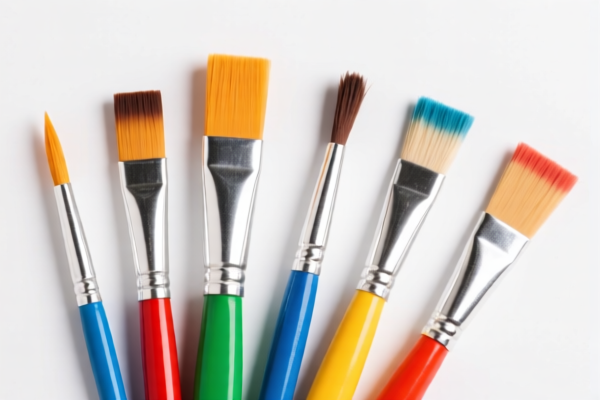
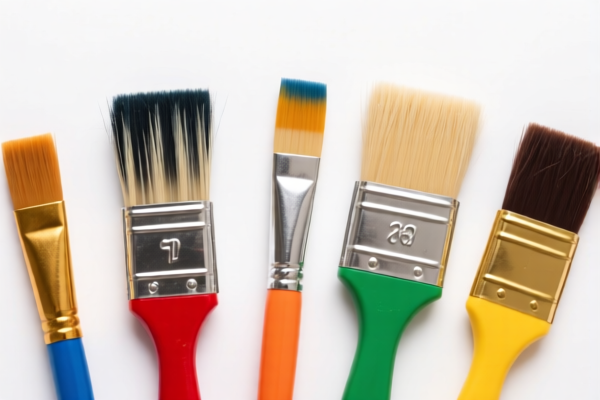
10 children's paintbrushes colorful
CN → US| HS Code | Tariff Rate | Origin | Destination | Doc |
|---|---|---|---|---|
| 9503000071 | 10.0% | CN | US | Official Doc |
| 9603404060 | 14.0% | CN | US | Official Doc |
| 9603306000 | 10.0% | CN | US | Official Doc |
| 9503000073 | 10.0% | CN | US | Official Doc |
| 3926100000 | 15.3% | CN | US | Official Doc |
Product Images


AI Analysis
🎨 Colorful Children's Paintbrushes (Toys/Crafts)
🌐 HS Code Reference & Clearance Guide | 2026 Latest Tariff Analysis | Professional Entry Strategy
📌 One, Product Definition: What exactly are "Children's Paintbrushes"?
In international trade, the classification of paintbrushes depends entirely on their intended use and target audience. Are they professional artistic tools or toys for children? This distinction determines the HS Code, the tax rate, and the clearance complexity.
Children's Art Supplies (Toys): Designed for kids, often featuring bright colors, rounded tips, or non-toxic materials. They fall under Chapter 95 (Toys).
Professional Artist Brushes: Designed for precision work by adults. They fall under Chapter 96 (Miscellaneous manufactured articles).
⚠️ Key Distinction Point:
- If the product is marketed towards children for play or basic art creation → Chapter 95 (Toy Category).
- If marketed towards artists for professional painting → Chapter 96 (Brush Category).
📦 Two, HS Code Classification Details (2026 Latest Tariff Data)
Based on the provided data for "10 children's paintbrushes," here are the applicable HS Codes and tax structures. Note that while there are similar brush codes in Chapter 96, the children's nature primarily points to Chapter 95 codes provided in the data.
| HS Code | Product Description | Category | Applicability for "Children's Paintbrushes" |
|---|---|---|---|
9503.00.00.71 |
Children's goods, falling within the scope of child products and toy accessories | Toy/Children's | ✅ Highly Recommended if intended for children's play/learning. |
9503.00.00.73 |
Toys/Art Tools, fitting the description of children's utensils | Toy/Art Tools | ✅ Recommended if explicitly marketed as an art tool for kids. |
9603.40.40.60 |
Brushes in the category of paint, varnish, or similar brushes | Professional Brush | ❌ Avoid for children's toys. High risk of misclassification if used. |
9603.30.60.00 |
Classification definition for artists' and similar brushes | Professional Brush | ❌ Avoid. Implies professional artistic use. |
3926.10.00.00 |
Office or school supplies, plastic products category | Plastic Supplies | ⚠️ Possible if purely plastic "paint sticks" or non-brush tools, but less accurate for actual brushes. |
🔍 Key Reminder:
- The term "Children's" in your input strongly suggests9503(Toys) rather than9603(Professional Brushes).
- Do not use9603codes for children's items unless they are clearly professional-grade brushes sold in a toy context (rare).
-9503.00.00.71and9503.00.00.73are the most appropriate for children's art toys.
💰 Three, 2026 Latest Tariff Rate Details (Including Additional Taxes & Policy Surcharges)
✅ Applicable Country: United States (US)
✅ Origin: China (CN)
✅ Effective Date: Current tariffs apply (2026 context)
🎯 1. 9503.00.00.71 — Children's Goods / Toy Accessories
| Item | Detail |
|---|---|
| Base Tariff Rate | 0.0% |
| Section 301 Surcharge | 0.0% |
| Section 122 Tariff | 10.0% |
| Total Effective Tax Rate | 10.0% |
| Tax Calculation | CIF Value × 10% |
| De Minimis Eligibility | ❌ Not Eligible (Subject to Section 122) |
| Legal Basis Path | Section 122: 9503.00.00.71 |
📌 Explanation:
- Base Tariff: 0% (Toys often have low base rates).
- Section 122 Tariff: 10% is applied to specific children's products and toy accessories. This is the critical cost driver.
- No Section 301: Unlike electronics or machinery, many toy categories are exempt from the 25% Section 301 tariffs, but Section 122 specifically targets this area.
🎯 2. 9503.00.00.73 — Toys / Art Tools for Children
| Item | Detail |
|---|---|
| Base Tariff Rate | 0.0% |
| Section 301 Surcharge | 0.0% |
| Section 122 Tariff | 10.0% |
| Total Effective Tax Rate | 10.0% |
| Tax Calculation | CIF Value × 10% |
| De Minimis Eligibility | ❌ Not Eligible |
| Legal Basis Path | Section 122: 9503.00.00.73 |
📌 Note:
- Same tax structure as9503.00.00.71.
- The 10% Section 122 tariff is the defining cost factor for children's art toys from China.
🎯 3. 9603.40.40.60 — Professional Paint Brushes (For Comparison/Risk Warning)
| Item | Detail |
|---|---|
| Base Tariff Rate | 4.0% |
| Section 301 Surcharge | 0.0% |
| Section 122 Tariff | 10.0% |
| Total Effective Tax Rate | 14.0% |
| Tax Calculation | CIF Value × 14% |
| De Minimis Eligibility | ❌ Not Eligible |
📌 Warning:
- If you misclassify children's brushes as professional brushes (9603), you pay 14% instead of 10%.
- However, the bigger risk is customs rejection for incorrect classification.
- Section 122 (10%) applies to both, making the total difference only 4%. But the risk of misclassification is high.
🎯 4. 9603.30.60.00 — Artists' Brushes
| Item | Detail |
|---|---|
| Base Tariff Rate | 0.0% |
| Section 301 Surcharge | 0.0% |
| Section 122 Tariff | 10.0% |
| Total Effective Tax Rate | 10.0% |
| Tax Calculation | CIF Value × 10% |
🛠️ Four, Clearance Practical Advice (Avoiding Pitfalls)
✅ 1. Documentation Checklist (Mandatory)
| Document | Required | Notes |
|---|---|---|
| ✅ Product Description | ✔️ | Must clearly state "Children's Paintbrushes" or "Art Toys for Kids". |
| ✅ Material Declaration | ✔️ | Specify bristle type (synthetic, natural) and handle material (plastic, wood). |
| ✅ Age Recommendation | ✔️ | e.g., "For Ages 3+" to justify Chapter 95 classification. |
| ✅ Safety Certifications | ✔️ | ASTM F963 (US), CPSIA compliance for children's products. |
| ✅ Commercial Invoice | ✔️ | List unit price and total value clearly. |
| ✅ Packing List | ✔️ | Specify "10 Pieces per Box" or similar. |
✅ 2. Classification Tips (Key Mnemonics)
🔥 “Kids = 95, Pro = 96, 122 Rule Applies to Both!”
| Scenario | Correct HS Code | Tax Rate | Risk |
|---|---|---|---|
| Children's Paintbrushes | 9503.00.00.71 or 73 |
10% | ✅ Low (if properly documented as toys) |
| Professional Artist Brushes | 9603.30.60.00 or 9603.40.40.60 |
10% or 14% | ⚠️ Medium (ensure marketing is not for kids) |
| Plastic "Paint Sticks" (No Bristles) | 3926.10.00.00 |
15.3% | ❌ Higher tax, check if it's truly a "brush" |
📌 Crucial Note:
- Do not claim "De Minimis" exemption. Section 122 tariffs apply to shipments regardless of value for these categories.
- Ensure the product is not classified as "Toys" if it has sharp points or toxic materials. Safety compliance is key.
✅ 3. Special Considerations
| Situation | Handling Advice |
|---|---|
| Mixed Sets (Brushes + Paints) | If sold as a set, the primary function determines classification. If brushes are main item, use 9503/9603. |
| Plastic Handles with Synthetic Bristles | Still 9503 or 9603. Material doesn't change the brush classification, only the base tariff in some cases. |
| Educational Kits | If part of a larger educational kit, ensure the kit itself is classified correctly. |
🌍 Five, Global Market Comparison (2026)
| Country/Region | Recommended HS Code | Tariff (China Origin) | Certification Requirement | Notes |
|---|---|---|---|---|
| 🇺🇸 USA | 9503.00.00.71 |
10% (Section 122) | CPSIA, ASTM F963 | High scrutiny on children's products. |
| 🇨🇳 China | 9503.00.00.71 |
Varies (Export) | CCC (if applicable) | Domestic tax not relevant for export. |
| 🇪🇺 EU | 9503.00.00.71 |
~6.5% + VAT | CE, EN71 | No Section 122 equivalent, but strict safety. |
| 🇬🇧 UK | 9503.00.00.71 |
~6.5% + VAT | UKCA, EN71 | Post-Brexit rules apply. |
📌 Conclusion:
- USA: Best to use9503.00.00.71or73for a 10% total tax.
- Misclassification Risk: Using9603codes for children's items may lead to higher taxes (14%) or penalties.
📌 Six, Common Mistakes & Pitfalls (Lessons Learned)
❌ Mistake 1: Classifying children's paintbrushes under 3926.10.00.00 (Plastic Goods)
👉 Consequence: Higher tax rate (15.3%) and potential customs dispute for incorrect classification.
❌ Mistake 2: Not declaring "Children's Use"
👉 Consequence: Customs may default to professional brush codes (9603), leading to 14% tax instead of 10%, or delays.
❌ Mistake 3: Ignoring Section 122 Tariff
👉 Consequence: Assuming 0% base tariff means 0% total tax. 10% Section 122 still applies!
✅ Correct Approach:
"Children's Art Paintbrushes, Synthetic Bristles, Plastic Handle, Ages 3+, Set of 10, ASTM F963 Compliant"
🎯 Seven, Conclusion: Professional Declaration, Cost Saving!
🎯 Remember the Mnemonic:
🔹 "Kids = 95, Section 122 = 10%, Pro = 96, Be Careful!"
🔹 "Base Tax 0%, Add 10%, Total 10%, Don't Forget Section 122!"
📌 Tips:
- Ensure all packaging and marketing materials clearly state "For Children" to support Chapter 95 classification.
- Keep safety test reports ready for customs inspection.
- For high-value shipments, consider Advance Ruling to confirm HS Code and tariff eligibility.
📣 Act Now:
📞 Consult a licensed customs broker
🚀 Declare accurately, pay fair tax, clear customs smoothly!
✨ Professional Classification Starts Here!
💼 Your Cost Control Depends on Precision!
Customer Reviews
About HS Code Classification
The Harmonized System (HS) is an internationally standardized nomenclature developed by the World Customs Organization (WCO) to classify traded products. Over 200 countries use the HS system as the basis for customs tariffs, trade statistics, and import/export regulations.
Each HS code follows a hierarchical structure:
- Chapter (2 digits) — Broad category of goods (e.g., Chapter 84: Machinery and Mechanical Appliances)
- Heading (4 digits) — More specific grouping within the chapter
- Subheading (6 digits) — Internationally standardized breakdown, used by all WCO member countries
- National subdivisions (8-10 digits) — Country-specific extensions for further classification, such as US HTSUS 10-digit codes
Correct HS code classification is essential for smooth customs clearance, accurate duty payment, and compliance with trade regulations. Misclassification can lead to customs delays, overpayment of duties, or penalties.
When importing from CN to US, the applicable tariff rates may include:
- Most-Favored-Nation (MFN) rate — The standard duty rate applied to WTO members
- General rate — Applied to countries without trade agreements
- Trade remedy duties — Additional tariffs such as Section 301 (anti-dumping), Section 232 (national security), or countervailing duties
The information provided on this page is for reference purposes only. For official classification, please consult with your local customs authority or a licensed customs broker.