4 Layer Twill Cotton Blend Fabric > 200gsm Home Textile
CN → US| HS Code | Tariff Rate | Origin | Destination | Doc |
|---|---|---|---|---|
| 5514120020 | 49.9% | CN | US | Official Doc |
| 5514220020 | 49.9% | CN | US | Official Doc |
| 5209520020 | 43.4% | CN | US | Official Doc |
| 5209430030 | 43.4% | CN | US | Official Doc |
| 5514120020 | 49.9% | CN | US | Official Doc |
Product Images
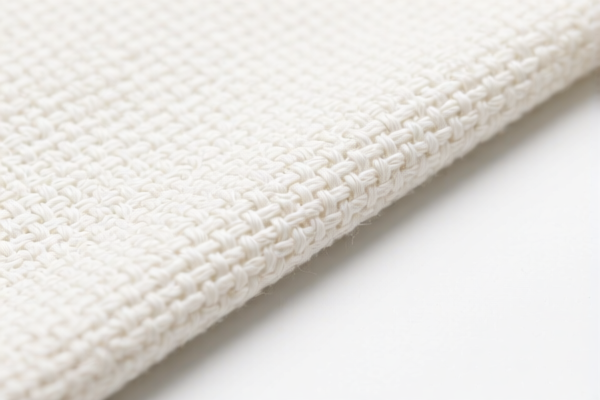
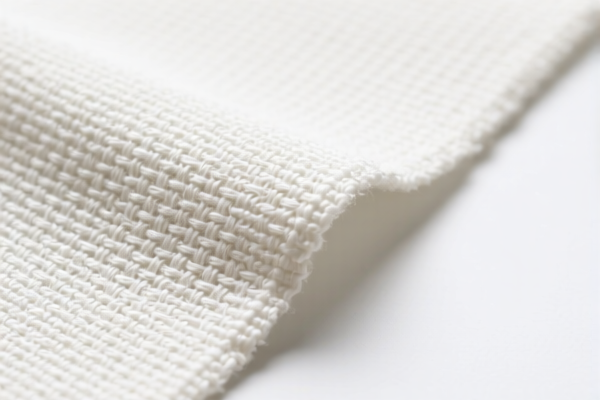
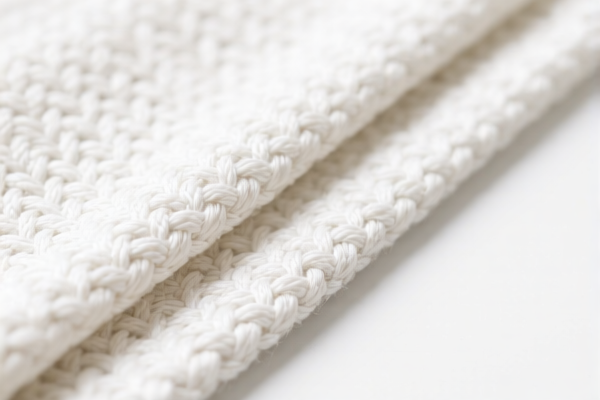
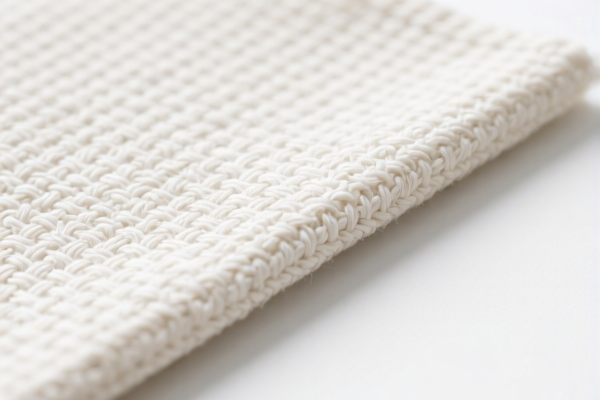
AI Analysis
🧵 4-Layer Twill Cotton Blend Fabric (>200gsm) | Home Textile & Apparel
🌐 HS Code Reference & Customs Clearance Guide | 2026 Latest Tariff Analysis | Professional Customs Strategy
📌 I. Product Definition & Classification: What Exactly is "4-Layer Twill"?
This product is a high-density, multi-ply woven fabric characterized by a twill weave structure (diagonal parallel ribs) and a gram weight exceeding 200g/m². The key differentiator is the "4-layer" construction, which can refer to: 1. 4-Ply Yarns: Fabric woven using four strands of yarn twisted together per thread. 2. 4-Layer Fabric Construction: A specific composite fabric structure (often double-layer or triple-layer warp-faced) offering extreme durability, insulation, and structure.
In international trade, this fabric falls under Chapter 54 (Man-Made Filaments) or Chapter 52 (Cotton), depending on the primary constituent material (synthetic fiber vs. cotton) and the specific weave definition.
⚠️ Critical Distinction Point: - If the synthetic short fibers constitute the principal weight or specific blend ratio defined by HTSUS → Headings 5514. - If the fabric is classified primarily as Cotton (even if blended) due to specific weave definitions (e.g., "Interwoven" features resembling pure cotton twills) or higher cotton content thresholds → Headings 5209. - "4-Layer/4-Ply" often triggers specific sub-classifications regarding density and weight (>200g/m²), pushing it into specific sub-headings for heavier fabrics.
📦 II. HS Code Classification Details (2026 Latest Tariff Authority)
Based on the provided data, here are the potential HS Codes and their rationales. Note that 5514 and 5209 codes have significantly different base tariffs, though the final effective rate is similar due to additional duties.
| HS Code | Product Description | Application Scenario | Classification Rationale |
|---|---|---|---|
5514.12.00.20 |
Cotton-blended synthetic staple-fiber fabrics, woven, not ≥85 g/m², mixed with synthetic staple fibers, twill, >200 g/m² | Apparel, heavy-duty home textiles, workwear | Primary Match: Specifically defines "Twill" with weight >200g/m². "4-layer" implies high density/weight. |
5514.22.00.20 |
Cotton-blended synthetic staple-fiber fabrics, woven, twill, >170 g/m² | General apparel, mid-weight home textiles | Alternative Match: Applies if weight is interpreted between 170-200g/m² or if specific blend ratios favor this subheading. |
5209.52.00.20 |
Cotton fabrics, woven, twill, >200 g/m², mixed with synthetic fibers | Heavy cotton twills, denim alternatives, upholstery | Cotton Bias: Classified under Cotton Chapter because the "4-ply twill" weave structure is deemed functionally equivalent to heavy cotton twills. |
5209.43.00.30 |
Cotton fabrics, woven, twill, >200 g/m², interwoven structure | Industrial cottons, heavy drapes | Weave Feature: "Interwoven" characteristic aligns with complex cotton twill definitions in some customs rulings. |
🔍 Key Reminder:
- 5514 applies when synthetic fibers are the primary classification driver (often based on weight or specific blend rules). - 5209 applies when cotton is the primary driver, often due to specific weave structures ("4-ply" or "interwoven") that customs authorities treat as "Cotton Fabrics" despite synthetic blends. - The "4-layer" description is critical for justifying the >200g/m² weight threshold, which excludes lighter fabrics (lower HS codes).
💰 III. 2026 Latest Tariff Rate Breakdown (Including Surcharges & Policy Add-ons)
✅ Applicable Country: USA (US)
✅ Origin: China (CN)
✅ Effective Date: From November 10, 2025 (including subsequent imports)
🎯 1. 5514.12.00.20 & 5514.22.00.20 —— Synthetic/Cotton Blend Fabrics (Twill >200g/170g)
| Item | Content |
|---|---|
| Base Tariff | 14.9% (ad valorem) |
| USITC Surcharge (Section 301) | +25.0% |
| IEEPA Surcharge (Section 122/China Specific) | +10.0% |
| Total Effective Rate | 49.9% |
| Tax Calculation | CIF Value × 49.9% |
| De Minimis Eligibility | ❌ No (deny_de_minimis) |
| Legal Basis Path | IEEPA:9903.01.25 → IEEPA:9903.01.24 → USITC:5514.12.00.20 → FOOTNOTE:9903.88.01 |
📌 Explanation:
- The Base Rate (14.9%) is standard for synthetic-cotton blend twills. - The 25% Section 301 is the standard additional duty on Chinese textiles. - The 10% IEEPA/122 Clause is a specific surcharge on certain Chinese textile products. - Total: 49.9%. This is a very high tariff, making cost control essential.
🎯 2. 5209.52.00.20 & 5209.43.00.30 —— Cotton Blend Fabrics (Twill >200g/m²)
| Item | Content |
|---|---|
| Base Tariff | 8.4% (ad valorem) |
| USITC Surcharge (Section 301) | +25.0% |
| IEEPA Surcharge (Section 122/China Specific) | +10.0% |
| Total Effective Rate | 43.4% |
| Tax Calculation | CIF Value × 43.4% |
| De Minimis Eligibility | ❌ No (deny_de_minimis) |
| Legal Basis Path | IEEPA:9903.01.25 → IEEPA:9903.01.24 → USITC:5209.52.00.20 → FOOTNOTE:9903.88.01 |
📌 Explanation:
- The Base Rate (8.4%) is lower for cotton-heavy classifications. - However, the 25% + 10% surcharges remain unchanged. - Total: 43.4%. This is 6.5% lower than the 5514 codes, making it a potentially more favorable classification if the customs authority accepts the "Cotton" primary definition for 4-layer twill.
🛠️ IV. Customs Clearance Operational Advice (Practical Pitfall Avoidance)
✅ 1. Documentation Checklist (Mandatory)
| Document | Required? | Explanation |
|---|---|---|
| ✅ Detailed Product Specification | ✔️ | Must specify: "4-Layer/Tw Ply", "Twill Weave", "Weight >200g/m²", "Blend Ratio (e.g., 65% Poly / 35% Cotton)". |
| ✅ Weave Structure Diagram | ✔️ | Visual proof of "Twill" pattern and "4-Layer" construction to justify HS Code selection. |
| ✅ Laboratory Test Report | ✔️ | Third-party test confirming Gram Weight (GSM) >200g/m² and fiber composition. |
| ✅ Commercial Invoice | ✔️ | Clearly state "4-Layer Twill Cotton Blend Fabric" and NOT just "Cotton Fabric" or "Polyester Fabric". |
| ✅ Packing List | ✔️ | Detail roll dimensions, weight per roll, and total volume. |
| ✅ Cert of Origin | ✔️ | Essential for proving Chinese origin (triggers surcharges). |
✅ 2. Declaration Strategy (Key Mantra)
🔥 "Weight is King, Weave is Law, Blend Defines Code!"
| Scenario | Correct Declaration | Wrong Declaration | Consequence |
|---|---|---|---|
| Weight >200g/m² | Declare as ">200g/m²" | Declare as "<200g/m²" | Wrong HS Code → 49.9% or 43.4% vs. lower rate → Refund/Rejection |
| 4-Layer Structure | Specify "4-Ply" or "4-Layer Weave" | Say "Standard Twill" | May lose specific subheading preference → Base Rate Risk |
| Blend Composition | Specify exact % (e.g., 65/35) | Say "Cotton Blend" vaguely | Customs may default to worst-case scenario → Higher Duty |
| Use Case | "For Home Textile/Apparel" | Vague ("Fabric") | May trigger additional safety standards checks → Delay |
✅ 3. Special Case Handling
| Scenario | Advice |
|---|---|
| Customs Ruling Dispute | If customs insists on 5514 instead of 5209, provide laboratory tests showing the "4-layer" structure behaves like heavy cotton twill. |
| Sample Submission | Submit a physical sample to customs for pre-clearance. Highlight the thickness and weave. |
| Value Declaration | Ensure CIF value is accurate. Tariff is ad valorem. Under-declaring leads to penalties. |
| Origin Labeling | Must be clearly marked "Made in China". Failure to mark correctly may result in additional duties or fines. |
🌍 V. Global Market Comparison (2026 Latest)
| Country/Region | Recommended HS Code | Tariff (China Origin) | Certification Requirements | Notes |
|---|---|---|---|---|
| 🇺🇸 USA | 5514.12.00.20 / 5209.52.00.20 |
49.9% / 43.4% | None (Textile Specific) | Highest Surcharge Market. Budget for ~50% duty. |
| 🇨🇳 China | 5514.12.00.20 / 5209.52.00.20 |
8-10% | None | Low base tariff, no surcharges. |
| 🇪🇺 EU | 5514.42.00 / 5209.52.00 |
9.5% - 12% | CE (if consumer goods) | No Section 301/122 surcharges. |
| 🇬🇧 UK | 5514.42.00 / 5209.52.00 |
9.5% - 12% | UKCA | Post-Brexit rules apply. |
| 🇨🇦 Canada | 5514.42.00 / 5209.52.00 |
9.5% - 12% | None | CUSMA benefits may apply if non-Chinese origin. |
📌 Conclusion:
- USA is the most expensive market for this fabric due to Section 301 + IEEPA surcharges. - EU/UK/Canada are significantly more cost-effective for Chinese-origin textiles. - Strategy: If targeting the US, negotiate price to absorb the ~50% duty or consider transshipment (risky) or origin diversification (Vietnam, Mexico, etc.).
📌 VI. Common Mistakes & Pitfalls (Lessons Learned)
❌ Mistake 1: Declaring weight as "<200g/m²" to avoid higher HS codes.
👉 Consequence: Customs testing reveals >200g/m² → Backdated duties + Penalties.
❌ Mistake 2: Vague description "Cotton Fabric".
👉 Consequence: Customs assigns worst-case HS Code → Higher Base Rate (14.9% vs 8.4%).
❌ Mistake 3: Ignoring "4-Layer" specification.
👉 Consequence: Misclassification as standard twill → Incorrect duty assessment.
❌ Mistake 4: Not providing blend ratio.
👉 Consequence: Customs defaults to highest duty synthetic blend → 49.9% even if cotton is dominant.
✅ Correct Practice:
"4-Layer Twill Cotton Blend Fabric, 65% Polyester / 35% Cotton, Weight: 220g/m², For Home Textile Use, HS Code 5514.12.00.20"
🎯 VII. Conclusion: Precision is Profit
🎯 Remember the Mantra:
🔹 "Weight Determines Code, Blend Determines Base Rate, Surcharge is Fixed!"
🔹 "4-Layer = >200g = Specific HS Code. Don't Guess!"
🔹 "US Tariff = ~50%. Plan Your Margins Accordingly!"
📌 Pro Tip:
If your fabric is blended with Modal, Viscose, or other regenerated fibers, the classification may shift to Chapter 55 or 56. Ensure fiber composition is explicitly stated.
📣 Immediate Action:
📞 Engage a Customs Broker for a Pre-Ruling on the "4-Layer" definition.
📦 Label All Rolls with Weight, Blend, and Origin.
🚀 Optimize Your Supply Chain for the ~50% US Tariff.
✨ Professional Clearance, Starting with Accurate Classification!
💼 Your Cost, Every Cent, Is Precisely Calculated!
Customer Reviews
About HS Code Classification
The Harmonized System (HS) is an internationally standardized nomenclature developed by the World Customs Organization (WCO) to classify traded products. Over 200 countries use the HS system as the basis for customs tariffs, trade statistics, and import/export regulations.
Each HS code follows a hierarchical structure:
- Chapter (2 digits) — Broad category of goods (e.g., Chapter 84: Machinery and Mechanical Appliances)
- Heading (4 digits) — More specific grouping within the chapter
- Subheading (6 digits) — Internationally standardized breakdown, used by all WCO member countries
- National subdivisions (8-10 digits) — Country-specific extensions for further classification, such as US HTSUS 10-digit codes
Correct HS code classification is essential for smooth customs clearance, accurate duty payment, and compliance with trade regulations. Misclassification can lead to customs delays, overpayment of duties, or penalties.
When importing from CN to US, the applicable tariff rates may include:
- Most-Favored-Nation (MFN) rate — The standard duty rate applied to WTO members
- General rate — Applied to countries without trade agreements
- Trade remedy duties — Additional tariffs such as Section 301 (anti-dumping), Section 232 (national security), or countervailing duties
The information provided on this page is for reference purposes only. For official classification, please consult with your local customs authority or a licensed customs broker.