Boy's Boxer Briefs (Other Materials)
CN → US| HS Code | Tariff Rate | Origin | Destination | Doc |
|---|---|---|---|---|
| 6111905070 | 24.9% | CN | US | Official Doc |
| 6207199030 | 20.5% | CN | US | Official Doc |
| 6111909000 | 23.1% | CN | US | Official Doc |
| 6107199000 | 23.1% | CN | US | Official Doc |
| 6111905070 | 24.9% | CN | US | Official Doc |
Product Images
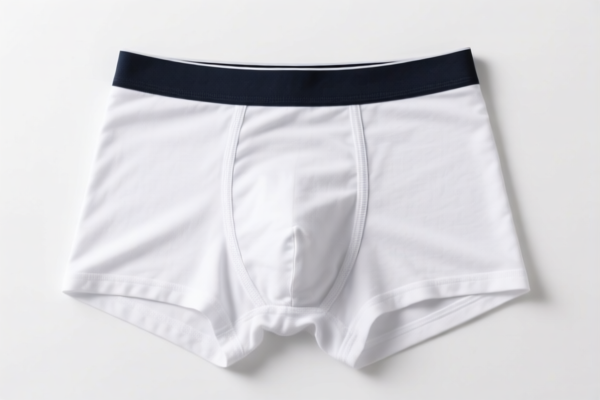
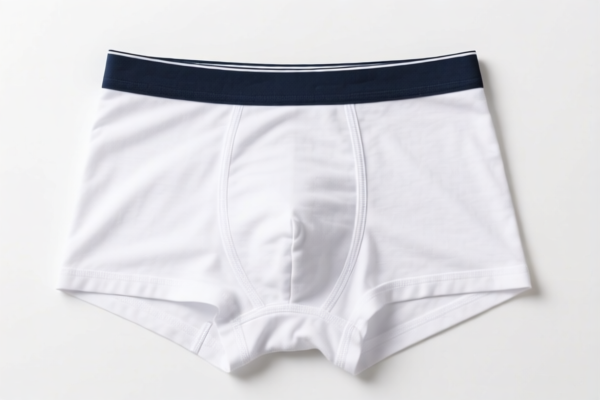


AI Analysis
🩲 Boy's Boxer Briefs (Other Materials)
🌐 HS Code Reference & Customs Clearance Guide | 2026 Latest Tariff Analysis | Professional Clearance Strategy
📌 Part 1: Product Definition & Classification: Do You Really Understand "Boy's Boxer Briefs"?
Boy's Boxer Briefs, a core category of men's and boys' underwear, are classified in international trade based on two critical factors: Material Composition and Manufacturing Method (Knitted vs. Woven). The term "Other Materials" typically refers to fabrics other than cotton, wool, or specific synthetic fibers that might fall under different subheadings.
In international trade, they are broadly divided into:
Knitted or Crocheted (针织或钩编): Fabric made by interlocking loops of yarn. Includes jersey, rib, and most stretchy underwear fabrics.
Non-Knitted or Non-Crocheted (非针织或钩编): Fabric made by weaving threads. Includes woven cotton broadcloth, poplin, or certain technical fabrics.
⚠️ Key Distinction Point:
- If the fabric is soft, stretchy, and made by looping (e.g., jersey, rib knit) →归入 Knitted codes (61xx)
- If the fabric is structured, woven (e.g., poplin, twill) →归入 Non-Knitted codes (62xx)
📦 Part 2: HS Code Classification Details (2026 Latest Tariff Authority Comparison)
| HS Code | Product Description | Applicable Scenario | Manufacturing Method |
|---|---|---|---|
6111.90.50.70 |
Boy's boxer briefs, of other textile materials, knitted or crocheted | Most common stretchy underwear (polyester/nylon blends), rib knit | ✅ Knitted/Crocheted |
6207.19.90.30 |
Boy's boxer briefs, of other textile materials, not knitted or crocheted | Woven fabrics (e.g., poplin, technical woven underwear) | ❌ Not Knitted |
6111.90.90.00 |
Boy's boxer briefs, of other textile materials, knitted or crocheted | General knitted underwear (often used for mixed lots or less specific material claims) | ✅ Knitted/Crocheted |
6107.19.90.00 |
Boy's boxer briefs, of other textile materials, knitted or crocheted | Another general knitted subheading for men's/boys' underwear | ✅ Knitted/Crocheted |
🔍 Key Reminders:
-6111.90.50.70is the most precise code for specific knitted boxer briefs of "other materials" (often implying specific synthetic blends not covered under cotton/wool headings).
-6207.19.90.30is the only non-knitted option listed. If your product is woven, you must use this code.
-6111.90.90.00and6107.19.90.00are broader knitted categories. Use only if6111.90.50.70is not applicable or if customs requires a more general classification.
💰 Part 3: 2026 Latest Tariff Rate Details (Including Surtaxes & Policy Add-ons)
✅ Applicable Country: United States (US)
✅ Origin: China (CN)
✅ Effective Time: 2025 November 10 onwards (including subsequent imports)
🎯 1. 6111.90.50.70 – Boy's Boxer Briefs, Knitted/Crocheted (Specific Material)
| Item | Content |
|---|---|
| Base Tariff | 14.9% (ad valorem) |
| Section 301 Surcharge | 0.0% (No additional 301 tariff for this specific subheading in this dataset) |
| Section 122 Tariff | +10% (Specific surcharge under Section 122) |
| Total Tax Rate | 24.9% |
| Tax Calculation | CIF Value × 24.9% |
| De Minimis Eligibility | ❌ Not Eligible (Likely subject to de minimis exclusion for China) |
| Legal Basis Path | HTSUS:6111.90.50.70 → Section 122 Tariff |
📌 Explanation:
- This code has a high base tariff (14.9%) compared to other knitted underwear codes.
- No Section 301 tariff is listed here, but the Section 122 tariff of 10% applies.
- Total 24.9% is a significant cost driver. Ensure the material composition strictly matches "other textile materials" as defined by customs.
🎯 2. 6207.19.90.30 – Boy's Boxer Briefs, Not Knitted/Crocheted (Woven)
| Item | Content |
|---|---|
| Base Tariff | 10.5% (ad valorem) |
| Section 301 Surcharge | 0.0% |
| Section 122 Tariff | +10% |
| Total Tax Rate | 20.5% |
| Tax Calculation | CIF Value × 20.5% |
| De Minimis Eligibility | ❌ Not Eligible |
| Legal Basis Path | HTSUS:6207.19.90.30 → Section 122 Tariff |
📌 Note:
- Lower total tariff (20.5%) than the specific knitted code (6111.90.50.70).
- Only applies if the product is woven (non-knitted).
- Critical: If you misclassify knitted boxer briefs as woven, you may face penalties or retroactive taxes.
🎯 3. 6111.90.90.00 & 6107.19.90.00 – General Knitted/Non-Knitted Categories
| Item | Content |
|---|---|
| Base Tariff | 5.6% (ad valorem) |
| Section 301 Surcharge | +7.5% |
| Section 122 Tariff | +10% |
| Total Tax Rate | 23.1% |
| Tax Calculation | CIF Value × 23.1% |
| De Minimis Eligibility | ❌ Not Eligible |
| Legal Basis Path | HTSUS:6111.90.90.00 / 6107.19.90.00 → Section 301 + Section 122 |
📌 Important:
- These codes have a lower base tariff (5.6%) but incur a Section 301 surcharge of 7.5%.
- Total 23.1% is slightly lower than6111.90.50.70(24.9%) but higher than6207.19.90.30(20.5%).
- Use Case: Use only if6111.90.50.70is not applicable and the product is knitted. Ensure the "other materials" definition fits these broader categories.
🛠️ Part 4: Practical Customs Clearance Advice (Practical Pitfall Avoidance Guide)
✅ 1. Preparation Checklist (All Documents Required)
| Document | Required | Description |
|---|---|---|
| ✅ Product Specification Sheet | ✔️ | Must include material composition (e.g., 95% Polyester, 5% Spandex), size, color, brand |
| ✅ Fabric Swatch/Test Report | ✔️ | Prove whether the fabric is knitted or woven. Critical for HS code selection |
| ✅ Product Photos | ✔️ | Clear images of the front, back, and label showing care instructions and material content |
| ✅ Commercial Invoice | ✔️ | Must accurately describe the product as "Boy's Boxer Briefs" and specify material |
| ✅ Packing List | ✔️ | Detail quantities and weights per box |
| ✅ Origin Certificate | ✔️ | If not from China, apply for preferential rates if available |
✅ 2. Declaration Tips (Key Rules of Thumb)
🔥 "Material Defines Code, Knitting Defines Type, Accuracy Saves Money!"
| Scenario | Correct Declaration | Wrong Practice |
|---|---|---|
| Knitted, Specific "Other Material" | 6111.90.50.70 (24.9%) |
Misdeclare as woven → 6207.19.90.30 (20.5%) → Penalties for misclassification |
| Woven | 6207.19.90.30 (20.5%) |
Declare as knitted → 6111.90.50.70 (24.9%) → Overpayment or audit risk |
| Knitted, General Category | 6111.90.90.00 or 6107.19.90.00 (23.1%) |
Use specific code when not applicable → Potential reclassification |
| Mixed Lots | Separate by material/type | Mix knitted and woven in one declaration → Confusion and delays |
✅ 3. Special Circumstances Handling
| Situation | Handling Advice |
|---|---|
| OEM Custom Boxer Briefs | Provide OEM contract and design specs to prove "other materials" classification |
| Polyester/Spandex Blend | Ensure "other materials" aligns with customs definitions for synthetic blends |
| Imported from Non-China Countries | Check for preferential tariffs (e.g., USMCA, GSP) if applicable |
| De Minimis Exclusion | Be aware that shipments from China may not benefit from de minimis exemptions under Section 122/301 |
🌍 Part 5: Global Market Comparison (2026 Latest)
| Country/Region | Recommended HS Code | Tariff | Certification | Remarks |
|---|---|---|---|---|
| 🇺🇸 United States | 6111.90.50.70 (Knitted) or 6207.19.90.30 (Woven) |
20.5% - 24.9% | FTC Labeling, CPSIA (if applicable) | High tariffs due to Section 122/301 |
| 🇨🇳 China | 6111.90 / 6207.19 |
~5-10% | CCC (if applicable) | Lower base tariffs |
| 🇪🇺 European Union | 6111.90 / 6207.19 |
0-12% | CE (if applicable), REACH | No Section 122/301 equivalent |
| 🇬🇧 United Kingdom | 6111.90 / 6207.19 |
0-12% | UKCA | Post-Brexit tariffs may vary |
| 🇦🇺 Australia | 6111.90 / 6207.19 |
5-10% | ACCC Labeling | Moderate tariffs |
📌 Conclusion:
- US is the most expensive market for Chinese-origin boy's boxer briefs due to Section 122 and potential 301 tariffs.
- Accurate classification is critical to avoid overpayment or penalties.
- Consider supply chain diversification if tariffs significantly impact profitability.
📌 Part 6: Common Mistakes & Pitfall Avoidance (Lessons Learned)
❌ Mistake 1: Misclassifying knitted boxer briefs as woven (or vice versa)
👉 Consequence: Wrong HS code → Wrong tariff → Back taxes + Penalties
❌ Mistake 2: Failing to specify "Boy's" vs. "Men's"
👉 Consequence: May fall under different HS codes with different tariffs → Audit Risk
❌ Mistake 3: Not providing fabric test reports
👉 Consequence: Customs cannot verify knitting method → Clearance Delay
❌ Mistake 4: Assuming all "Other Materials" have the same tariff
👉 Consequence: 6111.90.50.70 (24.9%) vs. 6111.90.90.00 (23.1%) → Unnecessary cost
✅ Correct Practice:
"Boy's Boxer Briefs, Knitted, 95% Polyester/5% Spandex, Model XYZ, Size M-L, Labelled with Material Content"
🎯 Part 7: Conclusion: Precise Classification, Efficient Clearance, Cost Optimization!
🎯 Remember:
🔹 "Knitted vs. Woven Determines the Code, Tariffs Vary by 5-10%, Precision Saves Thousands!"
🔹 "Section 122 Adds 10% Across the Board, Check 301 for Knitted General Codes!"
📌 Pro Tip:
If your boxer briefs are manufactured in Vietnam, Mexico, or other non-China countries, you may be eligible for lower or zero tariffs under various trade agreements.
Recommend pre-ruling application with US Customs to confirm HS code and tariff rates.
📣 Take Action Now:
📞 Consult a Professional Customs Broker + Provide Fabric Swatch + Apply for HS Code Pre-Ruling
🚀 Ensure Smooth Clearance, Maximize Profit, Minimize Risk!
✨ Professional Clearance Starts with Accurate Classification!
💼 Every Cent of Cost Deserves Precise Calculation!
Customer Reviews
About HS Code Classification
The Harmonized System (HS) is an internationally standardized nomenclature developed by the World Customs Organization (WCO) to classify traded products. Over 200 countries use the HS system as the basis for customs tariffs, trade statistics, and import/export regulations.
Each HS code follows a hierarchical structure:
- Chapter (2 digits) — Broad category of goods (e.g., Chapter 84: Machinery and Mechanical Appliances)
- Heading (4 digits) — More specific grouping within the chapter
- Subheading (6 digits) — Internationally standardized breakdown, used by all WCO member countries
- National subdivisions (8-10 digits) — Country-specific extensions for further classification, such as US HTSUS 10-digit codes
Correct HS code classification is essential for smooth customs clearance, accurate duty payment, and compliance with trade regulations. Misclassification can lead to customs delays, overpayment of duties, or penalties.
When importing from CN to US, the applicable tariff rates may include:
- Most-Favored-Nation (MFN) rate — The standard duty rate applied to WTO members
- General rate — Applied to countries without trade agreements
- Trade remedy duties — Additional tariffs such as Section 301 (anti-dumping), Section 232 (national security), or countervailing duties
The information provided on this page is for reference purposes only. For official classification, please consult with your local customs authority or a licensed customs broker.