Boy's Overalls
CN → US| HS Code | Tariff Rate | Origin | Destination | Doc |
|---|---|---|---|---|
| 6109901049 | 49.5% | CN | US | Official Doc |
| 6204630350 | 32.4% | CN | US | Official Doc |
| 6204620550 | 26.4% | CN | US | Official Doc |
| 6104621030 | 27.8% | CN | US | Official Doc |
| 4202923131 | 52.6% | CN | US | Official Doc |
Product Images
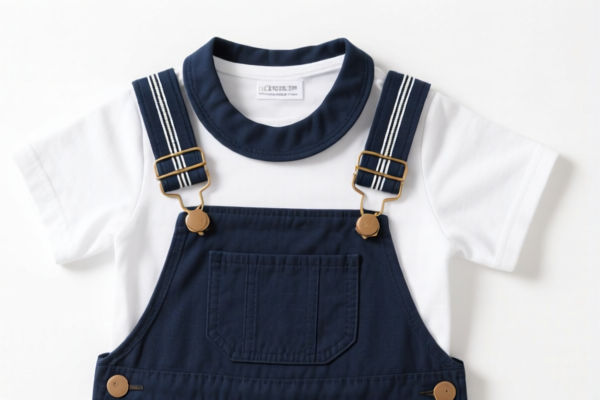
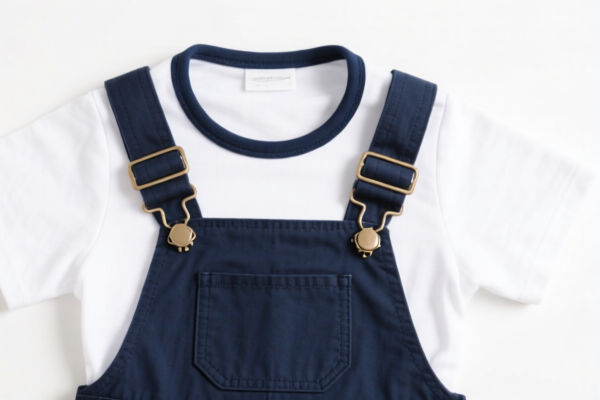
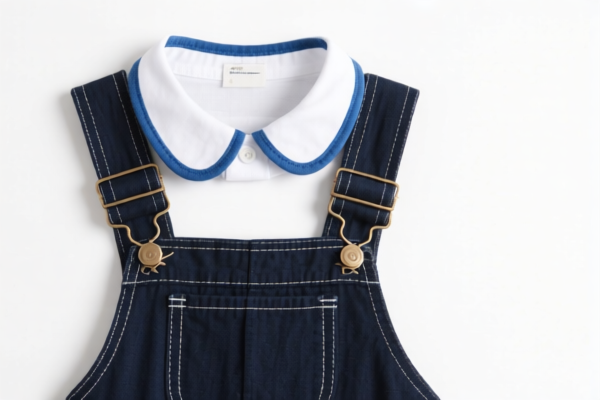

AI Analysis
🧒 Boy's Overalls (Knickers/Dungarees) – HS Code Classification & Tariff Guide
🌐 HS Code Reference & Clearance Guide | 2026 Latest Tariff Analysis | Strategic Compliance Strategy
📌 I. Product Definition & Classification: What Exactly Are "Boy's Overalls"?
Boy's overalls are garments designed for male children, characterized by a bib front with shoulder straps (suspenders) that fasten at the waist, often with a back opening. In international trade, the classification hinges on two critical factors: 1. Knitting vs. Weaving (Knitted vs. Non-Knitted): Are they made from knitted fabric (stretchy, looped) or woven fabric (woven threads, structured)? 2. Material Composition: Is the main fabric cotton, synthetic fibers (polyester, nylon, etc.), or a blend?
⚠️ Key Distinction: - If the garment is Knitted (e.g., jersey, sweatshirt fabric) → Goes to Chapter 61. - If the garment is Non-Knitted/Woven (e.g., denim, twill, canvas) → Goes to Chapter 62. - Gender Specific: Must be clearly identified for Boys (HS codes for boys/girls are often separated to reflect market demand and specific sizing).
📦 II. HS Code Classification Details (2026 Latest Tariff Authority Mapping)
Based on the provided data, here are the precise HS Codes for Boy's Overalls, categorized by construction and material.
| HS Code | Product Description | Construction | Material | Total Tax Rate |
|---|---|---|---|---|
6109.90.10.49 |
Boy's Overalls, Knitted | Knitted or similar | Artificial Fibers OR Cotton | 49.5% |
6204.63.03.50 |
Boy's Overalls, Non-Knitted | Non-Knitted (Woven) | Synthetic Fibers (implied) | 32.4% |
6204.62.05.50 |
Boy's Overalls, Non-Knitted | Non-Knitted (Woven) | Cotton | 26.4% |
🔍 Important Note: - The provided data lists specific HS codes for Girl's Overalls (
6204.63.03.50,6204.62.05.50,6104.62.10.30). However, for Boy's Overalls, only one HS Code (6109.90.10.49) is explicitly listed with the summary "Boy's Overalls." - Crucial Inference: For non-knitted boy's overalls, customs may use similar codes to girls' (6204.63or6204.62) if a specific boy's code is not distinct in the provided dataset, but always verify with local customs. The provided data explicitly links6109.90.10.49to Boy's knitted overalls. - Baby Carriers: The item4202.92.31.31is listed as "Infant Carrier, Travel/Sports Bag," which is NOT clothing. It is an accessory. Do not confuse this with overalls.
💰 III. 2026 Latest Tariff Rate Breakdown (Including Surtaxes & Policy Add-ons)
✅ Applicable Country: United States (US) ✅ Origin: China (CN) ✅ Effective Date: November 10, 2025 (and subsequent imports)
🎯 1. 6109.90.10.49 —— Knitted Boy's Overalls (Artificial Fibers or Cotton)
| Item | Detail |
|---|---|
| Base Tariff | 32.0% |
| Section 301 Surtax | 7.5% |
| Section 122 Tariff | 10.0% |
| Total Tax Rate | 49.5% |
| Tax Calculation | CIF Value × 49.5% |
| De Minimis Exemption? | ❌ NO (deny_de_minimis) |
| Legal Basis Path | Section 301: 7.5% → Section 122: 10% → USITC: 6109.90.10.49 |
📌 Explanation: - Base Tariff (32.0%): Standard MFN (Most Favored Nation) rate for knitted textile articles. - Section 301 Surtax (7.5%): Additional tariff imposed on Chinese goods under Trade Act Section 301. - Section 122 Tariff (10%): A special additional tariff applied to certain textile and apparel imports from China. - Total (49.5%): This is a very high tariff. It erodes profit margins significantly.
🎯 2. Non-Knitted Boy's Overalls (Inferred from Girl's Data for Comparison)
Note: While the provided data explicitly labels 6204.xxxx codes as "Girl's," if a specific "Boy's" non-knitted code is not provided, these are the likely comparable classifications for woven overalls.
| HS Code | Product Description | Base Tariff | Section 301 | Section 122 | Total Tax |
|---|---|---|---|---|---|
6204.63.03.50 |
Non-Knitted, Synthetic | 14.9% | 7.5% | 10.0% | 32.4% |
6204.62.05.50 |
Non-Knitted, Cotton | 8.9% | 7.5% | 10.0% | 26.4% |
📌 Explanation: - Woven cotton overalls (
6204.62) have a lower base tariff (8.9%) than knitted ones (32.0%), resulting in a 26.4% total tax vs. 49.5% for knitted. - Synthetic woven overalls (6204.63) fall in between at 32.4%.
🛠️ IV. Clearance Practical Advice (实战避坑指南)
✅ 1. Essential Documentation Checklist
| Document | Required | Purpose |
|---|---|---|
| ✅ Product Specification Sheet | ✔️ | Must clearly state: "Boy's Overalls," Knitted/Non-Knitted, Material % (e.g., 100% Cotton). |
| ✅ Material Composition Label | ✔️ | Photo of the inner label showing fiber content. Critical for determining HS Code. |
| ✅ Construction Detail Photo | ✔️ | Show bib, straps, buttons/snaps. Proves it is "overalls" and not a general suit. |
| ✅ Commercial Invoice | ✔️ | Must specify "Boy's Overalls" and HS Code. Avoid vague terms like "Children's Clothes." |
| ✅ Packing List | ✔️ | List items by type (e.g., "50 pcs Boy's Cotton Overalls"). |
| ✅ Certificate of Origin (CO) | ✔️ | If non-Chinese origin, may qualify for lower tariffs. |
✅ 2. Declaration Tips (Key Mnemonics)
🔥 "Knit vs. Woven, Material is King! Don't Say 'Clothes,' Say 'Overalls!'"
| Scenario | Correct Declaration | Risk if Incorrect |
|---|---|---|
| Knitted Overalls | HS 6109.90.10.49 + "Boy's Knitted Overalls" |
Misclassification → Penalty + Back Taxes |
| Woven Cotton Overalls | HS 6204.62.05.50 (if applicable to boys) + "Boy's Woven Cotton Overalls" |
Higher tariff if mislabeled as synthetic |
| Woven Synthetic Overalls | HS 6204.63.03.50 (if applicable to boys) + "Boy's Woven Synthetic Overalls" |
Higher tariff if mislabeled as cotton |
| Baby Carrier/Bag | HS 4202.92.31.31 + "Infant Carrier Bag" |
Do NOT declare as clothing! Different tax regime (52.6%) |
✅ 3. Special Cases & Handling
| Scenario | Handling Advice |
|---|---|
| Mixed Materials | If cotton < 50% and synthetic ≥ 50%, it is synthetic → Use 6204.63 or 6104.62 logic. |
| With Suspenders | If suspenders are detachable, it may still be classified as overalls. If permanently attached, still overalls. |
| OEM/Private Label | Provide brand authorization and design files if requested. |
| Section 122 Impact | This 10% tariff is mandatory for Chinese-origin textiles. No exemption for small shipments under $800 (de minimis). |
🌍 V. Global Market Comparison (2026)
| Country/Region | Recommended HS Code (Boy's) | Tariff (China Origin) | Notes |
|---|---|---|---|
| 🇺🇸 USA | 6109.90.10.49 (Knitted) 6204.62.05.50 (Woven Cotton) |
49.5% (Knitted) 26.4% (Woven Cotton) |
High tariffs due to Sec 301 + Sec 122. |
| 🇨🇳 China | Same HS Codes | ~15-20% | Domestic sales, no import tariff. |
| 🇪🇺 EU | 6111.30 (Knitted) 6203.49 (Woven) |
~12-16% | No Section 301 or 122 surcharges. |
| 🇬🇧 UK | Similar to EU | ~12-16% | Post-Brexit, similar to EU structure. |
📌 Conclusion: - The US market is the most challenging for Chinese textile imports due to Section 122 (10%) and Section 301 (7.5%) surcharges. - Woven cotton overalls are more cost-effective than knitted ones due to lower base tariffs. - De minimis ($800) does NOT apply. You must pay full duties even for small shipments.
📌 VI. Common Errors & Pitfalls (Blood & Tears Lessons)
❌ Error 1: Declaring "Knitted Overalls" as "Woven" to save on base tariff. 👉 Consequence: Customs inspection reveals knitted fabric → Penalty + Back Taxes + Delay.
❌ Error 2: Using generic "Children's Clothing" without specifying "Overalls."
👉 Consequence: Customs may assign a higher general tariff code (e.g., 6116.10 for gloves? No, but wrong category) → Audit Risk.
❌ Error 3: Confusing "Infant Carrier Bag" (4202.92.31.31) with "Overalls."
👉 Consequence: A bag is taxed at 52.6% with different regulations. Misclassifying a bag as clothing (26-49%) is fraud. Misclassifying clothing as a bag (52.6%) is overpaying.
❌ Error 4: Assuming De Minimis exemption for small batches. 👉 Consequence: Under current US law, textiles and apparel from China are NOT eligible for the $800 de minimis exemption. You must file formal entry and pay duties.
✅ Correct Practice:
"Boy's Knitted Cotton Overalls, Bib Style, with Front Pocket, Model BOY-001, 100% Cotton, Knitted Fabric" HS Code:
6109.90.10.49Duty: 49.5%
🎯 VII. Conclusion: Professional Declaration, Cost Savings
🎯 Remember the Mnemonic:
🔹 "Knitted = 49.5%, Woven Cotton = 26.4%, Woven Synth = 32.4%. No De Minimis! Always Declare Material & Construction!" 🔹 "HS Code Determines Tax. 20% Difference = $200 per $1000. Declare Accurately!"
📌 Pro Tip: If your overalls are knitted, the tax is high (49.5%). Consider: 1. Switching to woven cotton (26.4%) if design allows. 2. Sourcing from Vietnam/Mexico to avoid China-specific surcharges (Section 301/122). 3. Advance Ruling: Apply for a Customs Ruling from CBP to confirm the HS Code before shipping.
📣 Immediate Action:
📞 Consult a licensed US Customs Broker. 📄 Provide fabric swatch + photos. 🚀 Get the HS Code Pre-Ruling to ensure compliance and optimize tax.
✨ Professional Clearance Starts with Accurate Classification! 💼 Every Percent Saved is Pure Profit!
Customer Reviews
About HS Code Classification
The Harmonized System (HS) is an internationally standardized nomenclature developed by the World Customs Organization (WCO) to classify traded products. Over 200 countries use the HS system as the basis for customs tariffs, trade statistics, and import/export regulations.
Each HS code follows a hierarchical structure:
- Chapter (2 digits) — Broad category of goods (e.g., Chapter 84: Machinery and Mechanical Appliances)
- Heading (4 digits) — More specific grouping within the chapter
- Subheading (6 digits) — Internationally standardized breakdown, used by all WCO member countries
- National subdivisions (8-10 digits) — Country-specific extensions for further classification, such as US HTSUS 10-digit codes
Correct HS code classification is essential for smooth customs clearance, accurate duty payment, and compliance with trade regulations. Misclassification can lead to customs delays, overpayment of duties, or penalties.
When importing from CN to US, the applicable tariff rates may include:
- Most-Favored-Nation (MFN) rate — The standard duty rate applied to WTO members
- General rate — Applied to countries without trade agreements
- Trade remedy duties — Additional tariffs such as Section 301 (anti-dumping), Section 232 (national security), or countervailing duties
The information provided on this page is for reference purposes only. For official classification, please consult with your local customs authority or a licensed customs broker.