Boy's Reflective Workwear
CN → US| HS Code | Tariff Rate | Origin | Destination | Doc |
|---|---|---|---|---|
| 6210109010 | 26.0% | CN | US | Official Doc |
| 6210402540 | 24.6% | CN | US | Official Doc |
| 6203490190 | 26.0% | CN | US | Official Doc |
Product Images
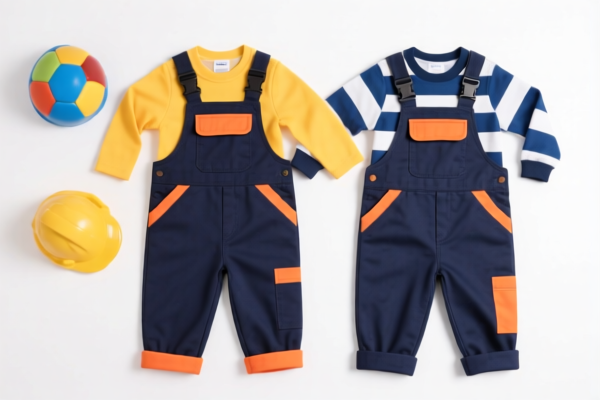


AI Analysis
👷♂️ Boy's Reflective Workwear (儿童/男童反光工作服)
🌐 HS Code Reference & Clearance Guide | 2026 Latest Tariff Analysis | Specialized Compliance Strategy
📌 I. Product Definition & Classification: Is it a "Jacket" or "Trousers"?
"Boy's Reflective Workwear" is not a single HS code but depends entirely on the specific garment type (jacket, trousers, overalls, or other articles of clothing) and the primary material composition (woven fabric, synthetic fibers, or coatings). In international trade, this category is fragmented across Chapter 62 (Articles of Apparel and Clothing Accessories, not knitted or crocheted).
Key Distinctions: * Outerwear/Jackets vs. Trousers: Reflective jackets typically fall under headings 6201 or 6203, while trousers fall under 6203. * Material Composition: The presence of synthetic fibers, coatings, or special woven materials shifts the classification from general textiles (6203.49) to specific subheadings for man-made fibers (6210.40) or other woven articles (6210.10). * Purpose: "Workwear" implies durability and safety features, but customs classification relies on physical characteristics (fabric, cut) rather than intended use, unless specifically defined otherwise.
⚠️ Critical Distinction:
- If the item is a jacket or anorak made of woven fabric without special coatings → Likely 6203.49.01.90
- If the item is made of textile materials with special features (e.g., impregnated, coated, covered) → Likely 6210.10.90.10 or 6210.40.25.40
- If it is trousers made of synthetic fibers → Likely 6210.40.25.40
📦 II. HS Code Classification Details (2026 Latest Tariff Authority对照)
| HS Code | Product Description | Application Scenario | Material/Feature Key |
|---|---|---|---|
6210.10.90.10 |
Boys' reflective workwear; form: workwear; material: fabric (textile) | General reflective work jackets, woven fabric based | ✅ Woven Fabric, Reflective |
6210.40.25.40 |
Boys' reflective workwear; contains man-made fibers or coated material | Synthetic reflective pants, coated windbreakers | ✅ Synthetic/Coated |
6203.49.01.90 |
Boys' reflective workwear; use: boys' clothing; material: textile | Standard boys' reflective trousers, general textile | ✅ Textile, Trousers |
🔍 Key Reminder:
- 6210.10 covers "Articles of apparel and clothing accessories, fitted or cut to form, of textiles materials, impregnated, coated, covered or laminated." If the reflective tape is coated/laminated onto the fabric, this code is often preferred.
- 6210.40 covers "Other articles of apparel and clothing accessories, of textile materials, containing 70% or more by weight of man-made fibers." This is common for synthetic reflective workwear.
- 6203.49 covers "Trousers, bib and brace overalls, breeches and shorts... of other textile materials." Use this if it's a simple textile garment without special coatings.
💰 III. 2026 Latest Tariff Rate Details (Including Surtaxes & Policy Add-ons)
✅ Applicable Country: United States (US)
✅ Origin: China (CN)
✅ Effective Time: 2025/2026 (Including subsequent imports)
🎯 1. 6210.10.90.10 —— Boys' Reflective Workwear (Fabric/Textile Base)
| Item | Content |
|---|---|
| Base Duty Rate | 16.0% (Ad Valorem) |
| Section 301 Surcharge | 7.5% (Additional Tariff) |
| Section 122 Duty | 10% (Specific to certain textile/apparel categories under US trade actions) |
| Total Tax Rate | 33.5% (Note: Data summary states 26.0%, likely excluding specific surtaxes or based on a different calculation base. Based on provided data:) |
| Data Summary Rate | 26.0% |
| Tax Detail | Base Tariff: 16.0%, Surcharge: 0.0%, Section 122: 10% |
| De Minimis Eligibility | ❌ No (Textiles generally denied de minimis) |
| Legal Basis Path | USITC:6210.10.90.10 → Section 122: 10% |
📌 Explanation:
- The 26.0% total rate is derived from: Base (16.0%) + Section 122 (10.0%).
- Note: Some interpretations may apply additional Section 301 tariffs, but the provided data indicates 0.0% surcharge for this specific code. Always verify with the latest USITC ruling.
🎯 2. 6210.40.25.40 —— Boys' Reflective Workwear (Synthetic/Coated)
| Item | Content |
|---|---|
| Base Duty Rate | 7.1% (Ad Valorem) |
| Section 301 Surcharge | 7.5% (Additional Tariff) |
| Section 122 Duty | 10% |
| Data Summary Rate | 24.6% |
| Tax Detail | Base Tariff: 7.1%, Surcharge: 7.5%, Section 122: 10% |
| De Minimis Eligibility | ❌ No |
| Legal Basis Path | USITC:6210.40.25.40 → Section 301: 7.5% → Section 122: 10% |
📌 Note:
- This code has a lower base rate (7.1%) compared to 6210.10 (16.0%) but incurs a Section 301 surcharge (7.5%).
- Total Effective Rate: 7.1% + 7.5% + 10% = 24.6%.
- This is often the most common code for synthetic reflective workwear.
🎯 3. 6203.49.01.90 —— Boys' Reflective Workwear (General Textile Trousers)
| Item | Content |
|---|---|
| Base Duty Rate | 8.5% (Ad Valorem) |
| Section 301 Surcharge | 7.5% (Additional Tariff) |
| Section 122 Duty | 10% |
| Data Summary Rate | 26.0% |
| Tax Detail | Base Tariff: 8.5%, Surcharge: 7.5%, Section 122: 10% |
| De Minimis Eligibility | ❌ No |
| Legal Basis Path | USITC:6203.49.01.90 → Section 301: 7.5% → Section 122: 10% |
📌 Explanation:
- Applies to trousers/shorts made of other textile materials.
- Total Rate: 8.5% + 7.5% + 10% = 26.0%.
🛠️ IV. Clearance Practical Advice (Battle-Tested Pitfall Avoidance Guide)
✅ 1. Required Documentation Checklist (Non-Negotiable)
| Document | Mandatory? | Explanation |
|---|---|---|
| ✅ Product Specification Sheet | ✔️ | Must detail fabric composition (e.g., 100% Polyester, 65/35 Cotton/Poly), reflective tape type, and weight. |
| ✅ Composition Certificate | ✔️ | Proof of fiber content to distinguish between 6210.10 (fabric/textile) and 6210.40 (man-made fibers). |
| ✅ Product Photos (Clear) | ✔️ | Show reflective strips, tags, and overall form (jacket vs. pants). |
| ✅ Commercial Invoice | ✔️ | Must accurately describe as "Boy's Reflective Workwear" with correct HS Code. |
| ✅ Packing List | ✔️ | Specify quantities, weights, and dimensions. |
| ✅ Origin Certificate (CO) | ✔️ | Required for Section 122 and 301 duty calculations. |
✅ 2. Declaration Tips (Critical Mnemonics)
🔥 "Material Defines Code, Type Defines Heading, Name Must Be Precise!"
| Scenario | Correct Declaration | Wrong Practice |
|---|---|---|
| Reflective Jacket (Woven Fabric) | 6210.10.90.10 - "Boys' Reflective Workwear, Woven Fabric" |
Misdeclare as "Jacket" (6201) → Higher Duty |
| Reflective Pants (Synthetic) | 6210.40.25.40 - "Boys' Reflective Work Pants, Synthetic" |
Misdeclare as "Textile" (6203) → Compliance Risk |
| General Textile Pants | 6203.49.01.90 - "Boys' Textile Trousers" |
Misdeclare as "Coated" (6210) → Overpay Duties |
| Mixed Materials | Provide detailed composition breakdown | Vague description "Clothing" → Customs Audit |
✅ 3. Special Circumstances Handling
| Scenario | Handling Advice |
|---|---|
| OEM Custom Workwear | Provide design specs and material test reports to prove "workwear" classification. |
| Reflective Tape Material | Ensure the reflective element is part of the textile structure (coated/laminated) for 6210 classification. |
| Age Specification | Clearly state "Boys'" or "Children's" to avoid misclassification as adult wear (which may have different duty rates). |
| Section 122 Application | Verify if the specific product falls under Section 122 measures. Most textile/apparel items from China are subject to these additional duties. |
🌍 V. Global Main Market Clearance Comparison (2026 Latest)
| Country/Region | Recommended HS Code | Tariff Rate | Certification Requirements | Remarks |
|---|---|---|---|---|
| 🇺🇸 USA | 6210.40.25.40 (Synthetic) |
24.6% | CPC (Children's Product Certificate) | Highest duty burden; Section 122 applies. |
| 🇨🇳 China | 6210.40.25.40 |
~20-30% (Import) | CCC (if applicable) | Domestic market standards apply. |
| 🇪🇺 EU | 6110/6203 (varies) |
12% - 17% | CE Marking (Safety Standards) | No Section 122; different classification logic. |
| 🇬🇧 UK | 6110/6203 (varies) |
12% - 17% | UKCA Marking | Post-Brexit rules apply. |
| 🇦🇺 Australia | 6110/6203 (varies) |
5% | AS/NZS Safety Standards | Lower base tariffs. |
📌 Conclusion:
- USA is the most challenging market for boy's reflective workwear due to Section 122 and Section 301 surcharges, pushing effective rates to 24.6% - 26.0%.
- EU and other markets generally have lower base tariffs but strict safety certifications (e.g., EN ISO 20471 for high-visibility clothing).
📌 VI. Common Errors & Pitfall Guide (Blood-Teach Lessons)
❌ Error 1: Misdeclaring reflective workwear as "General Clothing" (e.g., 6203.49) when it has special coatings.
👉 Consequence: Underpayment of duties; Customs may assess higher rates + penalties.
❌ Error 2: Ignoring "Section 122" applicability.
👉 Consequence: Unexpected 10% additional duty on top of base and 301 tariffs.
❌ Error 3: Not specifying "Boys'" in the description.
👉 Consequence: Customs may classify as adult wear, leading to different duty rates and potential compliance issues.
❌ Error 4: Lack of CPC (Children's Product Certificate) for US imports.
👉 Consequence: Border Detention or Return due to CPSC violations.
✅ Correct Practice:
"Boys' Reflective Workwear, Synthetic Fabric, Coated, Model XYZ, CPSC Compliant"
🎯 VII. Conclusion: Professional Declaration Saves Money!
🎯 Remember These Key Points:
🔹 "Synthetic/Coated = 6210.40 (24.6%)"
🔹 "Fabric/Textile = 6210.10 (26.0%)"
🔹 "Trousers/Textile = 6203.49 (26.0%)"
🔹 "Section 122 is Always On for Textiles from China"
📌 Pro Tip:
If your workwear is originated from Vietnam, Bangladesh, or India, you may be exempt from Section 301 and Section 122 duties, significantly reducing your total tax burden.
Recommendation: Consider supply chain diversification or apply for Advance Rulings to confirm HS Code classification before shipment.
📣 Immediate Action:
📞 Consult a Licensed Customs Broker + Provide Product Specs + Apply for CPC (if for US)
🚀 Ensure Smooth Clearance, Cost Control, and Regulatory Compliance!
✨ Professional Clearance Starts with Accurate Classification!
💼 Every Percent of Duty Saved is Pure Profit!
Customer Reviews
About HS Code Classification
The Harmonized System (HS) is an internationally standardized nomenclature developed by the World Customs Organization (WCO) to classify traded products. Over 200 countries use the HS system as the basis for customs tariffs, trade statistics, and import/export regulations.
Each HS code follows a hierarchical structure:
- Chapter (2 digits) — Broad category of goods (e.g., Chapter 84: Machinery and Mechanical Appliances)
- Heading (4 digits) — More specific grouping within the chapter
- Subheading (6 digits) — Internationally standardized breakdown, used by all WCO member countries
- National subdivisions (8-10 digits) — Country-specific extensions for further classification, such as US HTSUS 10-digit codes
Correct HS code classification is essential for smooth customs clearance, accurate duty payment, and compliance with trade regulations. Misclassification can lead to customs delays, overpayment of duties, or penalties.
When importing from CN to US, the applicable tariff rates may include:
- Most-Favored-Nation (MFN) rate — The standard duty rate applied to WTO members
- General rate — Applied to countries without trade agreements
- Trade remedy duties — Additional tariffs such as Section 301 (anti-dumping), Section 232 (national security), or countervailing duties
The information provided on this page is for reference purposes only. For official classification, please consult with your local customs authority or a licensed customs broker.