Boy's Shirt Synthetic Fiber Other Formal Jacquard
CN → US| HS Code | Tariff Rate | Origin | Destination | Doc |
|---|---|---|---|---|
| 6105201000 | 23.6% | CN | US | Official Doc |
| 6205302030 | 0.0% | CN | US | Official Doc |
| 6110303010 | 49.5% | CN | US | Official Doc |
| 6110303053 | 49.5% | CN | US | Official Doc |
| 6205302010 | 0.0% | CN | US | Official Doc |
Product Images

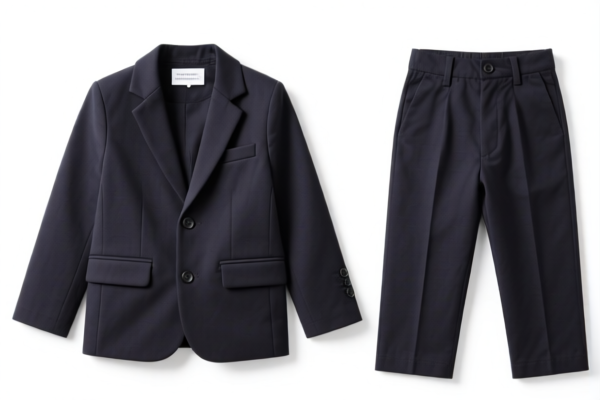
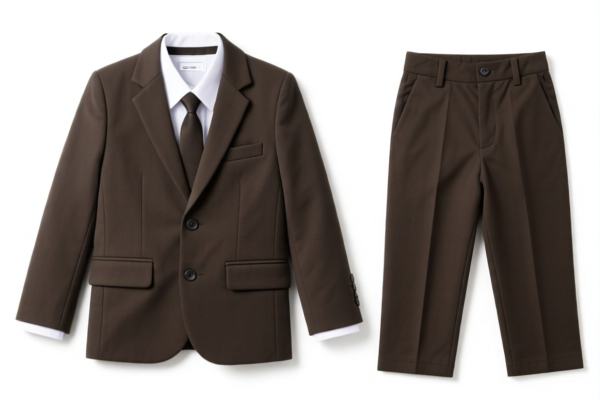

AI Analysis
👔 Boy's Formal Shirt: Synthetic Fiber & Jacquard | HS Code Guide & Clearance Strategy
🌐 HS Code Reference & Clearance Guide | 2026 Latest Tariff Analysis | Strategic Entry Protocol
📌 Product Profile: "Boy's Shirt Synthetic Fiber Other Formal Jacquard"
In international trade, this specific product category—Knitted or Crocheted, or Woven, Men's/Boys' Shirts, Synthetic/Acrylic Fiber, Formal/Jacquard Style—is subject to a complex web of duties. The classification hinges on two critical variables: Fabric Construction (Knitted vs. Woven) and Fiber Composition (Synthetic vs. Artificial). Misclassification here can lead to doubling the tax bill or shipment delays.
⚠️ Critical Distinction:
- Knitted/Crocheted (Stretchy, T-shirt style structure) → HS 61
- Woven (Stiff, dress-shirt structure, Jacquard pattern) → HS 62
- Synthetic (Polyester, Nylon) vs. Artificial (Rayon, Viscose) → Different Tariff Rates
📦 二、HS Code Classification Breakdown (2026 Data)
| HS Code | Product Description | Construction | Fiber Type | Tax Rate (Total) | Tax Details (Base + Add-on) |
|---|---|---|---|---|---|
6105.20.10.00 |
Men's/Boys' Woven Shirts, Synthetic, Jacquard | Knitted/Crocheted (Textile category definition) | Synthetic Fiber | 23.6% | Base: 13.6% Add-on: 0% Section 301 (122): 10% |
6205.30.20.30 |
Men's/Boys' Woven Shirts, Synthetic, Formal | Woven (Fabric technique) | Artificial Fiber | 29.1¢/kg + 25.9% + 10% | Base: 29.1¢/kg + 25.9% Add-on: 0% Section 301 (122): 10% |
6110.30.30.10 |
Men's/Boys' Sweater/Shirts, Synthetic, Formal | Knitted/Crocheted | Artificial Fiber | 49.5% | Base: 32.0% Add-on: 7.5% Section 301 (122): 10% |
6110.30.30.53 |
Men's/Boys' Shirts, Synthetic, Formal | Shirt/Other Garment | Synthetic Fiber | 49.5% | Base: 32.0% Add-on: 7.5% Section 301 (122): 10% |
6205.30.20.10 |
Men's/Boys' Woven Shirts, Synthetic, Multi-color Jacquard | Woven (Multi-color fabric) | Synthetic Fiber | 29.1¢/kg + 25.9% + 17.5% | Base: 29.1¢/kg + 25.9% Add-on: 7.5% Section 301 (122): 10% |
🔍 Key Analysis:
- Highest Risk: Code6205.30.20.10carries a punitive 17.5% Add-on (Section 301) on top of base duties, totaling ~47% + weight fee.
- Lowest Risk: Code6105.20.10.00has a 0% Add-on, making it significantly cheaper if the product qualifies as "Knitted" under the specific textile definition.
- Material Trap: Distinguish between Synthetic (e.g., Polyester) and Artificial (e.g., Viscose). The tax treatment differs wildly between codes ending in.10,.30, and.53.
💰 三、Detailed Tariff Breakdown & Legal Basis
✅ Applicable Market: USA (US)
✅ Origin: China (CN)
✅ Applicable Period: Current (2025-2026 Import Cycles)
🎯 1. Code 6105.20.10.00 — The "Sweet Spot" (23.6%)
| Item | Content |
|---|---|
| Base Duty | 13.6% (Ad Valorem) |
| Section 301 Add-on | 0.0% (Crucial Advantage) |
| Section 122 (Trump Era/Current) | +10.0% |
| Total Effective Rate | 23.6% |
| Legal Path | HTSUS: 6105.20.10.00 + Section 301: Footnote |
📌 Explanation:
- This code applies to Knitted/Crocheted shirts. If your "Formal Jacquard" is actually a knit fabric (stretchy, jersey-like with jacquard pattern), this is your best rate.
- No Section 301 Penalty makes it highly competitive against woven counterparts.
🎯 2. Code 6205.30.20.30 — The "Artificial Fiber Trap" (Weight + %)
| Item | Content |
|---|---|
| Base Duty | 29.1¢/kg + 25.9% |
| Section 301 Add-on | 0.0% |
| Section 122 | +10.0% |
| Total Effective Rate | ~49.5% (Weight dependent) |
| Calculation | (CIF Value × 25.9%) + (Weight in kg × $0.291) + (CIF Value × 10%) |
📌 Explanation:
- Applies to Woven shirts made of Artificial Fiber (Rayon/Viscose).
- Weight Surcharge: If the shirt is heavy (e.g., thick fabric), the 29.1¢/kg fee adds up quickly, often exceeding the ad valorem tax on lighter items.
🎯 3. Code 6205.30.20.10 — The "Punitive Rate" (17.5% Add-on!)
| Item | Content |
|---|---|
| Base Duty | 29.1¢/kg + 25.9% |
| Section 301 Add-on | +7.5% (Special Penalty) |
| Section 122 | +10.0% |
| Total Effective Rate | ~47% + Weight Fee |
| Why so high? | This specific subheading targets "Multi-color woven fabrics" with high scrutiny on synthetic origins. |
📌 Warning:
- This code has an extra 7.5% "Additional Duty" on top of the standard Section 301.
- Total Impact: ~47.5% + weight fees. Avoid this code unless your product exactly matches the description.
🎯 4. Code 6110.30.30.10 & .53 — The "Sweater/Knit" Category (49.5%)
| Item | Content |
|---|---|
| Base Duty | 32.0% |
| Section 301 Add-on | +7.5% |
| Section 122 | +10.0% |
| Total Effective Rate | 49.5% |
| Applicability | Knitted items that are classified as "Sweaters" or "Shirts" under specific knit rules. |
📌 Note:
- Even though the product is a "Shirt", if it's classified under6110(Sweaters/Knitwear), the tax is a flat 49.5%.
- Strategy: Try to prove it is6105(Shirts) instead of6110to save ~26% in taxes!
🛠️ 四、Customs Clearance Practical Advice (Actionable Steps)
✅ 1. Pre-Shipment Documentation Checklist
| Document | Requirement | Why it Matters |
|---|---|---|
| Detailed Composition Sheet | Must state % of Synthetic vs. Artificial Fiber | Crucial: Determines if you pay 13.6% or 32% base rate. |
| Fabric Construction Proof | Photo/Video showing Knitted vs. Woven structure | Crucial: 61 (Knit) vs 62 (Woven) is the #1 classification battle. |
| Jacquard Pattern Specification | Close-up images of the weave pattern | Proves "Jacquard" feature for 6205 vs 6105 differentiation. |
| Commercial Invoice | Must explicitly state "Formal", "Boy's", "Synthetic/Acrylic" | Vague descriptions lead to "Red Flag" audits. |
| Packing List | Weight breakdown per unit | Essential for calculating the 29.1¢/kg surcharge. |
| Labeling | "Made in China" + Fiber Content Label | Mandatory for US customs; missing labels = 10% penalty. |
✅ 2. Declaration Strategy (The "Golden Rules")
🔥 Rule: "Don't Guess, Prove. Knit it to 61, Woven it to 62."
| Scenario | Recommended HS Code | Reasoning |
|---|---|---|
| Knitted Fabric (Stretchy, jersey-like) | 6105.20.10.00 |
Best Rate (23.6%). Avoid the 49.5% sweater tax. |
| Woven Fabric (Stiff, formal collar) | 6205.30.20.30 |
Use if Artificial Fiber. Avoid 20.10 if possible due to 17.5% add-on. |
| Synthetic Woven (Polyester, Multi-color) | 6105.20.10.00? NO |
Only if it fits the "Knitted" definition. If Woven + Synthetic, check 6205.30.20.30 (0% add-on) vs 6205.30.20.10 (17.5% add-on). |
| "Formal" with Jacquard Pattern | 6205.30.20.30 |
If Artificial Fiber, this is safer than the 17.5% penalty code. |
⚠️ Critical Pitfall:
- Do NOT declare a "Woven Shirt" as6105(Knitted).
- Do NOT declare a "Synthetic Woven Shirt" under6205.30.20.10unless you are certain it triggers the 17.5% penalty.
- Goal: Aim for6105.20.10.00(23.6%) or6205.30.20.30(0% add-on) to avoid the 49.5% bracket.
✅ 3. Special Handling for "Jacquard" & "Formal"
| Situation | Action |
|---|---|
| Is the Jacquard pattern woven or knitted? | Check the loom. If knitted, it falls under 6105 or 6110. If woven, it falls under 6205. |
| Is it "Formal" (Suit Shirt)? | Ensure collar, cuffs, and placket are stiffened. If it's a casual "button-down", it might qualify for different rates (though not in this specific dataset). |
| Boy's vs. Men's | Both 6105 and 6205 cover "Men's/Boys'". Ensure the size range is clearly defined as "Boy's" (e.g., under 58" chest) to avoid confusion. |
🌍 五、Global Market Comparison (2026 Context)
| Country/Region | Recommended HS Code | Estimated Duty | Certifications | Notes |
|---|---|---|---|---|
| 🇺🇸 USA | 6105.20.10.00 or 6205.30.20.30 |
23.6% - 49.5% | FDA (No), CPSC (Textiles) | High Section 301 Risk. Avoid 6205.30.20.10. |
| 🇨🇳 China | Same Codes | ~13.6% - 32% | CCC (No) | No Section 301. |
| 🇪🇺 EU | 6105 or 6205 |
0% - 12% | CE (No), GOTS (Optional) | No Section 301. Lower base rates. |
| 🇬🇧 UK | Same Codes | 0% - 12% | No | Post-Brexit rules apply. |
📌 Conclusion:
- USA is the most expensive market for this product due to Section 301 and Section 122 penalties.
- Strategy: If the product is Knitted, push for6105.20.10.00(23.6%).
- Strategy: If Woven, ensure it is Artificial Fiber to avoid the 17.5% penalty on Synthetic Woven goods.
📌 六、Common Mistakes & "Blood and Tears" Lessons
❌ Mistake 1: Classifying a Woven shirt as Knitted (6105) to get 23.6%.
👉 Consequence: Customs audit → Re-classification → Back-taxes + Fines (up to 500% of duty).
❌ Mistake 2: Not distinguishing between Synthetic (Polyester) and Artificial (Viscose).
👉 Consequence: If declared as Synthetic but is Artificial, you miss the 0% add-on rate and pay extra 7.5% or 17.5%.
❌ Mistake 3: Ignoring the Weight Fee (29.1¢/kg) in 6205.30.20.30.
👉 Consequence: Heavy shirts (e.g., thick formal shirts) end up costing more in weight tax than value tax.
❌ Mistake 4: Using "Men's Shirt" generic label instead of "Boy's".
👉 Consequence: Potential mismatch in size/age classification, leading to delayed release.
✅ Correct Approach:
"Boys' Formal Shirt, Synthetic Fiber, Knitted Jacquard, 100% Polyester, Model XYZ."
Declare:6105.20.10.00(Check Knitted definition first!).
🎯 七、Final Verdict: Professional Clearance Strategy
🎯 Remember the口诀 (Mnemonic):
🔹 "Knit is King (61), Woven is Queen (62)."
🔹 "Synthetic Woven = High Risk (17.5%), Artificial Woven = Safe (0%)."
🔹 "Always check Section 301: 10% Base + 0% or 7.5% or 17.5% Add-on."
📌 Pro Tip:
If your product is Knitted and Synthetic, push hard for
6105.20.10.00. It is the lowest cost option (23.6%).
If your product is Woven and Synthetic, verify if it can be classified as6205.30.20.30(Artificial Fiber logic or specific exemption) to avoid the 17.5% penalty.
Do NOT declare Woven Synthetic under6205.30.20.10unless you are ready to pay ~47% + weight fees.
📣 Immediate Action:
📞 Contact your Broker: Provide Fabric Swatches (Knit vs. Woven) + Fiber Content Test Report.
🚀 Get Pre-Ruling: Apply for a Binding Ruling from US Customs to lock in the 23.6% rate before shipping.
💼 Your Profit Margin: Save 26% by choosing the right HS Code. Don't let classification errors eat your margin!
✨ Precision Classification = Lower Costs = Higher Profits!
💼 Every penny saved in duty is profit earned.
Customer Reviews
About HS Code Classification
The Harmonized System (HS) is an internationally standardized nomenclature developed by the World Customs Organization (WCO) to classify traded products. Over 200 countries use the HS system as the basis for customs tariffs, trade statistics, and import/export regulations.
Each HS code follows a hierarchical structure:
- Chapter (2 digits) — Broad category of goods (e.g., Chapter 84: Machinery and Mechanical Appliances)
- Heading (4 digits) — More specific grouping within the chapter
- Subheading (6 digits) — Internationally standardized breakdown, used by all WCO member countries
- National subdivisions (8-10 digits) — Country-specific extensions for further classification, such as US HTSUS 10-digit codes
Correct HS code classification is essential for smooth customs clearance, accurate duty payment, and compliance with trade regulations. Misclassification can lead to customs delays, overpayment of duties, or penalties.
When importing from CN to US, the applicable tariff rates may include:
- Most-Favored-Nation (MFN) rate — The standard duty rate applied to WTO members
- General rate — Applied to countries without trade agreements
- Trade remedy duties — Additional tariffs such as Section 301 (anti-dumping), Section 232 (national security), or countervailing duties
The information provided on this page is for reference purposes only. For official classification, please consult with your local customs authority or a licensed customs broker.