Boy's Silk Pajamas
CN → US| HS Code | Tariff Rate | Origin | Destination | Doc |
|---|---|---|---|---|
| 6207191000 | 19.2% | CN | US | Official Doc |
| 6207291000 | 18.6% | CN | US | Official Doc |
| 6107995015 | 18.3% | CN | US | Official Doc |
| 6107295000 | 18.4% | CN | US | Official Doc |
| 6117803090 | 12.3% | CN | US | Official Doc |
Product Images
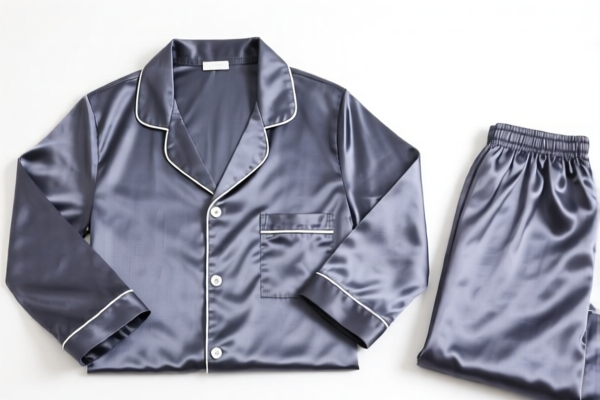
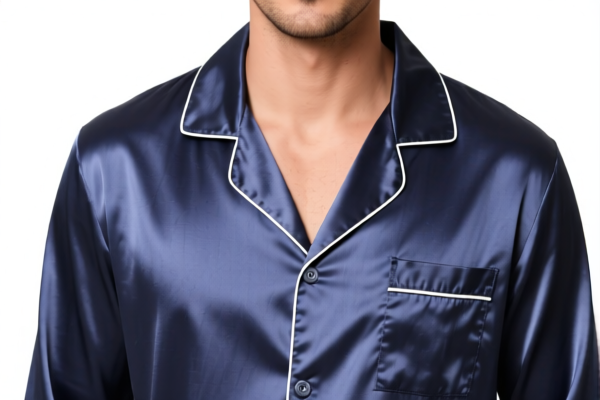
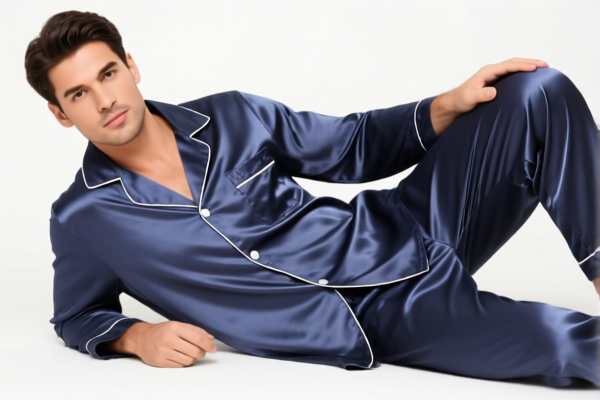
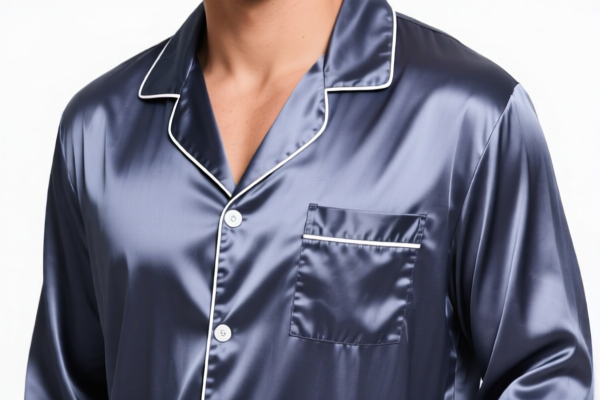
AI Analysis
👶 Boy's Silk Pajamas (Children's Sleepwear & Loungewear)
🌐 HS Code Reference & Customs Clearance Guide | 2026 Latest Tariff Analysis | Professional Compliance Strategy
📌 I. Product Definition & Classification: Do You Really Know "Silk Pajamas"?
Boy's Silk Pajamas are children's garments designed for sleeping or lounging, manufactured primarily from silk (silk content ≥70%). In international trade, they are classified based on two critical factors: 1. Construction Method: Knitted/Knitted (Chapter 61) vs. Woven (Chapter 62). 2. Specific Function: Are they explicitly "Sleepwear" (pajamas) or "Other Loungewear"?
⚠️ Key Distinction Point:
- If the fabric is Knitted/Knitted → Classify under Chapter 61.
- If the fabric is Woven → Classify under Chapter 62.
- If labeled as "Pajamas/Sleepwear" → Higher likelihood of specific sleepwear codes.
- If labeled as "Loungewear/Robes/Other Similar Articles" → May fall under broader apparel codes.
📦 II. HS Code Classification Details (2026 Latest Tariff Authority Comparison)
Based on the provided data, here are the five potential HS Codes for Boy's Silk Pajamas, with their specific tax implications.
| HS Code | Product Description | Application Scenario | Construction Type | Total Tax Rate (China Origin -> US) |
|---|---|---|---|---|
6207.19.10.00 |
Boys' Silk Loungewear/Wear-at-home | Woven silk pajamas; matches material (silk ≥70%) and form (underwear/pajamas category). | Woven | 19.2% |
6207.29.10.00 |
Boys' Silk Loungewear (Non-pajama specific) | Woven silk garments for sleeping/lounging; silk content ≥70%. | Woven | 18.6% |
6107.99.50.15 |
Boys' Silk Loungewear (Knitted, Not Pajamas) | Knitted/knitted articles; other similar articles excluding pajamas/robes; silk content compliant. | Knitted | 18.3% |
6107.29.50.00 |
Boys' Loungewear (Knitted, Corresponds to Pajamas) | Knitted/knitted sleepwear/sleeprobes; material is silk (≥70% silk content). | Knitted | 18.4% |
6117.80.30.90 |
Silk Accessories/Parts for Clothing | Silk apparel accessories/parts; meets ≥70% true silk requirement. | N/A (Accessories) | 12.3% |
🔍 Key Reminder:
- Woven vs. Knitted is the primary split: Codes starting with62are woven; codes starting with61are knitted.
- "Pajamas" vs. "Other Loungewear": Even within knitted items, distinguishing between explicit "pajamas" (6107.29) and "other similar articles" (6107.99) can shift the base duty slightly, affecting the total tax.
- Accessories Warning: Code6117.80.30.90is for accessories/parts. Do not use this for complete garments unless you are importing silk collars/cuffs separately. Using this for full pajamas is a high-risk classification error.
💰 III. 2026 Latest Tariff Rate Breakdown (Including Surcharge & Policy Add-ons)
✅ Applicable Country: United States (US)
✅ Origin: China (CN)
✅ Effective Date: From November 10, 2025 (including subsequent imports)
The total tax rate is composed of three components: Base Duty + Section 301 Surcharge + Section 122 Tariff.
🎯 1. 6207.19.10.00 – Woven Boys' Silk Pajamas
| Item | Content |
|---|---|
| Base Duty Rate | 1.7% |
| Section 301 Surcharge | +7.5% |
| Section 122 Tariff | +10.0% |
| Total Tax Rate | 19.2% |
| Tax Calculation | CIF Value × 19.2% |
| De Minimis Exemption Eligibility | ❌ No (Not eligible for Section 321/De Minimis exemption due to high rates and specific restrictions) |
| Legal Basis Path | Section 301: 9903.88.01 → Section 122: 9903.01.24 → USITC: 6207.19.10.00 |
📌 Explanation:
- The 1.7% base duty applies to woven men's/boys' pajamas.
- The 7.5% is the standard Section 301 tariff on many textile/apparel items from China.
- The 10% is the new Section 122 tariff applicable to certain Chinese imports.
- Total 19.2% is significant for low-value children's goods, eroding margins.
🎯 2. 6207.29.10.00 – Woven Boys' Silk Loungewear
| Item | Content |
|---|---|
| Base Duty Rate | 1.1% |
| Section 301 Surcharge | +7.5% |
| Section 122 Tariff | +10.0% |
| Total Tax Rate | 18.6% |
| Tax Calculation | CIF Value × 18.6% |
| De Minimis Exemption Eligibility | ❌ No |
| Legal Basis Path | Section 301: 9903.88.01 → Section 122: 9903.01.24 → USITC: 6207.29.10.00 |
📌 Note:
- Slightly lower base duty (1.1%) than the previous code, leading to a total of 18.6%.
- Applicable if the garment is classified as general loungewear rather than specific "pajamas" under the broader woven category.
🎯 3. 6107.99.50.15 – Knitted Boys' Silk Loungewear (Other)
| Item | Content |
|---|---|
| Base Duty Rate | 0.8% |
| Section 301 Surcharge | +7.5% |
| Section 122 Tariff | +10.0% |
| Total Tax Rate | 18.3% |
| Tax Calculation | CIF Value × 18.3% |
| De Minimis Exemption Eligibility | ❌ No |
| Legal Basis Path | Section 301: 9903.88.01 → Section 122: 9903.01.24 → USITC: 6107.99.50.15 |
📌 Explanation:
- Knitted items often have lower base duties (0.8%).
- This code is for "other similar articles," meaning it excludes specific pajamas/robes listed elsewhere in Chapter 61.
- Total 18.3% is the lowest among knitted/woven apparel codes in this dataset, but still high due to surcharges.
🎯 4. 6107.29.50.00 – Knitted Boys' Silk Pajamas
| Item | Content |
|---|---|
| Base Duty Rate | 0.9% |
| Section 301 Surcharge | +7.5% |
| Section 122 Tariff | +10.0% |
| Total Tax Rate | 18.4% |
| Tax Calculation | CIF Value × 18.4% |
| De Minimis Exemption Eligibility | ❌ No |
| Legal Basis Path | Section 301: 9903.88.01 → Section 122: 9903.01.24 → USITC: 6107.29.50.00 |
📌 Note:
- Explicitly for "Pajamas/Sleeprobes."
- Base duty is 0.9%, leading to a total of 18.4%.
- Very close to the "other articles" code (18.3%), so the distinction is marginal in cost but critical for compliance.
🎯 5. 6117.80.30.90 – Silk Accessories/Parts
| Item | Content |
|---|---|
| Base Duty Rate | 2.3% |
| Section 301 Surcharge | +0.0% |
| Section 122 Tariff | +10.0% |
| Total Tax Rate | 12.3% |
| Tax Calculation | CIF Value × 12.3% |
| De Minimis Exemption Eligibility | ❌ No (Check specific accessory rules) |
| Legal Basis Path | Section 122: 9903.01.24 → USITC: 6117.80.30.90 |
📌 Critical Warning:
- This is NOT for complete pajamas.
- It is for accessories, parts, or trim (e.g., silk collars, cuffs, embroidery patches).
- Do not misclassify complete garments as accessories to get the lower 12.3% rate. Customs will penalize for false classification.
- The 0% Section 301 is a major advantage for genuine accessories, but the 10% Section 122 still applies.
🛠️ IV. Customs Clearance Practical Advice (Battle-Tested Pitfall Guide)
✅ 1. Documentation Checklist (Non-negotiable)
| Document | Required? | Description |
|---|---|---|
| ✅ Product Specifications | ✔️ | Must clearly state "Silk Content ≥70%" and "Knitted/Woven." |
| ✅ Composition Label | ✔️ | Photo of the care label showing material percentage. |
| ✅ Product Photos | ✔️ | Front/back view showing it is a complete garment (set of top & bottom or robe). |
| ✅ Commercial Invoice | ✔️ | Must describe as "Boy's Silk Pajamas" or "Knitted/Woven Silk Loungewear." |
| ✅ Packing List | ✔️ | Item count, weight, dimensions. |
| ✅ Origin Certificate | ✔️ | Confirms China origin (triggers the surcharges). |
✅ 2. Declaration Tips (Critical Mnemonics)
🔥 “Knit vs. Woven, Pajamas vs. Other, Accessories Only for Parts!”
| Scenario | Correct Declaration | Wrong Approach |
|---|---|---|
| Knitted Silk Pajamas | Use 6107.29.50.00 (18.4%) |
Classify as Woven → Wrong chapter |
| Woven Silk Pajamas | Use 6207.19.10.00 (19.2%) |
Classify as Knitted → Wrong chapter |
| Silk Robes/Loungewear | Use 6207.29.10.00 or 6107.99.50.15 |
Classify as "Pajamas" if not a set |
| Silk Collars/Cuffs | Use 6117.80.30.90 (12.3%) |
Include in main garment value without separate line item |
| Complete Set (Top+Bottom) | Declare as one HS Code | Split into two items → Risk of rejection |
✅ 3. Special Handling for "Section 122" & "Section 301"
| Situation | Recommendation |
|---|---|
| High Tax Burden | 12.3% - 19.2% is high for low-margin children's goods. Consider freight cost optimization or value engineering to reduce CIF value. |
| De Minimis Risk | These goods DO NOT qualify for the $800 de minimis exemption if the tariff rate is high and Section 122 applies. Declare correctly as formal entry. |
| Misclassification Risk | Using 6117.80.30.90 for full pajamas to save 6%+ tax is fraud. Customs audits on textile composition are frequent. |
| Material Proof | Keep fabric test reports (e.g., SGS, Intertek) proving silk content ≥70%. If silk content is <70%, the HS Code changes entirely, and taxes may differ. |
🌍 V. Global Market Clearance Comparison (2026 Latest)
| Country/Region | Recommended HS Code | Tariff Rate (Approx.) | Certification Requirements | Notes |
|---|---|---|---|---|
| 🇺🇸 USA | 6107.29.50.00 / 6207.19.10.00 |
18.3% - 19.2% | CPSIA (Lead/Phthalates), Flammability | High surcharges due to Section 301 & 122. |
| 🇨🇳 China | 6107.29.50.00 / 6207.19.10.00 |
5% - 8% | CCC (if applicable), Quality Inspection | No Section 301/122. Lower duty. |
| 🇪🇺 EU | 6107.29.50.00 / 6207.19.10.00 |
0% - 12% | CE, REACH, Organic Cotton/Silk Labels | No Section 301. GSP may apply if origin is non-China. |
| 🇬🇧 UK | 6107.29.50.00 / 6207.19.10.00 |
6% - 12% | UKCA, Safety Standards | Post-Brexit rules apply. |
| 🇯🇵 Japan | 6107.29.50.00 / 6207.19.10.00 |
0% - 8% | JIS, Safety Standards | JETP may allow duty-free if origin is eligible. |
📌 Conclusion:
- The USA is the most expensive market for Chinese-origin silk children's apparel due to Section 301 + Section 122.
- Europe/Asia offer significantly lower duties if the origin can be proven as non-China (e.g., Vietnam, Bangladesh, Turkey).
- Recommendation: If targeting the US, consider transshipment (careful with legality) or value-based pricing to absorb the 19.2% cost.
📌 VI. Common Errors & Pitfall Guide (Lessons Learned)
❌ Error 1: Declaring knitted pajamas as woven (62xx instead of 61xx)
👉 Consequence: Customs rejects entry, demands reclassification, delays shipment by weeks.
❌ Error 2: Using 6117.80.30.90 for full pajamas to save tax
👉 Consequence: Fraud accusation, fines, seizure of goods, blacklisting of importer.
❌ Error 3: Ignoring "Silk Content ≥70%" requirement
👉 Consequence: If silk content is <70%, the HS Code changes to synthetic blends, and tax rates may change significantly. Always provide test reports.
❌ Error 4: Forgetting Section 122 Tariff
👉 Consequence: Underpayment of duties → Back taxes + Penalties upon audit.
✅ Correct Practice:
"Boy's Silk Pajamas, Knitted, 75% Silk/25% Cotton, Size 4-6, Set of 2, CPSIA Compliant, Model XYZ, Origin: China"
🎯 VII. Conclusion: Professional Declaration, Save Time, Reduce Costs!
🎯 Remember the Mantra:
🔹 "Knit is 61, Woven is 62, Pajamas vs. Other matters, Accessories only for parts!"
🔹 "HS Code decides tax, 19% vs 12% is a big gap, but fraud is a big trap!"
📌 Pro Tip:
If your silk pajamas are originally from Vietnam, Bangladesh, or Turkey, you can potentially avoid the Section 301 (7.5%) and Section 122 (10%) surcharges, reducing the total tax to the Base Duty only (0.8% - 2.3%).
Recommend applying for a Pre-Ruling from CBP if the classification is ambiguous between "Pajamas" and "Loungewear."
📣 Immediate Action:
📞 Contact a licensed customs broker + Provide product images + Apply for HS Code Pre-Ruling
🚀 Let your silk pajamas clear customs smoothly, protect your margins, and boost profits!
✨ Professional customs clearance starts with precise classification!
💼 Every cent of your cost deserves precise calculation!
Customer Reviews
About HS Code Classification
The Harmonized System (HS) is an internationally standardized nomenclature developed by the World Customs Organization (WCO) to classify traded products. Over 200 countries use the HS system as the basis for customs tariffs, trade statistics, and import/export regulations.
Each HS code follows a hierarchical structure:
- Chapter (2 digits) — Broad category of goods (e.g., Chapter 84: Machinery and Mechanical Appliances)
- Heading (4 digits) — More specific grouping within the chapter
- Subheading (6 digits) — Internationally standardized breakdown, used by all WCO member countries
- National subdivisions (8-10 digits) — Country-specific extensions for further classification, such as US HTSUS 10-digit codes
Correct HS code classification is essential for smooth customs clearance, accurate duty payment, and compliance with trade regulations. Misclassification can lead to customs delays, overpayment of duties, or penalties.
When importing from CN to US, the applicable tariff rates may include:
- Most-Favored-Nation (MFN) rate — The standard duty rate applied to WTO members
- General rate — Applied to countries without trade agreements
- Trade remedy duties — Additional tariffs such as Section 301 (anti-dumping), Section 232 (national security), or countervailing duties
The information provided on this page is for reference purposes only. For official classification, please consult with your local customs authority or a licensed customs broker.