Boy's Simple Long Robe
CN → US| HS Code | Tariff Rate | Origin | Destination | Doc |
|---|---|---|---|---|
| 6107220025 | 33.5% | CN | US | Official Doc |
| 6207210040 | 26.4% | CN | US | Official Doc |
| 6107210020 | 26.4% | CN | US | Official Doc |
| 6207210020 | 26.4% | CN | US | Official Doc |
| 6207997520 | 24.9% | CN | US | Official Doc |
| 6207911000 | 25.9% | CN | US | Official Doc |
Product Images
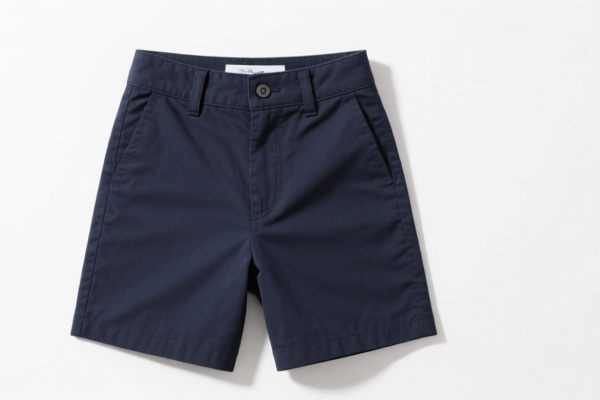
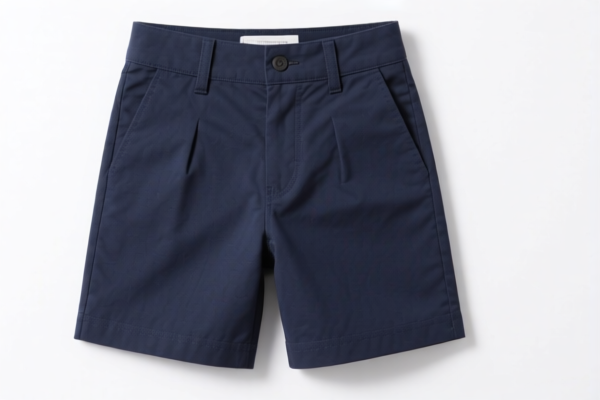
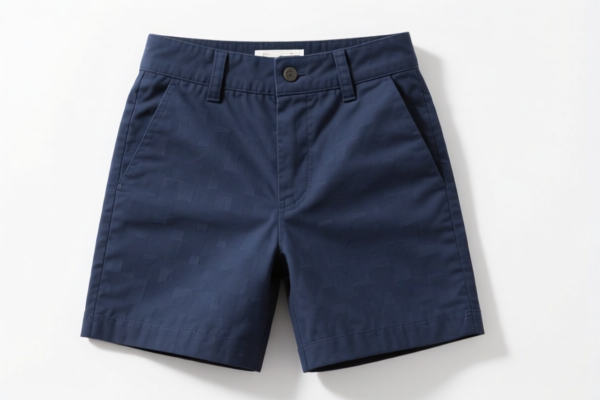

AI Analysis
👔 Boy's Simple Long Robe (Sleepwear)
🌐 HS Code Reference & Customs Clearance Guide | 2026 Latest Tariff Analysis | Professional Entry Strategy
📌 I. Product Definition & Classification: What Exactly is a "Boy's Simple Long Robe"?
A "Boy's Simple Long Robe" refers to loose-fitting, open-front or wrap-style outerwear designed for boys, typically used as sleepwear or loungewear. In international trade, the classification hinges critically on two factors: Fabric Composition (Cotton vs. Synthetic vs. Wool) and Construction Method (Knitted/Hooked vs. Woven).
⚠️ Key Classification Distinction:
- Knitted/Hooked (Chapter 61): Stretchy, jersey-like fabrics (e.g., fleece, terry cloth). Usually categorized under 6107.
- Woven (Chapter 62): Non-stretch, flat-weave fabrics (e.g., cotton flannel, broadcloth). Usually categorized under 6207.
- Material Matters: Cotton generally attracts lower base tariffs; synthetic fibers (rayon/nylon) or wool blends may have different rates.
📦 II. HS Code Classification Details (2026 Latest Tariff Authority Comparison)
Based on the provided data, here are the specific HS Codes for "Boy's Simple Long Robe," categorized by material and construction:
| HS Code | Product Description (Inferred) | Construction Type | Base Tariff | Additional Tariffs (US Specific) | Total Tax Rate |
|---|---|---|---|---|---|
6107.22.00.25 |
Boy's Simple Robe, Non-Cotton/Synthetic Fiber | Knitted/Hooked | 16.0% | +7.5% (Sec 301) + 10% (Sec 122) | 33.5% |
6207.21.00.40 |
Boy's Simple Robe, Cotton | Woven | 8.9% | +7.5% (Sec 301) + 10% (Sec 122) | 26.4% |
6107.21.00.20 |
Boy's Simple Robe, Cotton | Knitted/Hooked | 8.9% | +7.5% (Sec 301) + 10% (Sec 122) | 26.4% |
6207.21.00.20 |
Boy's Simple Robe, Cotton | Woven | 8.9% | +7.5% (Sec 301) + 10% (Sec 122) | 26.4% |
6207.99.75.20 |
Boy's Robe, Non-Wool Synthetic/Cotton Blend | Woven | 14.9% | +0.0% (Sec 301) + 10% (Sec 122) | 24.9% |
6207.91.10.00 |
Boy's Robe, Cotton | Woven | 8.4% | +7.5% (Sec 301) + 10% (Sec 122) | 25.9% |
🔍 Critical Note:
- Cotton Robes (Knitted6107.21or Woven6207.21) generally benefit from a lower Base Tariff (8.9%) compared to synthetic/knit6107.22(16.0%).
- Section 122 Tariff (10%) appears to apply to all listed categories in this dataset.
- Section 301 Tariff (7.5%) applies to most categories except6207.99.75.20(0.0%).
-6207.91.10.00has a slightly different base tariff (8.4%) compared to other cotton woven codes (8.9%), resulting in a 25.9% total rate.
💰 III. 2026 Latest Tariff Rate Breakdown (Including Add-ons & Policy Surcharges)
✅ Applicable Country: United States (US)
✅ Origin: China (CN) (Inferred from the presence of Section 301 and 122 tariffs)
✅ Effective Date: Current 2026 tariff regime
🎯 1. 6107.22.00.25 – Synthetic/Knit Robe (Highest Cost)
| Item | Detail |
|---|---|
| Base Tariff | 16.0% |
| Section 301 Tariff | +7.5% |
| Section 122 Tariff | +10.0% |
| Total Tax Rate | 33.5% |
| Tax Calculation | CIF Value × 33.5% |
| De Minimis Eligibility | ❌ No (Value likely exceeds $800 threshold for exemption) |
| Legal Path | USITC:6107.22.00.25 → FOOTNOTE:301.01.07 → FOOTNOTE:122.01 |
📌 Explanation:
- Base 16%: Reflects the higher duty on non-cotton knitted apparel.
- 301 + 122 = 17.5% Add-ons: Significant penalties for Chinese origin.
- Result: This is the most expensive classification in the list.
🎯 2. 6207.21.00.40 & 6107.21.00.20 & 6207.21.00.20 – Cotton Robes (Standard)
| Item | Detail |
|---|---|
| Base Tariff | 8.9% |
| Section 301 Tariff | +7.5% |
| Section 122 Tariff | +10.0% |
| Total Tax Rate | 26.4% |
| Tax Calculation | CIF Value × 26.4% |
| De Minimis Eligibility | ❌ No |
| Legal Path | USITC:6207.21.00.40 / 6107.21.00.20 → FOOTNOTE:301.01.07 → FOOTNOTE:122.01 |
📌 Note:
- Whether Knitted (6107) or Woven (6207), if it is 100% Cotton, the base rate is 8.9%.
- Total rate is 26.4%, which is 7.1% lower than the synthetic knit option.
🎯 3. 6207.99.75.20 – Non-Wool Synthetic/Cotton Blend Woven (Lowest Total?)
| Item | Detail |
|---|---|
| Base Tariff | 14.9% |
| Section 301 Tariff | +0.0% |
| Section 122 Tariff | +10.0% |
| Total Tax Rate | 24.9% |
| Tax Calculation | CIF Value × 24.9% |
| De Minimis Eligibility | ❌ No |
| Legal Path | USITC:6207.99.75.20 → FOOTNOTE:122.01 |
📌 Strategic Insight:
- Although the Base Tariff (14.9%) is higher than cotton, the Section 301 Tariff is 0.0%.
- This results in the lowest total tax rate (24.9%) among all listed options.
- Caution: Ensure the product genuinely fits "Non-Wool Synthetic/Cotton Blend" and not 100% cotton or 100% synthetic, as misclassification can lead to penalties.
🎯 4. 6207.91.10.00 – Cotton Woven Robe (Specific Subheading)
| Item | Detail |
|---|---|
| Base Tariff | 8.4% |
| Section 301 Tariff | +7.5% |
| Section 122 Tariff | +10.0% |
| Total Tax Rate | 25.9% |
| Tax Calculation | CIF Value × 25.9% |
| De Minimis Eligibility | ❌ No |
| Legal Path | USITC:6207.91.10.00 → FOOTNOTE:301.01.07 → FOOTNOTE:122.01 |
📌 Note:
- Slightly cheaper base rate (8.4% vs 8.9%) but still subject to 301 tariff.
- Total 25.9% is marginally lower than the standard 26.4% cotton codes.
🛠️ IV. Customs Clearance Practical Advice (Avoiding Pitfalls)
✅ 1. Essential Documentation Checklist
| Document | Required? | Notes |
|---|---|---|
| ✅ Product Specification Sheet | ✔️ | Must state Fabric Composition (e.g., 100% Cotton vs. 100% Polyester) and Construction (Knit vs. Woven). |
| ✅ Material Test Report | ✔️ | Gerber or Intertek report confirming fiber content is critical for HS code accuracy. |
| ✅ Product Photos | ✔️ | Show the full garment, label, and any tags indicating "Robe" or "Sleepwear." |
| ✅ Commercial Invoice | ✔️ | Clearly describe as "Boy's Cotton Knitted Sleep Robe" or similar, avoiding vague terms like "Clothing." |
| ✅ Packing List | ✔️ | Match invoice details exactly. |
✅ 2. Declaration Tips (Key Mantras)
🔥 “Fabric Defines Duty, Construction Defines Chapter! Name Accurately, Avoid the 33.5% Trap!”
| Scenario | Correct Declaration | Error to Avoid |
|---|---|---|
| 100% Cotton Knitted Robe | 6107.21.00.20 (26.4%) |
Misclassify as synthetic → 33.5% |
| Polyester Knitted Robe | 6107.22.00.25 (33.5%) |
Misclassify as cotton → Risk of penalty & back taxes |
| Blend Woven Robe | 6207.99.75.20 (24.9%) |
Claim 100% cotton if it’s a blend → 33.5% due to 301 tariff |
| 100% Cotton Woven Robe | 6207.21.00.40 (26.4%) |
Use 6207.91.10.00 incorrectly if it doesn’t fit specific sub-requirements |
✅ 3. Special Circumstances Handling
| Situation | Recommendation |
|---|---|
| Mixed Materials | If the robe is 60% Cotton, 40% Polyester, check the substantial transformation rules. Usually, the fiber comprising the greatest weight by volume determines the chapter. |
| Lined Robes | If lined with a different material (e.g., cotton outer, fleece lining), the outer material typically dictates the classification. |
| OEM/White Label | Provide clear design sheets to prove it is a "Robe" and not "Nightgown" or "Pajama Top," which may have different HS codes. |
| Age Specification | Explicitly state "For Boys" (typically under 16) to ensure correct heading. Adult robes may fall under different subheadings. |
🌍 V. Global Market Comparison (2026 Snapshot)
| Country/Region | Recommended HS Code (Cotton Knit) | Est. Duty | Notes |
|---|---|---|---|
| 🇺🇸 USA | 6107.21.00.20 |
26.4% | Includes Sec 301 & 122. High cost. |
| 🇨🇳 China | 6107.21.00.20 |
~16-20% | Import duty only. No US-style add-ons. |
| 🇪🇺 EU | 6107.21.00.00 |
~12-14% | No Section 301 equivalent. Standard MFN rate. |
| 🇬🇧 UK | 6107.21.00.00 |
~12% | Post-Brexit, similar to EU rates. |
| 🇨🇦 Canada | 6107.21.00.00 |
~17-20% | CUSMA may apply if originating from US/Mexico. |
📌 Conclusion:
- The US market is the most expensive for Chinese-origin children's sleepwear due to Section 301 and Section 122 tariffs.
- Cotton is cheaper than synthetic in base duty, but Section 122 impacts all equally.
- Section 301 exemption (0%) for6207.99.75.20makes certain woven blends strategically cheaper despite higher base rates.
📌 VI. Common Errors & Pitfalls (Lessons Learned)
❌ Error 1: Calling it "Pajamas" instead of "Robe"
👉 Consequence: May be misclassified under 6116 or 6108, leading to incorrect tariff application and potential delays.
❌ Error 2: Ignoring Fabric Composition
👉 Consequence: Declaring 100% Cotton when it’s Polyester results in a 7.1% tax difference ($33.5k vs $26.4k per $100k CIF).
❌ Error 3: Overlooking Section 122
👉 Consequence: Many traders forget the 10% Section 122 tariff. It applies to all listed codes in this dataset. Always include it in cost calculations.
❌ Error 4: Assuming "Simple" Means Low Duty
👉 Consequence: "Simple" refers to design, not material. A simple polyester robe is still taxed at 33.5%.
✅ Correct Approach:
"Boy's Cotton Knitted Sleep Robe, 100% Cotton, Jersey Knit, Size 4-14, Model XYZ"
🎯 VII. Conclusion: Professional Declaration, Cost Optimization!
🎯 Remember the Mantras:
🔹 "Cotton is Cheap, Synthetic is Expensive in Base Rate!"
🔹 "Section 122 Hits Everyone (10%), But Section 301 Can Be Skipped (0%) for Specific Blends!"
🔹 "Knit vs. Woven Changes the Chapter, Not Just the Duty!"
📌 Pro Tip:
- If your product is a woven blend (e.g., Cotton/Polyester) and not 100% cotton, investigate 6207.99.75.20. With 0% Section 301, the total 24.9% is lower than the 26.4% for 100% cotton.
- Always get a material composition test before shipment.
- Consider Advance Ruling from US CBP if the material blend is complex.
📣 Action Item:
📞 Contact a licensed customs broker + Provide Lab Test Reports + Verify HS Code with CBP
🚀 Save up to 8.6% in taxes by choosing the right HS Code and Material Declaration!
✨ Precision in Classification, Profit in Clearance!
💼 Every Percent Counts in Apparel Import!
Customer Reviews
About HS Code Classification
The Harmonized System (HS) is an internationally standardized nomenclature developed by the World Customs Organization (WCO) to classify traded products. Over 200 countries use the HS system as the basis for customs tariffs, trade statistics, and import/export regulations.
Each HS code follows a hierarchical structure:
- Chapter (2 digits) — Broad category of goods (e.g., Chapter 84: Machinery and Mechanical Appliances)
- Heading (4 digits) — More specific grouping within the chapter
- Subheading (6 digits) — Internationally standardized breakdown, used by all WCO member countries
- National subdivisions (8-10 digits) — Country-specific extensions for further classification, such as US HTSUS 10-digit codes
Correct HS code classification is essential for smooth customs clearance, accurate duty payment, and compliance with trade regulations. Misclassification can lead to customs delays, overpayment of duties, or penalties.
When importing from CN to US, the applicable tariff rates may include:
- Most-Favored-Nation (MFN) rate — The standard duty rate applied to WTO members
- General rate — Applied to countries without trade agreements
- Trade remedy duties — Additional tariffs such as Section 301 (anti-dumping), Section 232 (national security), or countervailing duties
The information provided on this page is for reference purposes only. For official classification, please consult with your local customs authority or a licensed customs broker.