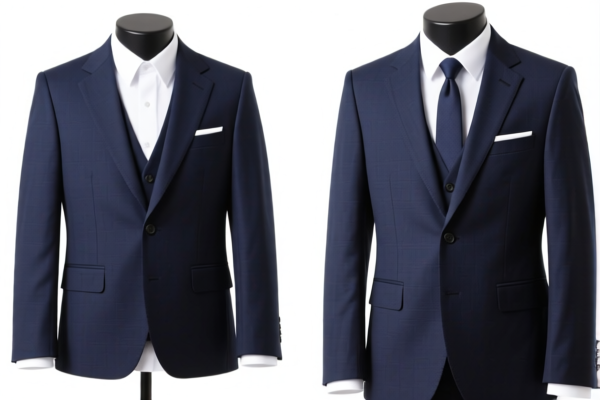
Boy's Suit and Synthetic Fiber Shirt
CN → US| HS Code | Tariff Rate | Origin | Destination | Doc |
|---|---|---|---|---|
| 6112120050 | 45.7% | CN | US | Official Doc |
| 6112120060 | 38.2% | CN | US | Official Doc |
| 6103230040 | 0.0% | CN | US | Official Doc |
| 6203439020 | 45.4% | CN | US | Official Doc |
| 6103431520 | 38.2% | CN | US | Official Doc |
Product Images



AI Analysis
👔 Boy's Suit & Synthetic Fiber Shirt | Comprehensive HS Code & Tariff Guide (2024/2025)
🌐 HS Code Reference & Clearance Strategy | 2024 Latest Tariff Breakdown | Professional Import Compliance
📌 Part 1: Product Definition & Classification
A Boy's Suit typically refers to a matching set of trousers and a jacket or blazer for male children, while a Synthetic Fiber Shirt is a single garment made from artificial materials (e.g., polyester, nylon).
Critical Classification Rules: * The "Ensemble" Rule (套式规则): If the trousers and shirt/jacket are presented together as a set, intended to be worn together, and classified under the same heading, they may be classified as an "Ensemble" (一套). However, for boys' suits made of synthetic fibers, US customs often separates them or treats them as Suit Separates (Trousers + Shirt) rather than a single suit if they don't meet the strict "suit" definition (jacket + trousers). * Material Determination: If the fiber is Synthetic, the classification falls under Chapter 61 (Knitted) or Chapter 62 (Woven). The provided data focuses heavily on Synthetic Fibers (likely Woven or specific knitted types). * Target Audience: Specifically for Boys (Male Children).
⚠️ Key Distinction:
- Single Garments (Shirt or Pants): Classified individually.
- Sets (Suit): If a jacket is missing and only pants + shirt are sold, they are usually classified separately unless they form a specific "set" under 61/62 notes. The data provided suggests a focus on Trousers/Pants and Shirts/Skirts separately, with some "Ensemble" specific tax details.
📦 Part 2: HS Code Classification Details (2024/2025 Data)
Based on the provided data, here are the specific classifications for Boy's Synthetic Fiber Pants/Shirts:
| HS Code | Product Description (Summary) | Applicable Scenario | Tax Rate (Total) |
|---|---|---|---|
| 6112.12.00.50 | Synthetic Fiber Boys'/Men's Pants/Skirts (Fully Matched Material/Shape) | Knitted boys' pants/skirts where all parts are synthetic. | 45.7% |
| 6112.12.00.60 | Synthetic Fiber Boys'/Men's Pants/Skirts (Consistent Material) | Knitted pants/skirts; no additional 7.5% surcharge (0% add-on). | 38.2% |
| 6103.23.00.40 | Synthetic Fiber Boys'/Men's Pants (Ensemble Components) | Ensemble Rule: If parts are classified separately, rate is "Sum of individual rates" + 17.5%. | Variable (See Details) |
| 6203.43.90.20 | Synthetic Fiber Boys' Trousers (Woven/Non-Knitted) | Woven boys' pants; material matches HS Code requirements. | 45.4% |
| 6103.43.15.20 | Synthetic Fiber Boys'/Men's Pants/Skirts (Key Elements Matched) | Knitted boys' trousers/skirts; key elements match; no 7.5% surcharge. | 38.2% |
🔍 Critical Note:
- 6103 vs. 6112: 6103 is typically Woven (Tailored), while 6112 is Knitted (Sportswear/Underwear). The data implies a mix, but 6203 is explicitly Woven. - The "Ensemble" Trap: Under code6103.23.00.40, the tax is not a flat rate. It is calculated as: Sum of tax rates if sold separately + 17.5%. This can be significantly higher than buying separately if the individual rates are high.
💰 Part 3: Detailed Tariff Breakdown (2026/2024 Tax Structure)
✅ Applicable Region: USA (US)
✅ Origin: China (CN)
✅ Effective Date: Based on 2024/2025 Trade Data (Section 301, 122 Section)
🎯 1. 6112.12.00.50 & 6203.43.90.20 (High Tariff Group)
| Item | Content |
|---|---|
| Base Tariff | 28.2% (for 6112) / 27.9% (for 6203) |
| Section 301 (Add-on) | +7.5% (Specific to these sub-headings) |
| Section 122 (Add-on) | +10% (Targeted on specific Chinese textiles) |
| Total Tariff | 45.7% (for 6112.50) / 45.4% (for 6203.20) |
| Calculation | CIF Value × Total Rate |
| De Minimis Exemption? | ❌ NO (Textiles are generally excluded) |
| Legal Basis | Section 301 (USITC) + Section 122 (Executive Order) |
📌 Explanation:
- The Base Tariff is the standard US Most-Favored-Nation (MFN) rate.
- The +7.5% is a specific Section 301 add-on for certain textile categories.
- The +10% is a "Section 122" tariff, often applied to specific Chinese-origin textiles to counter dumping or unfair trade practices.
- Total Impact: Almost 46% tax on the CIF value. This drastically reduces profit margins.
🎯 2. 6112.12.00.60 & 6103.43.15.20 (Lower Surcharge Group)
| Item | Content |
|---|---|
| Base Tariff | 28.2% |
| Section 301 (Add-on) | 0.0% (No additional Section 301 surcharge for this sub-category) |
| Section 122 (Add-on) | +10% (Still applicable) |
| Total Tariff | 38.2% |
| Calculation | CIF Value × 38.2% |
| De Minimis Exemption? | ❌ NO |
| Legal Basis | Section 122 (Executive Order) only |
📌 Note:
- These items save the 7.5% Section 301 surcharge but still pay the 10% Section 122 tax.
- Savings: 7.5% reduction compared to the...50and...20codes.
🎯 3. 6103.23.00.40 (Ensemble/Trousers Specific)
| Item | Content |
|---|---|
| Base Tariff | Variable (Rate applicable if sold separately) |
| Section 301 (Add-on) | +7.5% |
| Section 122 (Add-on) | +10% |
| Additional Clause | +17.5% (Special "Ensemble" adjustment if applicable) |
| Total Tariff | Complex Calculation (Sum of parts + 17.5%) |
| Legal Basis | Heading 6103 Ensemble Rules + Section 301/122 |
📌 Warning:
- If the Shirt and Pants are sold as a set (Ensemble) under this code, the tax is not a simple percentage. It is the sum of the taxes for each item (if sold separately) PLUS 17.5%.
- Example: If Shirt = 10% and Pants = 30%, Total = 40% + 17.5% = 57.5% (approx). Avoid this code if possible!
🛠️ Part 4: Clearance Practical Suggestions (Avoid Pitfalls)
✅ 1. Preparation Checklist (Must Have)
| Document | Requirement | Reason |
|---|---|---|
| 📄 Commercial Invoice | Must explicitly state "Boy's Synthetic Fiber Pants" or "Shirt" | Avoid "Suit" ambiguity unless a jacket is present. |
| 📷 Product Photos | Clear shots of fabric texture (Knitted vs. Woven) | Determines Chapter 61 (Knitted) vs. Chapter 62 (Woven). |
| 📋 Composition Label | 100% Polyester? Nylon? | Must match "Synthetic Fiber" declaration. |
| 🏷️ Size/Category | Must specify "Boy" (Male Child) | Essential for 6103/6203 classification (not Adult). |
| 📝 Packing List | Separate items if possible | Crucial: Separate shirt and pants if you want to avoid the "Ensemble" +17.5% tax. |
✅ 2. Declaration Strategy (The "Ensemble" Trick)
🔥 Golden Rule: "Separate Declaration = Lower Tax!"
| Scenario | Correct Declaration | Incorrect Declaration | Result |
|---|---|---|---|
| Boy's Shirt + Pants (No Jacket) | Declare as Two Separate Items (6103.43 + 6103.43) |
Declare as "Set" or "Ensemble" | ✅ Avoid +17.5% penalty |
| Boy's Suit (Jacket + Trousers) | Declare as "Suit" (if fully matching) | Declare as Separate items | ✅ Proper Suit Classification |
| Mixed Material | Declare by primary material | Guess | ❌ Risk of Rejection |
💡 Pro Tip:
If you are selling a Shirt + Pants set to a child, do not call it a "Suit" (unless a jacket is included). Classify the shirt and pants separately.
- Shirt:6103.43.15.20(38.2% or lower)
- Pants:6112.12.00.60(38.2%)
- Total: Avoid the +17.5% "Ensemble" surcharge found in6103.23.00.40.
✅ 3. Special Section 122 & 301 Advice
| Issue | Action |
|---|---|
| Section 122 (10%) | Cannot be avoided. It applies to most synthetic textiles from China. Factor this into your pricing. |
| Section 301 (7.5%) | Avoidable by choosing the right sub-code (...60 or ...15.20 instead of ...50 or ...40). |
| Origin Labeling | Must clearly state "Made in China" to prevent duty evasion accusations. |
| Cotton vs. Synthetic | Ensure no natural fiber (Cotton) is >10%, or the HS Code changes entirely to Chapter 61/62 Cotton categories (different taxes). |
🌍 Part 5: Market Comparison & Final Verdict
| Region | Recommended HS Code | Total Tax Rate | Strategy |
|---|---|---|---|
| 🇺🇸 USA | 6112.12.00.60 or 6103.43.15.20 |
38.2% | Best Option. Avoid ...50 and ...40 (Ensemble) codes. |
| 🇨🇳 China | Same HS Code | 0-15% (VAT only) | Domestic sales do not face Section 301/122. |
| 🇪🇺 EU | Similar HS Code | ~12% (Duty) | No Section 122, but has different surcharges. |
| 🇨🇦 Canada | Similar HS Code | ~10-15% | CETA/USMCA benefits may apply. |
📌 Part 6: Common Mistakes & How to Avoid Them
❌ Mistake 1: Declaring "Suit" for Shirt+Pants Set
👉 Consequence: Applies +17.5% ensemble tax + Section 301 + Section 122 → Total Tax > 50%.
✅ Fix: Declare as Two Separate Items.
❌ Mistake 2: Using HS Code 6112.12.00.50 unnecessarily
👉 Consequence: Paying extra 7.5% Section 301 surcharge when ...60 is available.
✅ Fix: Verify if the product qualifies for the ...60 code (often based on specific fabric blend or style).
❌ Mistake 3: Ignoring the "Boy" Category
👉 Consequence: Adult codes have different rates; misclassification leads to fines.
✅ Fix: Explicitly state "Boy's" (Male Child) on all invoices.
🎯 Conclusion: Strategic Classification for Profit
🎯 Key Takeaway:
For Boy's Synthetic Fiber Shirts and Pants, the Total Tax in the US is 38.2% if classified correctly (...60/...15.20).
However, if declared as an Ensemble (...40) or using high-tariff codes (...50), the tax jumps to 45.4% - 45.7% or higher due to the +17.5% ensemble penalty.🚀 Action Plan:
1. Separate Declaration: Always declare Shirt and Pants separately if no jacket is present.
2. Select Low-Surcharge Codes: Prioritize6112.12.00.60and6103.43.15.20to avoid the 7.5% add-on.
3. Verify Material: Ensure 100% Synthetic (Polyester/Nylon) to stay within these codes.
4. Prepare Documentation: Have clear composition labels and photos ready for CBP review.
✨ Smart Clearance, Smart Profit!
💼 Every 1% of tax saved is pure profit.
🚀 Don't let the "Ensemble" trap eat your margins!
Disclaimer: Tariff rates and HS Codes are subject to change based on US Customs & Border Protection (CBP) updates and Executive Orders. Always consult a licensed customs broker for final classification.
Customer Reviews
About HS Code Classification
The Harmonized System (HS) is an internationally standardized nomenclature developed by the World Customs Organization (WCO) to classify traded products. Over 200 countries use the HS system as the basis for customs tariffs, trade statistics, and import/export regulations.
Each HS code follows a hierarchical structure:
- Chapter (2 digits) — Broad category of goods (e.g., Chapter 84: Machinery and Mechanical Appliances)
- Heading (4 digits) — More specific grouping within the chapter
- Subheading (6 digits) — Internationally standardized breakdown, used by all WCO member countries
- National subdivisions (8-10 digits) — Country-specific extensions for further classification, such as US HTSUS 10-digit codes
Correct HS code classification is essential for smooth customs clearance, accurate duty payment, and compliance with trade regulations. Misclassification can lead to customs delays, overpayment of duties, or penalties.
When importing from CN to US, the applicable tariff rates may include:
- Most-Favored-Nation (MFN) rate — The standard duty rate applied to WTO members
- General rate — Applied to countries without trade agreements
- Trade remedy duties — Additional tariffs such as Section 301 (anti-dumping), Section 232 (national security), or countervailing duties
The information provided on this page is for reference purposes only. For official classification, please consult with your local customs authority or a licensed customs broker.