Boy's Synthetic Fiber Geometric Pattern Formal Shirt
CN → US| HS Code | Tariff Rate | Origin | Destination | Doc |
|---|---|---|---|---|
| 6105202030 | 49.5% | CN | US | Official Doc |
| 6105202020 | 49.5% | CN | US | Official Doc |
| 6205302040 | 0.0% | CN | US | Official Doc |
| 6205302020 | 0.0% | CN | US | Official Doc |
| 6205302020 | 0.0% | CN | US | Official Doc |
Product Images
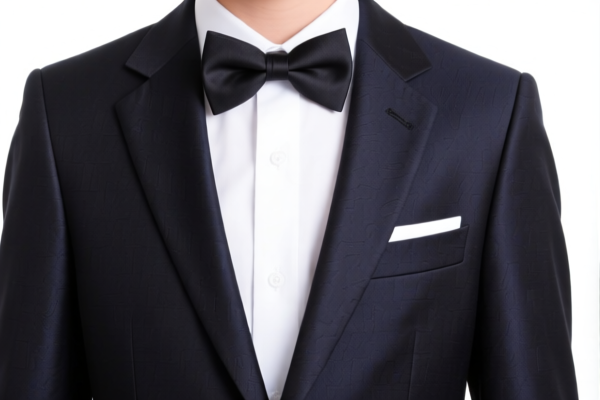
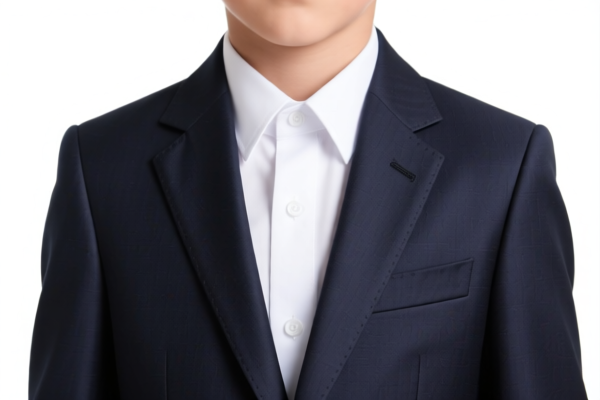


AI Analysis
👕 Boy's Synthetic Fiber Geometric Pattern Formal Shirt
🌐 HS Code Reference & Customs Clearance Guide | 2026 Latest Tariff Analysis | Professional Clearance Strategy
📌 I. Product Definition & Classification: What Exactly Is This Product?
A "Boy's Synthetic Fiber Geometric Pattern Formal Shirt" is a specific garment for male children, characterized by: 1. Material: Synthetic fibers (e.g., polyester, nylon). 2. Style: Formal shirt (typically with a collar, buttons, and structured fit, distinct from casual t-shirts or polo shirts). 3. Target Audience: Boys (Male children). 4. Pattern: Geometric pattern (this affects the specific sub-heading but generally falls under "printed" or specific woven categories).
In international trade, classification hinges on two main factors: - Chapter 61 vs. Chapter 62: Knitted/Crocheted (Ch. 61) vs. Woven/Non-Knitted (Ch. 62). Most "formal shirts" are woven, so we lean towards Chapter 62 unless specified as knit. - Formal vs. Casual: "Formal" implies a structured shirt (often button-down with a collar), which usually falls under 6205 (Men's/Boys' shirts) rather than 6105 (which often captures more casual or knit shirts, though there is overlap).
⚠️ Key Distinction:
- If the shirt is woven (non-knit) and formal → HS 6205
- If the shirt is knitted (stretchy, t-shirt style) or loosely defined → HS 6105
- "Geometric Pattern" usually implies a printed or specific woven design, which does not change the base HS code but may affect the "duty-free" status in some countries. For the US, the structure (61 vs 62) is the primary driver.
📦 II. HS Code Classification Details (2026 Latest Tariff Authoritative Comparison)
Based on the provided <DATA>, here are the relevant HS Codes and their logical mapping:
| HS Code | Product Description | Logical Mapping Reason | Applicable Scenario |
|---|---|---|---|
6105.20.20.30 |
Boy's Synthetic Fiber Shirt (Matched to Boy/Synthetic/Shirt Form) | Fallback/General Category: Fits "Boy's," "Synthetic Fiber," and "Shirt." May apply if the "Formal" aspect is deemed less strict or if the item is knitted. | Casual-woven or Knitted shirts for boys. |
6105.20.20.20 |
Boy's Synthetic Fiber Shirt (Based on Fallback Principle) | Fallback Principle: When specific "Formal" attributes aren't clearly distinguished from general shirts, this code serves as the catch-all for synthetic boy's shirts. | General synthetic boy's shirts. |
6205.30.20.40 |
Boy's Synthetic Fiber Formal Shirt (Artificial Fiber & Formal Wear Purpose) | Specific Formal Category: Explicitly targets "Formal Shirt" (礼服/正装) made of synthetic (人造纤维) fibers. Best Match for "Formal". | Structured, collared, button-down formal shirts. |
6205.30.20.20 |
Boy's Synthetic Fiber Formal Shirt (Boy/Synthetic/Formal Category) | Direct Match: Corresponds to Boy's, Synthetic Fiber, and Formal Wear definition. | Same as above; often used interchangeably with .40 depending on specific pattern details. |
6205.30.20.20 |
Boy's Synthetic Fiber Shirt (Material & Purpose Consistent) | Consistent Definition: Matches Boy's, Synthetic, and Formal definitions. | High-confidence classification for formal woven shirts. |
🔍 Key Insight:
- HS 6205 is the preferred code for "Formal" shirts because it specifically distinguishes structured/formal wear from casual wear.
- HS 6105 is riskier for "Formal" shirts unless they are knitted. If you declare a formal woven shirt under 6105, customs may reclassify it to 6205, causing delays.
- The "Geometric Pattern" is likely a subset of the general description in these codes, not a separate primary classifier in this dataset.
💰 III. 2026 Latest Tariff Rate Breakdown (Including Surcharges & Policy Add-ons)
✅ Applicable Country: United States (US)
✅ Origin: China (CN)
✅ Effective Date: November 10, 2025 (and subsequent imports)
🎯 1. HS Codes: 6105.20.20.30 & 6105.20.20.20 (General/Knit Synthetic Shirts)
| Item | Detail |
|---|---|
| Base Tariff | 32.0% (Ad Valorem) |
| Section 301 Surcharge | +7.5% (Additional Tariff) |
| Section 122 Tariff | +10% (122 Clause Tariff) |
| Total Effective Rate | 49.5% |
| Calculation Method | CIF Value × 49.5% |
| De Minimis Exemption | ❌ Not Eligible (High tariff rates usually exclude small parcels from Section 321 de minimis benefits if reclassified or if specific exclusions apply). |
| Legal Basis | Section 301: 122 Clause → USITC: 6105.20.20 |
📌 Explanation:
- These codes attract a flat percentage-based tax.
- The 49.5% rate is significant. For a $10 shirt, the duty is $4.95.
- Risk: If the item is actually woven (formal), using 6105 may lead to penalties.
🎯 2. HS Codes: 6205.30.20.40 & 6205.30.20.20 (Formal Synthetic Shirts)
| Item | Detail |
|---|---|
| Base Tariff | 29.1 ¢/kg + 25.9% (Specific + Ad Valorem) |
| Section 301 Surcharge | +7.5% |
| Section 122 Tariff | +10% |
| Total Effective Rate | 29.1 ¢/kg + 25.9% + 17.5% (Note: 25.9% base + 17.5% surcharges) |
| Calculation Method | (Weight in kg × $0.291) + (CIF Value × 25.9%) + (CIF Value × 17.5%) |
| De Minimis Exemption | ❌ Not Eligible |
| Legal Basis | Section 301 → Section 122 → USITC: 6205.30.20 |
📌 Explanation:
- This is a compound tariff (Specific + Ad Valorem).
- Why is the percentage lower? Formal shirts (6205) often have a lower ad valorem base (25.9%) compared to general shirts (32%), but they have a per-kg charge (29.1¢).
- Weight Sensitivity: For light shirts, the % dominates. For heavy/wet fabrics, the per-kg charge adds up.
- Total Tax Burden: The 17.5% total surcharge (7.5% + 10%) is applied on top of the base rate.
🛠️ IV. Customs Clearance Operational Advice (Practical Pitfall Guide)
✅ 1. Essential Documentation Checklist (None Can Be Omitted)
| Document | Required | Explanation |
|---|---|---|
| ✅ Product Specification Sheet | ✔️ | Must state: "Boy's," "Synthetic Fiber (e.g., Polyester)," "Woven/Knitted," "Formal Style." |
| ✅ Fabric Composition Label | ✔️ | Proof of "Synthetic" vs. "Natural" (Cotton). Mislabeling leads to huge rate differences. |
| ✅ Product Photos (Front/Back/Label) | ✔️ | Must show "Geometric Pattern" and "Formal Collar" to justify 6205 over 6105 if needed. |
| ✅ Commercial Invoice | ✔️ | Must accurately describe: "Boy's Formal Shirt, Synthetic, Geometric Pattern." |
| ✅ Packing List | ✔️ | Include Net Weight (for 6205 compound tariff calculation). |
| ✅ Origin Certificate | ✔️ | To prove China origin (subject to 301/122 tariffs). |
✅ 2. Declaration Tips (Key Mantras)
🔥 "Formal is Woven, 6205 Wins; Casual/Knit is 6105, But Watch the Rate!"
| Scenario | Correct Declaration | Wrong Practice |
|---|---|---|
| Structured, Collared Shirt | 6205.30.20.20 or .40 |
Declaring as 6105 → Risk of reclassification & penalty. |
| T-shirt Style Polo/Knit | 6105.20.20.20 |
Declaring as 6205 → Over-declaring weight/cost. |
| Mixed Packaging (Shirts + Pants) | Split Declaration | Mixed declaration → Delays & audits. |
| Geometric Pattern | Mention in description only | Do not create new HS code for pattern. |
✅ 3. Special Case Handling
| Scenario | Handling Advice |
|---|---|
| OEM/Custom Orders | Provide design specs to prove "Formal" nature if questioned. |
| Lightweight vs. Heavy Fabric | For 6205, calculate if the per-kg charge makes it more expensive than 6105's flat %. For very light shirts, 6205's % (25.9% + 17.5%) might be cheaper than 6105's 49.5% if the per-kg fee is low. Run the math! |
| "Formal" Ambiguity | If the shirt looks like a casual button-down, 6105 might be safer to avoid audits, but 6205 is legally more accurate for "Formal." |
| Pattern Changes | "Geometric" does not change the HS code. Ensure the material remains "Synthetic." |
🌍 V. Global Market Comparison (2026 Latest)
| Country/Region | Recommended HS Code | Estimated Total Duty (China Origin) | Certification | Notes |
|---|---|---|---|---|
| 🇺🇸 USA | 6205.30.20.20 |
~43.4% (25.9% + 17.5% + 29.1¢/kg) | None Specific | High tariffs due to 301/122. |
| 🇺🇸 USA | 6105.20.20.20 |
49.5% (32% + 17.5%) | None Specific | Flat rate, simpler to calculate. |
| 🇨🇳 China | 6205.30.20.20 |
13-16% | CCC (if applicable) | No 301/122 surcharges. |
| 🇪🇺 EU | 6205.30.20 |
12% | CE (if not textile) | No Section 301/122 equivalents. |
| 🇬🇧 UK | 6205.30.20 |
12% | UKCA | Post-Brexit rules apply. |
📌 Conclusion:
- USA is the most challenging market due to the combination of Base Tariff + Section 301 + Section 122.
- 6205 (Formal) is generally cheaper than 6105 (General) in terms of percentage (25.9% vs 32%), but the per-kg charge in 6205 can erode savings for heavy items. Always calculate based on CIF and Weight.
📌 VI. Common Mistakes & Pitfall Guide (Lessons Learned)
❌ Mistake 1: Using 6105 for a woven formal shirt.
👉 Consequence: Customs may reclassify to 6205, issuing a 补税 (Supplemental Tax) bill and delaying clearance.
❌ Mistake 2: Ignoring the per-kg charge in 6205.
👉 Consequence: For heavy synthetic fabrics, the 29.1¢/kg adds up. A $50 shirt weighing 0.5kg might end up with a higher total duty than a lighter shirt. Calculate precisely!
❌ Mistake 3: Mislabeling Material.
👉 Consequence: Declaring "Synthetic" but it's "Cotton" (HS 6205.10) or "Viscose" (HS 6205.90) leads to different base rates and potential fraud penalties.
❌ Mistake 4: Assuming "Geometric Pattern" gets a lower duty.
👉 Consequence: Patterns do not reduce US tariffs. You still pay 49.5% or ~43%.
✅ Correct Approach:
"Boy's Formal Shirt, 100% Polyester, Woven, Geometric Print, Collared, Button-Down. Net Weight: 0.2kg. CIF: $20."
🎯 VII. Conclusion: Professional Declaration Saves Money!
🎯 Remember the Mantra:
🔹 "Formal = 6205, General = 6105. 6205 has per-kg fees, 6105 has flat %. Calculate both!"
🔹 "49.5% is the max, 43.4% is the target. Don't let 'Formal' become a penalty!"
📌 Pro Tip:
- If your shirts are lightweight (<0.2kg), HS 6205 is likely cheaper because the per-kg fee is negligible, and the % (25.9% + 17.5% = 43.4%) is lower than 6105's 49.5%.
- If your shirts are heavy or bulky, HS 6105 might be cheaper due to the flat rate, but ensure they qualify as "General" and not "Formal."
- Recommendation: Apply for an Advance Ruling from US Customs (CBP) to confirm the 6205 vs 6105 classification for your specific design.
📣 Action Item:
📞 Contact a licensed customs broker + Provide fabric specs + Calculate duty for both 6105 and 6205.
🚀 Ensure smooth customs clearance, minimize duties, and maximize profit!
✨ Professional clearance starts with accurate classification!
💼 Every cent counts in cross-border trade!
Customer Reviews
About HS Code Classification
The Harmonized System (HS) is an internationally standardized nomenclature developed by the World Customs Organization (WCO) to classify traded products. Over 200 countries use the HS system as the basis for customs tariffs, trade statistics, and import/export regulations.
Each HS code follows a hierarchical structure:
- Chapter (2 digits) — Broad category of goods (e.g., Chapter 84: Machinery and Mechanical Appliances)
- Heading (4 digits) — More specific grouping within the chapter
- Subheading (6 digits) — Internationally standardized breakdown, used by all WCO member countries
- National subdivisions (8-10 digits) — Country-specific extensions for further classification, such as US HTSUS 10-digit codes
Correct HS code classification is essential for smooth customs clearance, accurate duty payment, and compliance with trade regulations. Misclassification can lead to customs delays, overpayment of duties, or penalties.
When importing from CN to US, the applicable tariff rates may include:
- Most-Favored-Nation (MFN) rate — The standard duty rate applied to WTO members
- General rate — Applied to countries without trade agreements
- Trade remedy duties — Additional tariffs such as Section 301 (anti-dumping), Section 232 (national security), or countervailing duties
The information provided on this page is for reference purposes only. For official classification, please consult with your local customs authority or a licensed customs broker.