Boy's printed shirt other textile materials
CN → US| HS Code | Tariff Rate | Origin | Destination | Doc |
|---|---|---|---|---|
| 6105908060 | 23.1% | CN | US | Official Doc |
| 6206900040 | 24.2% | CN | US | Official Doc |
| 6105901000 | 32.4% | CN | US | Official Doc |
| 6217909020 | 32.1% | CN | US | Official Doc |
| 6217909010 | 32.1% | CN | US | Official Doc |
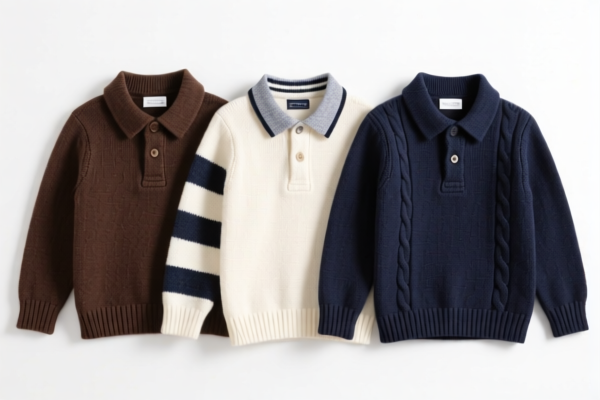
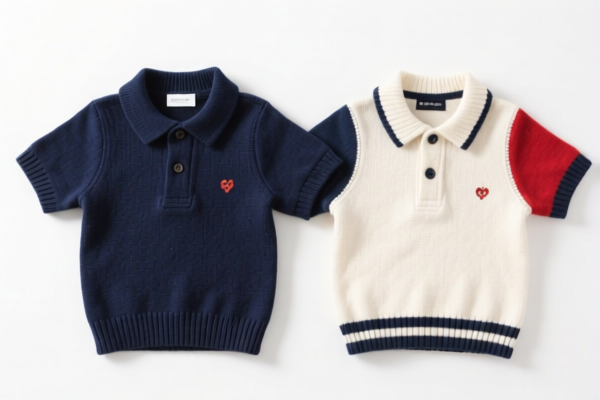
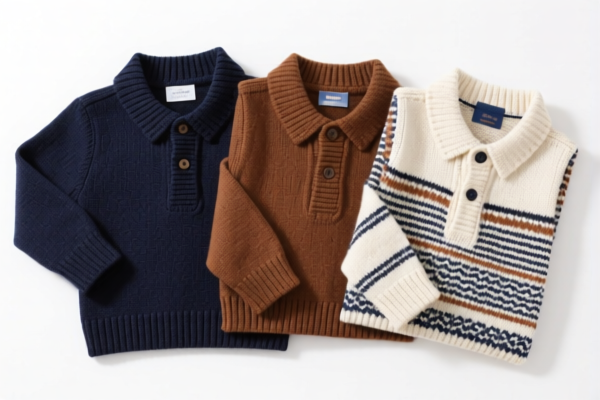
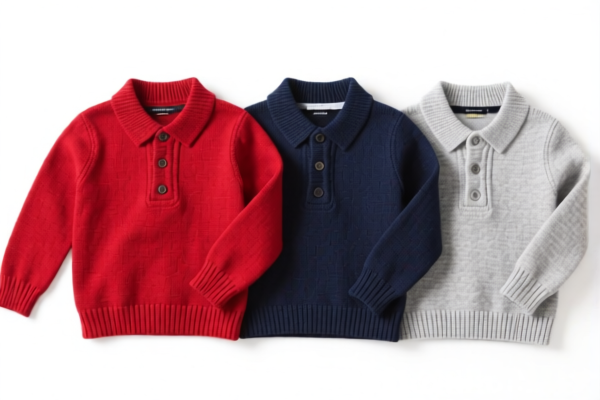
Product Images
AI Analysis
👕 Boy's Printed Shirt (Other Textile Materials)
🌐 HS Code Reference & Customs Clearance Guide | 2026 Latest Tariff Analysis | Professional Strategy
📌 I. Product Definition & Classification: What Exactly Is "Other Textile Materials"?
A Boy's Printed Shirt refers to a garment for boys, characterized by a printed surface pattern, falling under the general category of shirts. The critical classification factor here is "Other Textile Materials," which acts as a fallback category for materials that are NOT: 1. Cotton (Chapter 61/62 subheadings for cotton); 2. Wool, Fine Hair (Chapter 61/62 subheadings for wool/fine animal hair); 3. Man-made Filaments (Typically covered under specific subheadings for synthetic fabrics like polyester filament yarns).
⚠️ Key Distinction:
- If the fabric is Cotton → Do NOT use "Other Textile Materials" codes.
- If the fabric is Wool → Do NOT use "Other Textile Materials" codes.
- If the fabric is Man-made Filaments (e.g., Polyester Filament) → Check if a specific filament subheading exists; if not, it may fall under "Other."
- "Other Textile Materials" typically includes:
- Man-made Staple Fibers (e.g., Polyester Staple Fiber, Viscose Staple Fiber);
- Blends not primarily cotton/wool;
- Other natural fibers (e.g., linen, silk blends where neither dominates or specific exclusions apply).
📦 II. HS Code Classification Details (2026 Latest Tariff Authority Comparison)
The following HS codes are derived from the provided data for "Boy's Shirts (Other Textile Materials)" and "Boy's Plaid Shirts (Other Textile Materials)". Note that Plaid patterns may sometimes trigger different classification logic depending on specific national interpretations, but here they are grouped under "Other Textile Materials."
| HS Code | Product Description | Key Classification Logic | Total Tax Rate (China Origin) |
|---|---|---|---|
6105.90.80.60 |
Boy's Shirt (Knit/Crocheted, Other Textile Materials) | Matches form/usage; material fits "Other" definition. Knitted. | 23.1% |
6206.90.00.40 |
Boy's Shirt (Woven, Other Textile Materials) | Fits "Other" definition (Non-cotton, Non-wool, Non-filament). Woven. | 24.2% |
6105.90.10.00 |
Boy's Shirt (Knit/Crocheted, Other Textile Materials) | Fallback category match principle. Knitted. | 32.4% |
6217.90.90.20 |
Boy's Plaid Shirt (Woven, Other Textile Materials) | Material not cotton/wool; logical consistency with "Other". Woven. | 32.1% |
6217.90.90.10 |
Boy's Plaid Shirt (Woven, Other Textile Materials) | Purpose: Shirt; Material: Synthetic/Other Textile. Woven. | 32.1% |
🔍 Critical Note on Knitted vs. Woven:
- 6105 = Knitted or Crocheted Shirts.
- 6206/6217 = Woven Shirts.
You MUST know the fabric construction (Knit vs. Woven) to choose between6105and62xx. Misclassification here leads to immediate customs holds.
💰 III. 2026 Latest Tariff Rate Breakdown (Including Surcharge & Policy Add-ons)
✅ Applicable Country: United States (US)
✅ Origin: China (CN)
✅ Effective Date: Post-2025 (Based on provided data)
🎯 1. 6105.90.80.60 —— Boy's Shirt (Knitted, Other Textile Materials)
| Item | Content |
|---|---|
| Base Tariff | 5.6% |
| Section 301 Surcharge | +7.5% (Specific to this HS subheading under Trade Act) |
| Section 122 Tariff | +10% (Targeting China) |
| Total Tax Rate | 23.1% |
| Tax Calculation | CIF Value × 23.1% |
| De Minimis Exemption | ❌ Not Eligible (Section 301 & 122 tariffs apply to all shipments regardless of value) |
| Legal Basis Path | USITC:6105.90.80.60 → FOOTNOTE:301 → IEEPA:122 |
📌 Explanation:
- The 5.6% is the standard Most Favored Nation (MFN) rate for "Other" knitted shirts.
- The 7.5% is the additional duty imposed under Section 301 on specific textile/apparel subheadings.
- The 10% is the "122 Clause" tariff, a recent addition targeting Chinese imports.
- Total 23.1% is a moderate-to-high burden, significantly higher than base MFN rates.
🎯 2. 6206.90.00.40 —— Boy's Shirt (Woven, Other Textile Materials)
| Item | Content |
|---|---|
| Base Tariff | 6.7% |
| Section 301 Surcharge | +7.5% |
| Section 122 Tariff | +10% |
| Total Tax Rate | 24.2% |
| Tax Calculation | CIF Value × 24.2% |
| De Minimis Exemption | ❌ Not Eligible |
| Legal Basis Path | USITC:6206.90.00.40 → FOOTNOTE:301 → IEEPA:122 |
📌 Note:
- Slightly higher than the knitted version due to a higher base rate (6.7% vs 5.6%).
- Applies to Woven shirts made of non-cotton, non-wool, non-filament materials (e.g., cotton-blend where cotton <50%, or synthetic staple fibers).
🎯 3. 6105.90.10.00 —— Boy's Shirt (Knitted, Fallback "Other")
| Item | Content |
|---|---|
| Base Tariff | 14.9% |
| Section 301 Surcharge | +7.5% |
| Section 122 Tariff | +10% |
| Total Tax Rate | 32.4% |
| Tax Calculation | CIF Value × 32.4% |
| De Minimis Exemption | ❌ Not Eligible |
| Legal Basis Path | USITC:6105.90.10.00 → FOOTNOTE:301 → IEEPA:122 |
📌 Warning:
- This code is a fallback ("Other"). If your product can be classified under6105.90.80.60(which is 23.1%), DO NOT use this code.
- Using a fallback code often triggers stricter scrutiny and results in a ~9% higher total tax than the specific "Other" code.
🎯 4. 6217.90.90.20 & 6217.90.90.10 —— Boy's Plaid Shirt (Woven, Other Textile Materials)
| Item | Content |
|---|---|
| Base Tariff | 14.6% |
| Section 301 Surcharge | +7.5% |
| Section 122 Tariff | +10% |
| Total Tax Rate | 32.1% |
| Tax Calculation | CIF Value × 32.1% |
| De Minimis Exemption | ❌ Not Eligible |
| Legal Basis Path | USITC:6217.90.90.xx → FOOTNOTE:301 → IEEPA:122 |
📌 Explanation:
- Plaid patterns are often classified under 6217 ("Other made-up clothing accessories") in some jurisdictions, but here they are treated as shirts.
- High Base Rate: The base rate is 14.6%, significantly higher than standard shirts (6.7% or 5.6%).
- Risk: Customs may challenge "Plaid" classification if the pattern doesn't meet specific width/striping definitions. Ensure documentation clearly states "Plaid/Check Pattern."
🛠️ IV. Customs Clearance Practical Advice (Real-World Pitfall Guide)
✅ 1. Documentation Checklist (Non-Negotiable)
| Document | Required | Purpose |
|---|---|---|
| ✅ Product Specification Sheet | ✔️ | Must specify: Knit or Woven? Material Composition (e.g., 55% Polyester Staple, 45% Cotton), Weight, Pattern Type. |
| ✅ Fabric Swatch/Photo | ✔️ | Visual proof of "Other Textile" (not pure cotton/wool). Shows print quality. |
| ✅ Composition Label Photo | ✔️ | Must match invoice. If label says "Cotton," but you declare "Other," it will be rejected. |
| ✅ Commercial Invoice | ✔️ | Must list "Boy's Shirt" and HS Code clearly. Avoid vague terms like "Clothing." |
| ✅ Packing List | ✔️ | Quantity, Weight, Dimensions. |
| ✅ Country of Origin Certificate | ✔️ | If not China, rates may differ (but data assumes CN origin). |
✅ 2. Classification Strategy (Key Mantras)
🔥 “Knit vs. Woven First, Then Material, Then Pattern!”
| Scenario | Correct HS Code | Wrong Approach |
|---|---|---|
| Knitted, Synthetic Blend, Printed | 6105.90.80.60 (23.1%) |
Using 6206 (Woven) → Classification Error |
| Woven, Synthetic Blend, Printed | 6206.90.00.40 (24.2%) |
Using 6105 (Knit) → Classification Error |
| Knitted, Fallback "Other" (No specific subheading) | 6105.90.10.00 (32.4%) |
Using 6105.90.80.60 if not eligible → Overpayment |
| Woven, Plaid, Synthetic | 6217.90.90.20 (32.1%) |
Using 6206 → Potential mismatch if plaid is considered "accessory" |
📌 Critical Tip:
- "Other Textile Materials" is a trap. If your product is 100% Polyester Filament, it likely belongs in a different subheading (e.g.,6105.20or6205.20).
- Only use these codes if the material is Staple Fiber, Blended, or Non-Cotton/Non-Wool/Non-Filament.
- Plaid products are flagged more often. Ensure the print is consistent and meets "plaid" definitions.
✅ 3. Special Cases & Handling
| Situation | Handling Advice |
|---|---|
| Mixed Pack (Knit & Woven) | Declare separately! Do not combine into one line item. |
| Shirts with Buttons/Trims | Classified as shirts. Trims do not change HS Code. |
| Size Labels | Must match "Boy's" designation (e.g., Size 8, 10, 12). If labeled "Unisex," may be reclassified as adult, changing tax rates. |
| Samples | Still subject to tariffs. No de minimis exemption for Section 301/122 goods. |
| OEM/White Label | Provide license agreement if using a brand, but HS Code remains the same based on physical characteristics. |
🌍 V. Global Market Comparison (2026 Snapshot)
| Country/Region | Recommended HS Code | Estimated Duty (China Origin) | Key Certification | Notes |
|---|---|---|---|---|
| 🇺🇸 USA | 6206.90.00.40 |
24.2% (Woven) | No specific FDA/FCC | High Section 301/122 impact |
| 🇨🇳 China | 6206.90.00.40 |
5-15% (Varies by trade agreement) | CCC (if applicable) | Lower base rates |
| 🇪🇺 EU | 6206.90.99 |
12% | CE (if marked) | No Section 301/122 |
| 🇬🇧 UK | 6206.90.99 |
12% | UKCA | Post-Brexit rules apply |
| 🇯🇵 Japan | 6206.90.90 |
16% | PSE (if electronic accessories) | Standard MFN applies |
📌 Conclusion:
- USA is the most expensive market due to 301 & 122 tariffs.
- For USA-bound goods, precise classification is critical to avoid paying 32.4% when 23.1% might apply.
- Consider supply chain diversification (e.g., Vietnam, Bangladesh) if tariff costs exceed 20% of product value.
📌 VI. Common Mistakes & Pitfall Guide (Lessons Learned)
❌ Mistake 1: Declaring a Woven shirt as Knitted (6105)
👉 Consequence: Customs rejection, delay, fine.
👉 Fix: Check fabric construction. Knit = stretchy, looped. Woven = crisp, non-stretchy (usually).
❌ Mistake 2: Using 6217 (Plaid) for a Non-Plaid shirt
👉 Consequence: 32.1% tax instead of 24.2%.
👉 Fix: Only use 6217 if the pattern is explicitly "Plaid/Check." Otherwise, use 6206.
❌ Mistake 3: Ignoring Material Composition
👉 Consequence: If declared "Other" but is 100% Cotton, customs will reclassify to Cotton codes (different tax rate).
👉 Fix: Provide detailed composition breakdown (e.g., 60% Polyester Staple, 40% Cotton).
❌ Mistake 4: Assuming De Minimis applies
👉 Consequence: Package seized.
👉 Fix: No de minimis for Section 301/122 goods from China. All shipments are liable.
✅ Correct Practice:
"Boy's Woven Shirt, Plaid Pattern, 55% Polyester Staple Fiber, 45% Cotton, Size 10, Model ABC, HS 6206.90.00.40"
🎯 VII. Conclusion: Precision in Classification, Profit in Clearance
🎯 Remember the Mantra:
🔹 "Knit is 61, Woven is 62. Check Material, Not Just Pattern. 'Other' is a Fallback, Not a Shortcut."
🔹 "USA Tariffs Hit Hard: 23% for Knit, 24% for Woven, 32% for Plaid/Fallback. Don't Guess, Verify!"
📌 Pro Tip:
If your product is 100% Polyester Filament, do NOT use these codes. Look for 6105.20 or 6205.20 instead. Using "Other" for filament goods will result in penalties for misdeclaration.
📣 Immediate Action:
📞 Consult a Customs Broker + Provide Fabric Swatch + Verify Material Composition
🚀 Ensure Correct HS Code → Avoid 32.4% Surprise Taxes → Maximize Profit Margins!
✨ Professional Clearance Starts with Precise Classification!
💼 Every Dollar Saved on Tariffs is Pure Profit!
Customer Reviews
About HS Code Classification
The Harmonized System (HS) is an internationally standardized nomenclature developed by the World Customs Organization (WCO) to classify traded products. Over 200 countries use the HS system as the basis for customs tariffs, trade statistics, and import/export regulations.
Each HS code follows a hierarchical structure:
- Chapter (2 digits) — Broad category of goods (e.g., Chapter 84: Machinery and Mechanical Appliances)
- Heading (4 digits) — More specific grouping within the chapter
- Subheading (6 digits) — Internationally standardized breakdown, used by all WCO member countries
- National subdivisions (8-10 digits) — Country-specific extensions for further classification, such as US HTSUS 10-digit codes
Correct HS code classification is essential for smooth customs clearance, accurate duty payment, and compliance with trade regulations. Misclassification can lead to customs delays, overpayment of duties, or penalties.
When importing from CN to US, the applicable tariff rates may include:
- Most-Favored-Nation (MFN) rate — The standard duty rate applied to WTO members
- General rate — Applied to countries without trade agreements
- Trade remedy duties — Additional tariffs such as Section 301 (anti-dumping), Section 232 (national security), or countervailing duties
The information provided on this page is for reference purposes only. For official classification, please consult with your local customs authority or a licensed customs broker.