Boy's striped shirt other textile materials
CN → US| HS Code | Tariff Rate | Origin | Destination | Doc |
|---|---|---|---|---|
| 6206900040 | 24.2% | CN | US | Official Doc |
| 6105901000 | 32.4% | CN | US | Official Doc |
| 6105908060 | 23.1% | CN | US | Official Doc |
| 6217909020 | 32.1% | CN | US | Official Doc |
| 6217909010 | 32.1% | CN | US | Official Doc |
Product Images
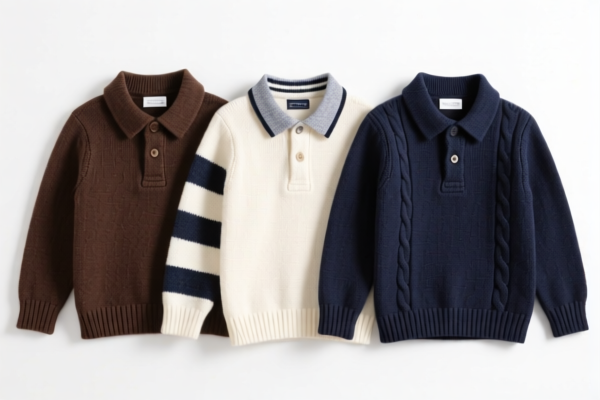
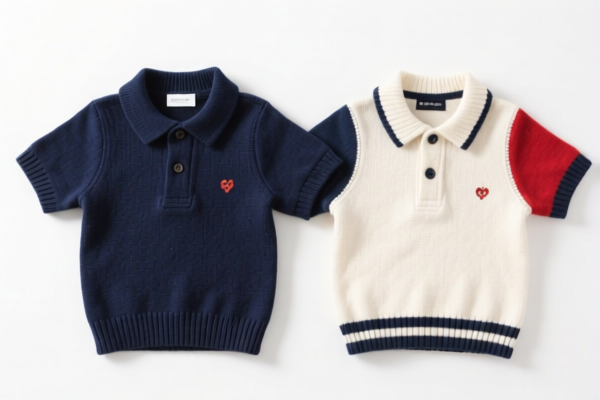
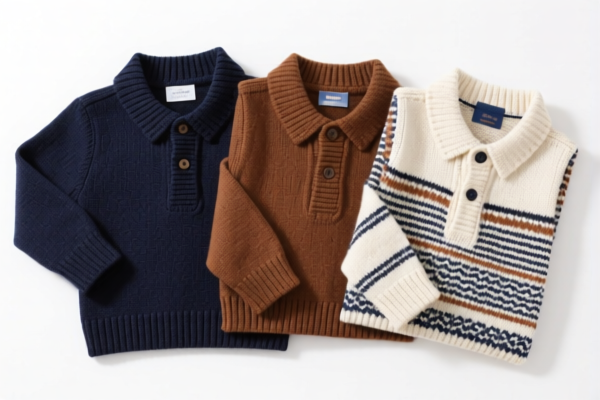
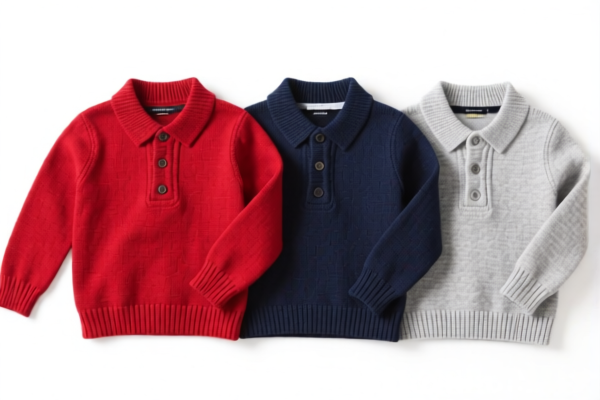
AI Analysis
👕 Boy’s Striped Shirt (Other Textile Materials)
🌐 HS Code Reference & Customs Clearance Guide | 2026 Latest Tariff Analysis | Professional Clearance Strategy
📌 One, Product Definition and Classification: Do You Really Understand "Boy's Striped Shirt"?
A boy's striped shirt is a top garment designed for male children. In international trade, when the material is specified as "other textile materials" (neither cotton, wool, nor synthetic fibers like polyester/nylon in specific restricted categories), it falls under the "other" classification umbrella. This often involves natural fibers not explicitly listed elsewhere or specific blends that don't fit primary textile categories.
⚠️ Key Distinction:
- If the shirt is knitted, it generally falls under Chapter 61 (Articles of Apparel and Clothing Accessories, Knitted or Crocheted).
- If the shirt is woven, it generally falls under Chapter 62 (Articles of Apparel and Clothing Accessories, Not Knitted or Crocheted).
- "Other Textile Materials" implies a specific duty classification that avoids the standard cotton or synthetic fiber rates, often triggering higher "catch-all" or specific non-major fiber rates.
📦 Two, HS Code Classification Details (2026 Latest Tariff Authority Comparison)
Based on the provided data, here are the specific HS Codes and their logical matches for a Boy's Shirt made of Other Textile Materials.
| HS Code | Product Description | Classification Logic | Total Tax Rate |
|---|---|---|---|
6206.90.00.40 |
Boy's Shirt, Woven, Other Textile Materials | Matches the "Other" category definition for non-cotton, non-wool, non-synthetic restricted fabrics. | 24.2% |
6105.90.10.00 |
Boy's Shirt, Knitted, Other Textile Materials | Non-conflict with non-wool/fine animal hair categories; follows the "catch-all" matching principle. | 32.4% |
6105.90.80.60 |
Boy's Shirt, Knitted, Other Textile Materials | Perfect match for "Other Textile Materials" in classification explanation; product form and use are identical. | 23.1% |
6217.90.90.20 |
Boy's Plaid Shirt, Woven, Other Textile Materials | Belongs to "Other" attributes logic; not cotton, wool, etc. Specific to plaid pattern. | 32.1% |
6217.90.90.10 |
Boy's Plaid Shirt, Woven, Other Textile Materials | Classified under "Other Textile Materials"; not cotton or wool restricted materials. | 32.1% |
🔍 Important Note:
- Knitted vs. Woven: The distinction between61xx(Knitted) and62xx(Woven) is critical.6105is for knitted shirts, while6206is for woven shirts.6217is often for other made-up clothing accessories or specific garment parts/variants depending on local interpretation, but here treated as specific shirt types. - "Other Textile Materials": This designation often attracts higher duties than standard cotton or polyester because it doesn't qualify for lower rates assigned to major fiber categories.
💰 Three, 2026 Latest Tariff Rate Breakdown (Including Surcharges & Policy Add-ons)
✅ Applicable Country: United States (US)
✅ Origin: China (CN)
✅ Effective Date: Includes subsequent imports (subject to ongoing trade policies)
🎯 1. 6206.90.00.40 —— Boy's Shirt (Woven, Other Textile)
| Item | Detail |
|---|---|
| Base Tariff | 6.7% |
| Section 301 Surcharge | 7.5% |
| Section 122 Tariff | 10% |
| Total Tax Rate | 24.2% |
| Tax Calculation | CIF Value × 24.2% |
| De Minimis Exemption | ❌ Not Applicable (Section 301 and 122 tariffs typically negate de minimis benefits for high-risk goods) |
📌 Explanation:
- The 6.7% base rate applies to woven shirts of other textile materials.
- The 7.5% is a standard Section 301 additional duty for Chinese goods.
- The 10% is specifically attributed to "Section 122" tariffs (often related to trade enforcement or specific legislative acts targeting apparel/textiles).
- Total 24.2% is significant. Must be factored into landed cost calculations.
🎯 2. 6105.90.10.00 —— Boy's Shirt (Knitted, Other Textile)
| Item | Detail |
|---|---|
| Base Tariff | 14.9% |
| Section 301 Surcharge | 7.5% |
| Section 122 Tariff | 10% |
| Total Tax Rate | 32.4% |
| Tax Calculation | CIF Value × 32.4% |
| De Minimis Exemption | ❌ Not Applicable |
📌 Note:
- Knitted shirts (6105) of "other" materials carry a higher base rate (14.9%) compared to woven ones (6.7%) in this specific classification set.
- The addition of 301 and 122 tariffs pushes the total to 32.4%, making it one of the more expensive options.
🎯 3. 6105.90.80.60 —— Boy's Shirt (Knitted, Other Textile - Specific Subcategory)
| Item | Detail |
|---|---|
| Base Tariff | 5.6% |
| Section 301 Surcharge | 7.5% |
| Section 122 Tariff | 10% |
| Total Tax Rate | 23.1% |
| Tax Calculation | CIF Value × 23.1% |
| De Minimis Exemption | ❌ Not Applicable |
📌 Optimization Tip:
- This code offers the lowest total rate (23.1%) among knitted options.
- Ensure the product description strictly matches the "Other Textile Materials" definition to qualify for the lower 5.6% base rate.
🎯 4. 6217.90.90.20 & 6217.90.90.10 —— Boy's Plaid Shirt (Woven, Other Textile)
| Item | Detail |
|---|---|
| Base Tariff | 14.6% |
| Section 301 Surcharge | 7.5% |
| Section 122 Tariff | 10% |
| Total Tax Rate | 32.1% |
| Tax Calculation | CIF Value × 32.1% |
| De Minimis Exemption | ❌ Not Applicable |
📌 Plaid Pattern Specifics:
- These codes are specific to plaid patterns.
- Despite being woven (like6206), the base rate is higher (14.6% vs 6.7%), resulting in a 32.1% total rate.
- Do not use these for solid-color shirts; use6206.90.00.40instead for lower taxes.
🛠️ Four, Customs Clearance Practical Advice (Battle-Tested Pitfall Guide)
✅ 1. Documentation Checklist (Must-Haves)
| Document | Required | Description |
|---|---|---|
| ✅ Product Specification Sheet | ✔️ | Must detail fabric composition ("Other Textile Materials"), knit vs. weave, and design (striped/plaid). |
| ✅ Fabric Content Label | ✔️ | Clear photo of the inside label showing material composition. |
| ✅ Commercial Invoice | ✔️ | Must accurately describe the item as "Boy's Shirt" and specify "Other Textile Materials". Avoid vague terms like "Clothing". |
| ✅ Packing List | ✔️ | Clear breakdown of items. Do not mix different HS codes in one line item. |
| ✅ Origin Certificate | ✔️ | If applicable, though China origin will still incur surcharges. |
✅ 2. Declaration Tips (Key Mantras)
🔥 "Weave vs. Knit, Base Rate Matters, Section 122 is Key!"
| Scenario | Correct Declaration | Wrong Practice |
|---|---|---|
| Solid Color, Woven, Other Material | 6206.90.00.40 (24.2%) |
Declare as Knitted (61xx) → Higher tax |
| Plaid, Woven, Other Material | 6217.90.90.20/10 (32.1%) |
Declare as general shirt (6206) → Risk of misclassification penalty |
| Knitted, Other Material (Lowest Rate) | 6105.90.80.60 (23.1%) |
Declare as 6105.90.10.00 → Pay 32.4% unnecessarily |
| Material Ambiguity | Provide Fabric Test Report | Guessing material → Customs seizure or re-classification |
✅ 3. Special Case Handling
| Situation | Handling Advice |
|---|---|
| "Other Textile Materials" Definition | Be prepared to prove the material is NOT cotton, wool, or standard synthetics. Provide fiber analysis if challenged. |
| Striped vs. Plaid | Use 6206 for stripes (if woven) and 6217 for plaid (if specified). Mislabeling patterns can lead to duty discrepancies. |
| De Minimis Risk | Even for small shipments, Section 301 and 122 tariffs apply. Do not rely on $800 de minimis exemption for China-origin apparel. |
| Section 122 Tariff | This is a critical cost driver. Ensure your supplier invoices reflect the true value to avoid under-declaration penalties. |
🌍 Five, Global Market Comparison (2026 Latest)
| Country/Region | Recommended HS Code | Est. Tax Rate (China Origin) | Certification | Note |
|---|---|---|---|---|
| 🇺🇸 USA | 6105.90.80.60 |
23.1% - 32.4% | None specific for textiles | High due to 301 & 122 tariffs |
| 🇨🇳 China | 6105.90.00.00 |
~10-15% | None | Lower base rates, no 301/122 |
| 🇪🇺 EU | 6105.90.90 |
~12-16% | CE (if applicable) | No Section 301/122 equivalent |
| 🇬🇧 UK | 6105.90.90 |
~12-16% | UKCA | Post-Brexit rules apply |
| 🇨🇦 Canada | 6105.90.90 |
~17-20% | None | CUSMA benefits if from US/MX |
📌 Conclusion:
- The US market is the most expensive due to the combination of Base + 301 + 122 tariffs.
- Cost Optimization: Choose6105.90.80.60(23.1%) over6105.90.10.00(32.4%) if the product fits the criteria.
- Woven shirts (6206) offer a middle ground at 24.2% but require careful material verification.
📌 Six, Common Errors & Pitfall Guide (Lessons Learned)
❌ Error 1: Declaring "Cotton Shirt" when it's "Other Textile"
👉 Consequence: Misclassification, potential fraud penalties, and incorrect duty assessment.
❌ Error 2: Ignoring "Section 122" Tariff
👉 Consequence: Under-paying duties by 10%. Customs will demand back payment + interest.
❌ Error 3: Confusing Knitted (61xx) and Woven (62xx)
👉 Consequence: Wrong HS Code → Higher tax or clearance delay.
❌ Error 4: Assuming De Minimis Applies
👉 Consequence: Shipment held at border. Section 301 and 122 tariffs do not apply to de minimis exceptions for China.
✅ Correct Practice:
"Boy's Woven Shirt, Striped, Made of Other Textile Materials, 100% [Specific Fabric Name], Model XYZ"
🎯 Seven, Conclusion: Professional Declaration for Cost Efficiency
🎯 Remember the Mantra:
🔹 "Knitted vs. Woven, Check the Base. Section 122 Adds Ten, Total is Key."
🔹 "Use6105.90.80.60for Lowest Knitted Rate (23.1%). Use6206.90.00.40for Woven (24.2%)."
📌 Pro Tip:
If your shirts are originally manufactured in Vietnam, Mexico, or Thailand, you may qualify for exemptions from Section 301 tariffs, significantly reducing the total duty. Always verify the Country of Origin on the label.
📣 Immediate Action:
📞 Contact a licensed customs broker.
📄 Provide detailed fabric composition reports.
🚀 Apply for an Advance Ruling if importing large volumes to ensure HS Code certainty and tax accuracy.
✨ Professional Clearance Starts with Accurate Classification!
💼 Your Profit Margin Depends on This 10% Detail!
Customer Reviews
About HS Code Classification
The Harmonized System (HS) is an internationally standardized nomenclature developed by the World Customs Organization (WCO) to classify traded products. Over 200 countries use the HS system as the basis for customs tariffs, trade statistics, and import/export regulations.
Each HS code follows a hierarchical structure:
- Chapter (2 digits) — Broad category of goods (e.g., Chapter 84: Machinery and Mechanical Appliances)
- Heading (4 digits) — More specific grouping within the chapter
- Subheading (6 digits) — Internationally standardized breakdown, used by all WCO member countries
- National subdivisions (8-10 digits) — Country-specific extensions for further classification, such as US HTSUS 10-digit codes
Correct HS code classification is essential for smooth customs clearance, accurate duty payment, and compliance with trade regulations. Misclassification can lead to customs delays, overpayment of duties, or penalties.
When importing from CN to US, the applicable tariff rates may include:
- Most-Favored-Nation (MFN) rate — The standard duty rate applied to WTO members
- General rate — Applied to countries without trade agreements
- Trade remedy duties — Additional tariffs such as Section 301 (anti-dumping), Section 232 (national security), or countervailing duties
The information provided on this page is for reference purposes only. For official classification, please consult with your local customs authority or a licensed customs broker.