Boys' Autumn Knitted Wool Blend Shirt
CN → US| HS Code | Tariff Rate | Origin | Destination | Doc |
|---|---|---|---|---|
| 6111900530 | 31.1% | CN | US | Official Doc |
| 6105901000 | 32.4% | CN | US | Official Doc |
| 6110190025 | 33.5% | CN | US | Official Doc |
| 6111900510 | 31.1% | CN | US | Official Doc |
| 6105201000 | 23.6% | CN | US | Official Doc |
Product Images


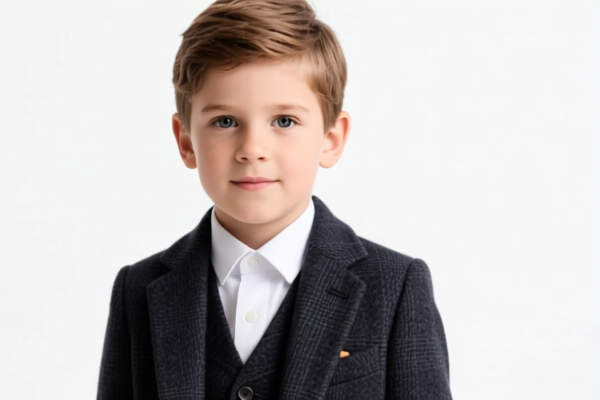

AI Analysis
👔 Boys' Autumn Knitted Wool Blend Shirt
🌐 HS Code Reference & Customs Clearance Guide | 2026 Latest Tariff Analysis | Professional Clearance Strategy
📌 One: Product Definition & Classification: Do You Truly Understand "Wool Blend Shirts"?
A Boys' Autumn Knitted Wool Blend Shirt is a seasonal garment designed for children, combining the warmth of wool with the durability of synthetic or other fibers, knitted (not woven) for flexibility and comfort. In international trade, the classification of such shirts depends heavily on:
- Fiber Composition: The specific ratio of wool to other materials (e.g., acrylic, polyester).
- Garment Type: Is it a "shirt," "sweater," or "vest"? The HS Code varies if it's classified as a specific "knitted shirt" (6105) versus a "knitted sweater" (6110) or "other knitted clothing" (6111).
- Age Group: "Boys'" implies it falls under children's apparel categories.
- Knitting vs. Woven: This product is explicitly knitted, placing it in Chapter 61.
⚠️ Critical Distinction:
- If the garment is primarily a sweater/jumper (thicker, pullover, or cardigan) → Often falls under 6110.
- If it is a collared shirt with buttons (resembling a traditional shirt) → Often falls under 6105.
- If it is a generic top not fitting specific "shirt" definitions → Falls under 6111.
Note: The data below shows multiple valid classifications depending on the exact cut, collar, and fiber mix.
📦 Two: HS Code Classification Details (2026 Latest Tariff Authority)
| HS Code | Product Description | Applicable Scenario | Fiber/Material Composition |
|---|---|---|---|
6111.90.05.10 |
Boys' Knitted Wool Blend Shirt (Miscellaneous Other Knitted) | General knitted tops, specific wool blend children's wear | Wool blend, Knitted |
6105.20.10.00 |
Boys' Knitted Wool Blend Shirt (Man-made Fiber + Wool) | Man-made fibers mixed with wool, Knitted Shirt form | Man-made + Wool, Knitted |
6110.11.00.25 |
Boys' Knitted Wool Blend Shirt (Wool >18.5%) | High wool content (>18.5% of weight), Knitted Sweater-style | Wool dominant, Knitted |
6110.19.00.25 |
Boys' Knitted Wool Blend Shirt (Other Animal Hair) | Other fine animal hair blend, Knitted form | Wool/Other Animal Hair, Knitted |
6105.90.10.00 |
Boys' Knitted Wool Blend Shirt (Other Fibers) | Other textile materials (non-man-made) + Wool, Knitted Shirt | Other Fibers + Wool, Knitted |
6111.90.05.30 |
Boys' Knitted Wool Blend Shirt (Specific Wool Blend) | Child-specific knitted wool items, miscellaneous | Wool, Knitted |
🔍 Key Observation:
- All listed codes incur significant tariffs (23.6% to 33.5%) due to USITC Section 301 and 122 Section levies. - The tax rate varies slightly based on the base tariff (13.6% to 16.0%) applied before the fixed 10% and 7.5% additions. - 6105 codes are for "Shirts" (typically collared), while 6110 are for "Sweaters/Jumpers" and 6111 for "Other".
💰 Three: 2026 Latest Tariff Rate Breakdown (Including Surcharges & Policy Add-ons)
✅ Destination: United States (US)
✅ Origin: China (CN)
✅ Effective Date: Current (2025-2026 Regime)
🎯 1. Code 6111.90.05.10 & 6111.90.05.30
(Miscellaneous Knitted Wool Blend)
Total Tax: 31.1%**
| Item | Content |
|---|---|
| Base Duty | 13.6% (Standard MFN Rate) |
| Section 301 Surcharge | +7.5% (Trade War Additional Tariff) |
| 122 Section Tariff | +10.0% (Targeted China Specific Tariff) |
| Total Effective Rate | 31.1% |
| Calculation | CIF Value × 31.1% |
| De Minimis Eligibility | ❌ No (Section 321 exemptions do not apply to these specific high-risk categories) |
📌 Explanation:
- The 7.5% surcharge is a legacy Section 301 rate for certain apparel categories. - The 10% "122 Section" tariff is a targeted measure against specific Chinese textile products, significantly increasing the cost. - Combined, these push the total to 31.1%, making this a high-cost category for US importers.
🎯 2. Code 6105.20.10.00
(Man-made + Wool Knitted Shirt)
Total Tax: 23.6% (Lowest in this set)
| Item | Content |
|---|---|
| Base Duty | 13.6% |
| Section 301 Surcharge | +0.0% (No additional Section 301 surcharge for this specific sub-class) |
| 122 Section Tariff | +10.0% |
| Total Effective Rate | 23.6% |
| Calculation | CIF Value × 23.6% |
| De Minimis Eligibility | ❌ No |
📌 Explanation:
- This is the most tax-efficient classification among the options provided. - The absence of the 7.5% Section 301 surcharge (due to specific man-made fiber/wool blend rules) saves a significant margin. - Strategy: If the garment allows, try to qualify under 6105.20.10.00 rather than pure wool or generic blends.
🎯 3. Codes 6110.11.00.25 & 6110.19.00.25
(Wool Sweaters/Jumpers)
Total Tax: 33.5% (Highest)
| Item | Content |
|---|---|
| Base Duty | 16.0% (Higher base rate for wool) |
| Section 301 Surcharge | +7.5% |
| 122 Section Tariff | +10.0% |
| Total Effective Rate | 33.5% |
| Calculation | CIF Value × 33.5% |
| De Minimis Eligibility | ❌ No |
📌 Explanation:
- Wool-heavy items attract a higher Base Duty (16.0%) compared to mixed fibers. - Combined with the 17.5% in surcharges, this results in the highest total tax (33.5%). - Risk: If the wool content is high, this category is the most expensive to clear.
🎯 4. Code 6105.90.10.00
(Other Knitted Shirts)
Total Tax: 32.4%*
| Item | Content |
|---|---|
| Base Duty | 14.9% |
| Section 301 Surcharge | +7.5% |
| 122 Section Tariff | +10.0% |
| Total Effective Rate | 32.4% |
| Calculation | CIF Value × 32.4% |
| De Minimis Eligibility | ❌ No |
📌 Explanation:
- This covers "Other" shirts not falling into specific man-made fiber categories. - Slightly cheaper than the pure wool sweaters but more expensive than the man-made/wool mix (6105.20).
🛠️ Four: Customs Clearance Practical Advice (Avoiding Pitfalls)
✅ 1. Preparation Checklist (Mandatory)
| Document | Requirement | Reason |
|---|---|---|
| ✅ Composition Label | ✔️ Critical | Must explicitly state "% Wool" and "% Other Fibers".海关 will verify fiber ratios. |
| ✅ Fabric Swatches | ✔️ Recommended | Physical proof of "Knitted" vs. "Woven" and fiber type. |
| ✅ Size Chart & Style | ✔️ | Must match "Boys'" definition (e.g., specific sizing standards). |
| ✅ Invoice & Packing List | ✔️ | Must clearly describe as "Knitted Wool Blend Shirt". |
| ✅ Country of Origin | ✔️ | Proof of Chinese origin is required to apply the surcharges. |
| ✅ HS Code Pre-Ruling | ⭐ Strongly Recommended | Since multiple codes exist (6105, 6110, 6111), a pre-ruling prevents re-classification delays. |
✅ 2. Declaration Strategy (Key Rules)
🔥 "Classify by Fiber, Define by Cut, Avoid the 122 Trap!"
| Situation | Correct Declaration | Wrong Declaration (Risk) |
|---|---|---|
| High Wool Content (>18.5%) | Use 6110 (Sweater) | ❌ Declaring as "Shirt" (6105) → Penalties/Seizure |
| Man-made + Wool Mix | Use 6105.20.10.00 (Best Rate) | ❌ Declaring as "Other" (6111) → 31.1% vs 23.6% |
| Collared Button Shirt | Use 6105 | ❌ Declaring as "Sweater" (6110) → Higher Base Duty (16%) |
| Generic Knitted Top | Use 6111 | ❌ Declaring as "Shirt" → Mismatch of function |
📌 Strategy:
- If the garment is a collared shirt with man-made fibers mixed with wool, prioritize6105.20.10.00to save 8% in tariffs (23.6% vs 31.1%). - If it is a pullover/sweater with high wool, expect 33.5%.
✅ 3. Special Handling Tips
| Scenario | Handling Suggestion |
|---|---|
| OEM Custom Orders | Ensure the "Boys'" designation matches the target market's size standards (US vs. EU). |
| Mixed Shipment | If shipping with other textiles, declare each HS Code separately to avoid "mixed" penalties. |
| Wool Content Dispute | Provide a Third-Party Lab Report (e.g., SGS, Intertek) proving the exact wool percentage. |
| 122 Section Check | Verify if the specific product falls under the "122 Section" list. Some new exemptions may apply, but currently, it is 10%. |
🌍 Five: Global Market Comparison (2026 Context)
| Country/Region | Recommended HS Code | Tariff (China Origin) | Certification | Notes |
|---|---|---|---|---|
| 🇺🇸 USA | 6105.20.10.00 (Optimized) |
23.6% | No special cert | High risk of 31-33% if misclassified |
| 🇨🇳 China | 6105.20.10.00 |
5-15% | CCC (if needed) | No Section 301/122 |
| 🇪🇺 EU | 6110.11.00 |
12-16% | CE (if labeled) | No Section 301, but VAT applies |
| 🇨🇦 Canada | 6105.10.00 |
Varies | No special cert | Lower tariffs, but strict origin rules |
📌 Conclusion:
- USA is the most punitive market for knitted wool blends due to the Section 301 and 122 Section叠加 (stacking). - Optimization Strategy: Focus on6105.20.10.00(Man-made + Wool) to minimize the 7.5% surcharge.
📌 Six: Common Errors & Pitfalls (Lessons Learned)
❌ Error 1: Calling a "Sweater" a "Shirt" to get a lower base rate.
👉 Consequence: Classification audit, potential 33.5% tax instead of claimed lower rate + fines.
❌ Error 2: Not specifying the Wool % on the label.
👉 Consequence: Customs may guess the worst-case scenario (High Wool) → 33.5%.
❌ Error 3: Ignoring the 122 Section surcharge.
👉 Consequence: Budgeting based on 13.6% base only → Unexpected 10% loss on profits.
❌ Error 4: Treating "Knitted" as "Woven".
👉 Consequence: Wrong Chapter (61 vs 62) → Complete Rejection.
✅ Correct Approach:
"Boys' Knitted Shirt, 60% Polyester / 40% Wool, Collared, Button Front, Size 8-12 US."
🎯 Seven: Conclusion: Precision is Profit!
🎯 Remember the Golden Rules:
🔹 "Man-made + Wool =
6105.20= 23.6% (Best!)"
🔹 "Pure Wool =6110= 33.5% (Expensive!)"
🔹 "122 Section + 301 = Always Pay Extra"
🔹 "Pre-Ruling is your Shield!"
📌 Pro Tip:
If you are importing large volumes, consider transshipment to a third country (e.g., Vietnam) where different rules might apply, BUT ensure the "Substantial Transformation" test is met to avoid US Customs penalties.
📣 Take Action Now:
📞 Consult a Customs Broker + Submit HS Code Pre-Ruling
🚀 Secure your margins, ensure smooth clearance, and avoid the 33.5% tax trap!
✨ Professional Clearance Starts with the Right HS Code!
💼 Every Percent of Tax Counts!
Customer Reviews
About HS Code Classification
The Harmonized System (HS) is an internationally standardized nomenclature developed by the World Customs Organization (WCO) to classify traded products. Over 200 countries use the HS system as the basis for customs tariffs, trade statistics, and import/export regulations.
Each HS code follows a hierarchical structure:
- Chapter (2 digits) — Broad category of goods (e.g., Chapter 84: Machinery and Mechanical Appliances)
- Heading (4 digits) — More specific grouping within the chapter
- Subheading (6 digits) — Internationally standardized breakdown, used by all WCO member countries
- National subdivisions (8-10 digits) — Country-specific extensions for further classification, such as US HTSUS 10-digit codes
Correct HS code classification is essential for smooth customs clearance, accurate duty payment, and compliance with trade regulations. Misclassification can lead to customs delays, overpayment of duties, or penalties.
When importing from CN to US, the applicable tariff rates may include:
- Most-Favored-Nation (MFN) rate — The standard duty rate applied to WTO members
- General rate — Applied to countries without trade agreements
- Trade remedy duties — Additional tariffs such as Section 301 (anti-dumping), Section 232 (national security), or countervailing duties
The information provided on this page is for reference purposes only. For official classification, please consult with your local customs authority or a licensed customs broker.