Boys' Blended Formal Shirt
CN → US| HS Code | Tariff Rate | Origin | Destination | Doc |
|---|---|---|---|---|
| 6105202010 | 42.0% | CN | US | Official Doc |
| 6105202030 | 49.5% | CN | US | Official Doc |
| 6205201000 | 26.2% | CN | US | Official Doc |
| 6205202026 | 37.2% | CN | US | Official Doc |
| 6205302030 | 0.0% | CN | US | Official Doc |
Product Images
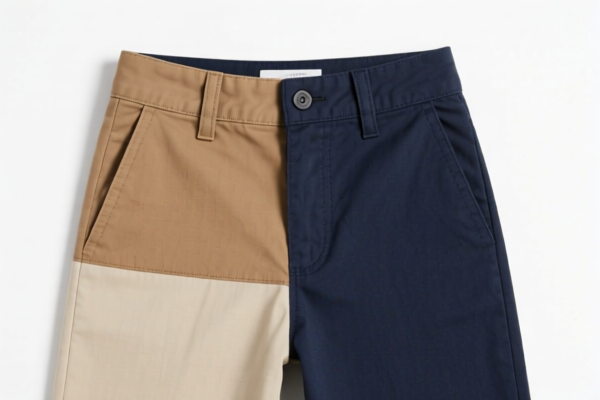
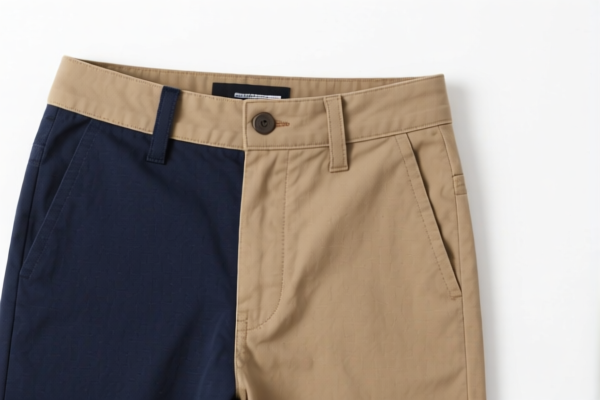
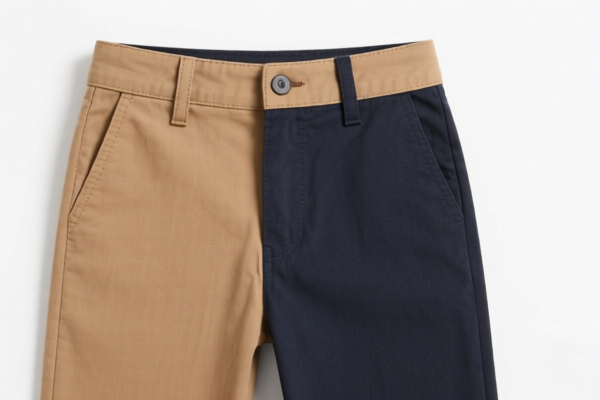
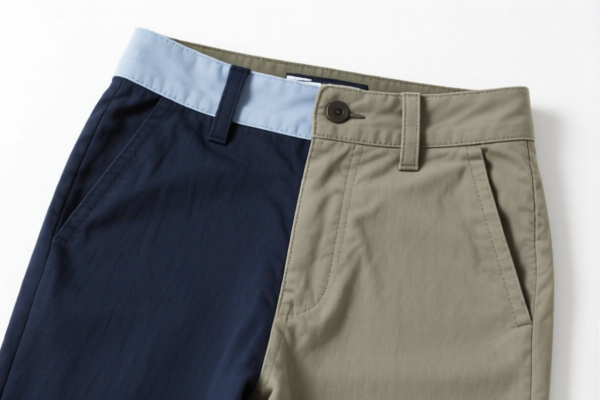
AI Analysis
👔 Boys' Blended Formal Shirt (Knitted/Woven)
🌐 HS Code Reference & Customs Clearance Guide | 2026 Latest Tariff Analysis | Professional Clearance Strategy
📌 I. Product Definition & Classification: What is a "Blended Formal Shirt"?
A "Boys' Blended Formal Shirt" typically refers to a dress shirt designed for male children, constructed from a mixture of fibers (e.g., Cotton/Polyester, Cotton/Acrylic, etc.). In international trade, the classification hinges on two critical factors: 1. Manufacturing Method: Is it Knitted/Crocheted (Chapter 61) or Woven (Chapter 62)? 2. Material Composition: Which fiber constitutes the majority by weight?
⚠️ Key Distinction:
- If the shirt is knitted or crocheted (stretchy, looped fabric) → Chapter 61.
- If the shirt is woven (flat interlaced threads, classic dress shirt feel) → Chapter 62.
- "Blended": The tariff rate depends on the primary fiber. If cotton is the main component, it falls under cotton subheadings. If synthetic/man-made fibers are dominant, it falls under synthetic subheadings.
📦 II. HS Code Classification Details (2026 Latest Tariff Authority对照)
Based on the provided data, here are the five potential HS Codes and their corresponding rationales for a "Boys' Blended Formal Shirt":
| HS Code | Product Description & Rationale | Application Scenario | Total Tax Rate |
|---|---|---|---|
6105.20.20.10 |
Knitted/Crocheted Men's Boys' Shirts of Cotton/Synthetic Fiber Matches the "formal shirt" usage and form. Material inferred as cotton or man-made fiber. Fits knitted formal shirt characteristics. |
Knitted dress shirt (soft, stretchy) | 42.0% |
6105.20.20.30 |
Hand-Knitted/Crocheted Formal Shirt for Boys Matches formal shirt usage, form is knitted/crocheted. Material inferred as fiber. Fits classification requirements for handmade knitted goods. |
Hand-knitted or high-end crocheted formal shirt | 49.5% |
6205.20.10.00 |
Woven Men's Boys' Shirts (Cotton/Linen/Silk Inferred) Matches formal shirt usage. "Hand-weaving" or traditional weaving craft fits woven characteristics. Material inferred as cotton, linen, or silk. No conflict. |
Woven dress shirt (classic, crisp fabric) | 26.2% |
6205.20.20.26 |
Other Woven Men's Boys' Shirts Matches formal shirt usage and form. Although material is not explicitly stated, it infers a fallback logic for cotton-based items. |
Generic woven shirt, potentially synthetic blend | 37.2% |
6205.30.20.30 |
Woven Shirts of Man-Made Fibers Matches formal shirt usage and form. Material inferred as man-made fibers (polyester, viscose, etc.). Fits classification rules for synthetic blends. |
Synthetic-blend woven shirt (e.g., 65% polyester/35% cotton) | 29.1¢/kg + 25.9% + 10.0% |
🔍 Critical Note:
- Chapter 61 vs. Chapter 62: The biggest cost difference often lies here. Knitted shirts (6105) generally face higher base tariffs (32%) than woven shirts (6205, base 8.7%-19.7%).
- "Hand-Knitted" Surcharge: Code6105.20.20.30has the highest tax (49.5%) due to additional duties. Avoid this unless the product is genuinely hand-crafted.
💰 III. 2026 Latest Tariff Rate Breakdown (Including Add-ons)
✅ Applicable Country: United States (US)
✅ Origin: China (CN)
✅ Effective Time: Current rates include Section 122 and other add-ons.
🎯 1. 6105.20.20.10 — Knitted/Crocheted Shirt (Cotton/Synthetic)
| Item | Content |
|---|---|
| Base Tariff | 32.0% |
| Additional Tariff (Section 301) | 0.0% (Note: Data shows 0.0%, likely due to specific exclusions or recent adjustments, but check latest USITC lists) |
| Section 122 Tariff | 10.0% |
| Total Effective Tax | 42.0% |
| Calculation | CIF Value × 42.0% |
| De Minimis Exemption | ❌ Not Applicable (High-value formal wear) |
📌 Interpretation:
- The 32% base rate reflects the US protection of domestic textile manufacturing.
- The 10% Section 122 duty is an additional levy on certain textile imports.
- Total 42% is a significant cost factor. Ensure the fabric is truly knitted to justify this code; misclassification can lead to penalties.
🎯 2. 6105.20.20.30 — Hand-Knitted/Crocheted Shirt
| Item | Content |
|---|---|
| Base Tariff | 32.0% |
| Additional Tariff (Section 301) | 7.5% |
| Section 122 Tariff | 10.0% |
| Total Effective Tax | 49.5% |
| Calculation | CIF Value × 49.5% |
📌 Interpretation:
- This is the most expensive option.
- The 7.5% Section 301 tariff is applied in addition to the base and Section 122 duties.
- Avoid this code unless the shirt is explicitly marketed and documented as "hand-knitted." For mass-produced knitted shirts, use6105.20.20.10.
🎯 3. 6205.20.10.00 — Woven Shirt (Cotton/Linen/Silk Inferred)
| Item | Content |
|---|---|
| Base Tariff | 8.7% |
| Additional Tariff (Section 301) | 7.5% |
| Section 122 Tariff | 10.0% |
| Total Effective Tax | 26.2% |
| Calculation | CIF Value × 26.2% |
📌 Interpretation:
- Lowest total tax among standard codes.
- The 8.7% base rate is much lower than knitted shirts.
- If the shirt is woven and primarily cotton/linen, this is the most cost-effective clearance path.
- Requirement: Must be woven fabric, not knitted.
🎯 4. 6205.20.20.26 — Other Woven Shirt
| Item | Content |
|---|---|
| Base Tariff | 19.7% |
| Additional Tariff (Section 301) | 7.5% |
| Section 122 Tariff | 10.0% |
| Total Effective Tax | 37.2% |
| Calculation | CIF Value × 37.2% |
📌 Interpretation:
- Higher base rate (19.7%) than cotton-specific woven shirts.
- Likely applies to synthetic blends where cotton is not the primary fiber by weight, or a "fallback" category.
- More expensive than6205.20.10.00.
🎯 5. 6205.30.20.30 — Woven Shirt of Man-Made Fibers
| Item | Content |
|---|---|
| Base Tariff | 29.1¢/kg + 25.9% |
| Additional Tariff (Section 301) | 0.0% |
| Section 122 Tariff | 10.0% |
| Total Effective Tax | 29.1¢/kg + 35.9% (approx) |
| Calculation | (Weight × $0.291) + (CIF Value × 35.9%) |
📌 Interpretation:
- Specific vs. Ad Valorem: This code uses a compound rate (specific duty per kg + ad valorem percentage).
- For lightweight shirts, the specific duty may be negligible, but the 25.9% base + 10% Section 122 adds up.
- Suitable if the shirt is primarily made of man-made fibers (polyester, nylon, acrylic) and woven.
🛠️ IV. Customs Clearance Practical Advice (Pitfall Avoidance)
✅ 1. Documentation Checklist (Must-Haves)
| Document | Mandatory | Description |
|---|---|---|
| ✅ Fabric Composition Label | ✔️ | Must clearly state % of each fiber (e.g., "60% Cotton, 40% Polyester"). |
| ✅ Woven vs. Knitted Declaration | ✔️ | Critical. Provide a swatch or technical drawing showing the weave/knit structure. |
| ✅ Product Photos | ✔️ | Show the shirt, tags, and close-ups of the fabric texture. |
| ✅ Commercial Invoice | ✔️ | Clearly state "Boys' Formal Shirt" and the HS Code. |
| ✅ Origin Certificate | ✔️ | If claiming preferential rates under FTAs (though limited for textiles from China). |
✅ 2. Classification Strategy (Key Mnemonics)
🔥 "Woven vs. Knitted, Cotton vs. Synthetic, Hand vs. Machine!"
| Scenario | Correct HS Code | Tax Implication |
|---|---|---|
| Knitted, Machine-Made | 6105.20.20.10 |
42.0% |
| Knitted, Hand-Made | 6105.20.20.30 |
49.5% (High Risk/Cost) |
| Woven, Cotton/Linen Primary | 6205.20.10.00 |
26.2% (Best Option) |
| Woven, Synthetic Primary | 6205.30.20.30 |
Compound Rate |
| Woven, Other Blends | 6205.20.20.26 |
37.2% |
📌 Note:
- Misclassification Risk: Declaring a knitted shirt as woven (6205) to save tax is fraud. US CBP uses fabric analysis.
- "Blended" Means: Check the primary fiber. If cotton > 50%, use cotton codes. If synthetic > 50%, use synthetic codes.
✅ 3. Special Cases
| Case | Handling Advice |
|---|---|
| OEM/Contract Manufacturing | Ensure the invoice matches the supplier's name and the factory's location. |
| Packaging | If shipped with accessories (ties, pocket squares), declare them separately if they have different HS codes. |
| Seasonal Import | High volume during back-to-school season. Pre-clearance is recommended to avoid delays. |
🌍 V. Global Market Comparison (2026)
| Country/Region | Recommended HS Code | Tariff (China Origin) | Key Certification | Notes |
|---|---|---|---|---|
| 🇺🇸 USA | 6205.20.10.00 (Woven) |
26.2% | None specific | High tariffs apply; Section 122 is critical. |
| 🇪🇺 EU | 6105/6205 (Varies) | 12% - 16% | CE (if functional) | Lower base rates but complex rules of origin. |
| 🇨🇳 China (Import) | 6105/6205 | 8% - 13% | GB Standards | Different tariff structure; focus on domestic compliance. |
| 🇦🇺 Australia | 6105/6205 | 5% - 10% | ACCC Labels | No major Section 122 equivalent. |
📌 Conclusion:
- USA is the most expensive market for Chinese-made shirts due to Section 122 and potential Section 301 duties.
- Woven cotton shirts (6205.20.10.00) offer the best cost efficiency in the US.
- Knitted shirts are significantly more expensive due to higher base tariffs.
📌 VI. Common Errors & Pitfalls (Lessons Learned)
❌ Error 1: Declaring a knitted shirt as woven to get a lower 8.7% base rate.
👉 Consequence: CBP inspection will reveal the knit structure. Penalties + Back Taxes + Seizure.
❌ Error 2: Not specifying fiber content.
👉 Consequence: Customs will assign the highest possible tax rate based on the most unfavorable fiber assumption.
❌ Error 3: Using "Hand-Knitted" code for machine-made shirts.
👉 Consequence: Overpayment of tax (49.5% vs 42.0%). No refund for "over-classification."
❌ Error 4: Ignoring Section 122.
👉 Consequence: All textile/apparel imports from China are subject to this 10% levy. Failure to declare leads to 100% penalty.
✅ Correct Declaration Example:
"Boys' Formal Shirt, Woven, 60% Cotton / 40% Polyester, Not Knitted, HS Code 6205.20.10.00, Origin: China"
🎯 VII. Conclusion: Precision Classification Saves Money!
🎯 Remember Mnemonics:
🔹 "Woven is Cheaper than Knitted (62 vs 61)"
🔹 "Cotton is Cheaper than Synthetic (Base 8.7% vs 19.7%+)"
🔹 "Section 122 is 10% on Everything!"
🔹 "Hand-Knitted is the Most Expensive (49.5%)"
📌 Pro Tip:
If your shirt is knitted, try to negotiate with your supplier to switch to a woven fabric if the design allows, as it saves 15.8% in taxes.
For knitted shirts, ensure they are machine-made, not hand-knitted, to save 7.5%.
📣 Immediate Action:
📞 Contact a Customs Broker + Provide Fabric Swatches + Apply for Pre-Ruling
🚀 Clear Your Boys' Formal Shirts Efficiently, Maximize Profits!
✨ Professional Clearance Starts with Accurate Classification!
💼 Every Dollar Counts in Global Trade!
Customer Reviews
About HS Code Classification
The Harmonized System (HS) is an internationally standardized nomenclature developed by the World Customs Organization (WCO) to classify traded products. Over 200 countries use the HS system as the basis for customs tariffs, trade statistics, and import/export regulations.
Each HS code follows a hierarchical structure:
- Chapter (2 digits) — Broad category of goods (e.g., Chapter 84: Machinery and Mechanical Appliances)
- Heading (4 digits) — More specific grouping within the chapter
- Subheading (6 digits) — Internationally standardized breakdown, used by all WCO member countries
- National subdivisions (8-10 digits) — Country-specific extensions for further classification, such as US HTSUS 10-digit codes
Correct HS code classification is essential for smooth customs clearance, accurate duty payment, and compliance with trade regulations. Misclassification can lead to customs delays, overpayment of duties, or penalties.
When importing from CN to US, the applicable tariff rates may include:
- Most-Favored-Nation (MFN) rate — The standard duty rate applied to WTO members
- General rate — Applied to countries without trade agreements
- Trade remedy duties — Additional tariffs such as Section 301 (anti-dumping), Section 232 (national security), or countervailing duties
The information provided on this page is for reference purposes only. For official classification, please consult with your local customs authority or a licensed customs broker.