Boys' Business Shirt (Other Textile Materials)
CN → US| HS Code | Tariff Rate | Origin | Destination | Doc |
|---|---|---|---|---|
| 6105908060 | 23.1% | CN | US | Official Doc |
| 6105908030 | 23.1% | CN | US | Official Doc |
| 6205904040 | 20.3% | CN | US | Official Doc |
| 6205903030 | 17.1% | CN | US | Official Doc |
| 6110909023 | 23.5% | CN | US | Official Doc |
Product Images

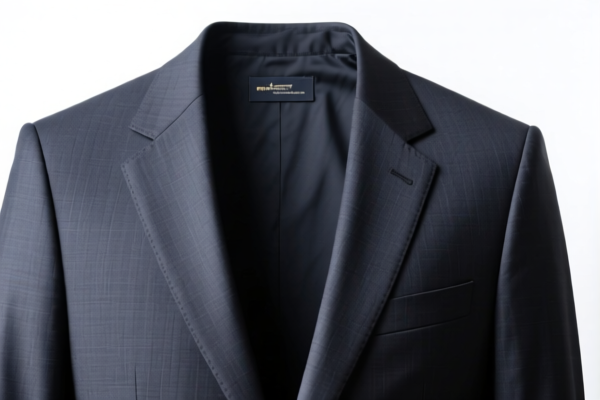


AI Analysis
👔 Boys' Business Shirt (Other Textile Materials)
🌐 HS Code Reference & Customs Clearance Guide | 2026 Latest Tariff Analysis | Professional Clearance Strategy
📌 I. Product Definition & Classification: What is a "Boys' Business Shirt"?
Boys' business shirts, typically made from knitted or crocheted fabrics (such as polyester, cotton blends, or other synthetic/textile materials), are formal or semi-formal attire for male children. In international trade, classification depends heavily on the fabric composition, knitted vs. woven status, and specific garment style.
⚠️ Key Distinction Points:
- Knitted vs. Woven: If the shirt is knitted, it generally falls under Chapter 61; if woven, it falls under Chapter 62. However, "Other Textile Materials" often implies synthetic fibers which can appear in both chapters.
- Age Group: Specifically for Boys (under 13/14 years, depending on tariff schedule definitions).
- Material: "Other Textile Materials" usually refers to man-made fibers (synthetic) or other natural fibers not specified as cotton or wool.
📦 II. HS Code Classification Details (Latest 2026 Tariff Schedule)
Based on the provided data, here are the specific HS Codes and their corresponding tax structures for Boys' Business Shirts made from "Other Textile Materials."
| HS Code | Product Description | Total Tax Rate | Tax Breakdown |
|---|---|---|---|
| 6105.90.80.60 | Boys' Short-Sleeve Shirt, Other Textile Materials | 23.1% | Base: 5.6% Add'l: 7.5% Section 301: 10% |
| 6105.90.80.30 | Boys' Shirt, Other Textile Materials | 23.1% | Base: 5.6% Add'l: 7.5% Section 301: 10% |
| 6110.90.90.23 | Boys' Garment, Other Textile Materials | 23.5% | Base: 6.0% Add'l: 7.5% Section 301: 10% |
| 6205.90.40.40 | Boys' Shirt, Other Textile Materials | 20.3% | Base: 2.8% Add'l: 7.5% Section 301: 10% |
| 6205.90.30.30 | Boys' Shirt, Other Textile Materials | 17.1% | Base: 7.1% Add'l: 0.0% Section 301: 10% |
🔍 Critical Note:
- Chapter 61 codes (6105, 6110) are for Knitted or Crocheted garments.
- Chapter 62 codes (6205) are for Non-Knitted (Woven) garments.
- The distinction between6105.90.80.60(Short-Sleeve) and6105.90.80.30(General) is based on sleeve length.
-6205.90.30.30has the lowest total tax (17.1%) because it has no Additional Duty (7.5%) applied, only Base + Section 301.
💰 III. 2026 Latest Tariff Rate Details (Including Surcharges & Policy Add-ons)
✅ Applicable Country: United States (US)
✅ Origin: China (CN)
✅ Effective Date: 2025-11-10 onwards (for subsequent imports)
🎯 1. 6105.90.80.60 & 6105.90.80.30 —— Knitted Boys' Shirts (Other Textile Materials)
| Item | Content |
|---|---|
| Product | Knitted Boys' Shirt (Short-sleeve or General) |
| Base Tariff | 5.6% |
| Additional Duty | +7.5% |
| Section 301 Tariff | +10% |
| Total Effective Rate | 23.1% |
| Tax Calculation | CIF Value × 23.1% |
| De Minimis Eligibility | ❌ Not Eligible (Deny de minimis for Section 301 goods) |
| Legal Basis Path | HTSUS:6105.90.80 → Section 301: 10% → Additional Duty: 7.5% |
📌 Explanation:
- These codes cover knitted shirts. The 7.5% additional duty may apply depending on specific trade remedies or policy adjustments for textile sectors.
- The 10% Section 301 tariff is a mandatory surcharge for Chinese-origin goods in this category.
- Total Cost Impact: Nearly 1/4 of the product value is lost to tariffs.
🎯 2. 6110.90.90.23 —— Knitted Boys' Garment (Sweater/Knitwear Category)
| Item | Content |
|---|---|
| Product | Knitted Boys' Garment (Other Textile Materials) |
| Base Tariff | 6.0% |
| Additional Duty | +7.5% |
| Section 301 Tariff | +10% |
| Total Effective Rate | 23.5% |
| Tax Calculation | CIF Value × 23.5% |
| De Minimis Eligibility | ❌ Not Eligible |
| Legal Basis Path | HTSUS:6110.90.90 → Section 301: 10% → Additional Duty: 7.5% |
📌 Note:
- This code is broader and may apply to knitted tops that don't fit specific "shirt" definitions.
- It has the highest total tax (23.5%) among the listed options due to a slightly higher base rate (6.0%).
🎯 3. 6205.90.40.40 —— Woven Boys' Shirt (Other Textile Materials)
| Item | Content |
|---|---|
| Product | Woven Boys' Shirt |
| Base Tariff | 2.8% |
| Additional Duty | +7.5% |
| Section 301 Tariff | +10% |
| Total Effective Rate | 20.3% |
| Tax Calculation | CIF Value × 20.3% |
| De Minimis Eligibility | ❌ Not Eligible |
| Legal Basis Path | HTSUS:6205.90.40 → Section 301: 10% → Additional Duty: 7.5% |
📌 Insight:
- Woven shirts have a lower base rate (2.8%) compared to knitted ones (5.6%), but the 7.5% additional duty brings the total to 20.3%.
🎯 4. 6205.90.30.30 —— Woven Boys' Shirt (Lowest Tax Option)
| Item | Content |
|---|---|
| Product | Woven Boys' Shirt |
| Base Tariff | 7.1% |
| Additional Duty | +0.0% |
| Section 301 Tariff | +10% |
| Total Effective Rate | 17.1% |
| Tax Calculation | CIF Value × 17.1% |
| De Minimis Eligibility | ❌ Not Eligible |
| Legal Basis Path | HTSUS:6205.90.30 → Section 301: 10% |
📌 Highlight:
- This is the most cost-effective classification in the dataset.
- The 7.5% additional duty is NOT applied here, saving 3.2%–6.4% compared to other codes.
- Caution: Ensure the product strictly meets the definition for this subheading to avoid misclassification penalties.
🛠️ IV. Customs Clearance Practical Advice (Avoiding Pitfalls)
✅ 1. Documentation Checklist (Mandatory)
| Document | Required? | Notes |
|---|---|---|
| ✅ Commercial Invoice | ✔️ | Must clearly state "Boys' Woven Shirt" or "Knitted Shirt" with material breakdown. |
| ✅ Packing List | ✔️ | Detail items per box. |
| ✅ Label Care Tag | ✔️ | Must show fiber content (e.g., "100% Polyester") and country of origin ("Made in China"). |
| ✅ Product Photos | ✔️ | Front/back view, showing collar, sleeves, and label. |
| ✅ Fiber Content Test Report | ✔️ | Third-party lab report confirming "Other Textile Materials" (e.g., polyester, rayon). |
| ✅ HS Code Pre-Ruling | ✔️ | Recommended to secure the 17.1% rate (6205.90.30.30) if applicable. |
✅ 2. Classification Strategy & Tips
🔥 Golden Rule: "Woven > Knitted for Tax Savings (in this dataset)!"
| Scenario | Recommended HS Code | Tax Rate | Why? |
|---|---|---|---|
| Woven Shirt, Specific Subheading | 6205.90.30.30 |
17.1% | Lowest tax. No 7.5% add'l duty. Best for cost optimization. |
| Woven Shirt, General | 6205.90.40.40 |
20.3% | Higher base rate, but still no 7.5% add'l. |
| Knitted Short-Sleeve | 6105.90.80.60 |
23.1% | Higher base (5.6%) + 7.5% add'l + 10% Sec 301. |
| Knitted General | 6105.90.80.30 |
23.1% | Same as above. |
| Knitted Garment (Broad) | 6110.90.90.23 |
23.5% | Highest tax. Avoid if product fits "Shirt" definition. |
✅ 3. Special Case Handling
| Situation | Advice |
|---|---|
| Mixed Materials | If the shirt is 60% Cotton, 40% Polyester, and "Other Textile" doesn't apply, reclassify. "Other" usually means synthetic or non-cotton/wool. |
| Sample vs. Bulk | Both are subject to the same tariffs. De minimis (Section 321) is excluded for Section 301 goods. |
| Origin Marking | Ensure "Made in China" is permanently marked. Failure to mark can result in fines or refusal of entry. |
| Section 301 Exclusions | Check if the specific HTS code has been excluded from Section 301 tariffs. (Note: In this dataset, all include the 10% Sec 301 tax, implying no exclusion). |
🌍 V. Global Market Comparison (2026)
| Market | Recommended HS Code | Tariff (China Origin) | Key Requirement |
|---|---|---|---|
| 🇺🇸 USA | 6205.90.30.30 |
17.1% | FCC/CPSC (if applicable), Correct Origin Marking |
| 🇨🇳 China | 6205.90.30.30 |
~5-10% | CCC (if applicable), GB Standards |
| 🇪🇺 EU | 6205.20.00 (Example) |
Varies (MFN) | CE Label (if safety gear), REACH Compliance |
| 🇬🇧 UK | 6205.20.00 (Example) |
Varies (MFN) | UKCA Marking (if safety gear) |
📌 Conclusion:
- USA imposes the highest effective tariff due to Section 301 and Additional Duties.
- Optimize for6205.90.30.30to minimize costs by 5.4%–6.4% compared to knitted options.
📌 VI. Common Errors & Pitfalls
❌ Error 1: Classifying a Woven shirt as Knitted (6105)
👉 Consequence: Tax jumps from 17.1% to 23.1%. Overpayment of ~6%.
❌ Error 2: Ignoring Section 301
👉 Consequence: Customs may reject the entry or assess penalties for undeclared additional duties.
❌ Error 3: Mislabeling "Other Textile Materials"
👉 Consequence: If the product is 100% Cotton, it falls under 6205.20 or 6105.20, which have different tax rates (potentially lower or higher). Misclassification leads to audits.
❌ Error 4: Assuming De Minimis Applies
👉 Consequence: No de minimis for Section 301 goods. Small shipments still incur full tariffs.
🎯 VII. Final Recommendation
🎯 Optimal Strategy:
- Confirm Fabric: Ensure the shirt is Woven and qualifies for
6205.90.30.30.- Apply for Pre-Ruling: Submit product details to US CBP to confirm the 17.1% rate.
- Documentation: Clearly label as "Boys' Woven Shirt, Other Textile Materials."
- Cost Control: Budget for 17.1% total tariff (Base 7.1% + Sec 301 10%).
📣 Act Now:
📞 Consult a licensed customs broker to verify the 6205.90.30.30 eligibility.
🚀 Save up to 6.4% by choosing the correct low-tax classification!
✨ Precision in Classification, Profit in Clearance!
💼 Every percentage point counts in international trade.
Customer Reviews
About HS Code Classification
The Harmonized System (HS) is an internationally standardized nomenclature developed by the World Customs Organization (WCO) to classify traded products. Over 200 countries use the HS system as the basis for customs tariffs, trade statistics, and import/export regulations.
Each HS code follows a hierarchical structure:
- Chapter (2 digits) — Broad category of goods (e.g., Chapter 84: Machinery and Mechanical Appliances)
- Heading (4 digits) — More specific grouping within the chapter
- Subheading (6 digits) — Internationally standardized breakdown, used by all WCO member countries
- National subdivisions (8-10 digits) — Country-specific extensions for further classification, such as US HTSUS 10-digit codes
Correct HS code classification is essential for smooth customs clearance, accurate duty payment, and compliance with trade regulations. Misclassification can lead to customs delays, overpayment of duties, or penalties.
When importing from CN to US, the applicable tariff rates may include:
- Most-Favored-Nation (MFN) rate — The standard duty rate applied to WTO members
- General rate — Applied to countries without trade agreements
- Trade remedy duties — Additional tariffs such as Section 301 (anti-dumping), Section 232 (national security), or countervailing duties
The information provided on this page is for reference purposes only. For official classification, please consult with your local customs authority or a licensed customs broker.