Boys' Casual Jumpsuit
CN → US| HS Code | Tariff Rate | Origin | Destination | Doc |
|---|---|---|---|---|
| 6103421070 | 33.6% | CN | US | Official Doc |
| 6103431570 | 38.2% | CN | US | Official Doc |
| 6211329081 | 25.6% | CN | US | Official Doc |
| 6203424561 | 34.1% | CN | US | Official Doc |
| 6203439040 | 45.4% | CN | US | Official Doc |
Product Images


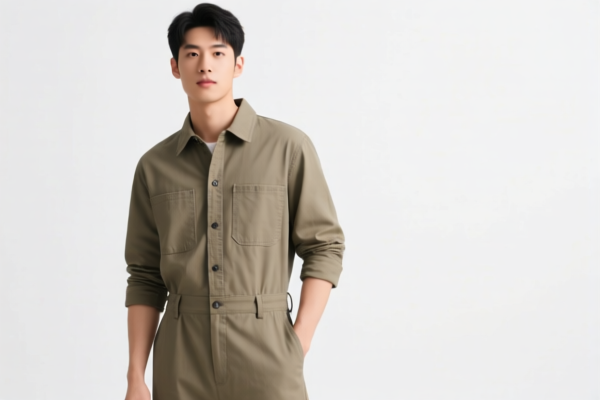

AI Analysis
👕 Boys' Casual Jumpsuit (Romper/Overall Style)
🌐 HS Code Reference & Customs Clearance Guide | 2026 Latest Tariff Analysis | Strategic Entry Protocol
📌 I. Product Definition & Classification: What is a "Boys' Casual Jumpsuit"?
A Boys' Casual Jumpsuit (often referred to as a romper, one-piece, or overall style) is a single-piece garment combining a top and shorts (or trousers) worn by boys for leisure or casual activities. In international trade, the classification depends heavily on:
1. Garment Construction: Is it a knit (knitted from yarn) or woven (woven from fabric)?
2. Material Composition: Cotton, Synthetic Fibers (Polyester/Nylon), or Blends.
3. Target Demographic: Explicitly for "Boys" (typically under 14 years).
⚠️ Critical Classification Logic:
- Knitted (Strung) items usually fall under Heading 61 (Chapter 61).
- Woven items fall under Heading 62 (Chapter 62).
- The specific subheading depends on whether the fabric is Cotton or Synthetic.
- Note: If the garment is specifically for swimming, it may be classified as "Swimwear" (Heading 62 or 61), but "Casual Jumpsuits" are typically excluded from swimwear unless explicitly marketed as such.
📦 II. HS Code Classification Details (Based on Provided Data)
Below are the specific HS Codes identified for "Boys' Casual Jumpsuits" based on the input data, covering both Knitted and Woven variants in Cotton and Synthetic fibers.
| HS Code | Material & Type | Summary of Logic | Total Tax Rate | Tax Breakdown (China Origin) |
|---|---|---|---|---|
| 6103.42.10.70 | Knitted / Cotton / Shorts | Matches "Boys" + "Shorts" form; inferred Cotton material. | 33.6% | Base: 16.1% + Add-on: 7.5% + Section 301 (122): 10% |
| 6103.43.15.70 | Knitted / Synthetic / Shorts | Matches "Boys" + "Shorts"; inferred Synthetic/Natural Fiber mix. | 38.2% | Base: 28.2% + Add-on: 0.0% + Section 301 (122): 10% |
| 6211.32.90.81 | Woven / Cotton / Overall | Matches "Boys" garment; inferred Cotton; no conflict with form. | 25.6% | Base: 8.1% + Add-on: 7.5% + Section 301 (122): 10% |
| 6203.42.45.61 | Woven / Cotton / Shorts | Matches "Shorts" form + "Boys"; inferred Cotton. | 34.1% | Base: 16.6% + Add-on: 7.5% + Section 301 (122): 10% |
| 6203.43.90.40 | Woven / Synthetic / Shorts | Matches "Boys Shorts"; inferred Synthetic or non-swimwear fabric. | 45.4% | Base: 27.9% + Add-on: 7.5% + Section 301 (122): 10% |
🔍 Key Distinctions:
- 6103 vs. 6203/6211:6103is for Knitted shorts/overalls.6203and6211are for Woven garments (overalls/shorts).
- Cotton vs. Synthetic: The material (Cotton vs. Synthetic) drastically changes the Base Tariff (e.g., Cotton knitted is 16.1%, Synthetic knitted is 28.2%).
- Section 122 (10%): All items listed above incur a mandatory 10% additional tariff under Section 122 regulations, regardless of material.
💰 III. 2026 Tariff Rate Deep Dive (Detailed Breakdown)
✅ Applicable Region: United States (US)
✅ Origin: China (CN)
✅ Context: All rates include Base Tariff, Additional Tariff, and Section 122 (10%) surcharge.
🎯 1. 6103.42.10.70 – Knitted Cotton Boys' Shorts/Jumpsuit
- Structure: Knitted fabric (e.g., jersey) made of cotton.
- Base Tariff: 16.1%
- Additional Tariff: 7.5% (Often applies to specific categories)
- Section 122 Tariff: 10% (Mandatory for Chinese origin)
- Total Duty: 33.6%
- Calculation:
CIF Value × 33.6%
📌 Explanation:
- This is the most common entry for casual cotton romper-style jumpsuits. - The 10% Section 122 is a fixed surcharge added on top of the other duties.
🎯 2. 6103.43.15.70 – Knitted Synthetic Boys' Shorts/Jumpsuit
- Structure: Knitted fabric made of synthetic fibers (Polyester/Nylon).
- Base Tariff: 28.2% (Higher than cotton due to fiber type)
- Additional Tariff: 0.0%
- Section 122 Tariff: 10%
- Total Duty: 38.2%
📌 Note: Even though the additional tariff is 0%, the higher Base Tariff (28.2%) makes the total duty higher than the cotton version.
🎯 3. 6211.32.90.81 – Woven Cotton Boys' Overall/Jumpsuit
- Structure: Woven fabric (e.g., denim or twill) made of cotton. Often classified as "One-piece garments" (Heading 6211).
- Base Tariff: 8.1% (Lowest Base Tariff in the list)
- Additional Tariff: 7.5%
- Section 122 Tariff: 10%
- Total Duty: 25.6% (Lowest Total Tax!)
📌 Strategic Insight: Woven Cotton jumpsuits have the lowest total tax burden (25.6%) compared to knitted versions. If the design allows, using woven fabric can save significant costs.
🎯 4. 6203.42.45.61 – Woven Cotton Boys' Shorts
- Structure: Woven cotton shorts (may be part of a jumpsuit if attached to a top).
- Base Tariff: 16.6%
- Additional Tariff: 7.5%
- Section 122 Tariff: 10%
- Total Duty: 34.1%
🎯 5. 6203.43.90.40 – Woven Synthetic Boys' Shorts
- Structure: Woven synthetic fabric (non-swimwear).
- Base Tariff: 27.9%
- Additional Tariff: 7.5%
- Section 122 Tariff: 10%
- Total Duty: 45.4% (Highest Total Tax!)
⚠️ Warning: Synthetic Woven garments carry the heaviest tax burden (45.4%). Avoid this classification if possible by switching to cotton or knit construction.
🛠️ IV. Customs Clearance Practical Advice (Step-by-Step)
✅ 1. Pre-Shipment Documentation Checklist
| Document | Requirement | Why It Matters |
|---|---|---|
| Material Composition Label | ✅ Mandatory | Must explicitly state % of Cotton vs. Synthetic to determine 6103 vs. 6203 and Cotton vs. Synthetic rates. |
| Garment Construction Photo | ✅ Mandatory | Must show if it is Knitted (looped) or Woven (warp/weft). This dictates Heading 61 vs. 62. |
| Product Description | ✅ Precise | Use "Boys' Knitted/Woven Cotton/Synthetic Jumpsuit" – DO NOT use generic "Clothes". |
| Swimwear Certification | ⚠️ Check | If the item is not swimwear, explicitly state "Not for Swimming" to avoid misclassification under swimwear codes. |
| Origin Certificate | ✅ Required | To prove Chinese origin (for Section 122 calculation) or to apply for exemptions if re-routed. |
✅ 2. Strategic Classification Tips
🔥 Golden Rule: "Woven Cotton is the Cheapest Path!" - If your jumpsuit can be made from Woven Cotton, aim for
6211.32.90.81(25.6%). - Avoid Woven Synthetic (6203.43.90.40) if possible, as it hits 45.4%. - Knitted Cotton (6103.42.10.70) is a solid middle ground at 33.6%.
✅ 3. Section 122 (10%) Clarification
📌 Fact: All items in the provided list incur a 10% Section 122 tariff. - This is an additional layer on top of the standard tariff. - It applies to all textile/apparel products from China in this specific regulatory window. - Strategy: You cannot avoid this tax unless the product origin changes (e.g., manufactured in Vietnam or Mexico) or an exemption is granted.
✅ 4. Common Mistakes to Avoid
| ❌ Mistake | ✅ Correction |
|---|---|
| Labeling as "Swimwear" | If it's a casual jumpsuit, declare as "Casual Wear". Swimwear often has different (sometimes lower) base rates but requires strict certification. |
| Vague Material Description | Saying "Fabric" instead of "100% Cotton" can lead to the highest possible synthetic rate being applied by default. |
| Ignoring "Knitted" vs. "Woven" | Failing to specify the fabric type can cause the CBP to guess, leading to delays or audit. |
| Splitting Components | Do not ship the top and shorts separately if they are a single piece (jumpsuit). They must be declared as one unit. |
🌍 V. Global Market Comparison (US vs. Others)
| Region | Recommended HS Code (Boys' Jumpsuit) | Estimated Duty (China) | Key Requirement |
|---|---|---|---|
| 🇺🇸 USA | 6211.32.90.81 (Woven Cotton) |
25.6% (Lowest in list) | Section 122 (10%) applies |
| 🇨🇳 China | 6211.32.90.81 |
~10-15% (Domestic) | Standard domestic tax |
| 🇪🇺 EU | 6211.32.90 |
~12% | No Section 122 equivalent |
| 🇨🇦 Canada | 6211.32.90 |
~12-15% | No Section 122 equivalent |
📌 Conclusion: The US market is currently the most expensive due to the Section 122 (10%) surcharge on top of existing tariffs. Woven Cotton is the best strategy to minimize this impact.
📌 VI. Final Expert Recommendation
- Material Selection: Prioritize Cotton over Synthetic to lower the Base Tariff.
- Fabric Type: If design allows, choose Woven over Knitted to access the lowest total tax rate (25.6% for
6211.32.90.81). - Labeling: Ensure the hangtag and main label clearly state "100% Cotton" and "Woven" (or Knitted) to prevent classification errors.
- Avoid Swimwear: Unless the product is specifically for swimming, do not use swimwear codes, as the definition is strict and can lead to audits.
- Plan for the 10%: Budget for the mandatory 10% Section 122 tariff regardless of the HS Code chosen.
💡 Pro Tip: If you are importing large volumes, consider pre-classification rulings from US Customs (CBP) to confirm your specific "jumpsuit" falls under
6211.32.90.81and not a higher-rate alternative.
✨ Professional Clearance Starts with Precision!
💼 Every tax percentage counts – choose your HS Code wisely!
Customer Reviews
About HS Code Classification
The Harmonized System (HS) is an internationally standardized nomenclature developed by the World Customs Organization (WCO) to classify traded products. Over 200 countries use the HS system as the basis for customs tariffs, trade statistics, and import/export regulations.
Each HS code follows a hierarchical structure:
- Chapter (2 digits) — Broad category of goods (e.g., Chapter 84: Machinery and Mechanical Appliances)
- Heading (4 digits) — More specific grouping within the chapter
- Subheading (6 digits) — Internationally standardized breakdown, used by all WCO member countries
- National subdivisions (8-10 digits) — Country-specific extensions for further classification, such as US HTSUS 10-digit codes
Correct HS code classification is essential for smooth customs clearance, accurate duty payment, and compliance with trade regulations. Misclassification can lead to customs delays, overpayment of duties, or penalties.
When importing from CN to US, the applicable tariff rates may include:
- Most-Favored-Nation (MFN) rate — The standard duty rate applied to WTO members
- General rate — Applied to countries without trade agreements
- Trade remedy duties — Additional tariffs such as Section 301 (anti-dumping), Section 232 (national security), or countervailing duties
The information provided on this page is for reference purposes only. For official classification, please consult with your local customs authority or a licensed customs broker.