Boys' Casual Knitted Sweater
CN → US| HS Code | Tariff Rate | Origin | Destination | Doc |
|---|---|---|---|---|
| 6111203000 | 32.4% | CN | US | Official Doc |
| 6110202015 | 34.0% | CN | US | Official Doc |
| 6110202025 | 34.0% | CN | US | Official Doc |
| 6111304000 | 47.5% | CN | US | Official Doc |
Product Images
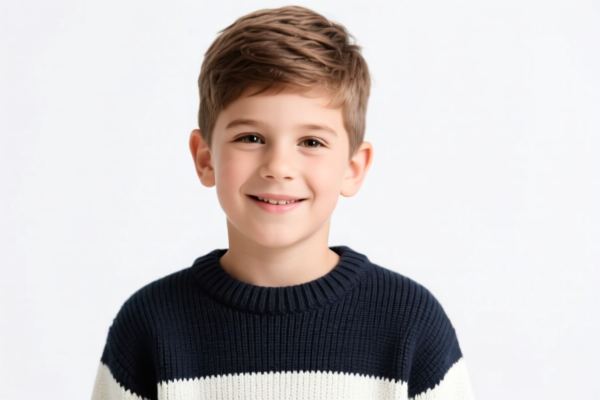
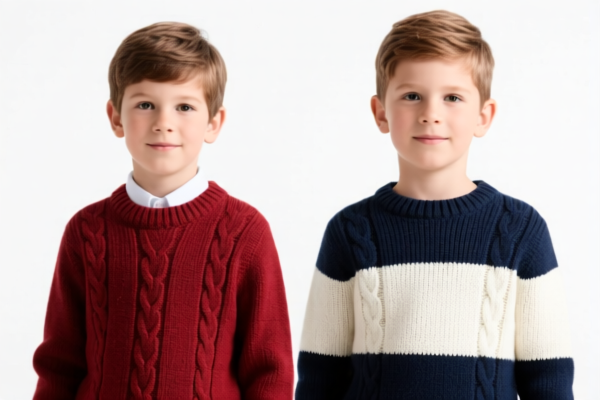
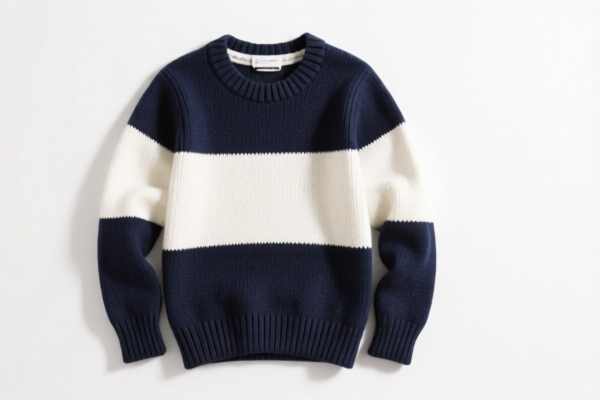
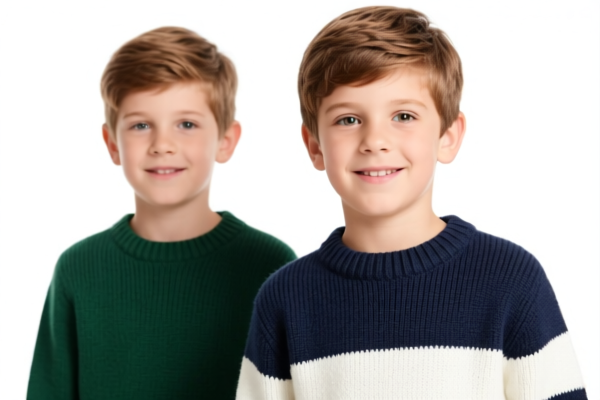
AI Analysis
👕 Boys' Casual Knitted Sweater (Children's V-Neck Knitwear)
🌐 HS Code Reference & Customs Clearance Guide | 2026 Latest Tariff Analysis | Professional Entry Strategy
📌 I. Product Definition & Classification: Do You Really Understand "Boys' Knitted Sweaters"?
Boys' casual knitted sweaters, particularly V-neck styles, are core apparel items in the children's wear sector. In international trade, classification is strictly determined by material composition. Even if the style (V-neck) and target user (Boys/Children) are identical, the HS Code shifts dramatically based on whether the fabric is cotton, synthetic, or a blend.
⚠️ Key Distinction Point:
- If the primary material is Cotton (≥85%) → Usually falls under 6111.20 (Knitted/crocheted baby garments) or 6110.20 (Other knitted sweaters of cotton).
- If the primary material is Synthetic Fibers (e.g., Polyester, Acrylic) → Falls under 6111.30 or 6110.31/39.
- Blends are classified by the principal fiber by weight.
📦 II. HS Code Classification Matrix (Based on Provided Data)
| HS Code | Product Summary | Material Composition | Target Group | Key Identifier |
|---|---|---|---|---|
6111.20.30.00 |
Boys' V-Neck Knitted Sweater | Cotton inferred | Children/Boys | High cotton content, fits infant/toddler category |
6110.20.20.15 |
Boys' V-Neck Knitted Sweater | Cotton or textile fibers | Children/Boys | Standard cotton knitwear, adult-style cut for kids |
6110.20.20.25 |
Boys' V-Neck Knitted Sweater | Cotton or Synthetic | Children/Boys | Blends or specific cotton definitions under 6110.20 |
6111.30.40.00 |
Boys' V-Neck Knitted Sweater | Synthetic or Natural Fibers | Children/Boys | High synthetic content (e.g., Polyester/Acrylic) |
🔍 Critical Note:
- Chapter 61 covers Knitted or Crocheted Articles.
- Heading 6110 is for "Sweaters, pullovers, cardigans...".
- Heading 6111 is for "Baby garments and clothing accessories".
- Note: The summary data suggests some overlap between 6111 and 6110 for "Boys' V-neck" items, likely due to specific national sub-classifications or age-bracket definitions (e.g., "Baby" vs. "Children" over 2 years).
💰 III. 2026 Latest Tariff Rate Breakdown (Detailed Tax Clauses)
✅ Applicable Country: United States (US)
✅ Origin: China (CN)
✅ Effective Date: Current Trade Policy (2024-2026)
The total tariff burden is a combination of three layers: Base Rate (MFN) + Section 301 (7.5%) + Section 122/Emergency Measures (10%).
🎯 1. 6111.20.30.00 – Cotton Boys' Knitwear (Infant/Toddler Focus)
| Item | Details |
|---|---|
| Base Tariff | 14.9% (MFN Rate for Cotton Knitwear) |
| Section 301 Tariff | +7.5% (Additional duty on Chinese imports) |
| Section 122/Emergency Tariff | +10% (Specific trade remedy or emergency duty) |
| Total Tariff Rate | 32.4% |
| Calculation | CIF Value × 32.4% |
| De Minimis Exemption | ❌ Not Eligible (Values over $800 are taxed; lower values may face scrutiny) |
| Legal Basis Path | HTSUS:6111.20.30.00 → USITC Footnote 9903.88.01 (Section 301) → 122 Clause |
📌 Explanation:
- This code carries a moderate-high tariff burden.
- The 14.9% base rate is higher than synthetic alternatives in some contexts, but the total package is lower than the synthetic option (47.5%) below.
🎯 2. 6110.20.20.15 & 6110.20.20.25 – Cotton/Synthetic Blend or Cotton Knitwear (Standard Children's)
| Item | Details |
|---|---|
| Base Tariff | 16.5% (MFN Rate for Other Knitted Sweaters of Cotton) |
| Section 301 Tariff | +7.5% |
| Section 122/Emergency Tariff | +10% |
| Total Tariff Rate | 34.0% |
| Calculation | CIF Value × 34.0% |
| De Minimis Exemption | ❌ Not Eligible |
| Legal Basis Path | HTSUS:6110.20.20.15/25 → USITC Footnote 9903.88.01 → 122 Clause |
📌 Explanation:
- Slightly higher base rate (16.5%) than the infant-specific code.
- Commonly used for older boys' wear (>2 years old) where "Sweater" definitions apply strictly.
- 34.0% is the standard "safe" tariff for cotton knitwear.
🎯 3. 6111.30.40.00 – Synthetic Fiber Boys' Knitwear
| Item | Details |
|---|---|
| Base Tariff | 30.0% (MFN Rate for Knitted Baby Garments of Synthetic Fibers) |
| Section 301 Tariff | +7.5% |
| Section 122/Emergency Tariff | +10% |
| Total Tariff Rate | 47.5% |
| Calculation | CIF Value × 47.5% |
| De Minimis Exemption | ❌ Not Eligible |
| Legal Basis Path | HTSUS:6111.30.40.00 → USITC Footnote 9903.88.01 → 122 Clause |
📌 Explanation:
- Highest Tariff Category.
- Synthetic fibers (Polyester/Acrylic) often have higher base MFN rates for baby/children's wear in this specific subheading.
- CRITICAL: If your product is 100% Polyester, you face a 47.5% cost, which is 15% higher than the cotton option (32.4%).
🛠️ IV. Customs Clearance Practical Advice (Battle-Tested Strategies)
✅ 1. Essential Documentation Checklist
| Document | Required? | Purpose |
|---|---|---|
| ✅ Fabric Composition Label | MANDATORY | Must state exact % (e.g., "100% Cotton" or "65% Polyester/35% Cotton"). Customs will verify against HS Code. |
| ✅ Tech Pack / Spec Sheet | YES | Show knit type, gauge, V-neck depth, sleeve length. |
| ✅ Product Photos | YES | Clear images of label, inside neck tag, and overall garment. |
| ✅ Commercial Invoice | YES | Must clearly state: "Boys' V-Neck Knitted Sweater, [Material], Size [X]". |
| ✅ Bill of Lading/Air Waybill | YES | Ensure HS Code matches invoice. |
⚠️ Warning:
- Misdeclaration of Material is the #1 cause of customs delays.
- If you declare "Cotton" but it contains 1% Polyester that changes the principal fiber, you may be downgraded to 6110.30 (Synthetic) or face penalties.
✅ 2. Declaration Tips (Golden Rules)
🔥 "Material Dictates Code, Age Dictates Heading, Style is Secondary!"
| Scenario | Correct HS Code | Risk if Wrong |
|---|---|---|
| 100% Cotton, V-Neck, Boys 0-2 yrs | 6111.20.30.00 (32.4%) |
If declared as Synthetic → 47.5% (Overpay) |
| 100% Cotton, V-Neck, Boys 3-10 yrs | 6110.20.20.15 (34.0%) |
If declared as Synthetic → 47.5% (Overpay) |
| 100% Polyester, V-Neck, Boys 0-2 yrs | 6111.30.40.00 (47.5%) |
If declared as Cotton → 32.4% (Underpay → Penalty/Fine) |
| Cotton/Poly Blend (60/40) | Depends on Principal Fiber | If misidentified, wrong code applies |
✅ 3. Cost-Saving Strategy
| Strategy | Action | Potential Saving |
|---|---|---|
| Material Shift | Change from 100% Polyester to 100% Cotton (if design allows) | Save 15.1% (47.5% → 32.4%) |
| Origin Diversification | Source from Vietnam/Mexico (if IEEPA exemptions apply) | Exempt from Section 301 & 122 (Tariff drops to Base Rate only: ~15-30%) |
| Pre-Ruling | Apply for CBP Ruling before shipment | Certainty: Avoids reclassification audits |
🌍 V. Global Market Comparison (2026 Snapshot)
| Market | Recommended HS Code | Est. Total Duty (China Origin) | Key Requirement |
|---|---|---|---|
| 🇺🇸 USA | 6111.20.30.00 / 6110.20.20.15 |
32.4% - 34.0% | Section 301 + 122 duties apply |
| 🇪🇺 EU | 6111.10 / 6110.11 |
~12% | No Section 301. Lower base rates for cotton. |
| 🇨🇳 China (Export) | 6111.20 / 6110.20 |
0% | Export duty usually 0%. |
| 🇬🇧 UK | 6111.10 / 6110.11 |
~12-15% | Post-Brexit tariffs differ from EU. |
📌 Conclusion:
- USA is the most expensive market due to layered political tariffs (301 + 122).
- EU/UK are more favorable for cotton knitwear if you can navigate rules of origin.
📌 VI. Common Mistakes & Pitfalls (Learn from Others' Errors)
❌ Mistake 1: Declaring "Sweater" without specifying "Knitted"
👉 Result: May be classified under Chapter 62 (Non-Knitted) → Higher Duties + Compliance Issues.
❌ Mistake 2: Ignoring "Age Bracket" (Infant vs. Child)
👉 Result: Misclassifying a 3-year-old's sweater as "Infant" (6111) instead of "Child" (6110) can lead to audit flags if data doesn't match size/quantity trends.
❌ Mistake 3: Assuming "Synthetic" is always cheaper
👉 Result: As shown above, Synthetic (6111.30.40.00) has a 47.5% total tariff, which is 15% more expensive than Cotton (32.4%). Always check the Base Rate!
✅ Correct Practice:
"Boys' V-Neck Knitted Sweater, 100% Cotton, Size 4T, Model XYZ, Made in China"
🎯 VII. Final Recommendation: Action Plan
🎯 Remember the Rule:
🔹 "Cotton is King (Lower Duty in USA), Synthetic is Heavy (Higher Base Rate)."
🔹 "Check the Label: 1% Polyester can change your HS Code and Tax Bill."
📌 Pro Tip:
If your volume is high, apply for a Section 301 Exclusion if your specific product code qualifies (rare for general apparel, but check annually). Alternatively, consider transshipment or sourcing from non-China origins to bypass the 7.5% + 10% add-ons.
📣 Immediate Action:
📞 Verify Material Composition before production.
📄 Request CBP Pre-Ruling for high-value shipments.
🚀 Optimize Supply Chain to mitigate the 32-47% tariff hit.
✨ Precision in Classification, Profit in Clearance!
💼 Every percentage point saved is pure margin!
Customer Reviews
About HS Code Classification
The Harmonized System (HS) is an internationally standardized nomenclature developed by the World Customs Organization (WCO) to classify traded products. Over 200 countries use the HS system as the basis for customs tariffs, trade statistics, and import/export regulations.
Each HS code follows a hierarchical structure:
- Chapter (2 digits) — Broad category of goods (e.g., Chapter 84: Machinery and Mechanical Appliances)
- Heading (4 digits) — More specific grouping within the chapter
- Subheading (6 digits) — Internationally standardized breakdown, used by all WCO member countries
- National subdivisions (8-10 digits) — Country-specific extensions for further classification, such as US HTSUS 10-digit codes
Correct HS code classification is essential for smooth customs clearance, accurate duty payment, and compliance with trade regulations. Misclassification can lead to customs delays, overpayment of duties, or penalties.
When importing from CN to US, the applicable tariff rates may include:
- Most-Favored-Nation (MFN) rate — The standard duty rate applied to WTO members
- General rate — Applied to countries without trade agreements
- Trade remedy duties — Additional tariffs such as Section 301 (anti-dumping), Section 232 (national security), or countervailing duties
The information provided on this page is for reference purposes only. For official classification, please consult with your local customs authority or a licensed customs broker.