Boys' Casual Knitwear
CN → US| HS Code | Tariff Rate | Origin | Destination | Doc |
|---|---|---|---|---|
| 6110202015 | 34.0% | CN | US | Official Doc |
| 6110303015 | 49.5% | CN | US | Official Doc |
| 6109100014 | 34.0% | CN | US | Official Doc |
| 6111203000 | 32.4% | CN | US | Official Doc |
| 6109901009 | 49.5% | CN | US | Official Doc |
Product Images
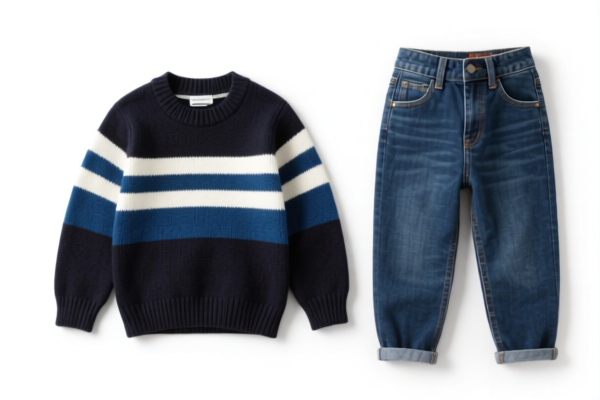
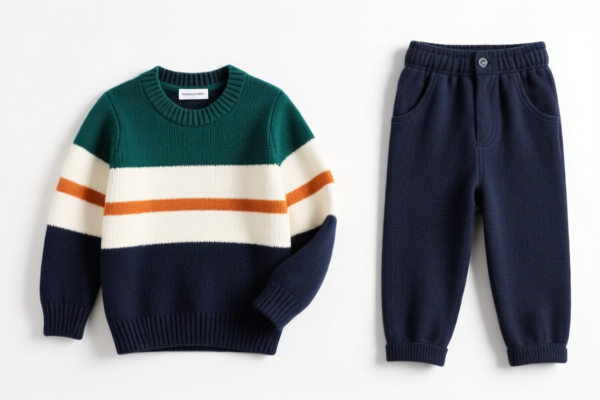
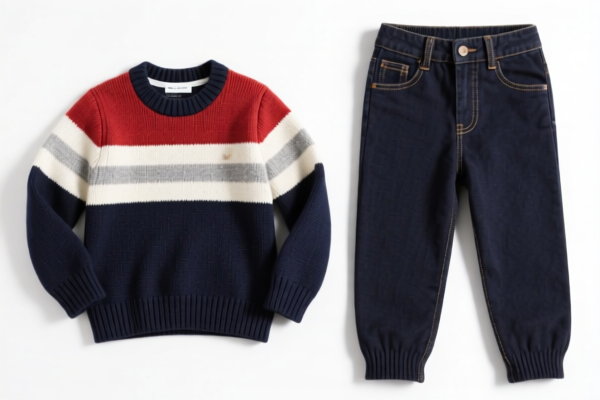
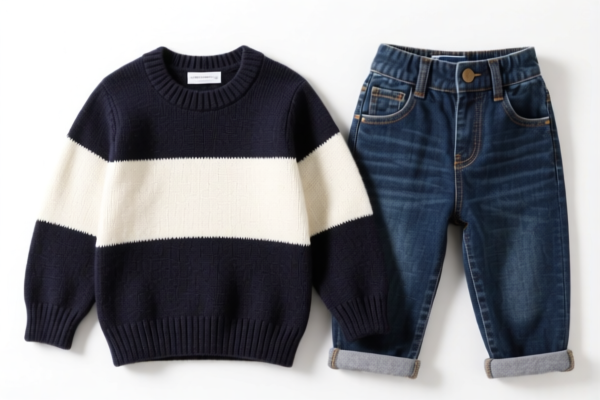
AI Analysis
👕 Boys' Casual Knitwear: The Ultimate Guide to HS Code Classification & US Customs Clearance (2026 Update)
🌐 HS Code Reference & Customs Clearance Guide | 2026 Latest Tariff Analysis | Professional Entry Strategy
📌 Part 1: Product Definition & Classification – What Exactly Is "Boys' Casual Knitwear"?
Boys' casual knitwear refers to knitted or crocheted garments designed for male children, typically worn for everyday leisure, play, or semi-formal occasions. In international trade, these items are primarily classified under Chapter 61 of the Harmonized System (HS), which covers "Articles of Apparel and Clothing Accessories, Knitted or Crocheted."
The classification hinges on three critical factors:
1. Material Composition (Cotton, Synthetic Fibers, or Man-Made Fibers);
2. Garment Type (Sweater, T-shirt, or Other);
3. Target Demographic (Boys/Males, Under 14).
⚠️ Key Distinction:
- If the garment is a pullover/sweater with long or short sleeves → Likely falls under 6110 (Sweaters) or 6109 (T-shirts);
- If it is a thermal or special garment (e.g., snowsuit, insulated parka) → Likely falls under 6111 (Baby/Infant Wear or Specialized Knitwear);
- Material dictates the specific subheading: Cotton vs. Synthetic/Man-Made Fibers.
📦 Part 2: HS Code Classification Breakdown (2026 Official Tariff Schedule)
Based on the provided dataset, here are the five potential HS Codes for Boys' Casual Knitwear, along with their descriptions, material inferences, and tax implications.
| HS Code | Product Description | Material Inference | Key Classification Logic |
|---|---|---|---|
| 6110.20.20.15 | Men's Boys' Sweaters, Pullovers, Split-Front Sweaters, Waistcoats, and Similar Articles (Knitted/Crocheted) – Cotton | Cotton | Matches knit form + boys' usage. Inferred as cotton based on common casual wear materials. |
| 6110.30.30.15 | Men's Boys' Sweaters, Pullovers, Split-Front Sweaters, Waistcoats, and Similar Articles (Knitted/Crocheted) – Synthetic/Man-Made Fibers | Synthetic or Man-Made | Matches knit form + boys' usage. Inferred as synthetic/viscose/polyester. |
| 6109.10.00.14 | T-Shirts, Singlets, and Other Singlets (Knitted/Crocheted) – Cotton | Cotton or Blended | Matches knit form + boys' usage. Inferred as cotton-based t-shirts or casual tops. |
| 6111.20.30.00 | Babies' Garments and Clothing Accessories (Knitted/Crocheted) – Cotton | Cotton | Matches knit form + boys' usage. Inferred as cotton. Note: Often includes younger children’s wear. |
| 6109.90.10.09 | T-Shirts, Singlets, and Other Singlets (Knitted/Crocheted) – Synthetic/Man-Made Fibers | Synthetic or Man-Made | Matches knit form + boys' usage. Inferred as synthetic based on rules. |
🔍 Important Note:
- 6110 vs. 6109: Sweaters/Pullovers (6110) generally carry higher base tariffs than T-shirts/Singlets (6109) in some regimes, but US tariffs are driven heavily by Section 301 and IEEPA surcharges.
- Cotton vs. Synthetic: In the US dataset provided, Cotton-based items (6110.20, 6109.10, 6111.20) have a lower base tariff (14.9%–16.5%) compared to Synthetic/Man-Made items (6110.30, 6109.90) which have a higher base tariff (32.0%).
💰 Part 3: 2026 US Tariff Rate Breakdown (Including Surtaxes & Policy Add-ons)
✅ Applicable Country: United States (US)
✅ Origin: China (CN)
✅ Effective Time: 2025/2026 (Includes all post-effective imports)
🎯 1. Cotton-Based Knitwear (Lower Base Tariff)
A. 6110.20.20.15 – Cotton Sweaters/Pullovers
| Item | Detail |
|---|---|
| Base Tariff | 16.5% |
| Section 301 Surcharge | 7.5% |
| IEEPA Section 122 Surcharge | 10% |
| Total Effective Tax Rate | 34.0% |
| Calculation | CIF Value × 34.0% |
| De Minimis Eligibility | ❌ No (Denied for China-origin goods under current enforcement) |
| Legal Basis Path | USITC:6110.20.20.15 → Footnote:301 → IEEPA:122 |
B. 6109.10.00.14 – Cotton T-Shirts/Singlets
| Item | Detail |
|---|---|
| Base Tariff | 16.5% |
| Section 301 Surcharge | 7.5% |
| IEEPA Section 122 Surcharge | 10% |
| Total Effective Tax Rate | 34.0% |
| Calculation | CIF Value × 34.0% |
| De Minimis Eligibility | ❌ No |
| Legal Basis Path | USITC:6109.10.00.14 → Footnote:301 → IEEPA:122 |
C. 6111.20.30.00 – Cotton Babies'/Children’s Wear
| Item | Detail |
|---|---|
| Base Tariff | 14.9% |
| Section 301 Surcharge | 7.5% |
| IEEPA Section 122 Surcharge | 10% |
| Total Effective Tax Rate | 32.4% |
| Calculation | CIF Value × 32.4% |
| De Minimis Eligibility | ❌ No |
| Legal Basis Path | USITC:6111.20.30.00 → Footnote:301 → IEEPA:122 |
📌 Explanation:
- "Base Tariff": The standard MFN (Most Favored Nation) rate applied to cotton knitwear.
- "Section 301 Surcharge (7.5%)": Additional tariff imposed on Chinese goods under Section 301 of the Trade Act.
- "IEEPA Section 122 Surcharge (10%)": Additional tariff under the International Emergency Economic Powers Act, targeting Chinese imports.
- Total 32.4%–34.0%: This is the all-in landed cost multiplier for duties. You must budget for this in your pricing model.
🎯 2. Synthetic/Man-Made Fiber-Based Knitwear (Higher Base Tariff)
A. 6110.30.30.15 – Synthetic Sweaters/Pullovers
| Item | Detail |
|---|---|
| Base Tariff | 32.0% |
| Section 301 Surcharge | 7.5% |
| IEEPA Section 122 Surcharge | 10% |
| Total Effective Tax Rate | 49.5% |
| Calculation | CIF Value × 49.5% |
| De Minimis Eligibility | ❌ No |
| Legal Basis Path | USITC:6110.30.30.15 → Footnote:301 → IEEPA:122 |
B. 6109.90.10.09 – Synthetic T-Shirts/Singlets
| Item | Detail |
|---|---|
| Base Tariff | 32.0% |
| Section 301 Surcharge | 7.5% |
| IEEPA Section 122 Surcharge | 10% |
| Total Effective Tax Rate | 49.5% |
| Calculation | CIF Value × 49.5% |
| De Minimis Eligibility | ❌ No |
| Legal Basis Path | USITC:6109.90.10.09 → Footnote:301 → IEEPA:122 |
📌 Explanation:
- "Base Tariff 32.0%": Synthetic fibers face higher base duties in the US tariff schedule for knitwear.
- "Total 49.5%": This is a very high tariff rate. Importers must carefully evaluate margin compression.
- Key Takeaway: If you can switch material composition from synthetic to cotton (without compromising product quality), you can save 15.5% in total duties (49.5% → 34.0%).
🛠️ Part 4: Customs Clearance Practical Advice (Avoiding Pitfalls)
✅ 1. Documentation Checklist (All Must Be Provided)
| Document | Required | Notes |
|---|---|---|
| ✅ Product Specification Sheet | ✔️ | Must specify: Material composition (e.g., 100% Cotton, 80% Polyester/20% Spandex), Knit type, Age range (e.g., "For Boys 2-5 Years") |
| ✅ Material Test Report | ✔️ | Third-party lab report (e.g., SGS, BV) confirming fiber content. Critical for HS Code determination. |
| ✅ Product Photos | ✔️ | Front, back, label, and tag. Must clearly show "Boy" styling or unisex design. |
| ✅ Commercial Invoice | ✔️ | Must state: "Boys' Casual Knitwear," HS Code, Country of Origin (China), Unit Price, Total Value. |
| ✅ Packing List | ✔️ | Itemize by style/color/size. Avoid mixing synthetic and cotton in one shipment if possible to simplify classification. |
| ✅ Certificate of Origin (CO) | ✔️ | If applicable for non-US sources, but for China origin, CO does not reduce tariffs under current policies. |
✅ 2. Declaration Tips (Key Mantras)
🔥 "Material Dictates Rate, Style Dictates Code, Name Must Be Precise!"
| Scenario | Correct Declaration | Incorrect Declaration | Consequence |
|---|---|---|---|
| Cotton Sweater | 6110.20.20.15 – "Boys' Cotton Knit Sweater" |
"Clothing" or "Sweatshirt" | Misclassification → Audit, Penalties |
| Polyester T-Shirt | 6109.90.10.09 – "Boys' Synthetic Knit T-Shirt" |
"T-shirt" (without material) | Higher base rate if synthetic not specified |
| Cotton T-Shirt | 6109.10.00.14 – "Boys' Cotton Knit T-Shirt" |
"Synthetic T-Shirt" | Overpayment of duties (15.5% difference) |
| Baby Knitwear | 6111.20.30.00 – "Boys' Cotton Knit Baby Garment" |
"Boy's Sweater" | May be reclassified to 6110, raising base rate from 14.9% to 16.5% |
📌 Critical Rule:
- Never use generic terms like "Knitwear" or "Clothing" on the commercial invoice.
- Always specify Material + Product Type + Demographic (e.g., "100% Cotton Boys' Knit Sweater").
✅ 3. Special Cases & Strategies
| Scenario | Handling Advice |
|---|---|
| Blended Materials | If material is mixed (e.g., 60% Cotton, 40% Polyester), classify based on the material comprising the greatest weight. If cotton is >50%, use cotton codes (34.0%). If synthetic is >50%, use synthetic codes (49.5%). |
| OEM/Private Label | Provide OEM agreement and design specifications to prove origin and material source. |
| Gift Sets | If knitwear is sold with accessories (e.g., hats, socks), the essential character determines the HS code. If knitwear is the main item, classify the whole set under the knitwear code. |
| Pre-Clearance Ruling | For large volume imports, apply for an Advance Ruling from US CBP to lock in the HS Code and avoid retroactive duties. |
🌍 Part 5: Global Market Comparison (2026 Overview)
| Country/Region | Recommended HS Code | Base Tariff | Surtaxes | Total Est. Rate | Notes |
|---|---|---|---|---|---|
| 🇺🇸 USA | 6110.20.20.15 (Cotton) or 6110.30.30.15 (Synthetic) |
14.9%–32.0% | 17.5% (301+122) | 32.4%–49.5% | Highest duty burden. Material choice is critical. |
| 🇨🇳 China | 6110.20 or 6110.30 |
10%–15% | 0% | ~10%–15% | Export duties may apply depending on policy. |
| 🇪🇺 EU | 6110.20 or 6110.30 |
12%–12% | 0% | ~12% | No Section 301/IEEPA surcharges. |
| 🇬🇧 UK | 6110.20 or 6110.30 |
12%–12% | 0% | ~12% | Post-Brexit tariffs similar to EU. |
📌 Conclusion:
- The US market is the most challenging due to the叠加 (stacking) of base tariffs, Section 301, and IEEPA surcharges.
- Material optimization is the key cost-saving strategy: Choose Cotton over Synthetic to save ~15.5% in total duties.
📌 Part 6: Common Mistakes & Pitfalls (Lessons Learned)
❌ Mistake 1: Assuming all knitwear is taxed equally.
👉 Result: Paying 49.5% when you could have paid 34.0% by specifying "Cotton" correctly.
❌ Mistake 2: Using vague descriptions like "Boys' Clothes."
👉 Result: CBP may assign a default higher rate or hold the shipment for inspection.
❌ Mistake 3: Ignoring material blends.
👉 Result: If a garment is 51% Polyester and 49% Cotton, it is classified as Synthetic (49.5% tax), not Cotton. Always verify material weight percentages.
❌ Mistake 4: Assuming De Minimis (Section 321) applies to small shipments.
👉 Result: No, China-origin goods are explicitly excluded from De Minimis exemptions under current US enforcement. Every shipment is subject to full duties.
✅ Correct Action:
"Boys' 100% Cotton Knit Pullover, Ages 2-4, Red, Model #ABC123, Made in China"
🎯 Part 7: Conclusion – Professional Declaration, Cost Control, Smooth Clearance
🎯 Remember the Mantra:
🔹 "Cotton is King: Save 15.5% in US Duties!"
🔹 "Specify Material, Specify Age, Specify Style!"
🔹 "No De Minimis for China: Plan for 32%–50% Tax!"
📌 Pro Tip:
If your supply chain allows, consider sourcing cotton-based knitwear to maximize duty savings. For synthetic items, ensure your material composition is accurately tested and declared to avoid penalties.
For high-volume shipments, apply for an Advance Ruling from CBP to secure your HS Code and avoid post-entry audits.
📣 Take Action Now:
📞 Contact your freight forwarder or customs broker with material test reports and product specs.
🚀 Optimize material composition and precise declaration to boost your profit margins in the US market!
✨ Professional Customs Clearance Starts with Accurate Classification!
💼 Your Bottom Line Depends on the HS Code!
Customer Reviews
About HS Code Classification
The Harmonized System (HS) is an internationally standardized nomenclature developed by the World Customs Organization (WCO) to classify traded products. Over 200 countries use the HS system as the basis for customs tariffs, trade statistics, and import/export regulations.
Each HS code follows a hierarchical structure:
- Chapter (2 digits) — Broad category of goods (e.g., Chapter 84: Machinery and Mechanical Appliances)
- Heading (4 digits) — More specific grouping within the chapter
- Subheading (6 digits) — Internationally standardized breakdown, used by all WCO member countries
- National subdivisions (8-10 digits) — Country-specific extensions for further classification, such as US HTSUS 10-digit codes
Correct HS code classification is essential for smooth customs clearance, accurate duty payment, and compliance with trade regulations. Misclassification can lead to customs delays, overpayment of duties, or penalties.
When importing from CN to US, the applicable tariff rates may include:
- Most-Favored-Nation (MFN) rate — The standard duty rate applied to WTO members
- General rate — Applied to countries without trade agreements
- Trade remedy duties — Additional tariffs such as Section 301 (anti-dumping), Section 232 (national security), or countervailing duties
The information provided on this page is for reference purposes only. For official classification, please consult with your local customs authority or a licensed customs broker.